
MAGAZINE
Collectible Interiors: How Bespoke Furniture Becomes Investment-Grade Art

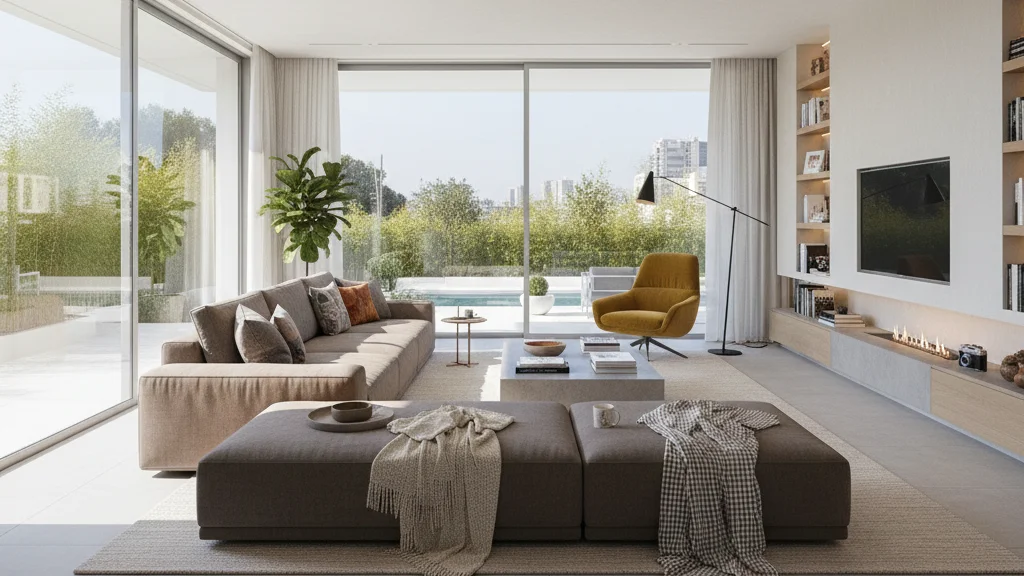
Understanding the philosophy behind creating custom furniture pieces that appreciate in value and emotional significance
Published: December 2025 | Reading Time: ~12 minutes | Category: Luxury Living & Investment
In the rarefied world of ultra-premium residential design, the conversation has fundamentally shifted. Today’s discerning homeowners—those whose portfolios often exceed ₹250 crores—no longer view their residences merely as real estate assets. Instead, they recognize their homes as curated collections of investment-grade design, where every piece of bespoke furniture carries the potential to appreciate not just in monetary value, but in cultural and emotional significance.
At Crosby Project, we’ve witnessed this transformation firsthand through our 50+ artisan workshop in Delhi, where traditional Indian craftsmanship converges with contemporary design sensibilities to create pieces that transcend the boundary between functional furniture and collectible art.
The Evolution of Furniture as Collectible Asset
The notion of furniture as investment might seem novel to some, yet it represents a return to historical precedent. Throughout history—from the ornate cabinets of Renaissance Italy to the refined joinery of Ming Dynasty China—exceptional furniture has commanded respect, preservation, and premium valuations across generations.
What distinguishes investment-grade furniture from merely expensive pieces? The answer lies in a constellation of factors that we’ve codified through decades of experience working with India’s most discerning clients and international collectors.
Provenance and Artisanal Lineage
Every piece that emerges from Crosby Project’s workshop carries with it a documented lineage of craftsmanship. Our master artisans, many of whom inherited their skills through generations of family practice, bring techniques refined over centuries. This provenance—the documented history of who created the piece, using what methods, and with what materials—forms the foundation of future value appreciation.
Consider our recent commission for a Mumbai industrialist: a dining table crafted from sustainably sourced Indian rosewood, featuring inlay work using the centuries-old parchin kari technique. The table’s value derives not merely from its materials or aesthetic appeal, but from the 600 hours of master craftsmanship, the rarity of the technique, and the documentation of every stage of its creation.
Material Integrity and Sustainable Sourcing
In an era increasingly defined by environmental consciousness, the sustainability credentials of luxury furniture have transitioned from peripheral consideration to central value proposition. Investment-grade pieces must demonstrate:
- Transparent material sourcing: Full documentation of wood origins, certification of sustainable harvesting practices, and verification of ethical supply chains
- Material rarity within sustainable parameters: Utilizing woods that are rare yet responsibly sourced, such as certified Indian rosewood, walnut, or reclaimed teak from heritage structures
- Longevity of materials: Selection of substances that improve with age rather than deteriorate, developing patina and character over decades
Our commitment to ISO 9001:2015 certification ensures that every material entering our workshop meets rigorous standards for both quality and sustainability. This certification, coupled with our 10-year on-site warranty, provides collectors with the assurance that their investment is protected through documented processes and guaranteed longevity.
The Crosby Methodology: From Concept to Collectible
Creating investment-grade furniture demands a fundamentally different approach than producing even high-end commercial pieces. Our methodology, refined through partnerships with India’s leading architects and international design studios, follows seven distinct phases:
Phase 1: Cultural and Personal Discovery (Duration: 2-4 weeks)
Unlike conventional furniture commissioning, which might begin with style preferences, we initiate every project with profound cultural and personal exploration. Our design team invests substantial time understanding:
- The client’s cultural heritage and how they wish to honor or reinterpret it
- Their lifestyle patterns, entertaining habits, and daily rituals
- Their existing art collection and how new furniture pieces will dialogue with these works
- Their values regarding sustainability, craftsmanship, and legacy
This discovery phase recently led us to create a console table for a Delhi-based collector that incorporated marble from the same Rajasthani quarry used in her grandfather’s haveli, reimagined through contemporary minimalist design principles.
Phase 2: Historical Research and Design Development (Duration: 4-8 weeks)
Every investment-grade piece requires exhaustive historical research. Our design team:
- Studies historical precedents for the furniture type being commissioned
- Researches traditional joinery techniques specific to the desired wood species
- Investigates finishing methods that have proven durable over centuries
- Explores contemporary interpretations while maintaining technical integrity
For a recent project involving a statement bed frame, our research team spent six weeks studying traditional Indian charpai construction techniques, analyzing how rope tensioning systems evolved across different regions, ultimately informing a contemporary design that honors this heritage while incorporating modern ergonomic science.
Phase 3: Material Selection and Sustainable Procurement (Duration: 6-12 weeks)
Material selection for collectible furniture operates on a timeline incomprehensible to conventional manufacturing. We routinely spend months sourcing specific timber cuts, ensuring:
- Grain pattern alignment: For larger pieces, matching wood grain across multiple boards to create visual continuity
- Age-appropriate timber: Selecting wood that has been properly seasoned, often for 3-5 years, ensuring dimensional stability
- Sustainable certification: Verifying forest stewardship credentials and, where possible, utilizing reclaimed timber from heritage structures
- Metal and stone procurement: For pieces incorporating metal or stone inlay, sourcing materials with appropriate provenance and character
Our recent collaboration with a Bangalore architect required nine months to source the perfect slabs of Makrana marble—the same variety used in the Taj Mahal—for a dining table commission, waiting for the quarry to extract specific veining patterns that would create symmetry across the table’s surface.
Phase 4: Prototype Development and Client Collaboration (Duration: 8-16 weeks)
Investment-grade furniture demands iterative refinement. We create:
- Scale models: Physical models at 1:4 or 1:2 scale, allowing clients to understand proportions and details
- Material samples: Full-size sections showing joinery details, finish options, and material combinations
- 3D visualizations: Photorealistic renderings showing how the piece will integrate within the intended space
- Functional prototypes: For complex pieces involving mechanisms or innovative joinery, full-scale functional prototypes
This phase embodies true collaboration. Clients aren’t simply approving designs; they’re actively participating in creation, often visiting our workshop multiple times to refine details as subtle as the degree of hand-planing texture on a table surface.
Phase 5: Master Craftsmanship and Creation (Duration: 12-40 weeks)
The creation phase transforms design into physical reality through traditional hand-craftsmanship techniques:
Timber Preparation and Treatment
Our workshop follows traditional Indian wood preparation methods, enhanced by contemporary understanding of wood science:
- Initial rough milling to dimension, followed by extended rest periods allowing the wood to acclimate to workshop humidity
- Hand-selection of specific boards for different furniture components based on grain direction and structural requirements
- Traditional treatment methods using natural oils and waxes, avoiding synthetic sealers that can compromise long-term stability
Joinery Execution
Investment-grade furniture demands joinery that will maintain integrity for generations. Our master joiners employ:
- Mortise and tenon joints: Hand-cut with tolerances measured in fractions of millimeters, creating connections that actually strengthen over time as wood seasons
- Dovetail joinery: Cut entirely by hand for drawer construction, with spacing and angles calculated specifically for the wood species in use
- Traditional Indian joinery: Techniques like jugaad (complex interlocking joints) that pre-date European joinery methods by centuries
Surface Treatment and Finishing
The finish determines how a piece will age over decades. We employ:
- Multi-stage hand-planing: Creating surface texture that catches light in specific ways, impossible to replicate through machine sanding
- Traditional French polish: Applied in 40-60 layers over several weeks, creating depth and luster that improves with age
- Natural oil finishes: For pieces where clients prefer a more tactile surface, utilizing traditional recipes of natural oils, beeswax, and earth pigments
Phase 6: Quality Verification and Documentation (Duration: 2-4 weeks)
Before delivery, every piece undergoes rigorous quality verification:
- Structural stress testing ensuring joints will maintain integrity under use
- Finish durability testing simulating decades of environmental exposure
- Photographic documentation of every detail, creating a permanent record
- Creation of detailed provenance documentation including:
- Master craftsmen involved in creation with their signatures
- Material source documentation
- Time invested in creation
- Technical specifications and care instructions
- Historical research informing the design
This documentation becomes part of the piece’s permanent record, essential for future valuation and potential sale to collectors or institutions.
Phase 7: Installation, Placement, and Lifecycle Care (Ongoing)
Unlike commercial furniture that’s simply delivered, investment pieces require:
- Specialized installation: Our team personally delivers and installs each piece, ensuring proper placement and environmental conditions
- Environmental optimization: Guidance on humidity control, light exposure, and temperature ranges that will protect the piece
- Lifecycle care planning: Detailed protocols for cleaning, seasonal maintenance, and long-term preservation
- Ongoing relationship: Our 10-year warranty includes annual inspection visits, ensuring pieces age gracefully and addressing any issues immediately
The Market for Investment-Grade Furniture: Current Landscape and Future Trajectory
The market for collectible furniture has experienced remarkable growth, particularly in India and key international markets where Crosby Project maintains presence.
The Indian Ultra-Premium Market
India’s ultra-high-net-worth population has grown by 11% annually over the past five years, with Mumbai and Delhi leading concentrations. These individuals increasingly seek:
- Heritage reinterpretation: Furniture that honors Indian design traditions while embracing contemporary aesthetics
- Sustainability credentials: Pieces that align with growing environmental consciousness
- Investment diversification: Tangible assets that provide both utility and appreciation potential
- Cultural legacy: Objects they can pass to future generations as family heirlooms
Recent auctions have demonstrated this trend. A contemporary rosewood table by a renowned Delhi craftsman, originally commissioned for ₹18 lakhs in 2010, sold at a Mumbai auction for ₹47 lakhs in 2024—a 160% appreciation independent of inflation.
The Dubai and Middle Eastern Markets
Dubai has emerged as a crucial hub for luxury furniture, with the city’s ultra-premium residential developments creating demand for:
- Statement pieces for grand salons in villas and penthouses
- Climate-appropriate finishes that withstand desert conditions
- Fusion designs incorporating Indian craftsmanship with Middle Eastern aesthetic preferences
- Pieces with documented sustainability credentials appealing to environmentally conscious Emirates residents
Our recent expansion into Dubai responds directly to this demand, with our Jumeirah Lake Towers office facilitating consultations with clients across the GCC region.
The London and European Markets
London’s established collectors market, particularly concentrated in Mayfair and Kensington, shows strong appetite for:
- Contemporary interpretations of traditional Indian furniture forms
- Pieces featuring exotic woods with impeccable sustainability documentation
- Furniture from workshops with documented traditional craftsmanship lineages
- Investment-grade pieces with clear provenance and valuation documentation
European collectors increasingly recognize Indian craftsmanship workshops, like Crosby Project, as representing value opportunities compared to established European ateliers, while offering equally rigorous quality and more distinctive aesthetic vocabularies.
Design Principles for Investment-Grade Furniture
Creating furniture that appreciates in value demands adherence to specific design principles:
Principle 1: Timeless Proportion Over Trendy Form
Investment pieces must transcend temporary design trends. We achieve timelessness through:
- Classical proportional systems: Utilizing golden ratio principles and traditional Indian proportional systems like the talamanaa
- Restrained ornamentation: Avoiding excessive decoration that dates a piece to a specific era
- Form following function: Ensuring every design element serves a purpose, whether structural, functional, or meaningful
Principle 2: Technical Innovation Within Traditional Framework
The most successful investment pieces balance innovation with tradition:
- Employing traditional joinery methods that have proven durable over centuries
- Incorporating modern understanding of wood movement and seasonal adaptation
- Utilizing contemporary finishing products that enhance rather than replace traditional techniques
- Integrating modern comfort requirements (ergonomics, hidden storage) without compromising aesthetic integrity
Principle 3: Cultural Authenticity and Personal Meaning
Furniture that becomes truly collectible carries cultural or personal significance:
- Regional authenticity: Designs that honestly reference specific Indian craft traditions rather than generic “ethnic” aesthetics
- Personal narrative: Incorporation of elements meaningful to the client—materials from significant locations, techniques from ancestral regions, or forms that honor family history
- Cultural dialogue: Pieces that create conversation between different traditions—Indian craftsmanship with European minimalism, for example
Principle 4: Materiality as Expression
In investment-grade work, material selection is never arbitrary:
- Every material choice must be defensible both aesthetically and philosophically
- Materials should improve with age, developing patina and character
- The combination of materials should create dialogue—wood and stone, metal and textile—with each enhancing the other
- Sustainability credentials must be impeccable and documented
Case Studies: Crosby Project Investment Pieces
The Mahajan Heritage Collection Dining Suite
Commissioned by a Delhi industrialist family for their new residence in Golf Course Road, this project exemplifies our approach to investment-grade furniture:
Client Brief: Create a dining suite that could accommodate 16 guests for formal dinners while honoring the family’s Marwari heritage and commitment to sustainability.
Our Solution: We designed an extending dining table in reclaimed teak from a 200-year-old Jaipur haveli, featuring hidden extension mechanisms that allow the table to expand from 8-seat to 16-seat configuration. The chairs incorporate traditional peeda (low stool) proportions, elevated to contemporary dining height, with seats woven using the traditional dari (carpet weaving) technique in organic cotton.
Investment Metrics:
- Commission value: ₹32 lakhs (2022)
- Independent appraisal value: ₹41 lakhs (2024)
- Documented craftsmanship hours: 840
- Materials: Certified reclaimed teak, brass (recycled), organic cotton
- Environmental impact: Carbon negative through use of reclaimed materials
The Kerala Contemporary Meditation Chamber
For a Bangalore technology entrepreneur, we created a complete meditation space featuring built-in seating and storage:
Client Brief: Design a meditation space that incorporates Kerala architectural principles while functioning in a contemporary minimalist residence.
Our Solution: A built-in daybed incorporating traditional Kerala nalukettu proportions, crafted in sustainably harvested jackfruit wood. The piece features hidden storage beneath, revealed through traditionally crafted zarookha (lattice screen) panels. The daybed integrates seamlessly with the architecture while maintaining identity as a distinct collectible element.
Investment Metrics:
- Commission value: ₹18 lakhs (2023)
- Current estimated value: ₹22 lakhs
- Documented craftsmanship hours: 520
- Materials: Certified sustainable jackfruit wood, brass, handwoven cotton
- Cultural significance: Preservation of rarely practiced Kerala joinery techniques
Environmental Sustainability and Investment Value: The Inextricable Connection
Modern collectors increasingly recognize that investment value and environmental sustainability are inseparable. Pieces created through exploitative or environmentally damaging practices face growing stigma and potential devaluation.
Our commitment to sustainability enhances investment potential through:
Transparent Supply Chains
Every piece of timber entering our workshop carries complete documentation:
- Forest of origin with GPS coordinates
- Harvest date and methodology
- Chain of custody documentation
- Third-party certification (FSC or equivalent)
This transparency creates confidence among collectors and facilitates future sales or donations to institutions.
Traditional Low-Impact Methods
Our workshop prioritizes hand-tool craftsmanship, which offers environmental benefits:
- Minimal electricity consumption compared to fully mechanized production
- Ability to work with irregular timber pieces that industrial processes would reject as waste
- Reduction in sawdust waste through careful hand-cutting
- Lower transportation carbon footprint through local artisan communities
Support for Artisan Communities
Investment in our furniture directly supports sustainable livelihoods:
- Fair compensation for master craftsmen, often 3-4 times industrial wages
- Preservation of traditional knowledge that would otherwise disappear
- Training programs transferring skills to younger generations
- Support for rural economies where many traditional crafts originated
Circular Economy Practices
We’ve established protocols for:
- Accepting and refurbishing pieces we created decades ago
- Utilizing workshop scraps for smaller objects or inlay work
- Partnering with salvage companies to source reclaimed timber
- Planning for eventual disassembly and material reuse at furniture end-of-life
The Care and Preservation of Investment Furniture
Collectible furniture requires informed stewardship. Our comprehensive care program includes:
Environmental Control
Indian homes, particularly in regions experiencing dramatic seasonal humidity variation, require careful environmental management:
- Humidity regulation: Maintaining 40-60% relative humidity year-round, using humidifiers during dry seasons and dehumidifiers during monsoon
- Temperature stability: Avoiding exposure to dramatic temperature fluctuations, particularly for pieces with complex joinery
- Light management: Protecting finishes and woods from direct sunlight through UV-filtering glazing or strategic placement
Maintenance Protocols
We provide detailed maintenance schedules:
- Daily care: Gentle dusting using specific soft brush types
- Monthly care: Application of appropriate polishes or oils depending on finish type
- Seasonal care: Inspection of joints, adjustment of mechanical components, professional cleaning
- Annual care: Professional workshop inspection, refinishing of high-wear surfaces as needed
Documentation and Appraisal
Maintaining investment value requires:
- Photographic documentation: Annual photography documenting condition
- Maintenance logs: Recording all care and repairs
- Professional appraisals: Periodic (3-5 year) independent appraisals establishing current value
- Insurance coverage: Appropriate coverage reflecting appreciated value
Commissioning Process: What Clients Should Expect
For those considering commissioning investment-grade furniture from Crosby Project:
Initial Consultation (No charge)
We begin with an extensive consultation:
- Discussion of intended use, aesthetic preferences, and budget parameters
- Review of existing space through photography and, for significant commissions, site visits
- Exploration of cultural or personal significance clients wish to incorporate
- Education about traditional Indian craftsmanship techniques and material options
Design Development Phase (₹50,000-₹2,00,000 depending on complexity)
Following consultation, we develop:
- Detailed design proposals with material specifications
- 3D visualizations showing integration within client’s space
- Material samples and mockups of key details
- Preliminary timeline and budget refinement
Contracting and Deposit (50% upon contract signing)
Once design is approved:
- Detailed contract specifying materials, timeline, delivery terms
- Documentation of craftsmanship team assigned to project
- Payment schedule aligned with project milestones
- Clarity on warranty terms and ongoing care provisions
Creation Phase (Timeline varies by complexity)
During fabrication:
- Monthly progress updates with photography
- Opportunities for workshop visits to see work in progress
- Checkpoints for client approval before proceeding to next phase
- Flexibility for minor refinements as piece takes physical form
Delivery and Installation (Remaining balance upon delivery)
Our team personally handles:
- Custom crating designed for each piece
- White-glove delivery and installation
- Guidance on optimal placement and environmental conditions
- Complete documentation package including care instructions and provenance documentation
Ongoing Relationship (Covered by warranty)
Our 10-year warranty includes:
- Annual inspection visits in Delhi/Gurgaon/Noida region (optional for other regions)
- Immediate response to any structural or finish concerns
- Lifetime availability for repair or refinishing services
- Assistance with future appraisals or sales if desired
The Future of Investment-Grade Furniture in India
India stands at a unique inflection point regarding investment-grade furniture. Several converging trends suggest robust future growth:
Growing Design Sophistication
India’s design literacy has evolved dramatically. Clients increasingly:
- Understand the value distinction between commercial luxury brands and bespoke craftsmanship
- Appreciate the cultural significance of traditional techniques
- Recognize furniture as asset class worthy of serious investment
- Seek education about materials, techniques, and design history
Institutional Recognition
Museums and cultural institutions increasingly acquire contemporary pieces by master craftsmen:
- National Crafts Museum has expanded contemporary acquisitions
- Private museums like the Kiran Nadar Museum collect investment-grade furniture
- International institutions recognize Indian workshops producing museum-quality work
This institutional interest validates and potentially drives value appreciation.
Generational Wealth Transfer
India is experiencing the largest intergenerational wealth transfer in its history. The next generation of inheritors:
- Often possess greater design education through international exposure
- Value experiences and tangible assets over purely financial instruments
- Seek meaningful objects with cultural resonance
- Appreciate sustainability credentials their parents’ generation might have overlooked
Global Recognition of Indian Craftsmanship
International design publications increasingly feature Indian workshops:
- Coverage in Architectural Digest, Elle Decor, and Wallpaper*
- Inclusion in international furniture fairs and exhibitions
- Collaboration between Indian craftsmen and international designers
- Growing collector interest from London, New York, and Dubai
Conclusion: Furniture as Philosophy
At its highest expression, investment-grade furniture transcends mere function or even aesthetic appeal. It becomes philosophy made tangible—a physical manifestation of values, culture, craftsmanship, and environmental stewardship.
When you commission a piece from Crosby Project’s workshop, you’re not simply purchasing furniture. You’re:
- Supporting the continuation of centuries-old craft traditions
- Creating employment for master artisans and their apprentices
- Making a statement about environmental responsibility
- Building a family legacy that can pass through generations
- Participating in the elevation of Indian design to global prominence
The pieces emerging from our workshop in Delhi carry the weight of this responsibility. Every hand-cut joint, every carefully selected timber, every hour of patient craftsmanship represents our commitment to creating furniture that will be treasured not just for years, but for generations.
In a world increasingly dominated by disposability, there is profound luxury in creating objects built to last lifetimes. There is investment value that transcends mere monetary appreciation. And there is deep satisfaction in surrounding oneself with objects that tell stories, honor traditions, and embody care for our environmental future.
This is the promise of investment-grade furniture. This is the philosophy of Crosby.
For Consultations on Investment-Grade Furniture Commissions:
Delhi Workshop & Showroom Tamil Nadu: 355/357, Bhavani Main Road, Sunnambu Odai, B.P.Agraharam, Erode Tamil Nadu 638005, India
International Office – Ireland
Contact: +91-8826860000 | care@crosby.co.in
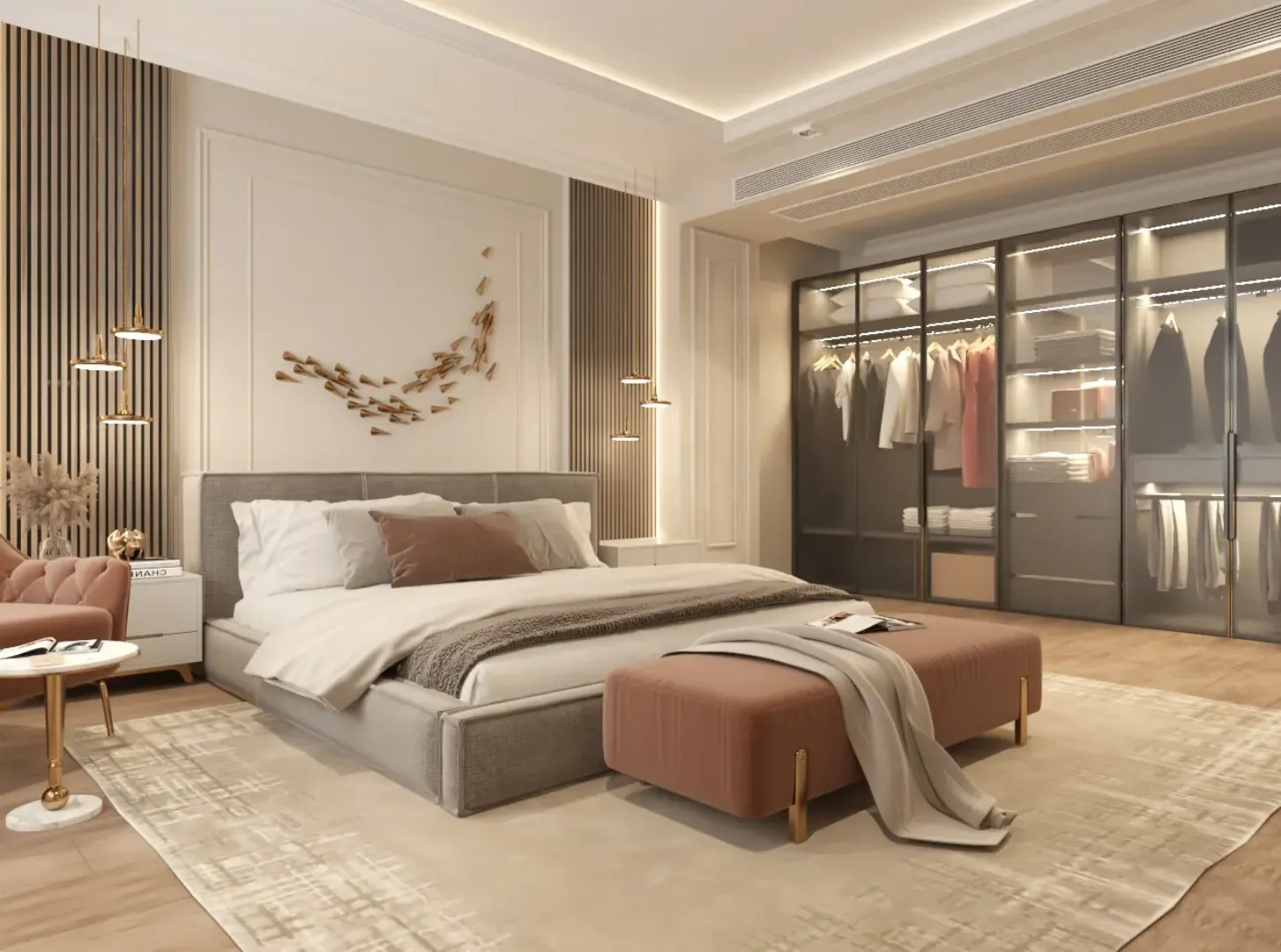

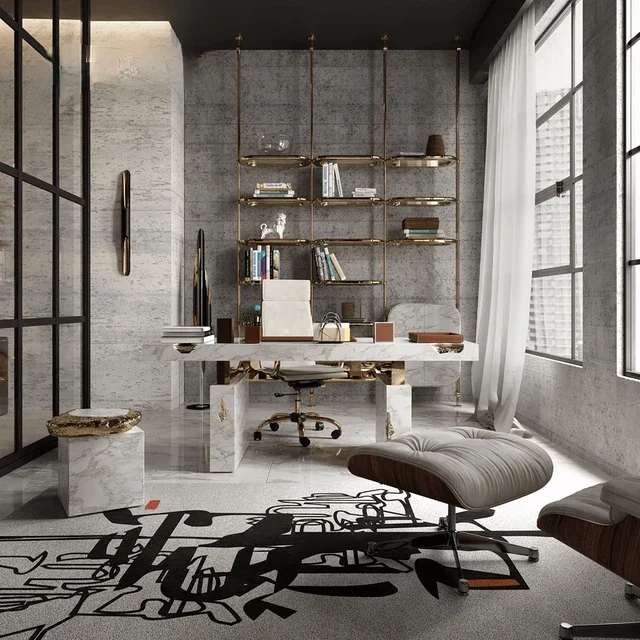
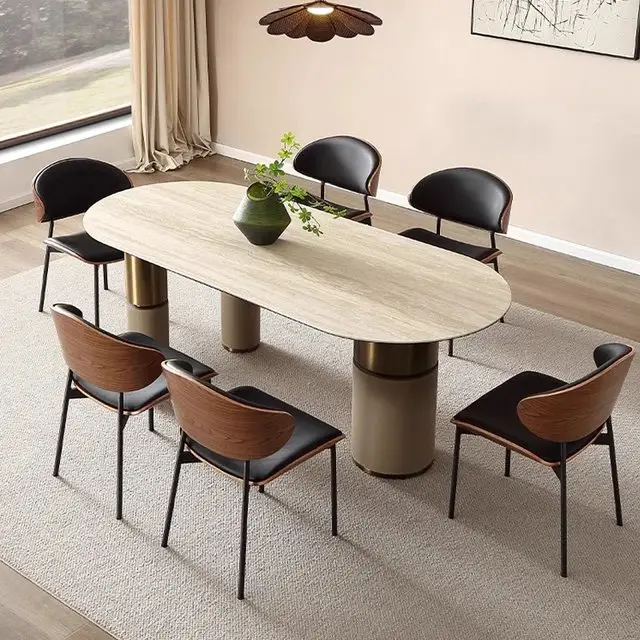











 Bedroom