
MAGAZINE
The Dream Dressing Room: Six Design Principles That Transform Luxury Wardrobes Into Personal Sanctuaries

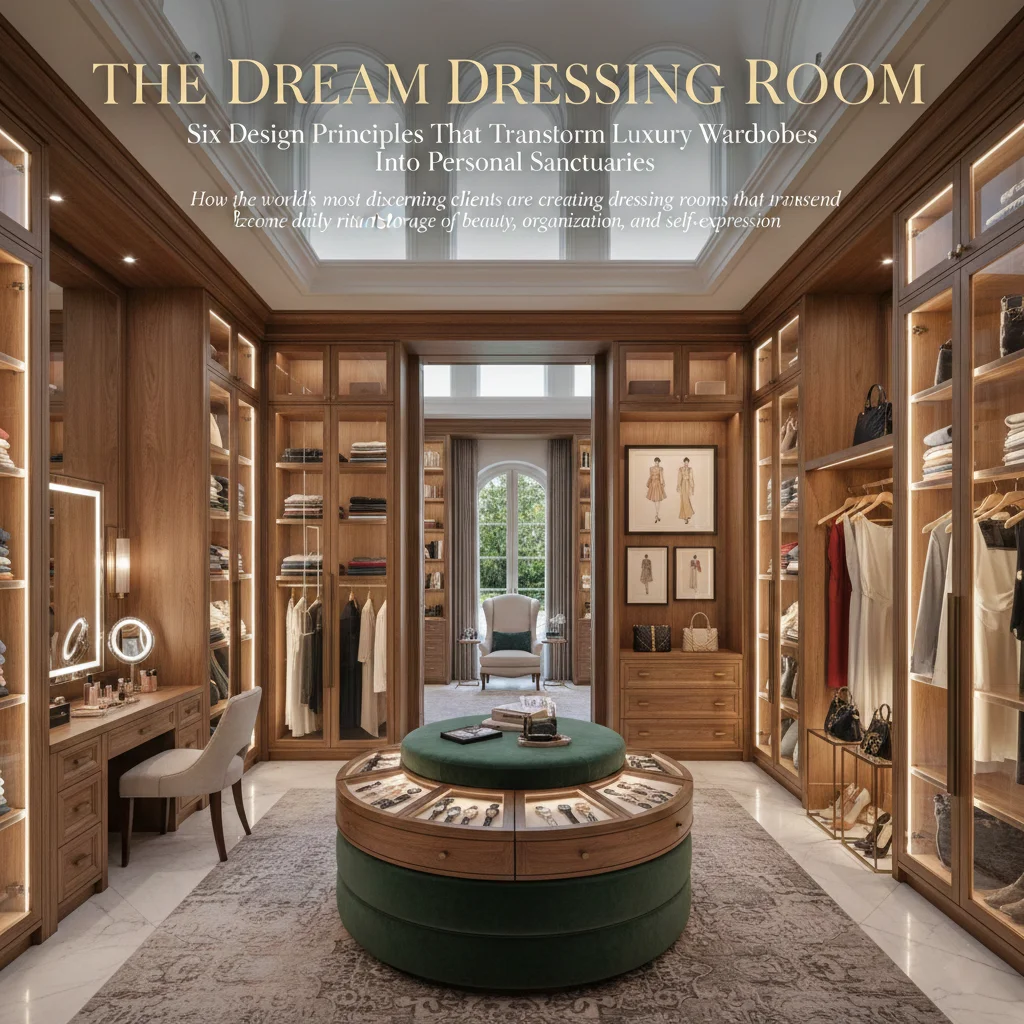
How the world’s most discerning clients are creating dressing rooms that transcend mere storage to become daily rituals of beauty, organization, and self-expression
Published: December 2025 | Reading Time: ~12 minutes | Category: Luxury Interior Design & Custom Furniture
She stood in what would become her dressing room—a generous 450 square feet corner space in her new Bangalore villa with windows overlooking mature trees. “I spend almost an hour here every morning,” she said, “choosing what to wear, applying makeup, preparing for the day. It needs to feel like a sanctuary, not a storage closet. It should be the most beautiful room in the house because it’s where I start and end every day.”
That conversation happened three years ago, and the dressing room we created for that client has since been photographed for design publications, featured on social media, and inspired similar projects from other clients who see the images and realize they want something equally special. But more importantly, the client recently told me it remains her favorite space in the entire villa—a place where she genuinely enjoys spending time, where the daily routine of dressing becomes a pleasure rather than a chore.
That project crystallized our understanding of what separates extraordinary dressing rooms from merely expensive ones. It’s not about square footage, though space certainly helps. It’s not about cost, though quality materials matter. It’s about understanding that for many people, particularly women who maintain extensive wardrobes and view personal presentation as important, the dressing room occupies psychological space in daily life far exceeding its physical footprint.
Over two decades of creating custom furniture for luxury residences across India and internationally, we’ve designed and built dozens of premium dressing rooms—from compact but brilliantly organized spaces in Dubai apartments to palatial walk-in wardrobes in Delhi farmhouses. Through this work, we’ve identified six fundamental principles that consistently appear in dressing rooms that succeed not just as storage but as spaces that genuinely enhance daily life.
Principle One: Organization as Invisible Architecture
The foundation of any exceptional dressing room is organizational brilliance so thorough that it becomes invisible. You shouldn’t notice the organization itself—you should simply notice that everything has a logical place, that items are easy to find and retrieve, that maintaining order feels effortless rather than burdensome.
This level of organization doesn’t happen accidentally. It requires understanding exactly what needs to be stored, in what quantities, with what access requirements. It demands systematic thinking about how different items are used and how frequently they’re needed.
We begin every dressing room project with extensive inventory. Clients document every category of item requiring storage—not just broad categories like “dresses” but specific subcategories: evening gowns, cocktail dresses, work dresses, casual dresses, summer dresses, winter dresses. We count shoes, bags, accessories, jewelry. We measure hanging lengths for different garment types. We understand which items are used daily versus seasonally.
This inventory reveals requirements that aren’t initially obvious. A client might say she has “a lot of shoes,” but the reality is 180 pairs requiring very specific storage—boots need different height than pumps, athletic shoes need ventilation, delicate evening shoes need protection. Designing storage that actually accommodates this reality rather than some idealized minimal version is what makes organization truly work.
For a Mumbai client with an extensive traditional Indian wardrobe, we discovered she owned 85 saris, 40 salwar kameez sets, 30 lehengas, plus substantial Western clothing. The saris alone required specialized storage—each needed to hang without crushing delicate fabrics, with enough space to prevent color transfer, with easy visibility for selection. We created a dedicated sari cabinet with individual padded hangers, adjustable spacing, and integrated lighting that illuminated each sari when the cabinet opened.
The organizational systems we create typically include:
Hanging storage in multiple heights: Full-length for gowns and coats (180cm clearance), standard length for dresses and shirts (120cm), shorter sections for jackets and folded pants (90cm). Adjustable rods allow reconfiguration as wardrobe composition changes.
Drawer systems with internal organization: Not just drawers, but drawers with dividers, compartments, and inserts that prevent items from becoming jumbled. Separate drawers for different accessory categories—scarves, belts, ties, jewelry—each with appropriate organization.
Specialized shoe storage: Angled shelves that display shoes while protecting them, with varying heights accommodating different heel heights. Ventilated sections for athletic shoes. Protected cubbies for delicate evening footwear.
Bag storage with structure preservation: Shelving that supports bags’ shapes, with appropriate spacing to prevent crushing. Dust bags for delicate pieces. Special accommodation for structured bags requiring upright storage.
Jewelry organization with security: Drawers with velvet-lined compartments, ring rolls, necklace hooks, watch cushions. Often with locking capability for valuable pieces. Integrated lighting for easy selection.
The key is that all this organization remains largely invisible. Closed cabinetry conceals the complexity, presenting serene façades. When you open a cabinet or drawer, everything is perfectly organized, but you’re not confronted with organizational apparatus—you see your beautifully arranged belongings.
Principle Two: Lighting as Transformation
The second principle separating exceptional dressing rooms from ordinary ones is lighting that’s been considered as carefully as in a photography studio. This isn’t hyperbole—the lighting requirements are genuinely similar. You need to see colors accurately, evaluate how garments and accessories look together, apply makeup with precision. This demands lighting quantity, quality, and positioning that typical residential lighting can’t provide.
We work with lighting designers on all significant dressing room projects, treating lighting as crucial as the furniture itself. The lighting strategy typically includes multiple layers:
Ambient lighting providing overall illumination: This base layer ensures the entire space is well-lit without harsh shadows. We typically use recessed LED fixtures with high color rendering index (CRI 95+) to ensure colors appear true. The light should be bright—300 to 500 lux—but diffused to avoid glare.
Task lighting for specific activities: Directed lighting at makeup areas, providing shadow-free illumination of your face. We often use fixtures flanking mirrors—like professional makeup mirrors—with daylight-balanced LED providing accurate color rendering. Jewelry drawers receive dedicated internal lighting that activates when opened.
Accent lighting highlighting key elements: This creates visual interest and drama. We might backlight glass-front cabinetry displaying bags or shoes, creating jewelry-box effect. LED strips integrated into hanging rods illuminate clothing from above. Under-cabinet lighting illuminates counter surfaces.
Natural light management: When dressing rooms have windows—always desirable but not always available—we control that light carefully. Sheer curtains diffuse harsh direct sun while maintaining brightness. Blackout treatments allow complete darkness when needed. We position sensitive items away from direct sun exposure to prevent fading.
The color temperature of lighting matters enormously. We typically use daylight-balanced lighting (5000K-5500K) in areas where color accuracy matters—makeup application, garment selection. This ensures colors appear as they will in natural daylight. In areas emphasizing ambiance over accuracy, we might use warmer lighting (2700K-3000K) creating cozy atmosphere.
For a Delhi client’s dressing room, we installed a sophisticated lighting system with multiple circuits allowing different scenes. “Morning routine” activated bright daylight-balanced lighting throughout for getting ready. “Evening selection” provided softer, more atmospheric lighting for choosing evening wear. “Showcase” lit only the display cabinetry, creating drama when entering through adjacent bedroom. The flexibility transformed how she used and experienced the space.
Control systems should be intuitive. We typically use combination of wall controls for general scenes and drawer/cabinet-activated lighting that turns on automatically when opened. Everything should be dimmable, allowing adjustment for time of day, task, and mood.
The investment in proper lighting pays dividends daily. Clients consistently report that one of their favorite improvements in moving from standard closets to properly designed dressing rooms is simply being able to see their belongings clearly, to evaluate how things look together, to spot stains or damage requiring attention.
Principle Three: Material Quality That Endures Daily Intensity
Dressing rooms receive extraordinarily intensive use—opened and closed multiple times daily, touched constantly, exposed to cosmetics and perfumes, bearing substantial weight. The furniture must withstand this intensity while maintaining beauty over decades. This demands material selection and construction quality far exceeding typical residential furniture.
We build dressing room furniture using techniques normally reserved for hospitality or institutional applications where durability is paramount. Drawer boxes use dovetail joinery—hand-cut joints that strengthen over time rather than weakening. Drawer slides are commercial-grade soft-close units rated for 100,000+ cycles. Cabinet doors use mortise and tenon joinery, the same construction technique used in furniture intended to last centuries.
The wood species matter enormously. We typically use teak or oak for dressing room cabinetry—species with inherent durability and stability. These woods can withstand the humidity variations from en-suite bathrooms, the exposure to cosmetics and perfumes, the constant handling. They also take finishes beautifully, developing patina over years that enhances rather than diminishes their appearance.
The finishes themselves receive special attention. We use conversion varnish or catalyzed lacquer—professional-grade finishes providing superior resistance to moisture, cosmetics, and wear. Multiple coats, carefully sanded between applications, create depth and durability. The result looks beautiful immediately but more importantly looks beautiful decades later.
Interior surfaces receive equal attention to exteriors. Drawer interiors are lined with velvet or felt providing gentle contact with delicate items. Cabinet interiors receive the same quality finishing as exteriors—no raw wood or cheap laminate hidden inside. Every surface you’ll touch or see gets the same level of refinement.
Hardware represents significant investment in dressing rooms. We use solid brass or stainless steel pulls and handles—materials that won’t tarnish or deteriorate. Hinges are commercial-grade soft-close units that will function smoothly through hundreds of thousands of cycles. Locks, when required, are precision mechanisms providing real security, not token hardware.
For a Gurgaon client’s dressing room, we created cabinetry in solid teak with hand-rubbed oil finish. Twenty years later, that dressing room remains beautiful—the teak has developed rich patina, the oil finish has deepened, the construction remains tight and solid. The client’s daughter, now married with her own home, used her mother’s dressing room as reference when commissioning her own, specifically requesting the same level of quality and durability.
This quality doesn’t come cheap. A well-built dressing room costs substantially more than builder-grade closets. But the value proposition is compelling: furniture that will last fifty or more years, that maintains beauty through intensive use, that can be refreshed and refinished rather than replaced. The lifetime cost is actually lower than cheaper alternatives requiring periodic replacement.
Principle Four: The Power of Display and Concealment
The fourth principle involves strategic balance between display and concealment—understanding what should be visible and what should be hidden, what items benefit from being showcased and what storage works best behind closed doors.
Many people assume luxury dressing rooms should display everything—glass-front cabinets, open shelving, constant visibility. This can work beautifully for highly edited, museum-quality wardrobes where every item is special enough to display. But for most real wardrobes—which include everyday basics, seasonal items, workout clothes, and occasional pieces—complete visibility creates visual chaos rather than serene luxury.
We typically advocate for majority closed storage with strategic open display of most beautiful items. This creates best of both worlds: serene, uncluttered appearance when cabinets are closed, but celebration of favorite pieces through thoughtful display.
Display opportunities we often incorporate:
Glass-front cabinets for special items: Handbags, shoes, or jewelry worthy of showcase. The glass provides protection from dust while allowing appreciation. Internal lighting transforms these cabinets into glowing displays.
Open shelving for everyday luxury: Designer handbags in frequent rotation, favorite shoes, accessories that are both beautiful and functional. The key is curation—only items genuinely worth displaying should occupy these spaces.
Dedicated display for special pieces: A single treasured handbag on a pedestal under focused lighting. A vintage evening gown framed and hung as art. A collection of watches displayed on dedicated stands. These focal points create visual interest and celebrate items with particular significance.
Jewelry display that functions as décor: Necklace trees, ring displays, watch winders—functional jewelry storage that’s beautiful enough to remain visible. We often create custom jewelry displays incorporating elements matching the overall design.
The concealed storage—the majority of the dressing room—should be just as carefully designed but prioritizes function over aesthetics. These are the deep drawers for bulky sweaters, the shoe cubbies for everyday footwear, the hanging sections for work clothes. Invisible when cabinets close, but supremely functional when in use.
For a Bangalore client with extensive jewelry collection, we created what essentially functioned as a jewelry showroom within her dressing room. Glass-topped island with drawers below provided storage for majority of pieces. But the island’s top surface displayed favorite items—watch winders for automatic watches, ring trees for statement rings, small pedestals for significant necklaces. Opening the island’s drawers revealed organized storage for hundreds of other pieces, but what remained visible was curated selection creating beauty while being functionally accessible.
The balance between display and concealment should reflect your actual habits. If you’re person who enjoys seeing your wardrobe, who finds inspiration in visible options, lean toward more display. If visual quiet helps you think clearly, prioritize concealment with selective display of only most special items.
Principle Five: The Dressing Room as Complete Room
The fifth principle recognizes that exceptional dressing rooms function as complete rooms deserving the same design attention as living rooms or bedrooms, not as utilitarian closets that happen to be large.
This means considering all elements that make a room feel finished and beautiful:
Architectural detailing: Crown molding, baseboards, door and drawer casings—the same refined details appearing elsewhere in the home. The dressing room shouldn’t feel like a stepchild with cheaper trim and details.
Flooring worthy of the space: We often recommend stone, wood, or high-quality tile rather than carpet. These materials handle heel traffic better, don’t trap odors from shoes, and create appropriate luxury atmosphere. Radiant heating makes stone comfortable underfoot.
Ceiling treatment: A beautiful ceiling—whether coffered, with decorative molding, or simply perfectly finished—elevates the entire space. Integrated lighting becomes architectural element rather than afterthought.
Seating for dressing: Comfortable seating—an ottoman, bench, or upholstered chair—makes the practical task of putting on shoes more pleasant. We typically create custom pieces that match the cabinetry, upholstered in performance fabrics that tolerate daily use.
Mirror placement: Full-length mirrors in multiple locations allow viewing outfits from different angles. We often include three-way mirrors similar to those in fine clothing boutiques. The mirrors should be lit appropriately for accurate assessment.
Counter surfaces for preparation: Dedicated surfaces for laying out accessories, packing luggage, or applying cosmetics. These might be integrated into the island or built into cabinetry, but they should be substantial surfaces of appropriate material.
For a Dubai client’s dressing room, we designed what functioned essentially as a private boutique. The space included all the functional storage but also seating area with sofa and coffee table where she could sit with her stylist reviewing options. A full-length mirror on a rotating stand allowed viewing from all angles. The island counter provided surface for laying out complete outfits. Fresh flowers on the island, artwork on walls, and area rug defining the seating area made the space feel like a luxurious room rather than a functional closet.
This approach transforms daily dressing from a chore into a ritual—a pleasant few minutes in a beautiful space rather than rummaging through cramped closet. Many clients report that they spend more time in their dressing rooms than initially expected, using them as private retreats where they can think, plan, and prepare without interruption.
Principle Six: Flexibility for Evolution
The final principle acknowledges that wardrobes evolve—styles change, body sizes fluctuate, lifestyles shift. A dressing room designed for today’s specific wardrobe but incapable of adapting to tomorrow’s will feel dated and dysfunctional within a few years.
We build flexibility into dressing rooms through:
Adjustable hanging rods: Rods that can be raised or lowered, moved laterally, or reconfigured entirely. This allows adjusting for changing garment lengths or redistributing hanging space as wardrobe composition evolves.
Modular drawer systems: Drawers with removable organizers and dividers that can be reconfigured. As accessory collections change, the organization can adapt without replacing entire drawer units.
Shelving with adjustable heights: Shelf standards allowing infinite vertical adjustment. This accommodates different shoe heel heights, varying bag sizes, or complete reorganization as needs change.
Convertible storage: Sections that can function as hanging, shelving, or drawer storage through simple reconfiguration. This is particularly valuable as seasonal needs shift or as major wardrobe changes occur.
Space for growth: Planning for fifteen to twenty percent more storage than current inventory requires. This buffer allows for acquisitions without requiring immediate reconfiguration.
The flexibility extends to technological integration. We often include infrastructure for future needs—electrical outlets, data connections, lighting controls—even if not immediately utilized. Adding these during initial construction costs little; retrofitting later is expensive and disruptive.
For a Bangalore client anticipating significant lifestyle changes—she was planning to start a business requiring professional wardrobe expansion—we designed her dressing room with unusual flexibility. Hanging sections used modular rod systems allowing complete reconfiguration. Drawer units were freestanding pieces that could be moved or restacked. The result was dressing room that started serving her current needs but could transform to accommodate professional wardrobe without major renovation.
This flexibility pays dividends over decades. Dressing rooms we created twenty years ago, designed with adaptability in mind, are still serving clients well despite their wardrobes having changed completely. The furniture is same, but configurations have evolved to accommodate different realities.
The Investment Perspective: What Exceptional Dressing Rooms Actually Cost
Clients often ask what they should budget for truly exceptional dressing room. The answer depends on size, complexity, and material quality, but general parameters exist.
For a modest but beautifully executed dressing room of 100-150 square feet with custom cabinetry in quality materials, budget ₹8-12 lakhs. This provides solid wood construction, quality hardware, good lighting, and thoughtful organization.
For a generous dressing room of 200-300 square feet with sophisticated features—island, extensive custom organization, premium materials, and integrated technology—budget ₹20-35 lakhs. This level provides truly exceptional quality and functionality.
For palatial dressing rooms exceeding 400 square feet with the finest materials, most sophisticated systems, and museum-quality execution, ₹50 lakhs to ₹1 crore becomes appropriate.
These figures often surprise clients accustomed to thinking of closets as relatively inexpensive compared to kitchens or bathrooms. But the reality is that well-designed dressing rooms require similar complexity and quality to fine kitchens—just applied to different functions.
The positive perspective? This investment creates value far exceeding its cost through daily utility, lifetime durability, and genuine enhancement of quality of life. A beautiful, functional dressing room is used multiple times every single day. Over years, it becomes one of the most valued spaces in the home.
For consultations on custom dressing room design and furniture:
Tamil Nadu Workshop
355/357, Bhavani Main Road, Sunnambu Odai, B.P.Agraharam, Erode, Tamil Nadu 638005, India
Ireland Office
16 Leopardstown Abbey, Carrikmines, Dublin 18 D18YW10, Ireland
Contact: +91-8826860000 | +91-8056755133 | care@crosby.co.in












 Bedroom