
MAGAZINE
Restaurant Interiors for 2026: How Design Shapes Success Beyond Food and Service

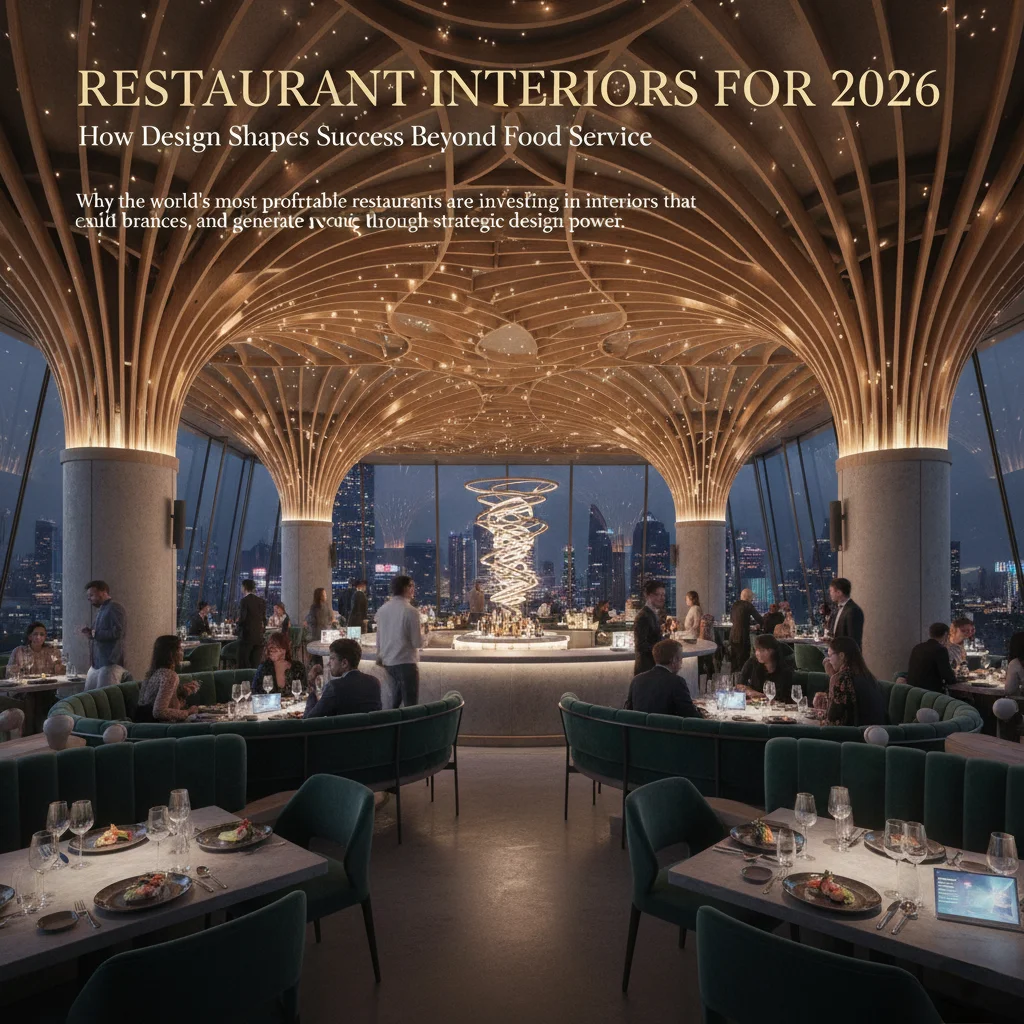
Why the world’s most profitable restaurants are investing in interiors that create experiences, build brands, and generate revenue through strategic design
Published: December 2025 | Reading Time: ~13 minutes | Category: Commercial Interior Design & Hospitality
The restaurant owner sat across from me in our Dubai office, visibly frustrated. His establishment in Jumeirah had exceptional food—he’d recruited a chef from a Michelin-starred London restaurant. The service was impeccable, trained to international hospitality standards. The location was prime, with high foot traffic and wealthy residents nearby. Yet after eighteen months, the restaurant was barely breaking even.
“I don’t understand,” he said. “We’ve invested in everything that matters—the best ingredients, skilled kitchen staff, experienced servers. But we’re not getting the customers we expected, and the ones who do come often don’t return.”
I’d visited his restaurant the previous week, and the problem was immediately apparent. Despite excellent food and service, the space itself was utterly forgettable—generic contemporary restaurant design that could have been anywhere in the world. Uncomfortable seating that discouraged lingering. Harsh lighting that made everyone look tired. Acoustics so poor that conversation required shouting. Materials and finishes that felt cheap despite not being inexpensive.
The interior was killing his business despite excellence in every other dimension.
This scenario plays out repeatedly across global restaurant markets. Operators invest enormous capital in kitchens, ingredients, and culinary talent while treating interior design as afterthought—something to be executed as cheaply as possible within remaining budget constraints. Then they wonder why exceptional food doesn’t translate into business success.
The reality that sophisticated restaurateurs are discovering is that in 2026, interior design isn’t supplementary to restaurant success—it’s fundamental. The space itself is product being sold, experience being offered, brand being built. Getting the interiors wrong dooms even restaurants with exceptional food and service.
Let me share what we’ve learned about restaurant interior design through creating custom furniture and consulting on design for hospitality projects across India, the Middle East, and beyond. These aren’t generic design principles—they’re strategic insights that directly impact revenue, profitability, and long-term viability.
The Economics of Design: How Interiors Drive Revenue
Before exploring design strategies, let’s establish why interior design matters economically. Restaurant operators often view design as cost center—money spent on something that doesn’t directly generate revenue. This fundamentally misunderstands how design creates value.
Great restaurant interiors drive revenue through multiple measurable mechanisms:
Table turn optimization: Well-designed restaurants can influence how long guests linger through furniture design, lighting, acoustics, and atmosphere. A breakfast café wants fast turnover—seating that’s comfortable for forty-five minutes but encourages departure before an hour. A fine dining establishment wants guests to linger—seating so comfortable that three-hour meals feel pleasant. The furniture and spatial design directly affect table turns, which directly affect revenue capacity.
We created seating for a quick-service concept in Mumbai where the design brief explicitly included “comfortable for twenty to thirty minutes, less comfortable beyond that.” The chairs featured ergonomic support for short-duration sitting but lacked the deep cushioning and back support that enables hour-plus comfort. Combined with appropriate lighting and acoustics, the design achieved target table turns of 2.5 during lunch rush—thirty percent better than comparable restaurants.
Premium pricing support: Restaurants with exceptional interiors command premium pricing independent of food quality. Diners demonstrably pay more for the same meal in a beautiful space than in a merely adequate one. Research consistently shows price tolerance increases fifteen to thirty percent in spaces perceived as luxurious or special compared to ordinary environments.
This premium pricing often exceeds interior investment costs within months. A restaurant spending ₹2 crores on exceptional interiors that enable ten percent menu price premium generates that investment back through higher revenue within the first year of operation, then continues generating premium indefinitely.
Social media multiplication: Instagram-worthy interiors generate free marketing impossible to achieve any other way. A restaurant with distinctive, photogenic design gets shared thousands of times by guests posting photos. Each share represents free advertising reaching audiences already interested in dining and lifestyle.
We designed furniture for a Bangalore restaurant where the centerpiece was a dramatic fourteen-foot communal table in Indian rosewood with sculptural brass base. That table appears in hundreds of Instagram posts monthly, each generating awareness and driving new customers. The table cost ₹18 lakhs—expensive for a single furniture piece but generating marketing value far exceeding its cost.
Loyalty and repeat business: Memorable interiors create emotional connections that drive repeat visits independent of food quality. Guests return to restaurants where they’ve had positive experiences, and the environment contributes enormously to experience quality. Comfortable seating, flattering lighting, pleasant acoustics, beautiful materials—these create satisfaction that translates into loyalty.
Data from restaurants we’ve worked with shows that establishments with exceptional interiors achieve thirty to forty percent higher repeat visit rates than comparable restaurants with adequate but unremarkable design. Over a restaurant’s lifetime, this loyalty difference translates into millions in incremental revenue.
Trend One: Biophilic Design and Natural Connection
The most significant design trend shaping restaurant interiors for 2026 is biophilic design—creating spaces that connect diners with nature through materials, forms, light, and living elements.
This isn’t merely aesthetic preference. Research consistently shows that natural elements in interior environments reduce stress, improve mood, and enhance perception of time spent in spaces. Restaurants incorporating biophilic elements see measurable improvements in guest satisfaction and spending.
The trend manifests in multiple ways:
Abundant natural materials: Moving away from synthetic finishes toward wood, stone, leather, linen, and other materials with organic origins. We’re seeing increased demand for furniture in solid wood with visible grain patterns, stone table tops showing natural veining, upholstery in natural fiber fabrics.
For a Dubai restaurant, we created dining tables using reclaimed teak with weathered surfaces preserving decades of patina. The tables’ organic character contrasts beautifully with the sleek contemporary architecture, creating warmth and connection to nature that guests consistently comment on.
Living elements integration: Not just decorative plants but integrated living walls, herb gardens, interior trees creating canopy effects. These need to be designed as architectural elements from project inception, with appropriate lighting, irrigation, and maintenance access.
A Mumbai restaurant we consulted on features a living wall spanning thirty feet, incorporating herbs the kitchen uses in dishes. Servers harvest herbs tableside for certain preparations, creating theater while emphasizing freshness and natural connection.
Natural light maximization: Designs that bring daylight deep into interiors through skylights, clerestory windows, interior glazing. Artificial lighting systems that mimic natural light’s color temperature progression through the day.
Organic forms and patterns: Furniture and architectural details incorporating curved lines, natural proportions, patterns derived from nature rather than rigid geometry. This creates subconscious resonance with natural environments.
The challenge is executing biophilic design authentically rather than superficially. Simply adding some plants to otherwise conventional interiors doesn’t create genuine natural connection. The commitment must be comprehensive, affecting material selections, spatial configurations, lighting strategies, and overall design philosophy.
Trend Two: Flexible Spaces and Multi-Functional Design
Post-pandemic, restaurant operators increasingly demand spaces that can serve multiple functions and adapt to different needs throughout the day and week.
A space might function as breakfast café in morning, professional lunch venue midday, cocktail bar in evening, and weekend brunch destination. Each use requires different furniture configurations, lighting scenes, and atmospheric qualities. Designing for this flexibility demands sophisticated thinking.
We’re creating furniture systems specifically for this flexibility:
Modular seating: Pieces that can be easily reconfigured for different group sizes and uses. A banquette system we designed for a Bangalore restaurant can be arranged in linear configuration for intimate two-tops, L-shaped for groups of four to six, or U-shaped for parties of eight to ten. The reconfiguration takes minutes without tools.
Multi-height tables: Tables that function for both dining and standing cocktail use, or that can be adjusted for different service styles. We’ve developed systems where table heights can be modified through mechanical or hydraulic mechanisms, allowing single space to transform from seated restaurant to standing reception venue.
Mobile elements: Furniture designed with integrated casters or lightweight construction allowing staff to reconfigure spaces quickly. Divider screens, planters, and decorative elements that can create distinct zones or be removed for open flow.
Transformable infrastructure: Lighting systems with programmable scenes creating different moods. Sound systems with zoning capability. Even climate control with area-specific temperature and air flow.
This flexibility provides economic advantage by maximizing space utilization. A restaurant that can transform from business lunch venue to evening date destination to weekend family brunch location generates more revenue per square foot than one designed for single use.
Trend Three: Craft and Artisanal Expression
In reaction to years of minimalist, industrial-influenced restaurant design, 2026 is seeing resurgence of craft, handwork, and artisanal materials creating warmth and character.
This doesn’t mean traditional or rustic design—it means contemporary spaces incorporating elements showing clear evidence of human making. Hand-carved details, textiles with visible weave structures, ceramics with intentional irregularity, furniture with joinery executed to display craftsmanship rather than hide it.
We’re increasingly creating restaurant furniture that celebrates craft:
Visible joinery: Rather than concealing joints, we’re designing furniture where traditional joinery—mortise and tenon, dovetails, finger joints—becomes decorative feature. This showcases quality construction while creating visual interest.
Hand-finished surfaces: Moving away from perfect machine-sanded finishes toward hand-planed or hand-scraped surfaces showing subtle texture and tool marks. This creates tactile quality and visual warmth impossible with industrial finishing.
Custom metalwork: Collaborating with metal artisans to create one-off bases, brackets, and hardware with forged or cast character rather than using standardized industrial components.
Bespoke textiles: Working with textile artists to create custom fabrics for upholstery and window treatments, incorporating traditional weaving or printing techniques creating unique patterns and textures.
The trend connects to broader cultural interest in authenticity, in things made by identified makers using traditional skills. Restaurants incorporating genuine craft create distinctive identities that cookie-cutter chain design can’t replicate.
A Delhi restaurant we furnished features custom dining chairs with hand-carved details by master woodcarvers from Tamil Nadu. Each chair bears subtle variations showing individual handwork. Guests notice and appreciate this authenticity, and the story of the chairs’ creation becomes part of the restaurant’s brand narrative.
Trend Four: Sustainable and Conscious Design
Sustainability has moved from niche concern to mainstream expectation in restaurant design. Operators recognize that increasingly, particularly among younger affluent demographics, environmental responsibility affects dining choices.
But sustainability in restaurant interiors extends beyond obvious green features. It encompasses:
Material provenance and impact: Using materials with verified sustainable sourcing, low environmental impact in production, and long service lives requiring less frequent replacement. We prioritize reclaimed wood, FSC-certified timber, recycled metals, natural fiber textiles in restaurant projects.
Durability and longevity: Designing furniture and finishes to withstand intensive commercial use for decades rather than years. This reduces waste and resource consumption while lowering lifetime operating costs.
We build restaurant furniture to hospitality-grade standards—commercial drawer slides rated for hundreds of thousands of cycles, upholstery fabrics with 100,000+ double rub ratings, finishes that resist moisture and impact. This furniture costs more initially but lasts far longer than standard commercial furniture requiring replacement every five to seven years.
Local and regional production: Reducing transportation carbon footprint by sourcing furniture and materials regionally. Our Tamil Nadu workshop serves Indian and Middle Eastern markets efficiently, with shorter supply chains than European manufacturers.
Circular design thinking: Creating furniture that can be repaired, reupholstered, refinished rather than discarded when worn. Using construction techniques that allow disassembly for eventual material recovery and recycling.
Transparency and storytelling: Documenting sustainability practices and sharing this information with guests. Restaurants are literally telling the stories of their furniture, materials, and design choices through menu notes, wall displays, and staff narratives.
The business case for sustainable design has become compelling. Environmentally conscious restaurants attract desirable demographics, generate positive press coverage, and build brand equity worth far more than incremental sustainability costs.
Trend Five: Acoustic Design as Priority
Perhaps the most overlooked aspect of restaurant design—and one becoming increasingly critical—is acoustic control. Poor acoustics destroy dining experiences regardless of how beautiful spaces look or how delicious food tastes.
Excessive noise makes conversation difficult, creates stress, and shortens visit duration. Research shows that restaurants with noise levels above 75 decibels see significantly reduced guest satisfaction and spending compared to quieter environments.
Yet many contemporary restaurant designs create acoustic nightmares—hard surfaces everywhere, high ceilings, open kitchens, minimal sound absorption. Spaces look beautiful in photographs but are miserable to actually occupy.
Addressing acoustics requires integrated approach:
Material selection for absorption: Incorporating soft materials that absorb sound—upholstered seating, fabric panels, carpeting or rugs, acoustic ceiling treatments. Even small amounts of sound-absorbing material strategically placed can dramatically improve acoustic comfort.
Strategic placement of hard and soft: Using hard reflective surfaces where visual impact matters but incorporating sound absorption where it’s needed most—ceiling areas above seating, walls facing seating areas, vertical surfaces in high-traffic zones.
Furniture as acoustic element: Designing furniture with acoustic performance in mind. Upholstered banquettes and booths provide significant sound absorption. High-back seating creates partial acoustic separation between tables.
We’re increasingly specifying acoustic performance requirements in restaurant furniture. Upholstery selections consider sound absorption coefficients alongside aesthetic and durability factors. Booth designs optimize the partial enclosure that creates acoustic privacy.
Mechanical systems control: Ensuring HVAC systems don’t introduce obtrusive noise. This often requires coordination with mechanical engineers during design phase rather than attempting fixes after installation.
The acoustic improvement from these measures isn’t subtle—well-designed restaurants typically achieve noise levels fifteen to twenty-five decibels lower than poorly designed spaces. This translates into dramatically better guest experiences.
Trend Six: Cultural Authenticity and Local Connection
Global homogenization of restaurant design—where restaurants in Dubai look identical to those in London or New York—is giving way to appreciation for cultural specificity and local connection.
Sophisticated restaurateurs recognize that generic international style lacks the distinctive identity that builds memorable brands. They’re increasingly incorporating local materials, traditional craft techniques, regional design vocabularies, and cultural narratives into contemporary restaurant interiors.
This isn’t about creating theme-park authenticity or literal historical reproduction. It’s about contemporary design that’s clearly rooted in specific cultural and geographic context.
Our work exemplifies this approach. When creating furniture for restaurants in India, we incorporate traditional Indian joinery techniques, use locally significant wood species, collaborate with regional craft artisans, reference historical design forms in contemporary interpretations.
For a restaurant in Jaipur, we created furniture incorporating traditional Rajasthani carved details executed in contemporary geometric patterns. The pieces read as modern and sophisticated while being unmistakably rooted in Rajasthani craft traditions. Guests recognize and appreciate this cultural authenticity.
For restaurants serving regional cuisines, this cultural grounding becomes essential to brand identity. A restaurant offering Kerala cuisine should feel distinctly from Kerala—not through literal reproduction of traditional architecture but through thoughtful incorporation of Kerala materials, craft techniques, and design sensibilities.
The trend also manifests in material sourcing. Rather than defaulting to imported materials, restaurants are using local stone, regional timbers, textiles from local weavers, ceramics from area artisans. This creates distinctive character while supporting local economies and reducing environmental impact.
Implementation Strategy: Making Design Actually Work
Understanding design trends is one thing. Successfully implementing them in real restaurant projects is another. Based on extensive hospitality work, here’s practical guidance for making design actually succeed:
Start design during concept development: Don’t treat interior design as final finishing step. Engage design professionals during initial concept development, ensuring spatial planning, infrastructure, and architecture support intended interior design direction.
Budget appropriately: Restaurant interiors require significant investment—typically fifteen to twenty-five percent of total project budget for premium establishments. Under-budgeting forces compromises that undermine entire concept.
Prioritize guest-facing elements: When budget constraints require prioritization, invest in elements guests directly experience—seating comfort, table quality, lighting in dining areas. Back-of-house and support spaces can be more utilitarian.
Plan for maintenance and replacement: Even the best restaurant furniture wears with intensive commercial use. Budget for refinishing, reupholstery, and eventual replacement. Design furniture for repairability rather than disposability.
Test before finalizing: Use mockups and samples to evaluate furniture comfort, lighting effects, material performance before committing to full orders. What looks perfect in showroom might not work in actual restaurant context.
Document everything: Maintain detailed records of furniture specifications, material sources, finish formulations. This enables accurate replacement and repair years later.
Build flexibility for evolution: Restaurants need to refresh and evolve. Design with this in mind—finishes that can be updated, furniture that can be reconfigured, infrastructure supporting future modifications.
The Investment Perspective
Restaurant operators often ask what they should budget for exceptional interiors. While every project is unique, some general parameters exist:
For quick-service concepts, budget ₹8,000 to ₹15,000 per square foot for complete interior build-out including furniture, finishes, lighting, and equipment.
For casual dining, ₹15,000 to ₹30,000 per square foot represents appropriate investment for quality results.
For fine dining and ultra-premium concepts, ₹30,000 to ₹60,000 per square foot or more may be warranted to achieve requisite luxury and distinction.
These figures often shock operators accustomed to minimal interior investment. But the return on design investment, properly executed, far exceeds cost through premium pricing, increased traffic, higher guest satisfaction, and enhanced brand value.
The restaurants succeeding in increasingly competitive markets are those treating interior design not as expense but as strategic investment in experience creation, brand building, and revenue generation.
In 2026 and beyond, exceptional food and service remain necessary for restaurant success. But they’re no longer sufficient. The space itself must be designed with same rigor, same investment, same commitment to excellence as the culinary program.
This is where restaurant design has evolved. And this is where it’s heading.
For consultations on restaurant furniture and hospitality interior design:
Tamil Nadu Workshop
355/357, Bhavani Main Road, Sunnambu Odai, B.P.Agraharam, Erode, Tamil Nadu 638005, India
Ireland Office
16 Leopardstown Abbey, Carrikmines, Dublin 18 D18YW10, Ireland
Contact: +91-8826860000 | +91-8056755133 | care@crosby.co.in












 Bedroom