
MAGAZINE
Where Billionaires Live: Key Architectural Trends Shaping Ultra-Luxury Real Estate

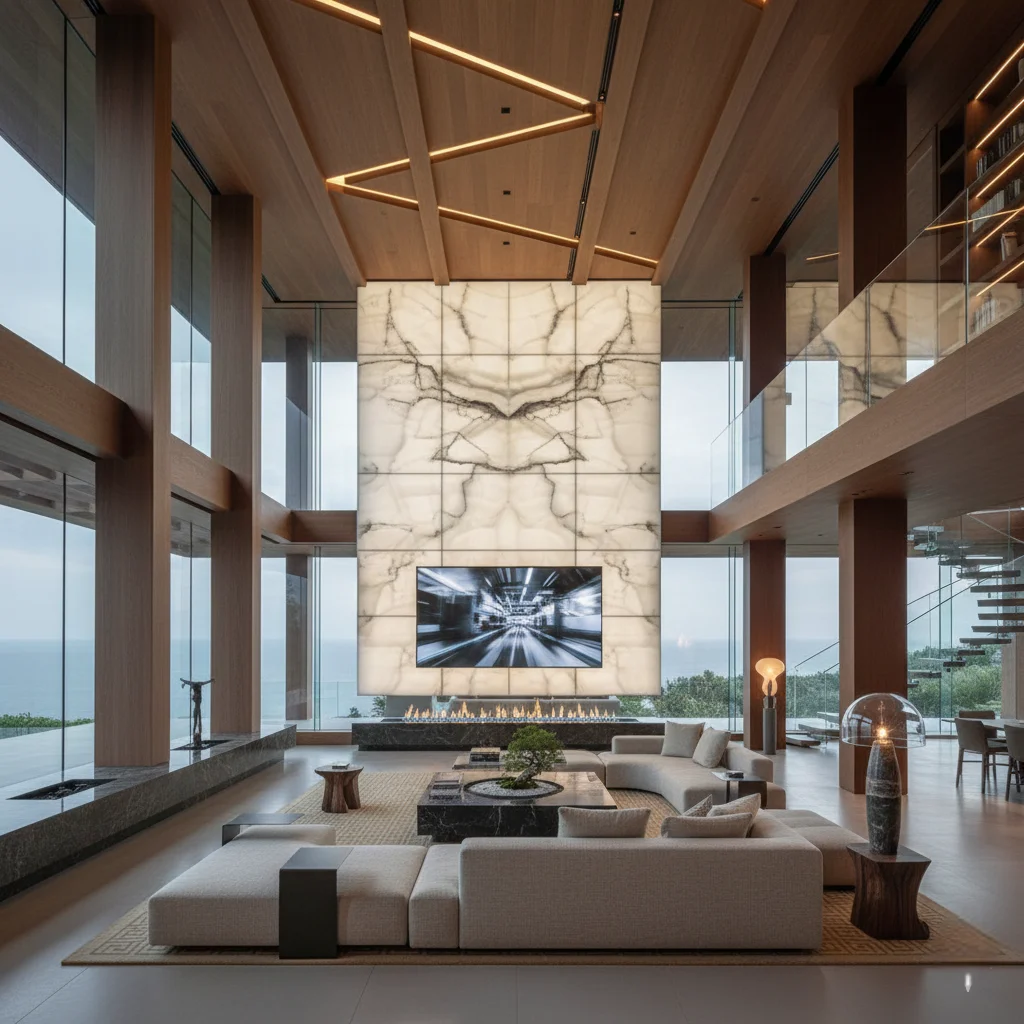
How the world’s wealthiest individuals are redefining residential architecture through privacy, sustainability, wellness, and technology—creating homes that transcend traditional luxury
Published: December 2025 | Reading Time: ~14 minutes | Category: Ultra-Luxury Real Estate & Architectural Trends
The property wasn’t listed publicly. No real estate websites, no marketing materials, no photographs beyond what the selling family shared privately with a select list of qualified buyers. Located in one of Bangalore’s most exclusive enclaves, the 45,000 square foot residence had never been photographed for publications despite being architecturally significant and furnished with museum-quality pieces, including several we’d created for the original owners.
The buyer—a technology entrepreneur whose company had recently achieved unicorn status—paid ₹280 crores for the property. Then spent another ₹120 crores completely reconstructing it to his specifications, keeping only the land and perimeter walls from the original estate.
This transaction exemplifies how ultra-high-net-worth real estate operates at the absolute pinnacle. Properties trade privately, often for prices that would shock even luxury real estate professionals. And increasingly, buyers aren’t seeking to preserve what exists—they’re commissioning entirely new architecture reflecting radically different values and priorities than previous luxury generations.
Through two decades creating custom furniture for India’s wealthiest families, serving clients across the Middle East, and consulting on ultra-luxury residential projects globally, we’ve observed the architectural evolution happening at wealth’s highest levels. These aren’t trends in the conventional sense—they’re fundamental reimagining of what residential architecture should achieve, driven by clients whose resources make essentially any vision achievable.
What follows are the seven architectural movements defining where and how billionaires are choosing to live, each representing profound shifts in luxury real estate that will eventually influence broader markets.
Trend One: The Disappearing House—Architecture as Invisibility
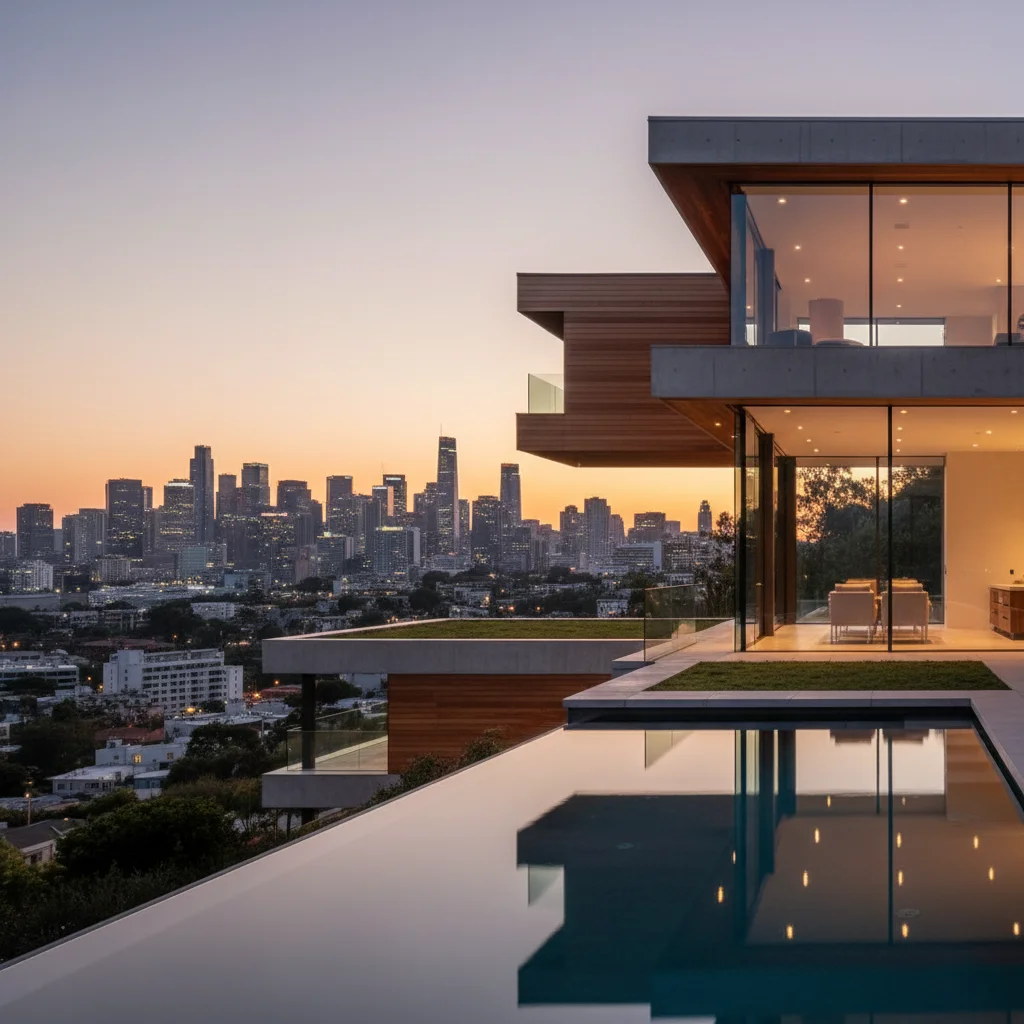
The most striking trend in billionaire residential architecture is the pursuit of invisibility—homes designed to blend into landscapes rather than dominate them, to disappear rather than announce themselves, to provide privacy through discretion rather than walls and gates.
This represents complete reversal of previous luxury architectural patterns, where prominence and visibility signaled status. The classic billionaire aesthetic was the hilltop mansion visible for miles, the urban penthouse occupying the building’s most visible position, the beachfront villa making maximum architectural statement.
Today’s ultra-wealthy increasingly want the opposite—architecture that’s difficult to see from public vantage points, that integrates into natural or urban context rather than contrasting with it, that provides privacy through camouflage rather than fortress-like separation.
We’re seeing this manifest in several ways:
Underground and earth-integrated architecture: Homes partially or fully embedded into hillsides, with living spaces extending below grade. A client’s Delhi farmhouse we furnished recently places sixty percent of its 15,000 square feet underground, with grass-covered roof making the structure nearly invisible from aerial view. The underground spaces, far from feeling claustrophobic, feature courtyards bringing natural light and connection to sky while maintaining privacy.
Single-story sprawl over vertical prominence: Rather than building tall to maximize views and visibility, new billionaire homes often spread horizontally, minimizing profile against skyline. A recent project in Gurgaon spans 35,000 square feet but never rises more than single story above natural grade, creating vast floor area while remaining relatively invisible from distance.
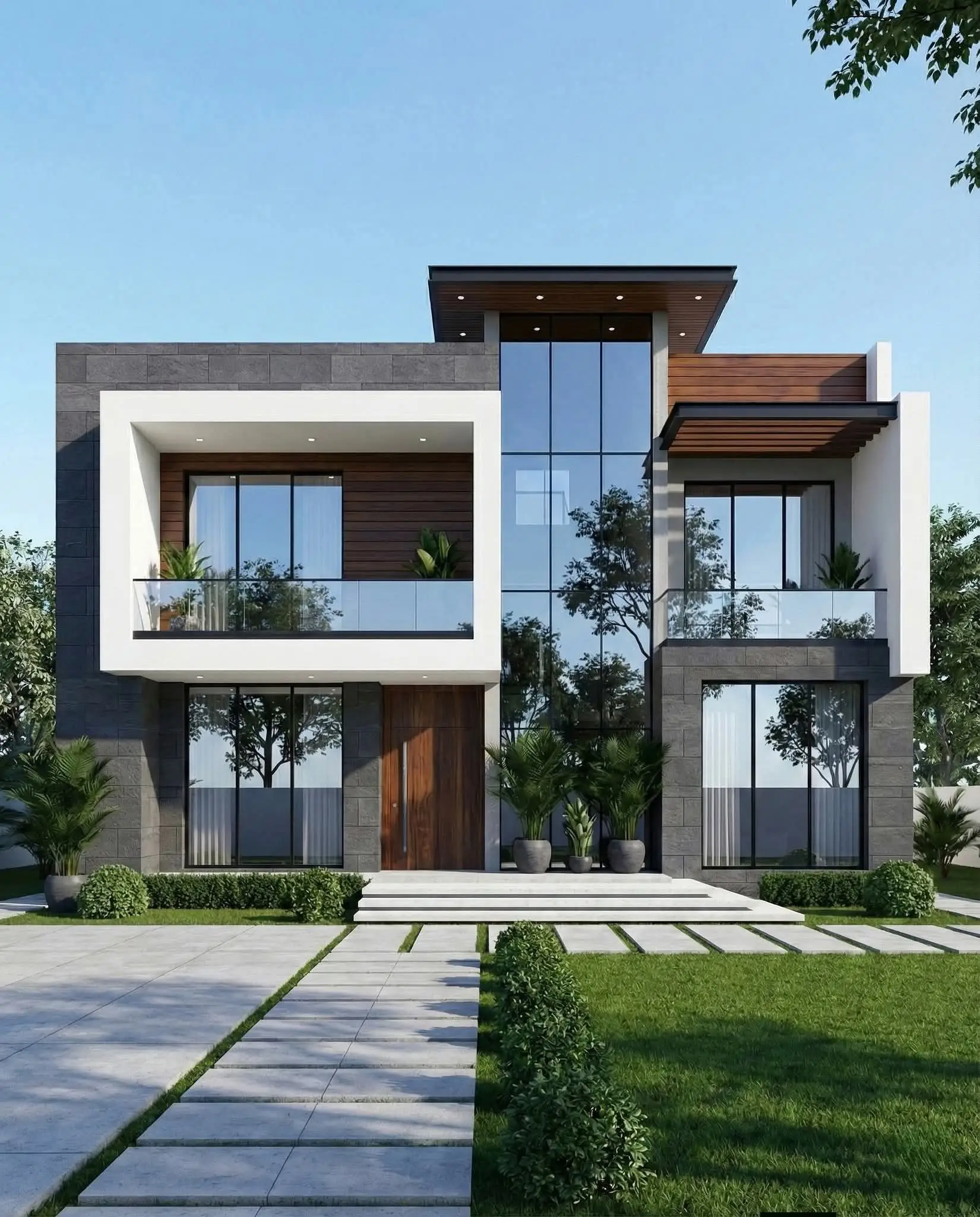
Material and color matching to context: Using materials and colors that blend with surroundings rather than contrast. Stone matching local geology, colors derived from natural landscape, glass that reflects environment rather than announcing presence. The goal is architecture that feels like it emerged from the site rather than being imposed upon it.
Landscape screening and buffer zones: Creating extensive landscape buffers—sometimes hundreds of meters—between public roads and actual residences, with strategic tree planting creating natural screening. Some properties are genuinely impossible to see from any public vantage point.
This invisibility trend connects to security concerns—ultra-wealthy individuals face genuine risks from visibility. But it’s also philosophical shift. Clients increasingly feel that true luxury is privacy and tranquility rather than prominence and display. The confidence to be invisible rather than visible.
The furniture we create for these homes reflects similar values—beautiful and extraordinarily well-made, but not ostentatious or immediately identifiable as expensive. The luxury reveals itself gradually to those who know what to look for rather than announcing itself to casual observers.
Trend Two: Wellness Architecture—Homes as Healing Environments
The second major trend is architecture designed explicitly to promote physical and mental wellness, going far beyond adding a gym or spa to instead fundamentally organizing spaces around health and wellbeing.
This wellness-first approach affects every architectural decision:
Air quality as primary concern: Homes incorporating hospital-grade air filtration, positive pressure systems preventing pollutant infiltration, materials selected for low or zero off-gassing. A Mumbai client’s residence we furnished includes air quality monitoring throughout, with systems automatically adjusting ventilation when pollution levels rise.
Natural light maximization and control: Architecture designed to bring daylight deep into living spaces while preventing unwanted heat gain or glare. Sophisticated glazing systems, light wells, courtyards, and reflective surfaces distributing natural light throughout interiors. Automated shading responding to sun position maintaining ideal natural light levels.
Circadian rhythm support: Lighting systems programmed to shift color temperature throughout the day, supporting natural circadian rhythms. Cool, energizing light in morning, neutral light midday, warm, calming light in evening. Some homes incorporate dawn simulation in bedrooms, gradually increasing light to support natural waking.
Biophilic design integration: Not just adding plants but structurally incorporating nature into architecture. Living walls forming interior surfaces, internal courtyards with mature trees, water features creating humidity and ambient sound, natural materials throughout. A Bangalore villa we worked on features a central courtyard with a fifty-year-old rain tree, with all primary rooms opening onto this green heart.
Movement encouragement: Architecture subtly encouraging physical activity through spatial planning. Stairs designed to be more appealing than elevators through beautiful materials, lighting, and views. Outdoor spaces directly connected to indoor areas encouraging regular outdoor time. Home gyms, pools, and sports facilities integrated rather than separated.
Meditation and contemplation spaces: Dedicated quiet rooms designed for meditation, yoga, or simple contemplation. These aren’t afterthoughts but primary spaces, often positioned in privileged locations with best views or most serene orientations.
The wellness focus extends to furniture selection. We’re increasingly creating pieces with ergonomic optimization—dining chairs designed for ideal posture, sofas supporting healthy sitting, desks at perfect heights. Materials are selected for sustainability and health—natural fibers, low-VOC finishes, woods with natural antimicrobial properties.
A technology entrepreneur client in Bangalore explained: “I can work from anywhere in the world. The single greatest determinant of my productivity and happiness is my physical and mental state. My home should be optimized for my health above all else.” His residence features air quality superior to most hospitals, natural light in every room, and furniture we created specifically for his body dimensions and ergonomic needs.
Trend Three: Radical Sustainability—When Luxury Demands Environmental Responsibility
The third trend is comprehensive sustainability commitment extending far beyond typical green building features to encompass entire property development and operation.
This isn’t performative sustainability or greenwashing. It’s genuine commitment driven by personal values and long-term thinking about environmental impact and resource consumption.
Net-zero or net-positive energy: Homes generating as much or more energy than they consume through extensive solar installations, geothermal systems, and extreme energy efficiency. Battery storage allowing complete grid independence. Some properties actually generate surplus energy contributed to local grids.
Water self-sufficiency: Rainwater harvesting, greywater recycling, blackwater treatment, and landscaping designed for minimal water consumption creating water-independent properties. A Delhi client’s farmhouse hasn’t used municipal water in three years, relying entirely on harvested rain and recycled water.
Material sustainability verification: Every material entering the property having verified sustainable sourcing, documented supply chain, third-party certification. We’ve had clients reject beautiful stones because quarrying practices, though legal, didn’t meet their environmental standards.
Waste elimination: Properties designed to generate minimal waste through composting organic matter, recycling all recyclables, and reducing consumption. Some homes have essentially eliminated waste stream entirely through careful planning.
Ecosystem enhancement: Going beyond not harming environment to actually improving it. Creating wildlife corridors, planting native species, supporting pollinators, improving soil health. Properties becoming net positives for biodiversity rather than net negatives.
Carbon accounting and offsetting: Comprehensive accounting of carbon footprint including construction, operation, and even resident travel, with extensive offsetting programs. A Bangalore client calculated complete carbon impact of his residence and commissioned massive reforestation project offsetting not just the home but his family’s entire lifestyle.
This sustainability extends to furniture and interiors. We’re sourcing exclusively sustainable materials—FSC-certified wood, reclaimed timber, natural fibers, non-toxic finishes. We document complete supply chains and carbon footprints. We design for multi-generational durability, ensuring furniture never becomes waste.
The economic model is interesting: these ultra-sustainable homes cost substantially more initially—often twenty-five to forty percent premiums over conventional luxury construction. But ultra-wealthy clients think in multi-generational timeframes. They’re creating properties intended to serve families for centuries, and the sustainability premium becomes trivial across that timeline.
More fundamentally, these clients see environmental responsibility as moral obligation that comes with extreme wealth. They have resources to build sustainably and feel duty to do so regardless of cost.
Trend Four: Technology Integration—The Intelligent Home
The fourth trend is comprehensive technology integration creating homes that respond intelligently to occupants’ needs while remaining visually simple and humanly controlled.
This goes far beyond smart home systems controlling lighting and temperature. It’s creating environments that understand occupants’ preferences, anticipate needs, and optimize themselves continuously while remaining invisible and unobtrusive.
Predictive environmental control: Systems that learn occupants’ preferences and adjust proactively rather than waiting for manual control. If you typically arrive home at 6:30 PM, the house begins preparing at 6:15—adjusting temperature, opening shades, starting music. If you usually prefer brighter light when working, spaces automatically brighten when you enter with your laptop.
Integrated security without visible apparatus: Comprehensive security through systems that are largely invisible—facial recognition, acoustic sensors, perimeter detection, but without visible cameras, access panels, or control stations. Security that provides protection without creating fortress atmosphere.
Seamless technology integration in furniture: We’re creating pieces incorporating charging capability, climate control, automated mechanisms, all completely invisible when not in use. A credenza might include motorized drawers opening at light touch, integrated lighting that activates when doors open, hidden compartments accessed through biometric readers—all without visible technology.
Health monitoring infrastructure: Sensors throughout the home monitoring air quality, water quality, electromagnetic fields, noise levels, and even occupants’ physiological data with consent. The home becomes health monitoring device, alerting to potential issues before they affect wellbeing.
Complete redundancy and reliability: Multiple backup systems ensuring technology never fails catastrophically. If primary internet fails, backup activates instantly. If primary power fails, battery systems maintain full functionality. Critical systems have tertiary backups. The technology is absolutely reliable even during infrastructure failures.
Human override supremacy: Despite comprehensive automation, humans always retain simple manual control. Light switches still work if the automation fails. Doors can be opened manually if electronic locks fail. The technology augments rather than replaces human control.
A crucial principle we’ve observed: the most successful technology integration is invisible and optional. Residents benefit from intelligent systems but never feel controlled by technology. They can interact with their homes as simply or as complexly as they prefer at any moment.
Trend Five: The Return to Craftsmanship—Bespoke Everything
The fifth trend is wholesale commitment to bespoke, artisanal creation throughout the property, rejecting mass production in favor of custom creation by identified makers.
In these properties, essentially nothing comes from standard catalogs. Everything is custom—not just furniture and fixtures, but architectural millwork, hardware, stonework, metalwork, even mundane functional elements.
Architectural elements as craft: Staircases become sculptures created by master fabricators. Doors are carved by traditional woodworkers. Hardware is cast in bronze by artisan foundries. Stone counters feature hand-carved details. Every architectural element shows evidence of skilled human making.
Furniture as singular creation: Every furniture piece commissioned for specific location and use, created by identified makers using traditional techniques. No pieces replicated between properties. Each residence has entirely unique furniture complement representing hundreds or thousands of hours of artisan labor.
Material selection at piece level: Rather than selecting materials from samples, clients examine specific stone slabs, wood boards, leather hides, choosing exactly which piece will be used in which application. A dining table uses specifically selected wood chosen from dozens of options.
Artisan relationships and knowledge transfer: Clients developing direct relationships with craftspeople creating elements of their homes. Visiting workshops, meeting makers, understanding processes. Some clients even learn aspects of crafts—woodworking, metalwork, stone carving—to deepen appreciation.
Documentation and provenance: Comprehensive documentation of who made what, when, using which materials and techniques. This information becomes permanent record passing to future owners. The home includes written and photographic documentation of its own creation.
We’ve experienced this dramatically in our furniture commissions. A Delhi client commissioning furniture for his 18,000 square foot residence spent two weeks with us in Tamil Nadu selecting wood, meeting artisans, understanding joinery techniques. He became personally involved in creation of pieces he’d live with, learning enough to have meaningful conversations about craft techniques and design decisions.
This craft focus creates employment for skilled artisans who might otherwise struggle to sustain themselves in mass-production economy. It preserves traditional techniques that would otherwise disappear. And it creates homes with character and authenticity impossible in properties filled with mass-produced elements.
Trend Six: Multi-Functionality and Flexibility—Homes That Transform
The sixth trend is architecture designed for multiple functions and easy transformation, allowing spaces to adapt to changing needs without renovation.
This might seem contradictory for ultra-wealthy clients who could easily renovate whenever desired. But sophisticated clients recognize that renovation, however affordable, is still disruptive and time-consuming. Better to create flexibility from the beginning.
Movable walls and room division: Partition systems allowing rooms to be divided or combined as needed. A ballroom that can become three separate spaces. A master suite that can incorporate or separate from adjacent guest suite. Walls that move on tracks without requiring construction.
Adaptable furniture systems: We’re creating furniture that reconfigures for different uses. Modular seating that can be arranged multiple ways. Tables that extend for large gatherings or compact for intimate meals. Storage that reconfigures internally for different items.
Infrastructure excess: Electrical, data, water, HVAC capacity far exceeding immediate needs, allowing future additions without upgrading core systems. Conduit and rough-ins for technology not currently needed but potentially desired later.
Rooms designed for evolving use: Spaces that can function as home office, guest bedroom, gallery, or entertaining area depending on current needs. The architecture doesn’t force function—it accommodates whatever use the residents require.
Outdoor space integration: Walls of glass that open completely, allowing spaces to function indoors or as covered outdoor areas. Some rooms essentially have no fixed fourth wall—they can be enclosed or open to gardens depending on weather and preference.
This flexibility extends multi-generational timelines. A room serving as nursery today might be teenager’s bedroom in fifteen years and home office in thirty years. The architecture accommodates all these functions without renovation.
Trend Seven: The Private Resort—Comprehensive Amenity Integration
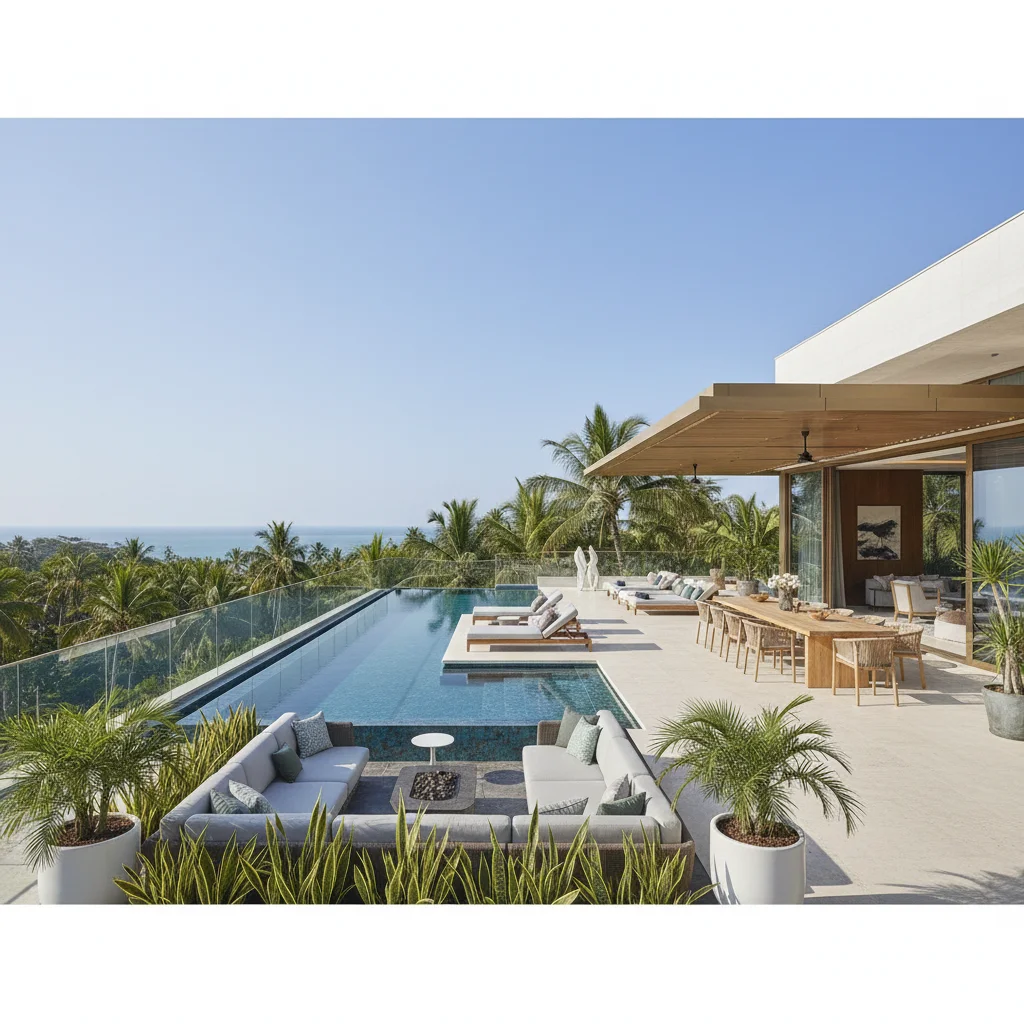
The seventh trend is incorporating resort-level amenities within private residences, creating properties that eliminate most need to leave home for recreation, wellness, or entertainment.
These aren’t just adding a gym and pool—they’re creating comprehensive recreational and wellness facilities rivaling luxury hotels:
Full-scale spas: Not just steam rooms and saunas, but complete spa facilities with treatment rooms, relaxation areas, salon capabilities. Some with dedicated staff providing services comparable to high-end resorts.
Professional fitness centers: Not home gyms but serious training facilities with professional equipment, dedicated spaces for different training modalities, sometimes with live-in trainers or visiting specialists.
Entertainment venues: Screening rooms with commercial-grade projection and sound, private nightclubs, bowling alleys, golf simulators, even indoor sports courts. Entertainment capacity that rivals commercial venues.
Culinary facilities: Kitchens designed for professional-level cooking, sometimes with multiple kitchens for different cuisines. Wine cellars accommodating thousands of bottles. Outdoor cooking facilities with professional equipment.
Automotive facilities: Garages that are really private car museums with climate control, lighting, and display infrastructure. Workshops for automotive restoration and maintenance. Some properties garage twenty or more vehicles in museum-quality display.
Guest accommodation: Not just guest rooms but essentially private boutique hotels within the residence—multiple guest suites with ensuite facilities, private sitting areas, sometimes separate entrances and services.
We furnished a Bangalore property including dedicated furniture for a fourteen-seat screening room, a commercial-style kitchen with custom furniture for staff areas, a wine tasting room with custom tables and seating for twelve, and six guest suites each with complete custom furniture complements. The amenity spaces totaled more square footage than most luxury homes entirely.
The Future of Ultra-Luxury Residential
These trends point toward future where ultra-luxury residential architecture becomes increasingly distinct from conventional luxury—not just more expensive but fundamentally different in priorities, values, and execution.
The gap between mass luxury and billionaire architecture will likely widen rather than narrow. While conventional luxury focuses on recognizable markers of expense and status, ultra-luxury will continue evolving toward privacy, sustainability, wellness, technology, craft, and experience.
For furniture makers like Crosby Project, this evolution creates extraordinary opportunities. Clients commissioning architecture at this level demand furniture of commensurate quality, created specifically for their unique homes, embodying same values of sustainability, craft, and personalization.
These aren’t just furniture commissions—they’re opportunities to participate in creating residences that represent architecture’s highest aspirations, serving clients with resources to achieve genuine excellence, creating work that will endure for generations.
This is where residential architecture is heading at wealth’s pinnacle. And it’s where we’re fortunate to contribute, one custom piece at a time.
For consultations on furniture for ultra-luxury residences:
Tamil Nadu Workshop
355/357, Bhavani Main Road, Sunnambu Odai, B.P.Agraharam, Erode, Tamil Nadu 638005, India
Ireland Office
16 Leopardstown Abbey, Carrikmines, Dublin 18 D18YW10, Ireland
Contact: +91-8826860000 | +91-8056755133 | care@crosby.co.in











 Bedroom