Cultural Layers in 1,800 Square Feet Prateek and Anjali—both in their early thirties with two young children—had purchased their first apartment in Dwarka, a planned suburb in southwest Delhi. The 1,800 square foot three-bedroom unit represented a significant step up from their previous rental, and they approached the interior design with clear intentions. Both had lived abroad—Prateek worked in Singapore for five years, Anjali studied in London—and returned to Delhi with aesthetic sensibilities shaped by these experiences. They appreciated contemporary design's clean lines but wanted their home to reflect Indian cultural identity through art, textiles, and craft rather than through literal traditional elements.
The brief emphasized livability for family life: durable surfaces accommodating children's activities, adequate storage for accumulating possessions, flexible spaces serving multiple functions, and an aesthetic that would evolve with their family rather than date quickly.
The budget was realistic but not unlimited. This wasn't a luxury apartment requiring imported fixtures and custom everything. The design needed to achieve sophistication through intelligent material choices, custom elements where they mattered most, and restraint that allowed a few significant pieces to carry aesthetic weight.
The Challenge: Making Compact Feel Generous The apartment's 1,800 square feet divided across living/dining (400 sq ft), master bedroom (250 sq ft), two children's bedrooms (180 sq ft each), two bathrooms, and kitchen. The floor plan was efficient but tight, with limited scope for spatial reorganization beyond removing non-structural partitions. The living room faced west, receiving harsh afternoon sun that could make the space uncomfortably bright and hot. The master bedroom faced east with pleasant morning light. Children's bedrooms faced north with consistent but not intense daylight.
The existing condition showed typical developer finishes: white walls, vitrified tile flooring, basic modular kitchen, standard bathroom fixtures. Everything functional but aesthetically neutral, requiring complete transformation to reflect the clients' vision. We identified three spatial strategies: maximize visual continuity through consistent material palette, employ built-in storage to reduce furniture clutter, and create flexible zones within rooms serving multiple functions throughout the day.
Material Strategy: Neutral Foundation, Cultural Accents The color palette centers on warm neutrals—beiges, taupes, soft greys—creating calm foundation appropriate for family life. These neutral surfaces allow colorful elements—textiles, art, objects—to take focus without competing backgrounds. Oak veneer appears in all custom millwork—TV units, storage cabinets, wardrobes—providing material consistency that unifies the apartment. We specified engineered veneer in consistent grain pattern, ensuring all millwork reads as related family of pieces rather than random furniture collection.
Walls received paint in subtle variations of off-white and warm grey, with one feature wall in each main room receiving deeper tone or textural treatment. This restrained use of color prevents visual chaos while providing focal points. Flooring remained the existing vitrified tiles—replacing 1,200 square feet of flooring exceeded budget constraints—but we introduced large area rugs in living spaces that establish warmth and define zones within open areas. The window treatments employ floor-to-ceiling curtains in natural linen, their long panels creating vertical emphasis that makes rooms feel taller. The neutral fabric provides privacy without blocking light, essential for the west-facing living room's sun exposure.
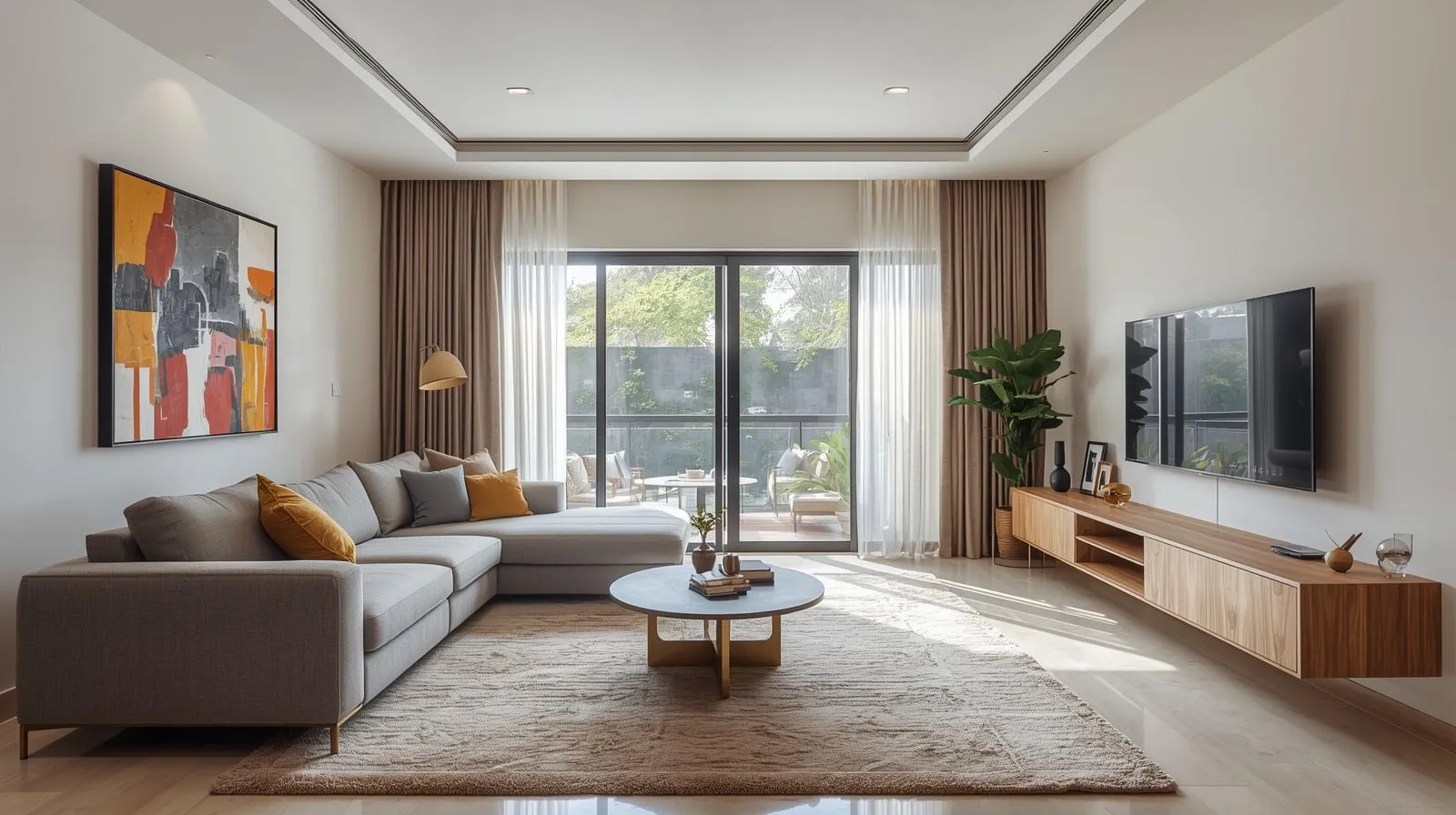
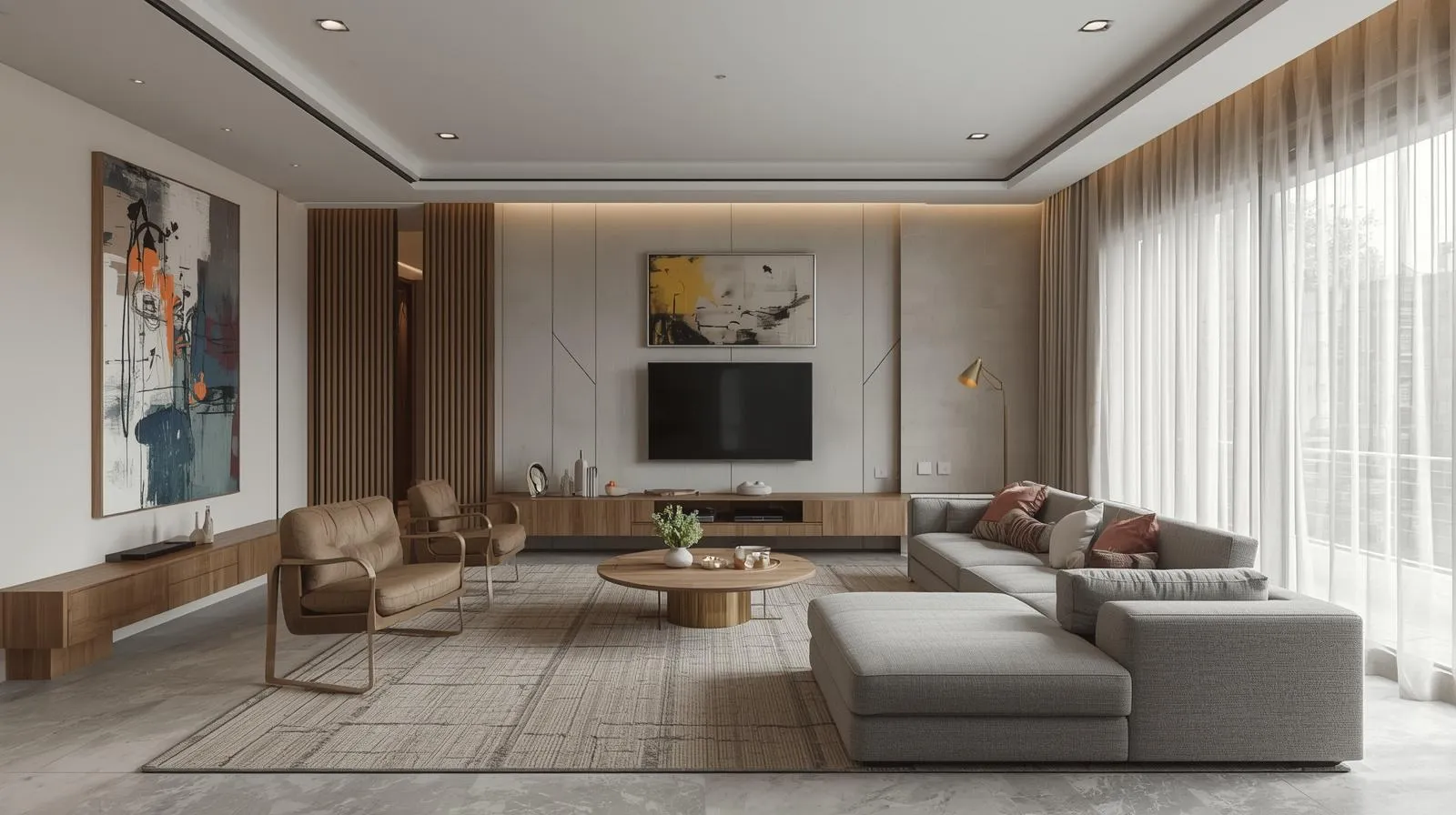
Living & Dining: Open Continuity The living and dining area form a single 400-square-foot space requiring careful zoning to serve both functions without feeling cramped. We avoided physical partitions that would fragment the space, instead using furniture arrangement and area rugs to define zones. The living zone centers on a custom-designed sofa in grey linen—a modular three-seater that can be reconfigured as needs change. We worked with Delhi upholsterers specializing in residential furniture, developing cushion firmness and back support appropriate for daily family use rather than showroom aesthetics.
A low coffee table in oak with brass-finish metal base anchors the seating arrangement. The table's open base maintains visual lightness crucial in compact spaces—solid bases would create visual weight inappropriate for the scale. The TV unit occupies the longest wall: a floating cabinet system in oak veneer with open shelving displaying art objects and books. The floating detail—cabinet suspended 300mm above floor with concealed brackets—creates the illusion of more floor space while allowing robot vacuum access for cleaning.
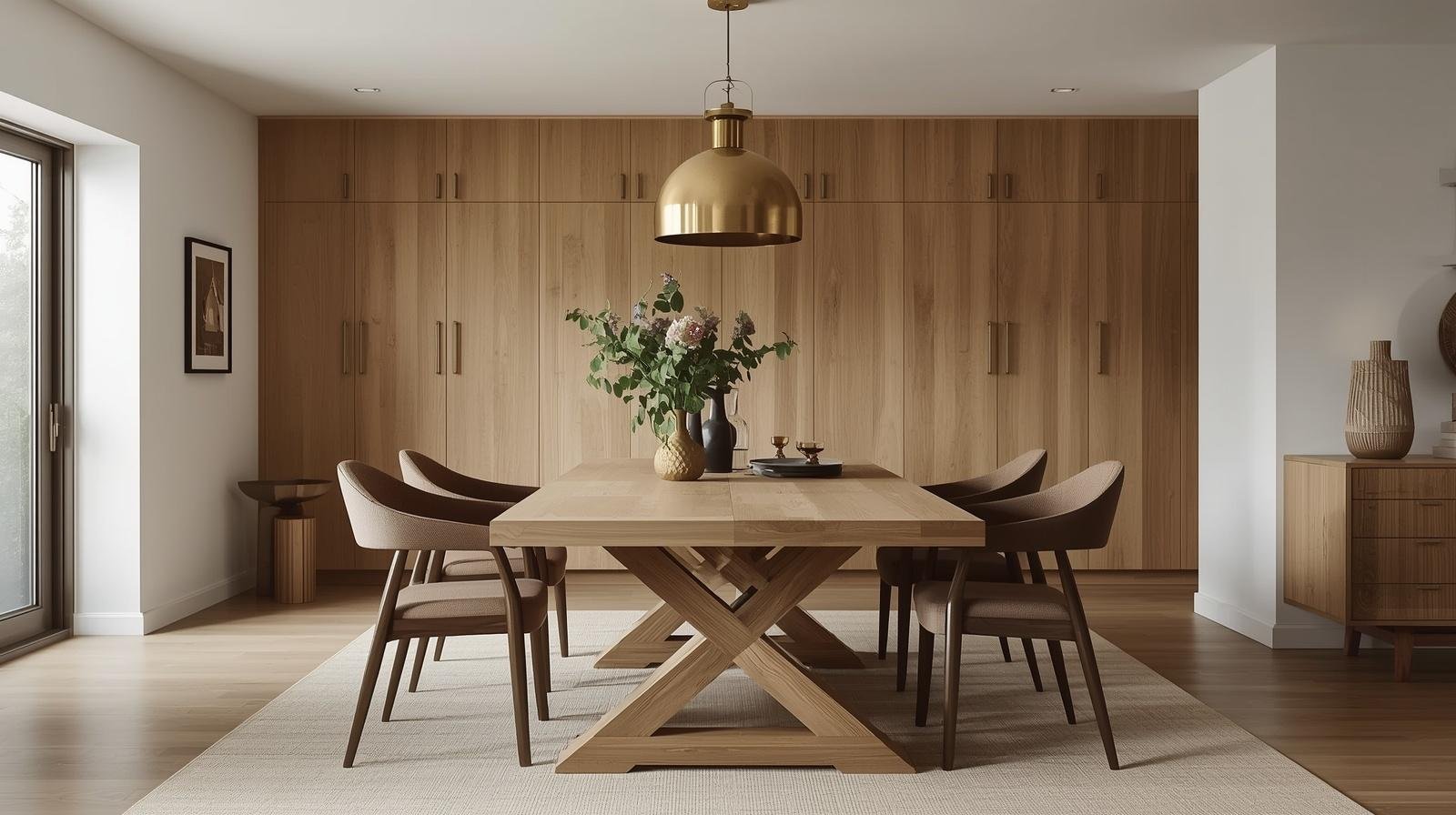
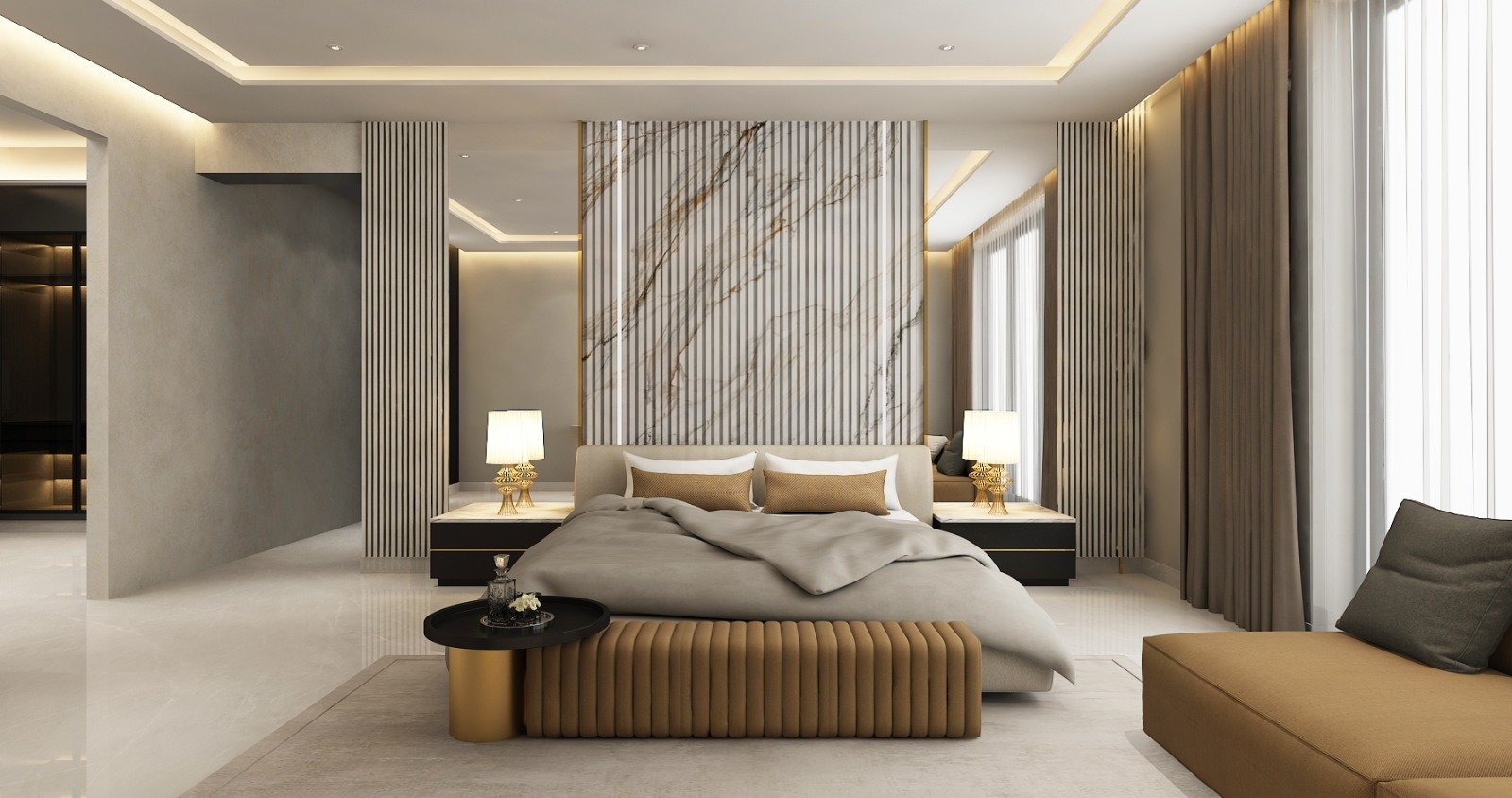
A statement lighting fixture—brass pendant in contemporary interpretation of traditional Indian lantern form—hangs above the dining table, defining the zone while providing task lighting for meals. Master Bedroom: Layers of Comfort The master bedroom required multiple functions: sleeping, dressing, and a small workspace for Anjali's freelance graphic design work. At 250 square feet, the room needed careful planning to accommodate all functions without feeling cluttered.
"Crosby understood what we wanted even when we struggled to articulate it. The design feels distinctly ours—not a decorated showroom but a home that reflects our family's life and values. The built-in storage has been transformative; we maintain order much easier than in our previous apartment. The neutral palette has allowed us to add layers over time without feeling like we need to redecorate. Most importantly, the design serves our daily life beautifully—it's not just pretty but genuinely functional for family with two young children. We couldn't be happier."— Anjali & Prateek, Homeowners
Specification: Quartz composite, 20mm thickness, simple edge profile
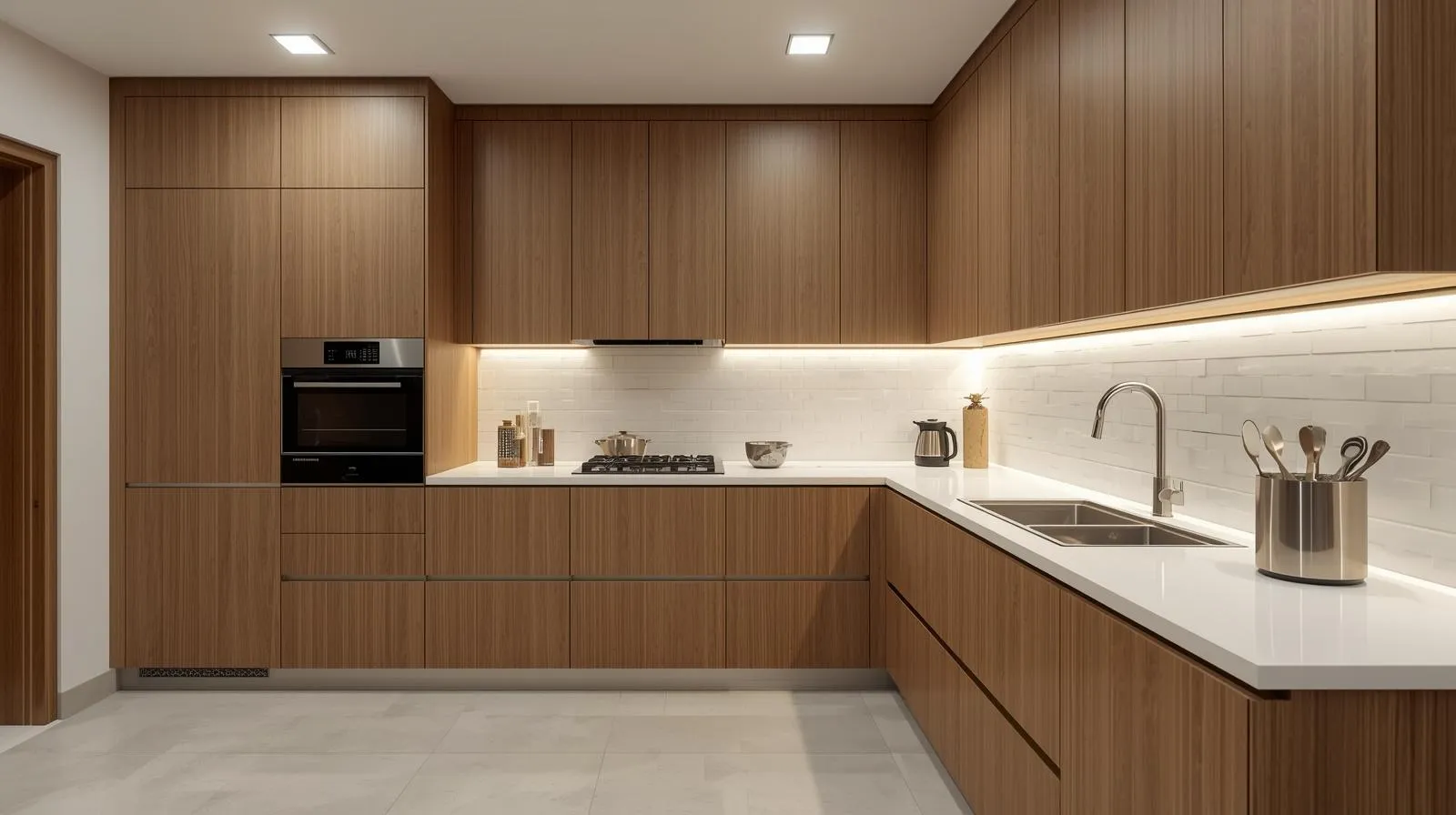
Kitchen and bathroom countertops employ engineered quartz from India's leading manufacturer, providing non-porous surface resistant to staining and bacterial growth essential for these wet areas. The pure white colorway with minimal veining maintains neutral palette while providing clean appearance. Each counter piece was templated on-site after cabinet installation, ensuring precise fit around sinks and fixtures. The material choice prioritized durability and maintenance ease over exotic natural stone that would strain budget while requiring more upkeep.
Specification: Rectified porcelain, matte finish, 600x1200mm walls, 300x300mm floors
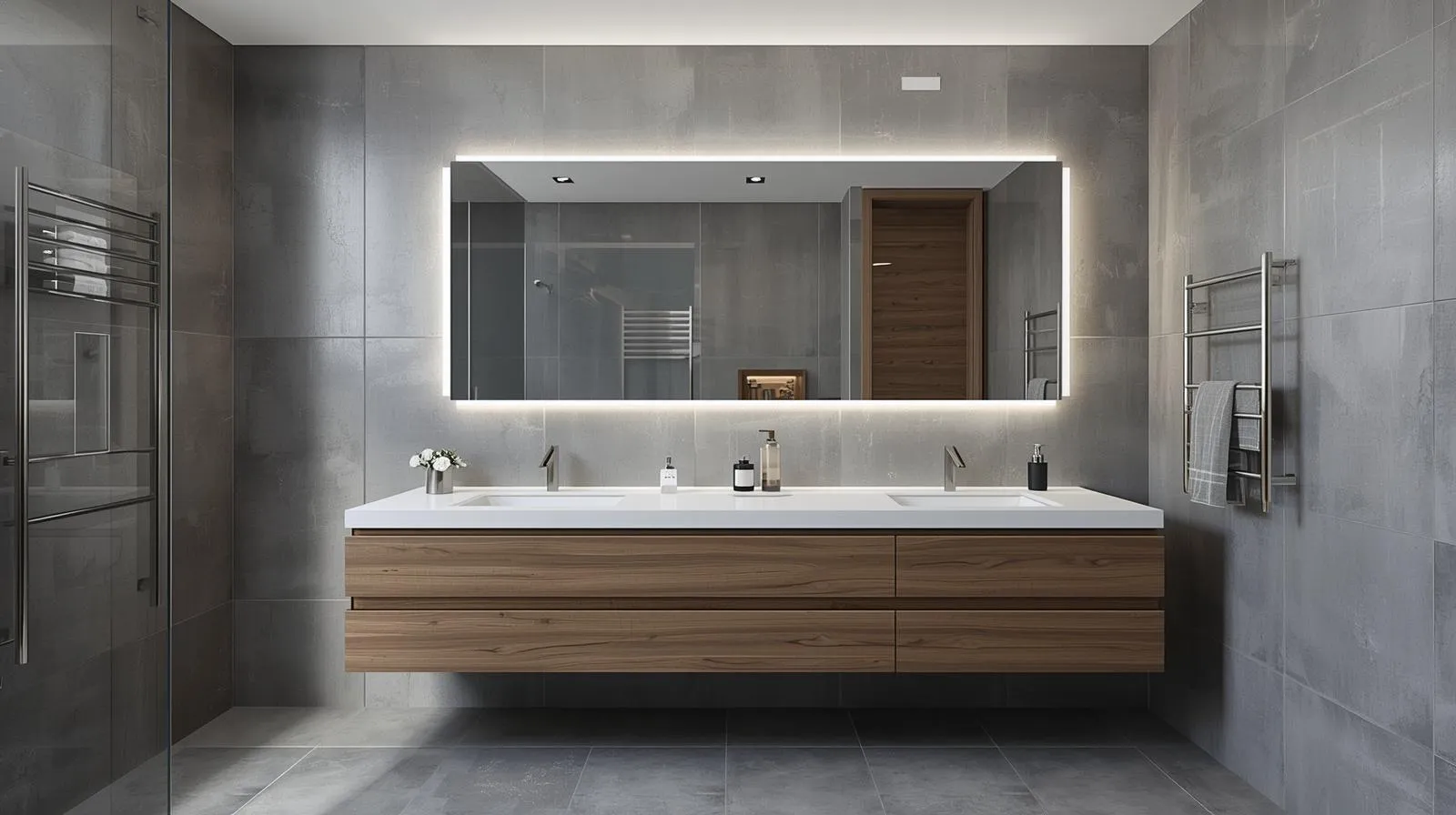
Bathroom renovations employed contemporary large-format tiles creating cleaner appearance than smaller traditional formats. Wall tiles in soft grey measure 600x1200mm with rectified edges allowing minimal grout lines (2mm)—the contemporary aesthetic requires these clean surfaces. Matte finish conceals water spots and soap residue better than glossy alternatives while feeling more sophisticated. Floor tiles employ smaller 300x300mm format with subtle texture providing slip resistance essential for safety. The size difference between wall and floor tiles creates visual interest through variation rather than pattern. Installation required skilled tile-setters understanding proper technique for large-format tiles—incorrect substrate preparation causes lippage (uneven tile edges) common with this format.
Specification: Natural linen, lined for privacy, ceiling-mounted tracks
Window treatments throughout employ floor-to-ceiling curtains in natural linen creating vertical emphasis that makes rooms feel taller—a critical illusion in standard-height apartments. The curtains mount to ceiling-installed tracks rather than wall-mounted rods, ensuring full height from ceiling to floor rather than stopping at window frame height. This detail—seemingly minor—significantly impacts perceived room height.
Lutron HomeWorks QS, professionally installed, Components: Lighting control, motorized shades, integration hub
The smart home lighting employs Lutron HomeWorks QS—professional-grade system providing reliable control via touchscreens, smartphones, or voice commands. The system includes dimming for all LED fixtures, scene programming (preset lighting combinations activated with single button), and scheduling (automated adjustments throughout day). Motorized shades integrate with lighting system allowing coordinated control—for example, "Morning" scene opens shades while adjusting lighting appropriately. The Lutron system interfaces with other smart home components (thermostats, audio, security) through central control hub. Professional installation ensures proper programming and user training.
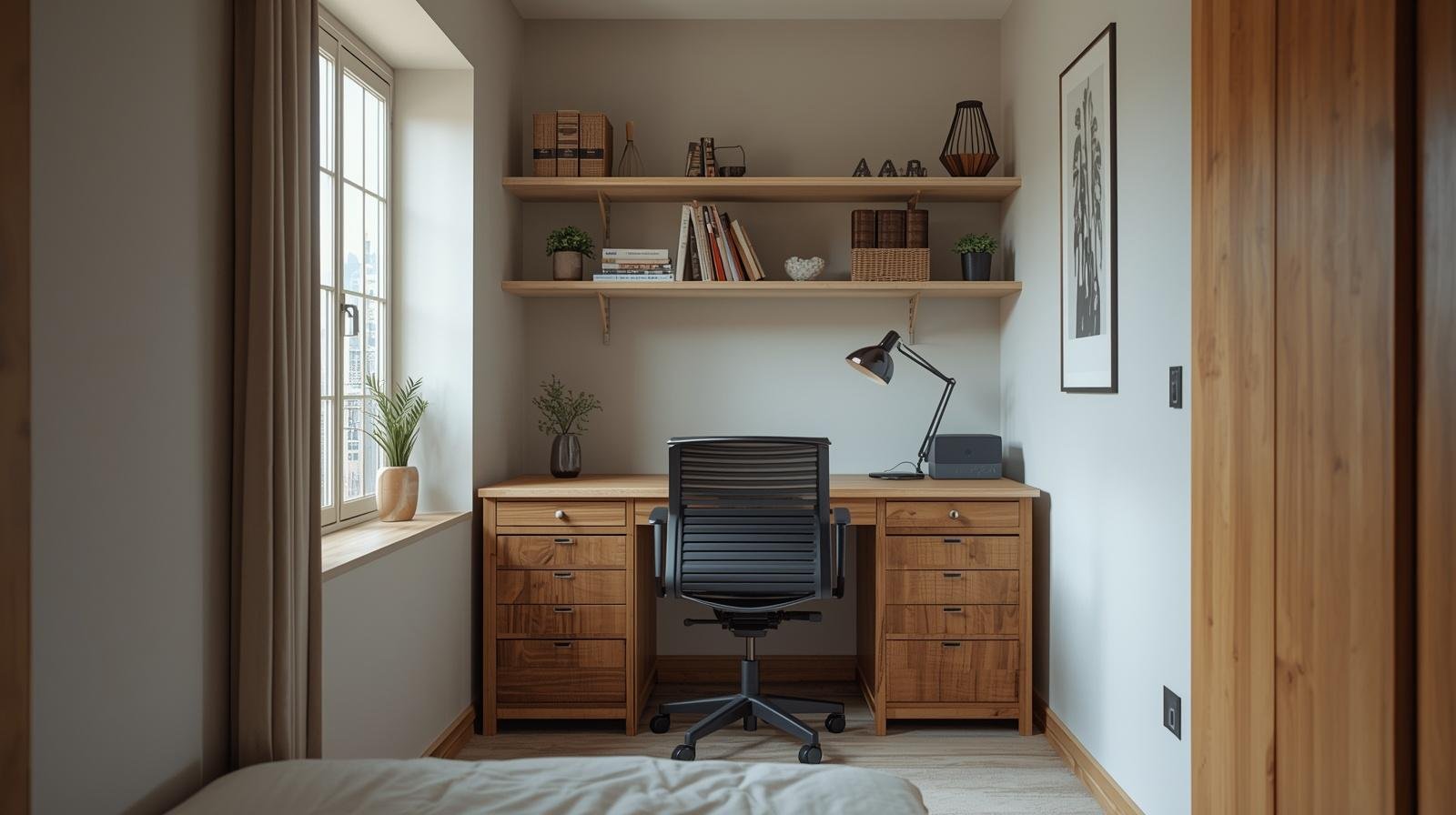
Anjali's workspace occupies a corner: a simple desk in oak veneer with adjustable task chair and wall-mounted shelving above. The desk positioning near the window provides natural light for computer work while being separated enough from the bed to maintain psychological boundary between work and rest.
The ceiling features a recessed tray detail with cove lighting—the room's only decorative architectural element. This detail, executed during apartment's initial construction, provides indirect ambient lighting appropriate for bedroom's restful function.
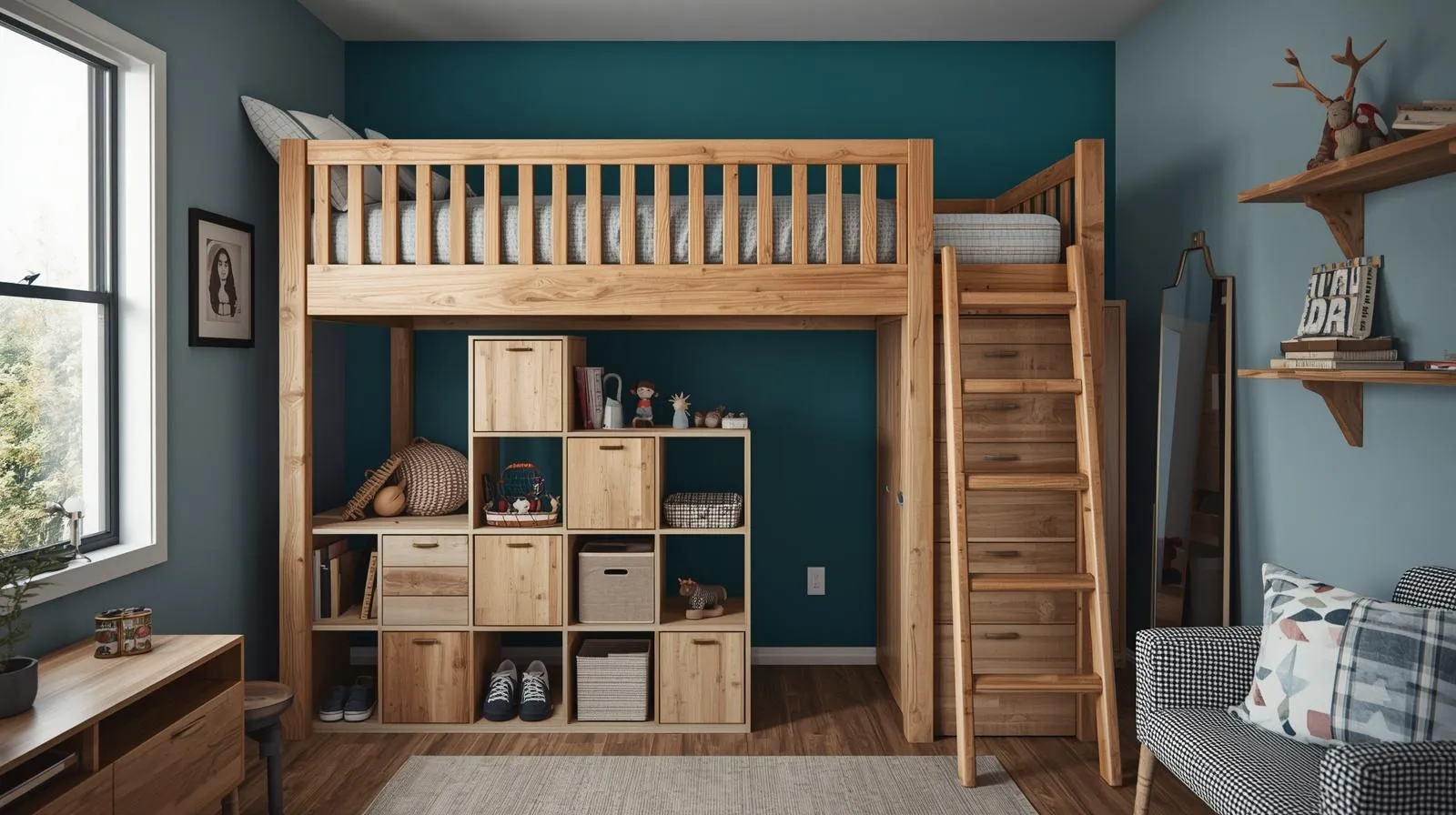
Children's Bedrooms: Growth-Accommodating Design Both children's bedrooms measure 180 square feet—sufficient for current needs (the children are ages 4 and 7) but requiring furniture that can adapt as they grow.
The loft structures employ oak-finished plywood construction with safety railings meeting code requirements. Access is via integrated ladder with wide treads safe for young children. Under-bed storage includes open cubbies for toys and closed cabinets for clothing. Study desks occupy corners near windows, providing daylight for homework. These simple pieces—oak veneer tops on powder-coated steel frames—will remain appropriate as children age, avoiding character themes that quickly feel childish.
Built-in wardrobes with sliding doors maximize storage without consuming floor space. Interior organization includes adjustable shelving that can be reconfigured as children's clothing needs change with age. Lighting combines recessed ceiling fixtures for general illumination with desk-mounted task lights and adhesive LED strips under the loft beds providing gentle night lights. Kitchen: Efficient Functionality The kitchen occupies approximately 120 square feet in L-configuration. The existing modular units remained structurally sound, so we focused on upgrading surfaces and organization rather than complete replacement—a budget-conscious decision that allocated resources elsewhere. New countertops in white quartz replaced the original laminate, providing durable work surface resistant to staining and heat. The edge received simple profile appropriate for contemporary aesthetic.
Vanities employ oak veneer cabinets with white quartz tops matching the kitchen material. The master bathroom vanity includes two sinks—seemingly minor but significantly improving morning routine efficiency for the couple.
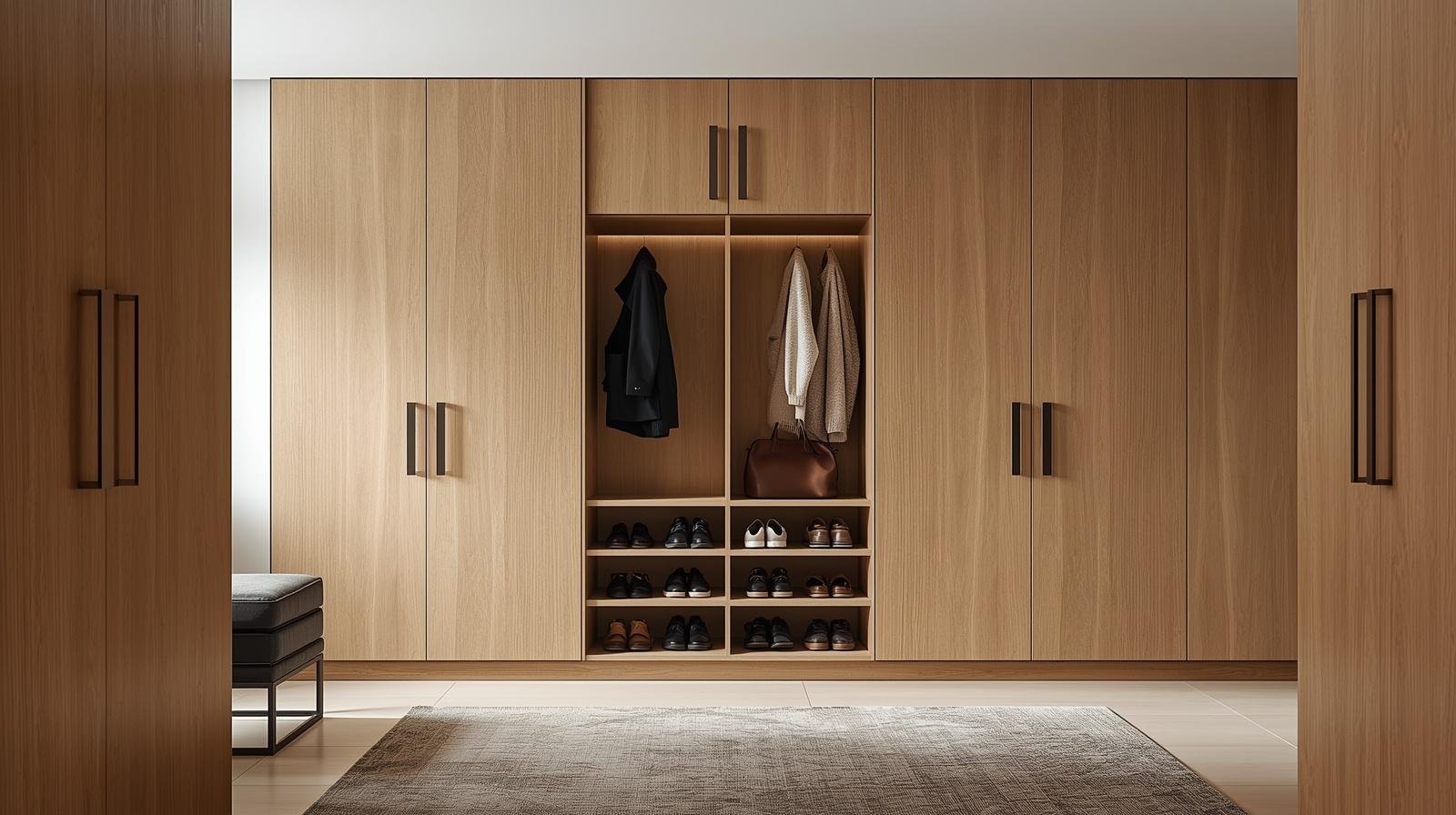
Storage Strategy: Built-In Solutions In compact apartments, visible furniture accumulation quickly creates clutter. We addressed this through comprehensive built-in storage throughout the apartment.
The Result: Sophisticated Livability The apartment has been occupied for two years. Regular check-ins with Prateek and Anjali confirm the design's success in serving their evolving family needs. From Crosby's perspective, the project demonstrates residential design principles applicable to middle-class Indian apartments: maximize visual continuity through consistent materials, invest in custom pieces where they matter most, specify durable standard products elsewhere, and create neutral foundations supporting personal expression over time.
We collaborate with globally mobile clients creating homes in compact urban environments. We do complete Model Unit Interior Design, Technology Integration, Furnishing & Styling. Our approach synthesizes cultural influences through material craft and spatial precision.
Begin Conversation