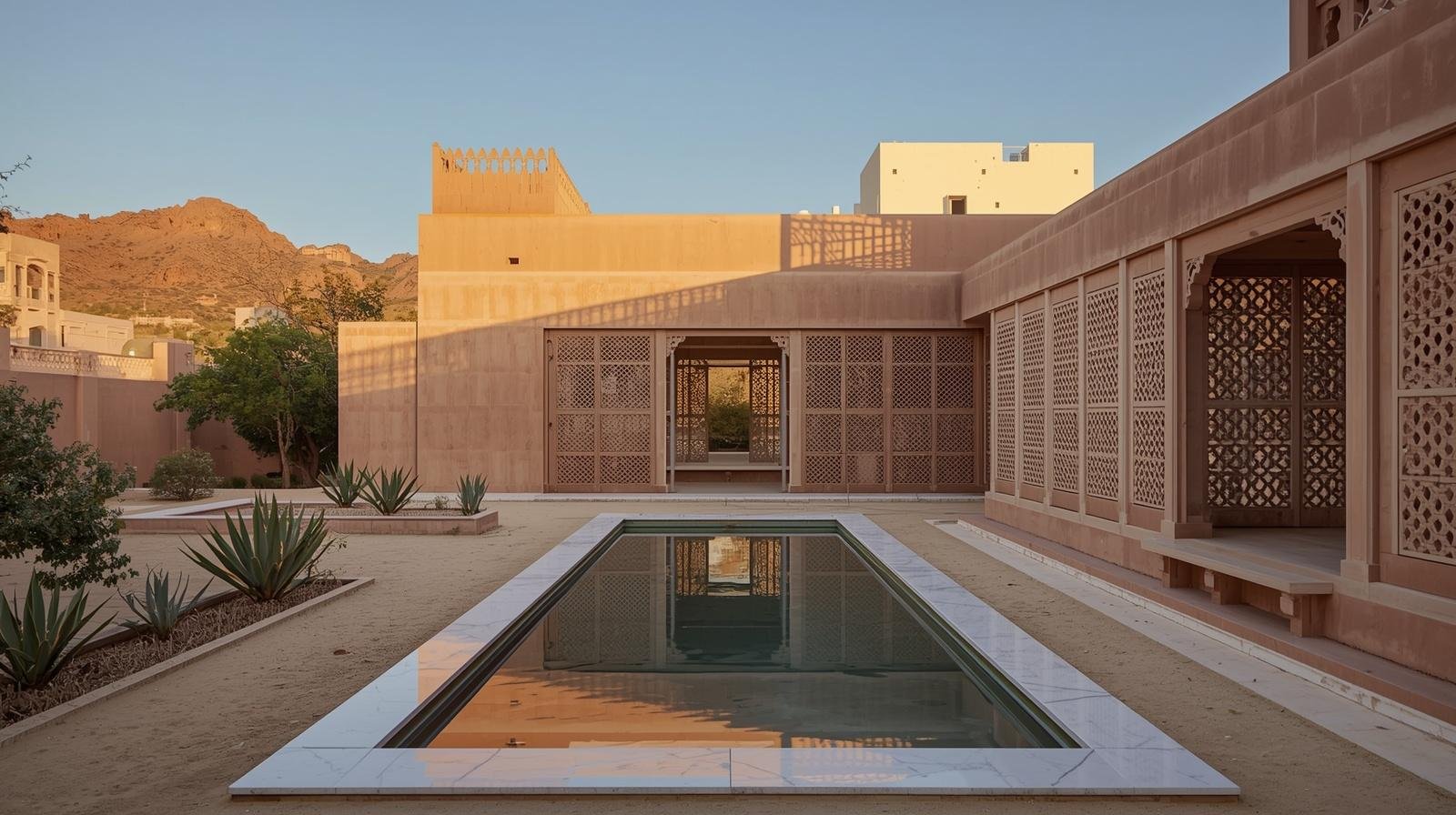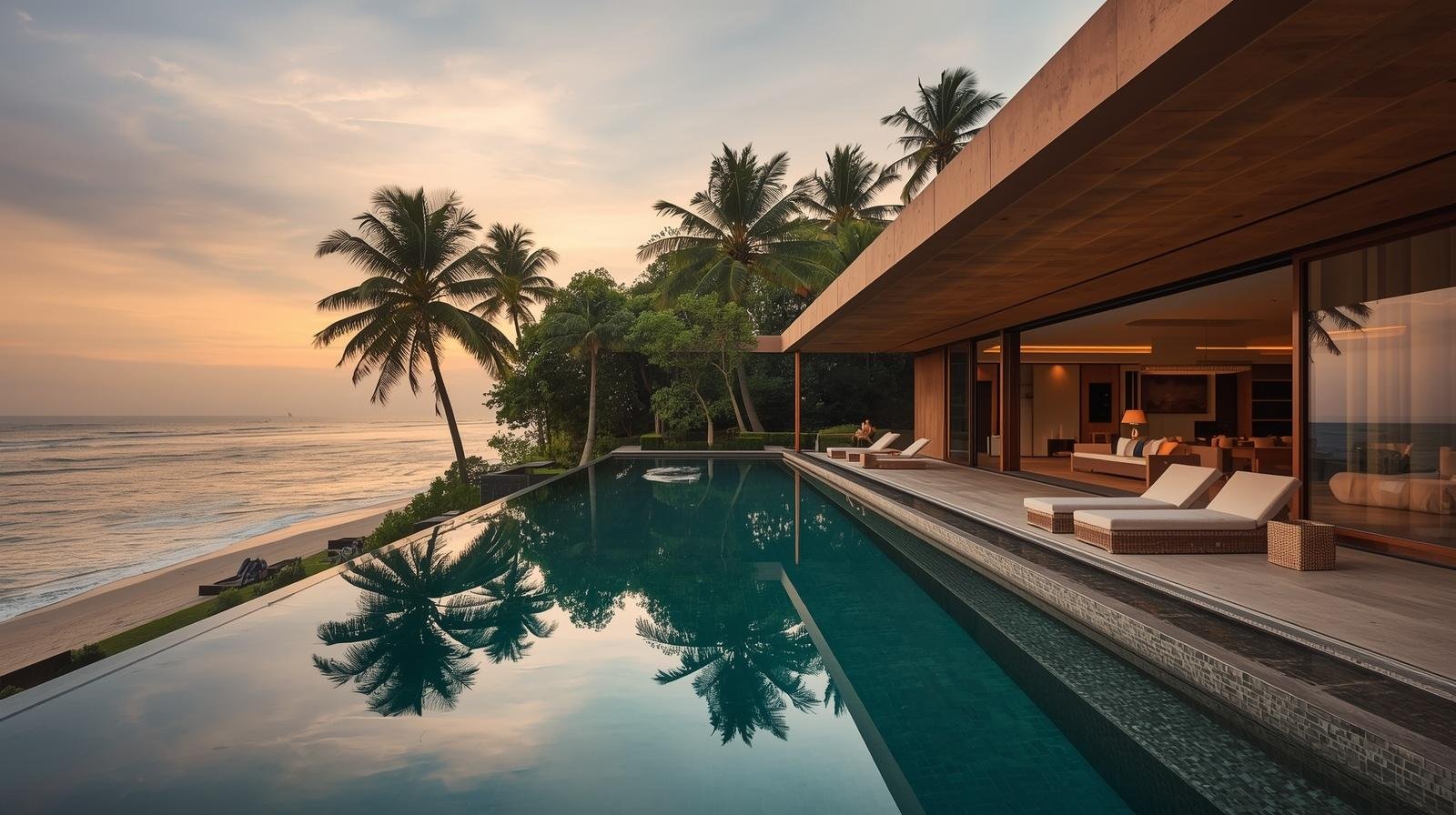
A 6,500 sq ft coastal residence where climate-responsive architecture and indoor-outdoor living create year-round sanctuary—celebrating Goa's Portuguese-Hindu synthesis without resort clichés or beach-house kitsch.
The clients—a Delhi-based couple who had spent decades visiting Goa, initially for weekends, then month-long escapes, eventually considering permanent relocation—approached us after acquiring a spectacular plot in Ashvem, North Goa's quieter coastal stretch. The property offered 100 meters of beach frontage, established coconut palms and cashew trees, and relative distance from tourism's worst excesses. What they sought: permanent home that would function year-round, not typical Goan second home inhabited three weeks annually.
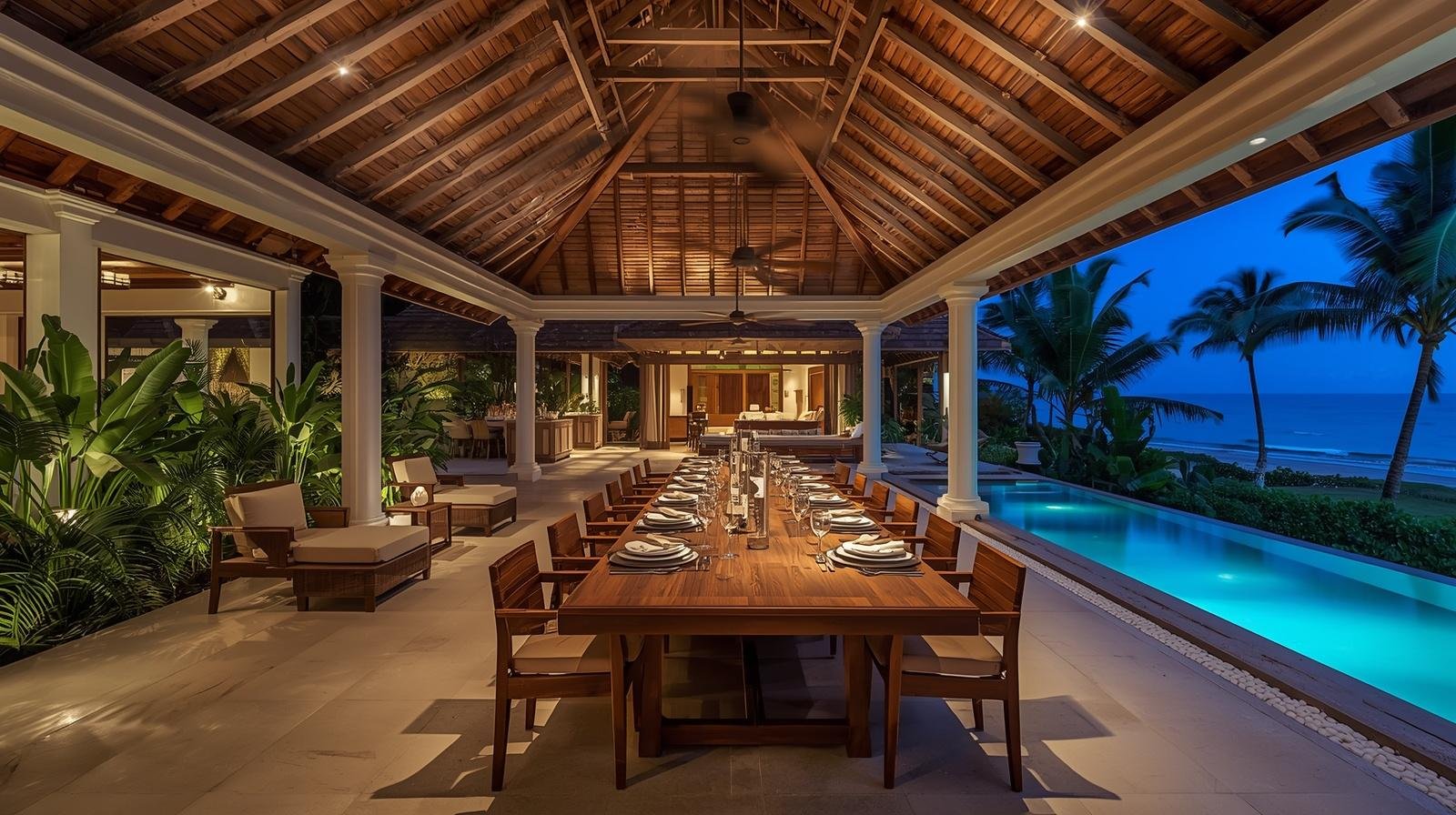
Their brief rejected standard Goan villa typology—Portuguese colonial pastiche with azulejo tiles, carved balustrades, and chandeliers. They'd lived globally (Singapore, London, New York) and wanted contemporary architecture that responded to tropical climate while respecting local building traditions. The house needed to accommodate their adult children's visiting families, host dinner parties for thirty, provide workspace for the husband's consulting practice, and feel comfortable for two people during off-season solitude.
Goa's climate—monsoon torrents, extreme heat, high humidity, salt-laden coastal air—demanded architecture that worked with these forces rather than fighting them through mechanical systems. The plot's orientation (west-facing beach, eastern approach) and topography (gentle slope from road to sea) created both opportunities and challenges. We needed to maximize ocean views while protecting interiors from afternoon sun and monsoon winds.
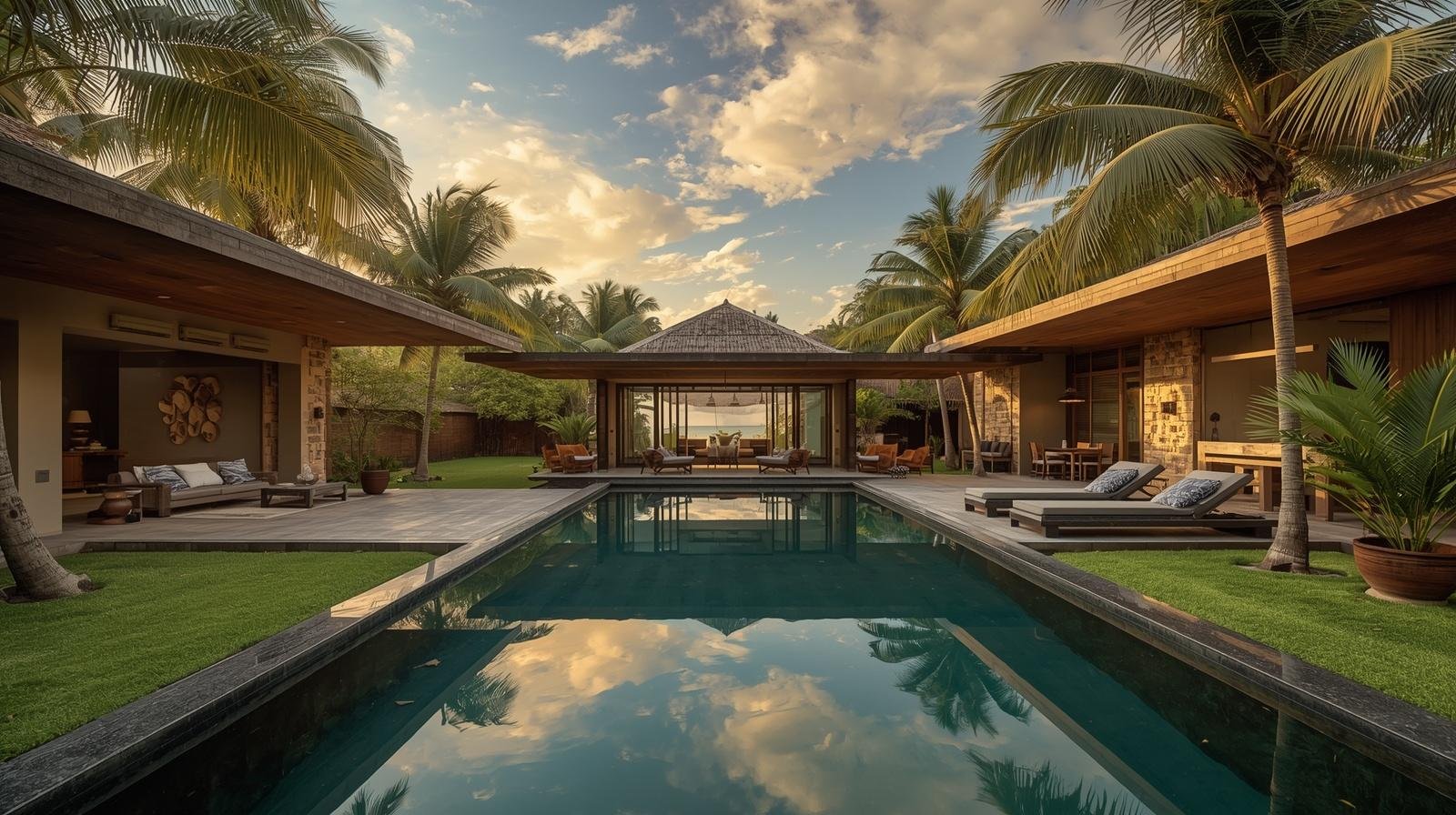
The villa's organization follows traditional Goan-Portuguese logic updated for contemporary program. A central courtyard—the heart of traditional Goan houses—organizes spaces around it. But rather than enclosed square, we created U-shaped configuration that opens westward to the ocean. The courtyard contains pool, tropical garden, and outdoor living/dining areas. Bedrooms and service spaces occupy the U's two arms; living, dining, and kitchen anchor the connecting base.
This layout creates cross-ventilation—essential in humid climate. Prevailing breezes flow from sea through courtyard into all rooms. During monsoon, when winds reverse, the courtyard protects interiors from driving rain. The deep roof overhangs (10-foot cantilevers) provide additional weather protection and shade, reducing solar heat gain by approximately 60% compared to typical construction.
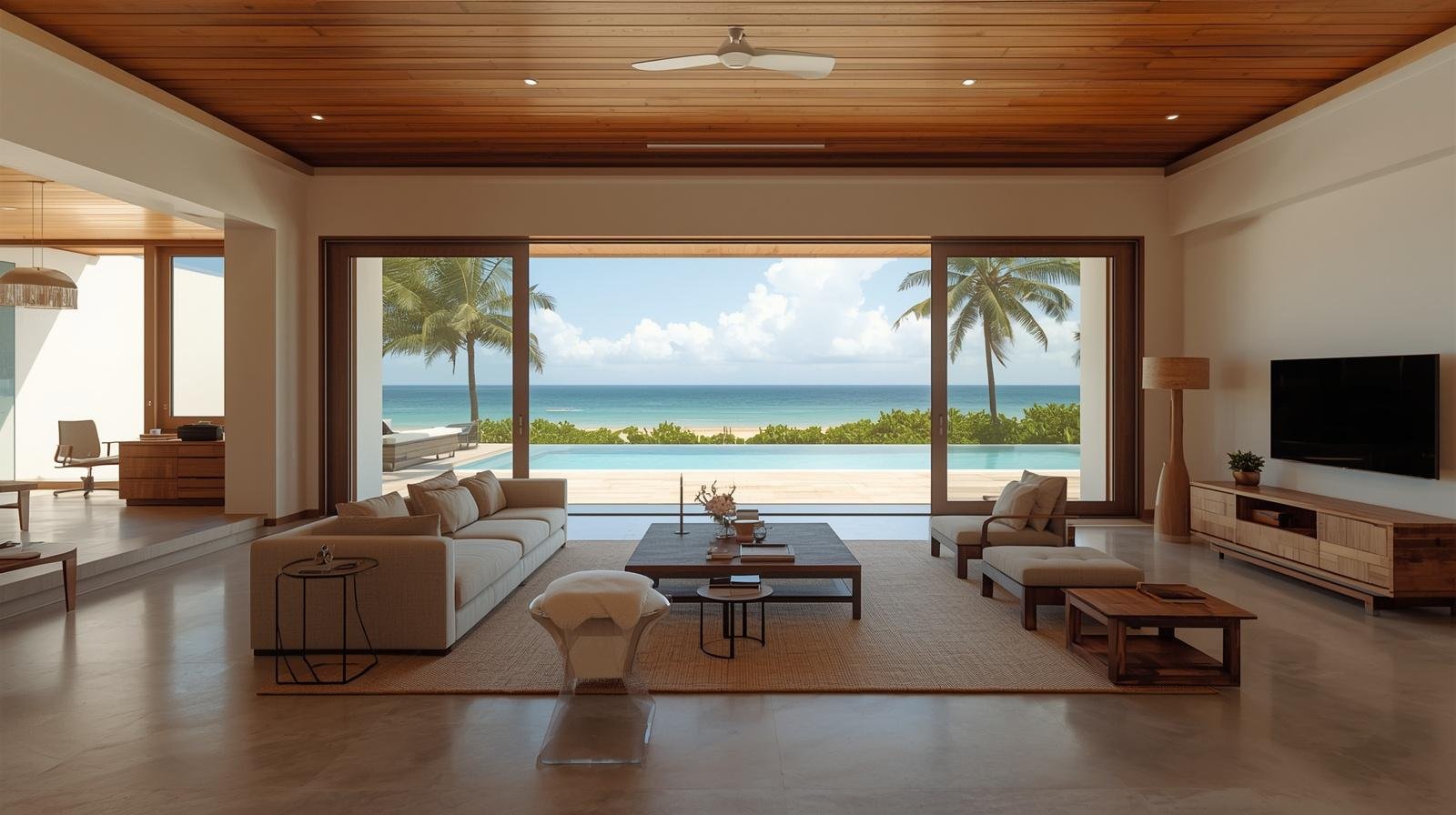
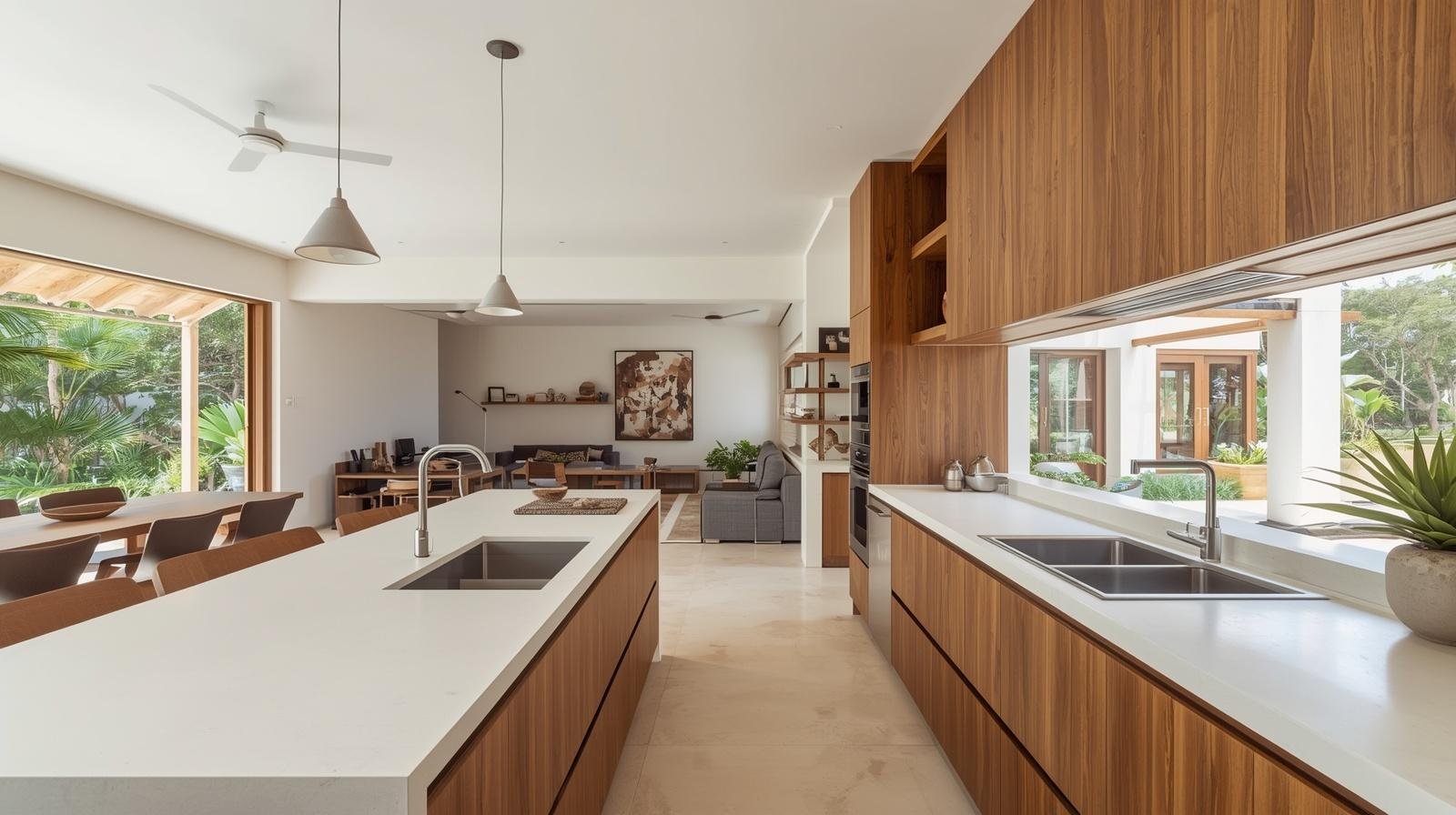
The ground floor employs complete indoor-outdoor transparency. Floor-to-ceiling glass doors—28 feet wide when fully open—dissolve boundaries between living room and pool deck. The dining area opens similarly to covered veranda. The kitchen features large serving window to outdoor dining area. During Goa's temperate months (November-February), the house effectively becomes pavilion, all spaces flowing into gardens and pool.
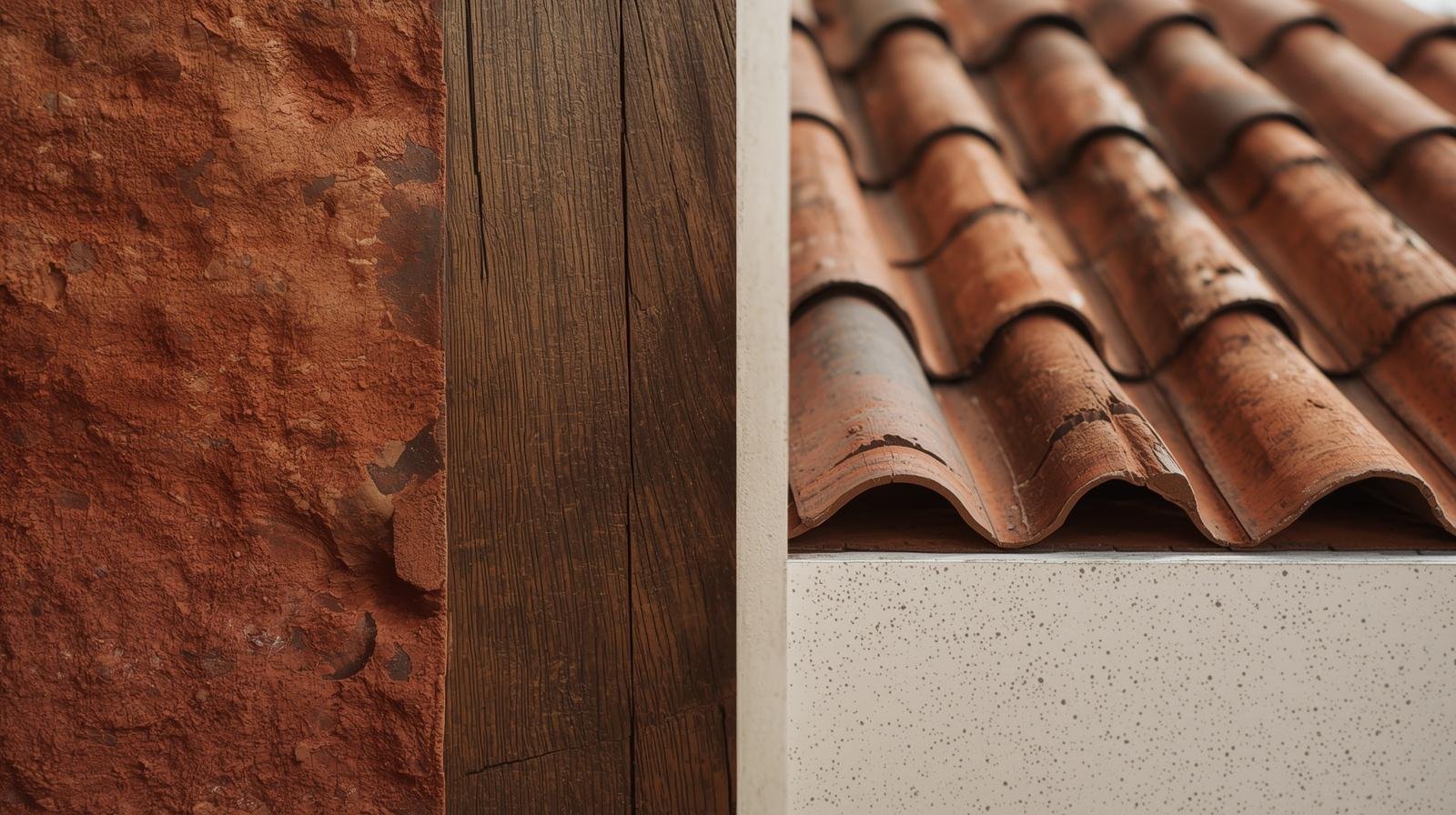
Material selection responded to coastal conditions and local building traditions. The primary structure employs reinforced concrete—necessary for monsoon and wind loading. But we concealed it beneath materials that breathe: local laterite stone for walls (the same red volcanic rock used in Goan buildings for centuries), reclaimed teak for all woodwork, Mangalore tiles for roofing. These materials age gracefully in salt air, develop natural patina, and maintain cooler interior temperatures than contemporary alternatives.
Flooring throughout employs polished concrete integrated with white oxide—traditional Goan material updated with contemporary finishing techniques. The surface provides thermal mass (moderating interior temperatures), reflects light (reducing need for artificial illumination), and handles monsoon humidity without damage. We specified drain channels at all thresholds—water will enter during torrential rains; better to direct it out than fight it.
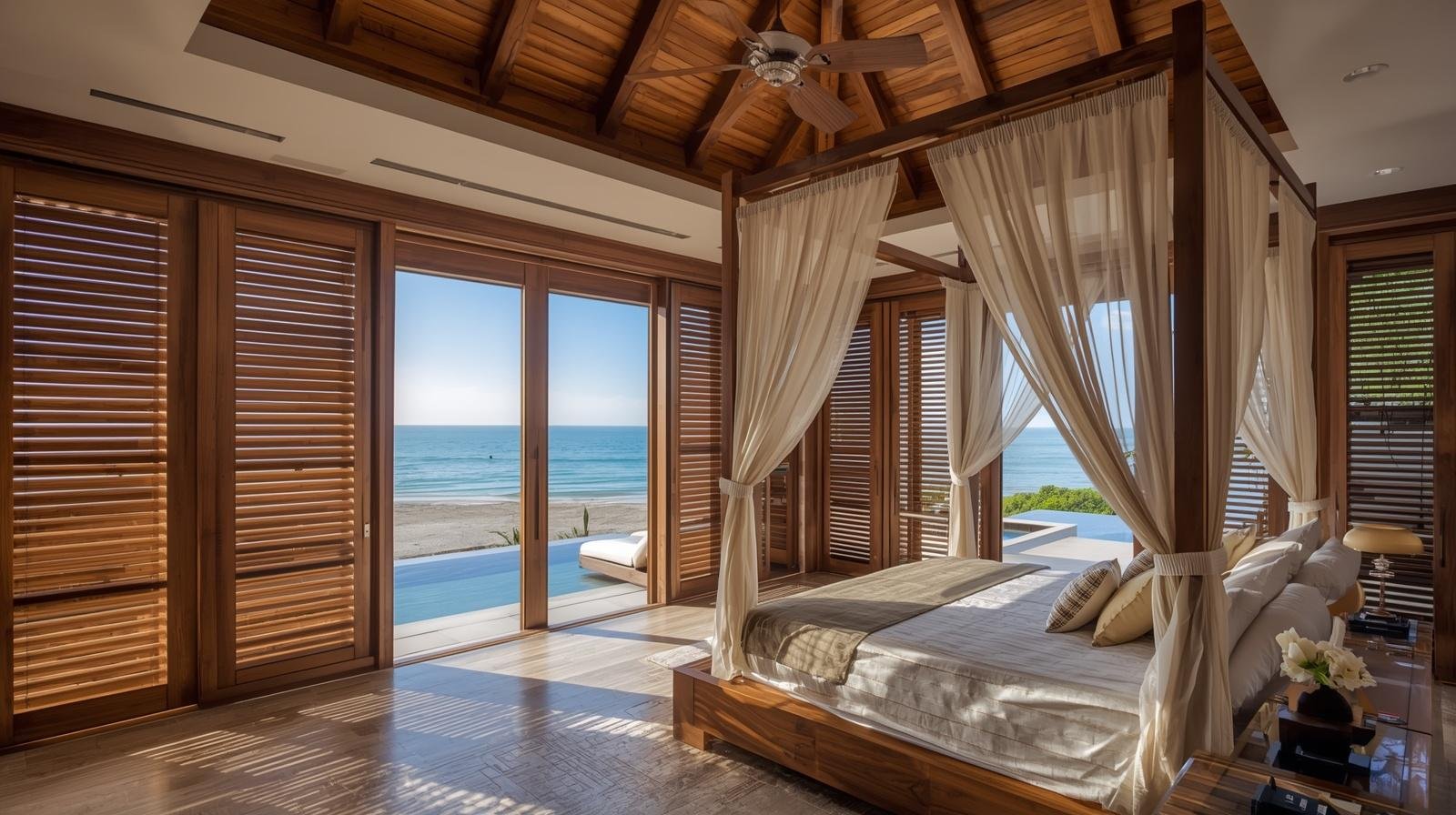
All woodwork uses reclaimed teak salvaged from demolished Portuguese-era buildings across Goa. Each beam, door, window frame carries history—bolt holes, saw marks, natural weathering—that we preserved during refinishing. The wood's density and natural oils make it ideal for coastal conditions; properly maintained, it lasts centuries. Window shutters, a critical element in Goan architecture, employ traditional panel-and-frame construction allowing multiple configurations: fully open (ocean views), partially closed (shade without blocking breeze), fully closed (storm protection).
The landscape design, developed with Aishwarya Tipnis, treats the grounds as extension of interior spaces rather than decoration. The existing coconut palms—several over 50 years old—were carefully preserved and integrated. We added native species: areca palms, mango trees, frangipani, bougainvillea, sea grape. The planting plan follows traditional Goan garden principles: fruit trees providing shade and harvest, flowering plants marking seasonal change, coastal-adapted species requiring minimal water.
The pool, rather than typical rectangular form, follows the courtyard's organic shape. The infinity edge faces the ocean, creating visual continuity between pool and sea. The water level aligns precisely with the main floor elevation, blurring boundaries between wet and dry. Shallow lounging ledges occupy the courtyard side; deeper swimming areas extend toward the ocean view. The pool uses saltwater chlorination (gentler on skin, lower maintenance in coastal environment) and employs overflow to irrigate gardens.
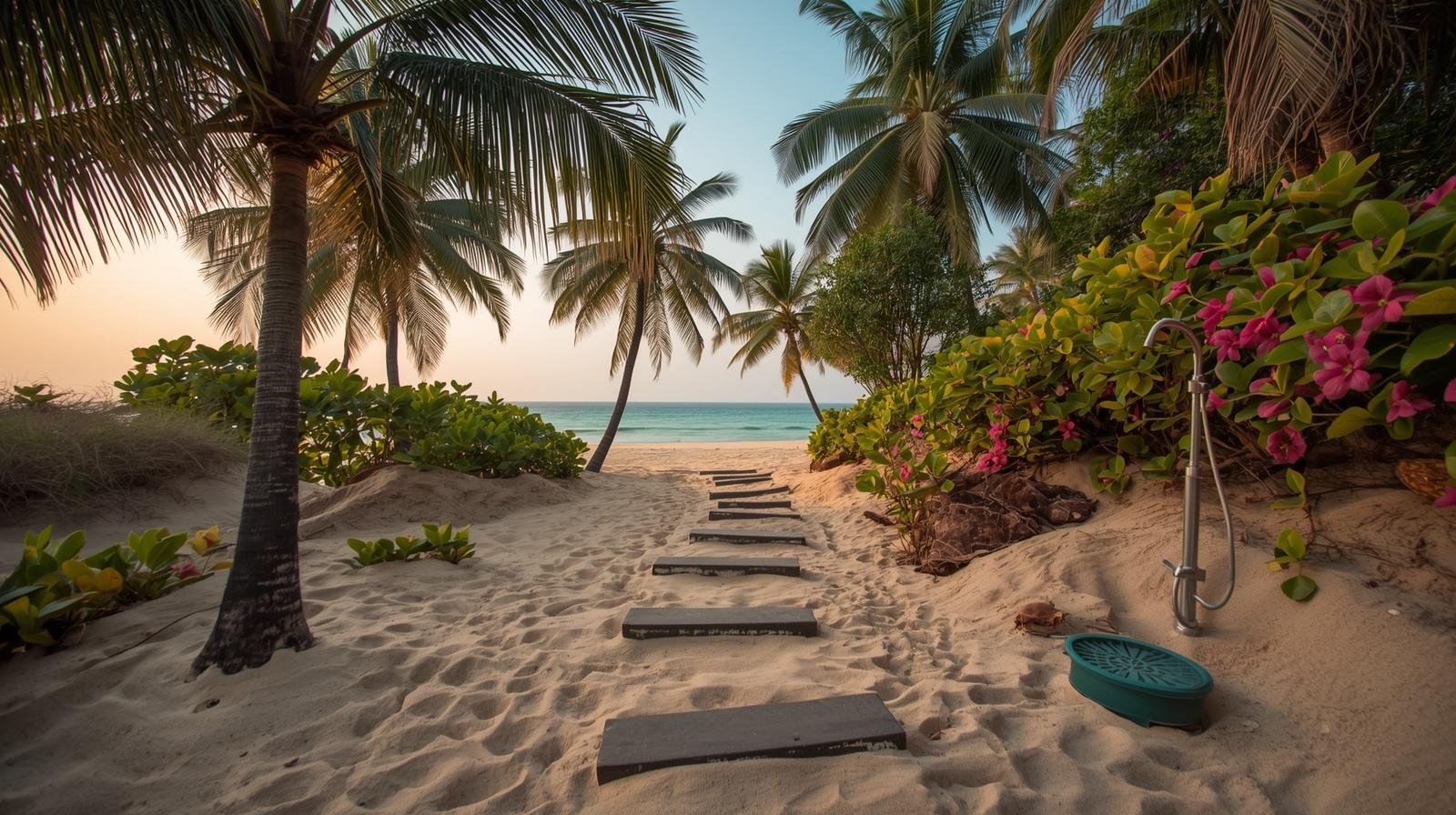
The beach access follows traditional Goan approach: a simple path through the dunes rather than constructed staircase or boardwalk. The path employs local laterite steps where needed, stabilizing sand while maintaining natural character. We positioned outdoor shower at the property's edge—essential for rinsing salt and sand before entering house. The shower, fabricated from blackened copper, will develop verdigris patina appropriate to coastal setting.
Tropical coastal architecture requires fundamentally different approach than temperate-zone building. Rather than sealed, mechanically conditioned envelopes, successful tropical design employs natural systems—ventilation, shading, thermal mass, evaporative cooling—that have worked for centuries.
"We've hosted monsoon dinners where rain hammers the roof while we sit completely dry beneath deep overhangs, ocean wind rushing through. We've had December mornings where every door opens and the house becomes pavilion. The architecture doesn't fight Goa's climate—it choreographs our experience of it."— Meera & Vikram Kapoor, Homeowners
Victorian brickwork, cast iron, timber beams
All original structural elements were carefully conserved. The brick walls were cleaned using gentle methods (no abrasive blasting), then sealed with breathable coating that maintains their appearance while providing minimal protection. Cast-iron columns were wire-brushed to remove loose rust, treated with rust converter, then sealed with matte finish that preserves their industrial character. Timber beams received structural assessment; several required steel reinforcement plates (concealed where possible) to meet current loading requirements.
Goan red volcanic rock, traditional masonry
All exterior walls employ laterite stone—the same red volcanic rock used in Goan buildings for centuries. The stone was quarried within 30 kilometers, cut by local masons using traditional techniques, then laid with lime mortar. The three-foot-thick walls provide superior thermal mass and weather resistance. We left the stone natural on exterior (it weathers beautifully), applied lime plaster to interior surfaces for smooth finish and improved light reflection.
Salvaged from Portuguese-era buildings
All structural timber, doors, windows, and ceiling work employs teak salvaged from demolished Portuguese-era buildings across Goa. The wood—often 100+ years old—possesses density and oil content that new timber lacks. We cleaned each piece, removed damaged sections, re-milled where necessary, then finished with natural oils. The wood's history—visible in bolt holes, mortises, patina—adds character impossible to manufacture. Local carpenters, many from families that built original Portuguese houses, executed all woodwork.
Traditional roofing, natural ventilation
The roof employs Mangalore tiles—terra cotta tiles manufactured using centuries-old techniques. The tiles are porous (allowing roofs to breathe), interlocking (resisting wind uplift), and naturally insulating. We specified traditional double-layer installation: lower layer provides primary weather barrier, upper layer creates air gap that improves thermal performance. The tiles will develop moss and lichen over time, integrating the building into tropical landscape.
White oxide integrated, traditional Goan finish
Ground floor flooring employs polished concrete with white oxide integrated throughout—traditional Goan material executed with contemporary precision. The concrete was poured in large panels with minimal joints, ground smooth, then polished to low sheen. The white oxide reflects light (reducing artificial lighting needs) and stays cooler underfoot than darker materials. Integral color means wear doesn't reveal different substrate. The floor handles monsoon moisture without damage or mold.
"Monkeypod wood, brass inlay, Delhi fabricationBangalore artisans, blackened steel
The pool employs saltwater chlorination system rather than traditional chlorine—gentler on skin and eyes, lower maintenance, more sustainable. The salt cell automatically generates chlorine from dissolved salt, eliminating need for chemical storage and handling. Pool overflow (from rain and splashing) channels to irrigation system rather than waste. The system was sized to handle monsoon deluges—the pool can overflow several inches daily during peak rains without damage.
We did install air conditioning—Goa's April-May heat requires it—but sized systems assuming natural ventilation primary, mechanical backup. Each bedroom has individual split unit; living areas use larger systems. But the villa's thermal performance means cooling is needed perhaps 90 days annually rather than year-round, dramatically reducing energy consumption.
Two years post-completion, the villa has validated every hypothesis about climate-responsive design. The clients relocated full-time from Delhi, making Goa their primary residence—outcome they hadn't initially planned but the house enabled. The comfort, functionality, and connection to landscape made staying year-round desirable rather than merely possible.
The passive systems performed better than modeled. Air conditioning usage runs approximately 40% below initial projections. The cistern has supplied all irrigation needs for two consecutive years despite below-average rainfall. The natural ventilation keeps interior temperatures 5-7 degrees cooler than surrounding buildings using conventional construction.
Maintenance has proven remarkably low. The laterite stone requires nothing beyond occasional cleaning. The teak, properly oiled annually, shows no weather damage. The Mangalore tiles have developed moss exactly as intended, creating living roof that actually improves over time. The copper fixtures have begun developing verdigris—controversial initially but now celebrated as evidence of authentic coastal aging.
The villa has attracted attention from Goa's architectural community as counterexample to prevailing trends. Most contemporary Goan construction imports generic luxury villa typology—marble, glass, air conditioning—resulting in houses that could exist anywhere and function poorly in Goa's climate. This villa proves that climate-responsive traditional approaches, executed with contemporary precision, create superior architecture.
For us, the project reinforces core convictions about regional architecture. Climate isn't constraint to overcome through engineering; it's fundamental design parameter that, properly engaged, produces better buildings. Local materials aren't limitations but advantages—cheaper, more sustainable, more culturally appropriate, better performing. Traditional building knowledge isn't antiquated but accumulated wisdom worth respecting.
The villa has also influenced our approach to second-home design. Rather than seasonal houses optimized for peak periods, we now advocate year-round functionality even for properties not occupied full-time. Houses designed to handle monsoons and heat perform better during ideal seasons. Houses that breathe naturally remain healthier when closed for months. Houses that age gracefully require less maintenance during owner absence.
We collaborate with clients creating year-round beautiful homes that respond thoughtfully to needs of any climate. Our approach integrates passive design strategies with contemporary comfort expectations.
Begin Conversation