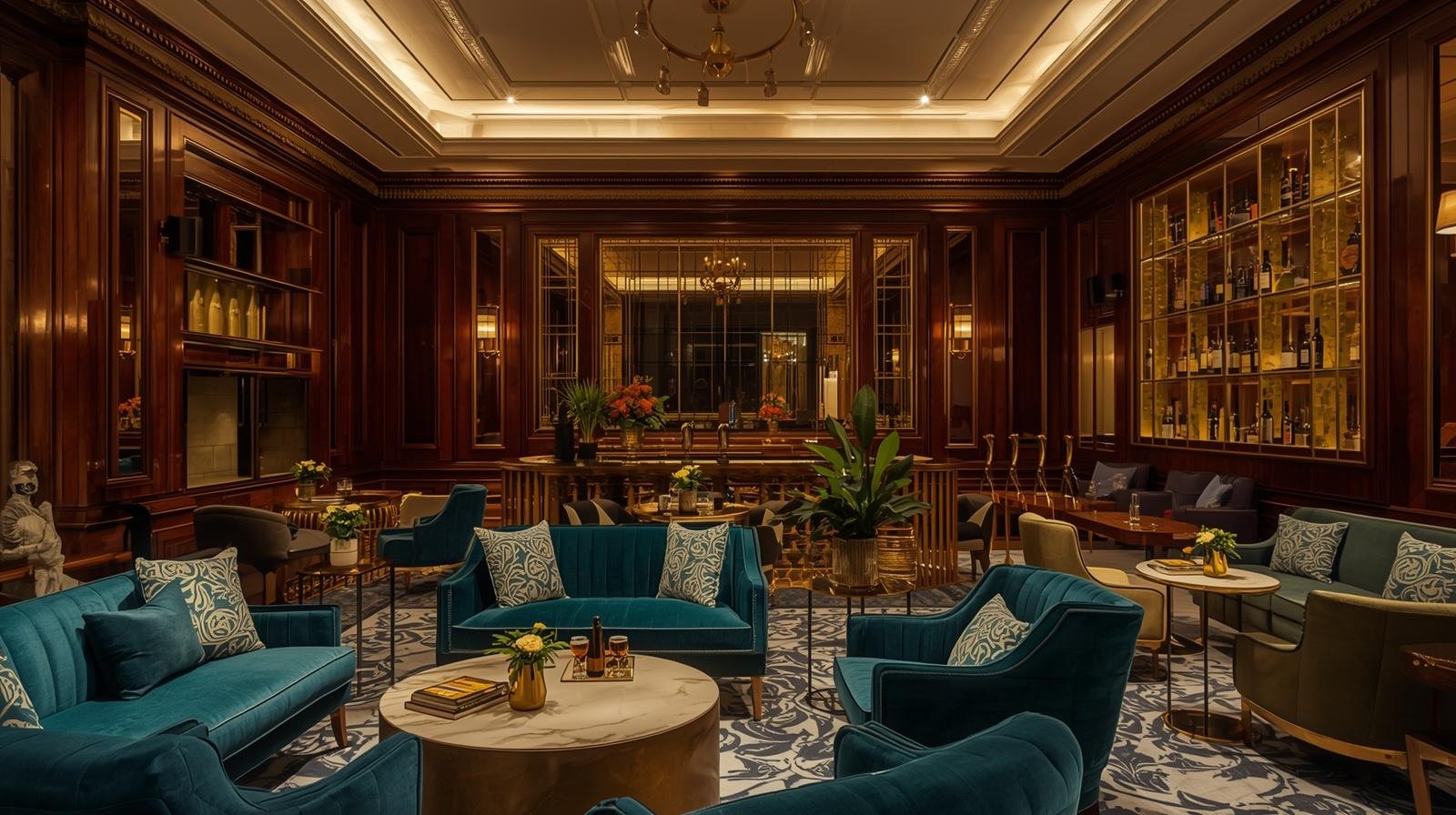
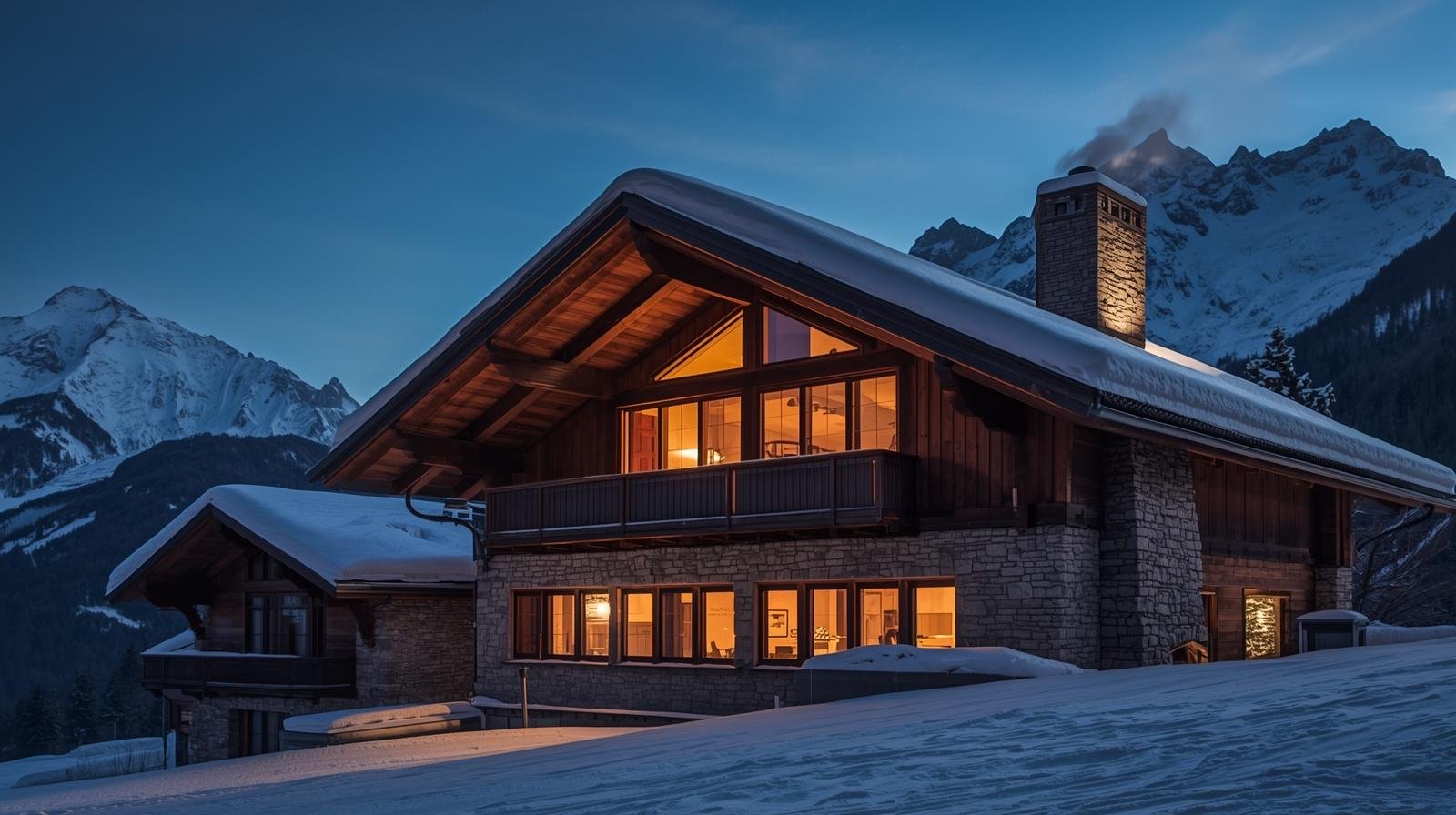
A 5,500 sq ft mountain retreat where Swiss alpine vernacular and Indian textile craft create unexpected synthesis—proving that cultural dialogue can happen through material warmth rather than obvious signifiers.
The clients—an Indian family who had lived in Geneva for two decades while maintaining strong connections to Delhi—acquired this Verbier plot seeking weekend escape from city life. Both avid skiers, they wanted home that would serve winter sports lifestyle while providing year-round mountain sanctuary. But they rejected typical Swiss chalet aesthetics—the overwhelming wood, the antler chandeliers, the folkloric clichés that make luxury alpine homes feel like theme parks.
Their brief sought balance: respect Swiss building traditions developed over centuries to handle extreme climate, but introduce warmth and craft quality associated with Indian interiors. The house should feel rooted in Verbier while reflecting their identity. It should accommodate large family gatherings (three generations, fifteen people) while remaining comfortable for the couple alone. And it should age gracefully—materials that would develop character rather than require constant maintenance. The site, on Verbier's southern slope with panoramic views toward Mont Blanc massif, presented both opportunity and constraint. Swiss building codes strictly regulate alpine construction: height limits, roof pitches, material choices, energy standards. Within these parameters, we needed to create contemporary home that would honor regional vernacular without replicating it, integrate sustainable systems without green-building clichés, and feel distinctly theirs without announcing cultural identity loudly.
The architecture follows traditional chalet massing—pitched roofs, deep eaves, stone base—but simplifies detailing to contemporary clarity. Rather than ornamental brackets and carved balustrades typical of folkloric chalets, we employed clean lines and minimal profiles. The pitched roof, required by code for snow shedding, becomes sculptural element rather than decorative gesture. Large windows, positioned for views and solar gain, frame Alps without picture-window kitsch.
The material palette honors Swiss tradition through honest use: local stone (Valais gneiss) for base and chimneys, reclaimed larch for cladding and structure, contemporary glazing for transparency and insulation. But we introduced warmth through Indian elements: custom brass hardware from Moradabad artisans, handwoven textiles from Delhi ateliers, carved wooden screens from Saharanpur workshops. These elements integrate seamlessly—the brass door handles feel appropriate to alpine woodwork, the textiles add color without clashing with neutral stone and wood.
The interior organization follows Swiss precedent—central living space with fireplace as literal and symbolic heart, bedrooms distributed around perimeter, service areas concealed. But we opened the plan more than traditional chalets: kitchen integrates with living rather than hiding behind doors, dining area flows into sitting zones, spaces connect visually while maintaining acoustic separation. The result feels both cozy (appropriate to mountain retreat) and generous (suitable for entertaining).
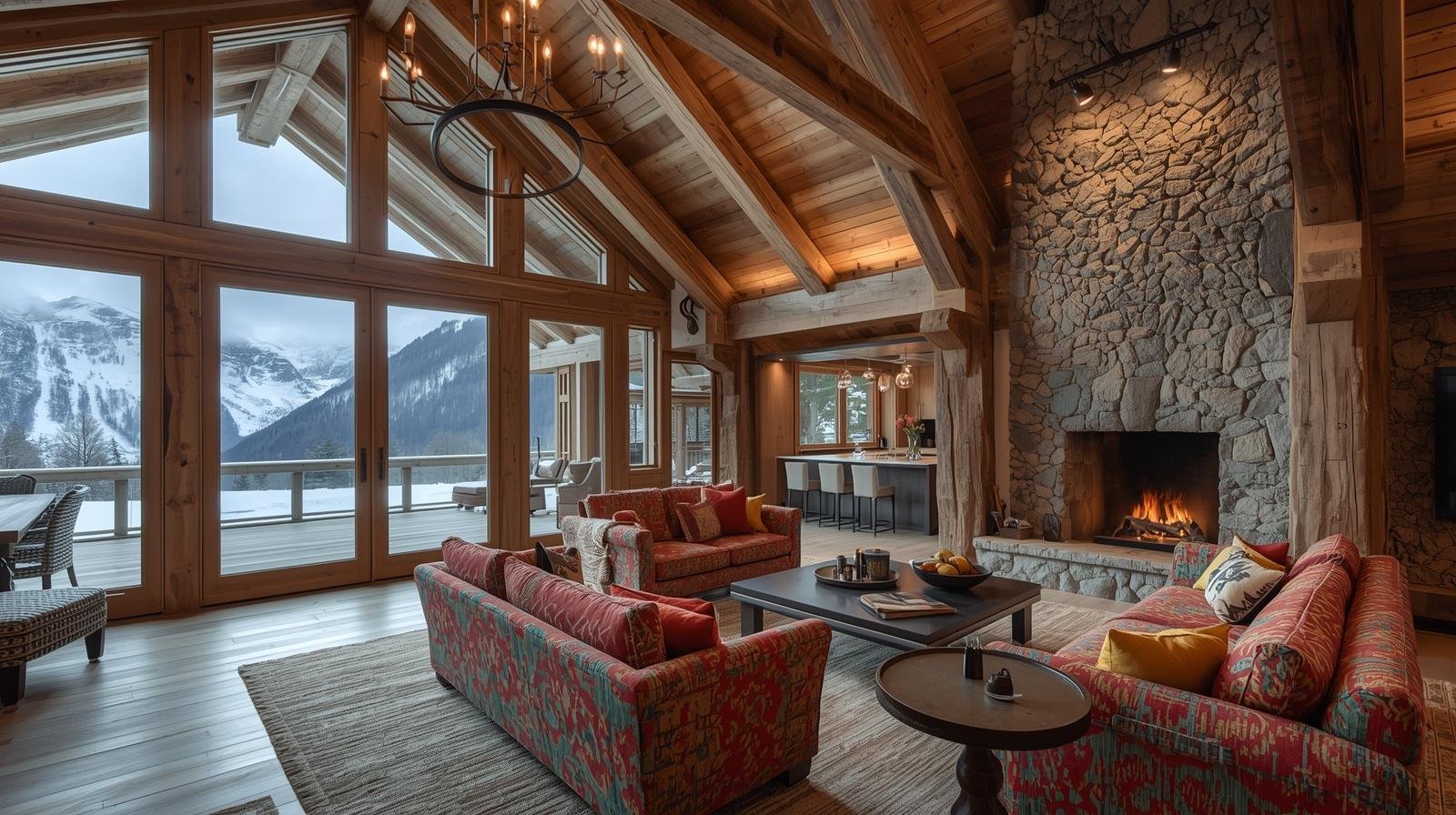
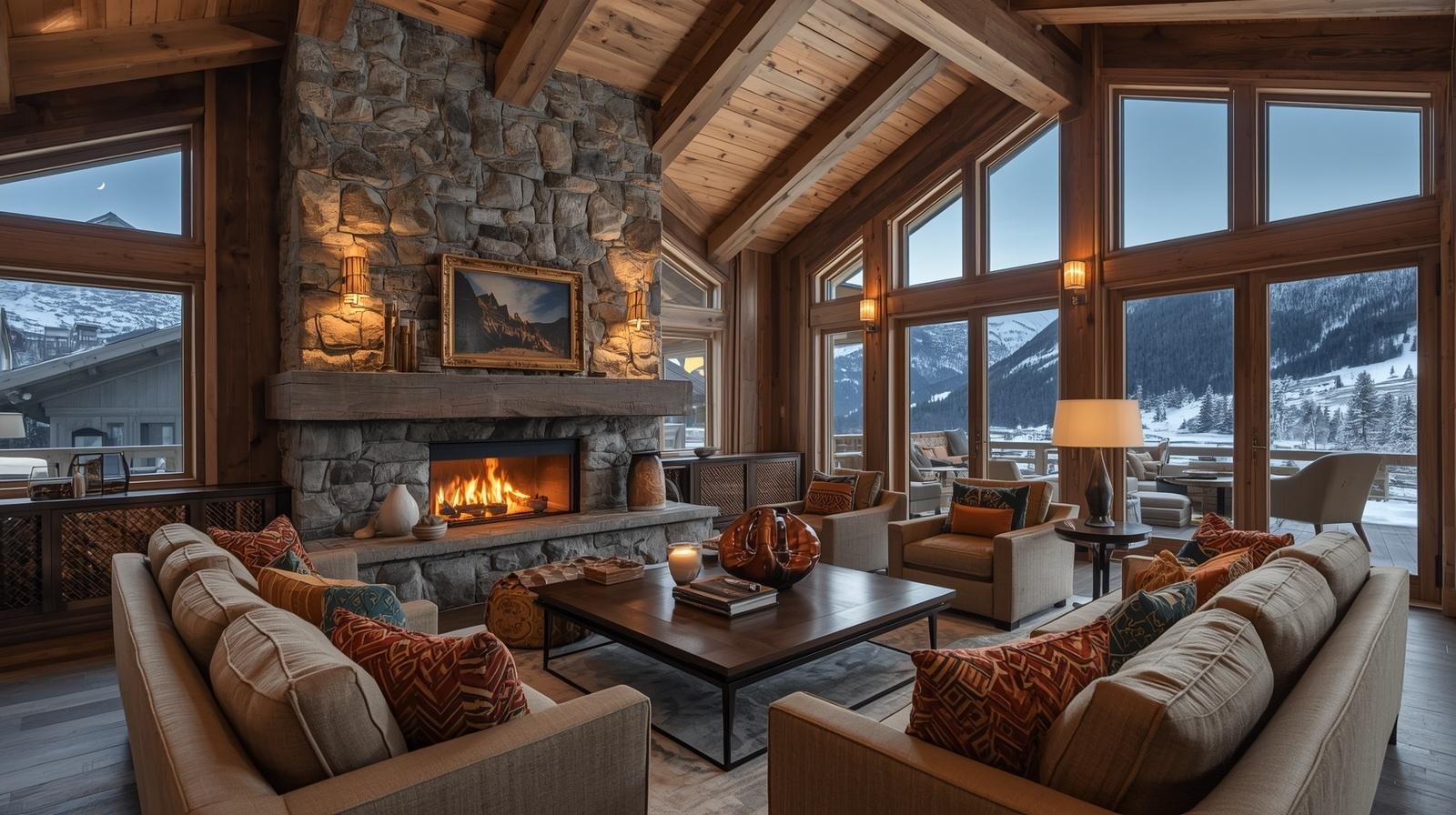
The great room—combining living, dining, and kitchen—occupies the chalet's heart. A massive stone fireplace, built from site-excavated rock by local mason, anchors one wall. The chimney mass provides thermal storage: absorbing heat during fire, releasing it hours later. Reclaimed larch beams, salvaged from deconstructed barns throughout Valais, span the ceiling. Each beam shows history—notches from original joinery, variations in color, the patina of decades exposed to weather before salvage.
The windows, triple-glazed for alpine climate, employ minimal framing that nearly disappears. Views extend uninterrupted to Mont Blanc massif—dramatic panorama that changes hourly with light and weather. We positioned window seats with storage below along the primary view wall, creating cozy reading nooks that become gathering spots during family visits. Custom cushions, upholstered in Abraham & Thakore textiles (handwoven wool in warm earth tones), provide comfortable seating and subtle color.
The living area includes a media wall: floor-to-ceiling oak veneer paneling concealing television, AV equipment, and storage. When closed, the panels read as architectural feature; when open, they reveal 75-inch television and organized media equipment. This integration—avoiding visible screens dominating the space—demonstrates the sophisticated technology approach buyers expect.
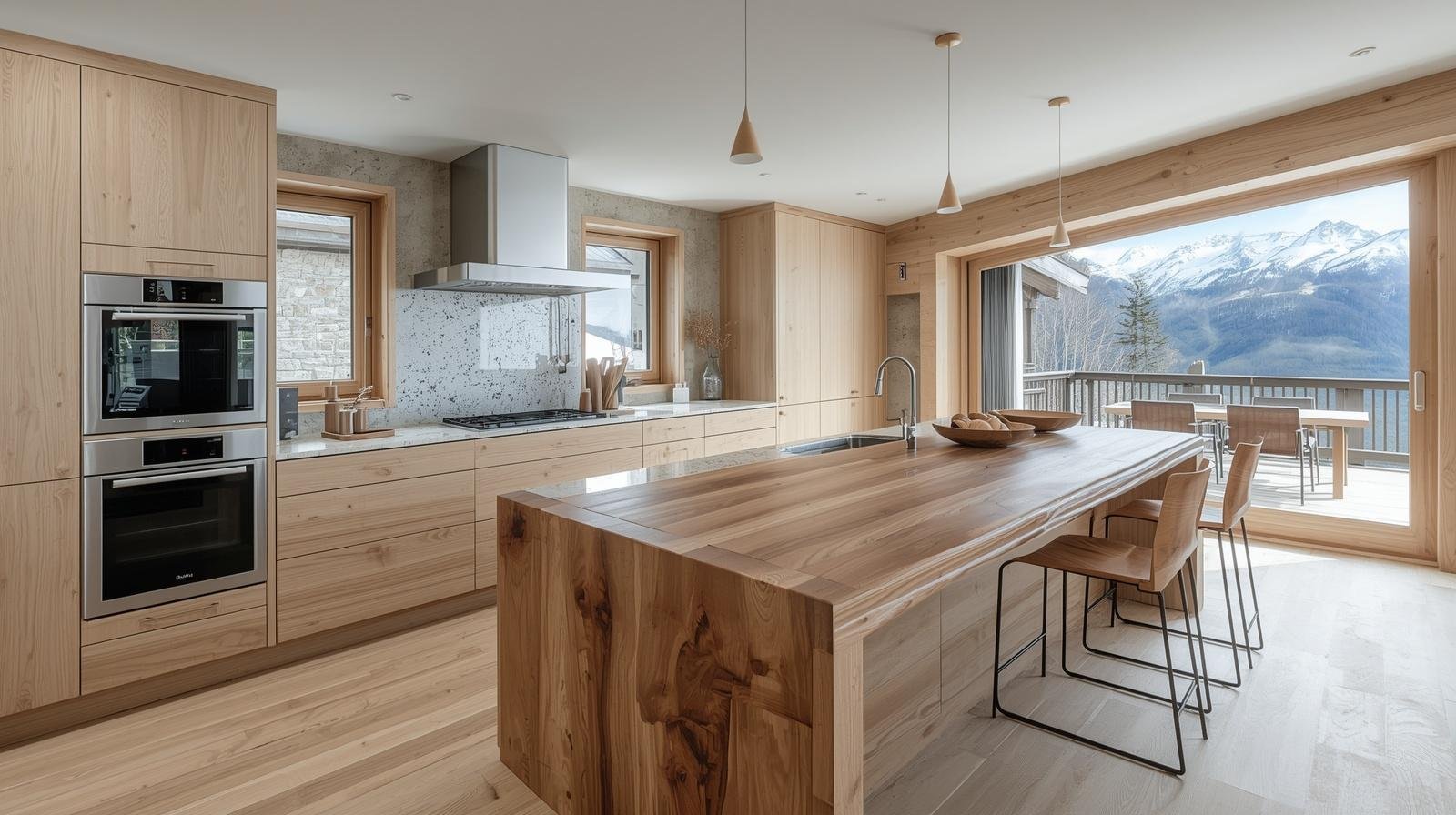
The kitchen integrates into the great room rather than separating. Custom cabinetry in white oak (neutral Scandinavian palette rather than dark Swiss traditional) keeps the space light. Countertops employ honed Valais granite—same stone as fireplace, creating material continuity. High-end appliances hide behind integrated panels. The kitchen island, topped with thick larch slab matching ceiling beams, serves as informal gathering point during meal preparation.
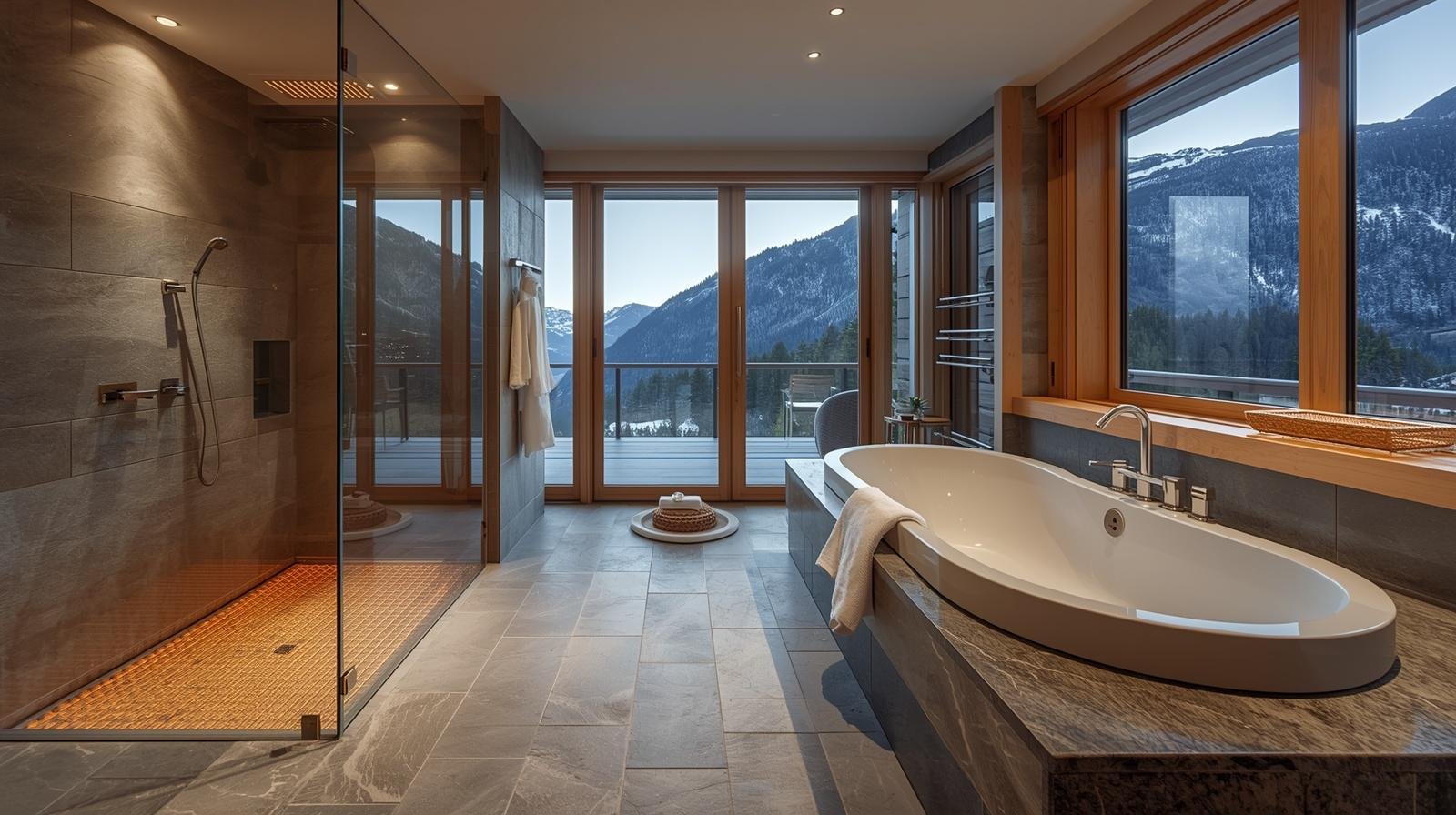
Technology integration serves alpine lifestyle. Radiant floor heating throughout—electric rather than hydronic for faster response and easier maintenance. Automated snow-melt systems keep entry paths clear. Motorized blinds provide privacy and insulation. The entire house controls via smartphone app, allowing the family to pre-heat from Geneva before weekend arrivals. But physical switches exist throughout—the technology serves life rather than dominating it.
"The question wasn't 'Swiss or Indian'—it was how to create home that honored both. The answer came through materials and craft. Wood and stone root us in Alps. Textiles and metalwork connect us to Delhi. Both traditions value quality and longevity. That's the synthesis."— Meera & Sameer Kapoor, Homeowners
Salvaged from Valais barns, traditional joinery
All structural and decorative timber employs larch salvaged from deconstructed barns throughout the Valais region. Larch is traditional Swiss building material—naturally rot-resistant, gaining character with age and weathering. The salvaged beams, some over 100 years old, possess density and color impossible to achieve with new timber. Each beam was cleaned, evaluated structurally, then reused with traditional mortise-and-tenon joinery executed by local carpenters. The wood's history—visible in old nail holes, variations in weathering, chisel marks from original shaping—adds character that new materials lack.
Local quarries, traditional masonry
The fireplace and chimney employ Valais gneiss—metamorphic rock quarried in the region and used in Swiss construction for centuries. The stone was site-excavated during foundation work, then hand-selected and shaped by local mason who learned his craft from grandfather. Each stone was individually fitted, creating tight joints without mortar that would crack with thermal expansion. The stone's natural variation—from light grey to deep charcoal—creates subtle texture. The massive thermal mass absorbs heat from fires, releasing it slowly over hours.
Swiss engineering, minimal frames
All windows employ Swiss-made triple-glazed units with argon fill—achieving U-values necessary for alpine climate while maintaining transparency. The frames, powder-coated aluminum in charcoal grey, minimize visual presence. Special corner units create frameless glass corners that maximize views without thermal bridges. The glazing admits maximum solar gain (important in winter) while providing excellent insulation. Motorized exterior blinds drop in summer to prevent overheating.
Handwoven, natural dyes, Delhi ateliers
All textiles were commissioned from Abraham & Thakore, working directly with weavers in Delhi and surrounding regions. The fabrics employ traditional techniques—pit loom weaving for cottons, hand-operated looms for wools—using natural fibers and vegetable dyes. Patterns were developed specifically for the chalet: geometric designs appropriate to alpine context, color palettes harmonizing with Swiss neutrals. Each textile length carries maker's mark and date—authentication and record of origin.
Lost-wax casting, hand-finishing
All hardware—door handles, cabinet pulls, bathroom fixtures—was commissioned from brass workshops in Moradabad, India. Each piece was individually cast using lost-wax technique, then hand-finished. We specified designs that would complement alpine woodwork: simple cylindrical forms, honest construction showing casting marks rather than machined perfection. The brass was left unsealed—it will develop natural patina in alpine environment, darkening in crevices while high-touch areas polish bright through use.
Electric systems, Swiss engineering
All floors employ electric radiant heating—preferred in alpine construction for responsiveness and reliability. The systems warm stone and wood floors efficiently, eliminating cold spots and drafts. Electric rather than hydronic (water-based) systems allow room-by-room control and faster heat-up times—important for weekend home that may sit empty during week. The installation employed Swiss engineering and local electricians ensuring code compliance and optimal performance.
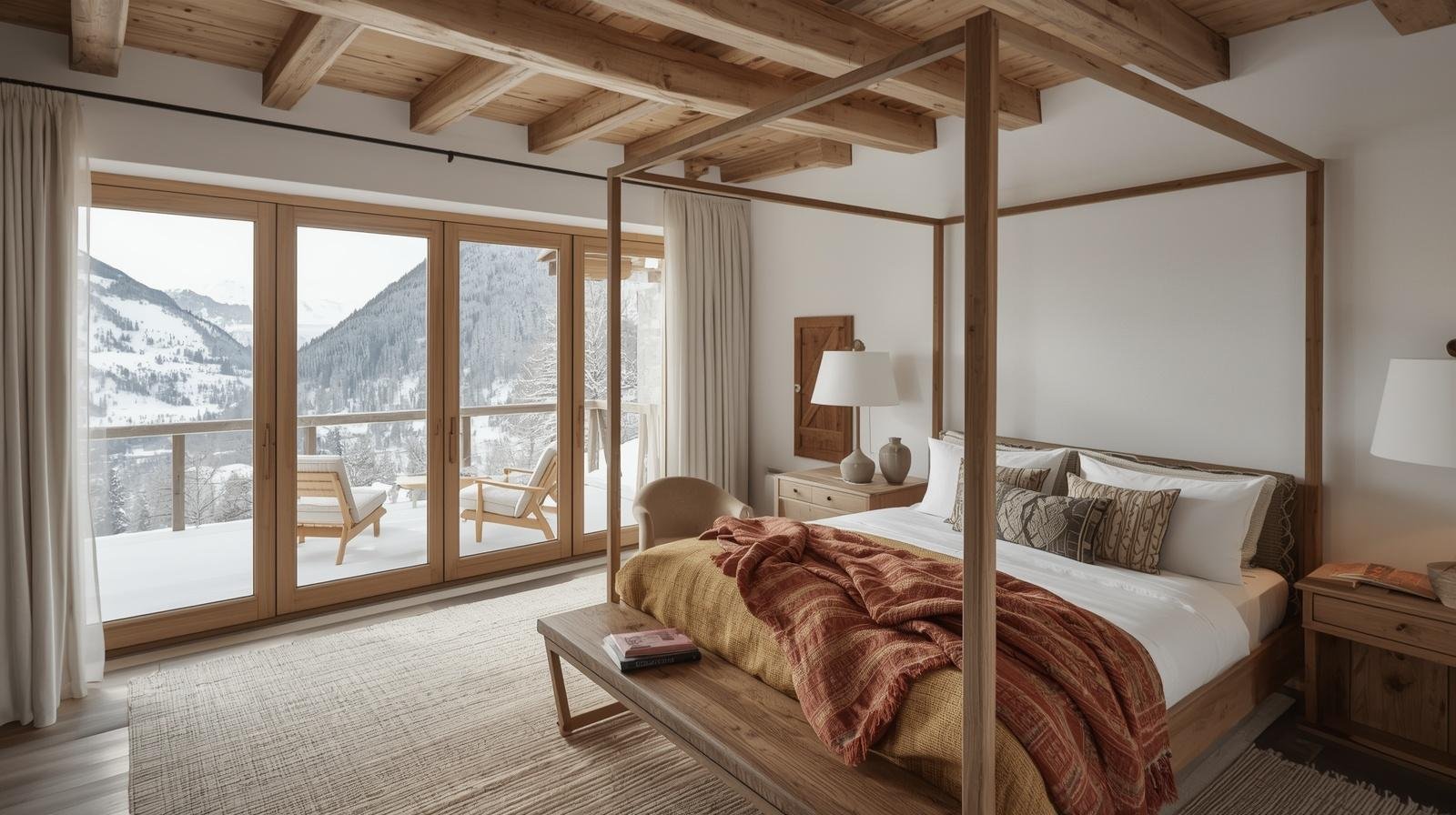
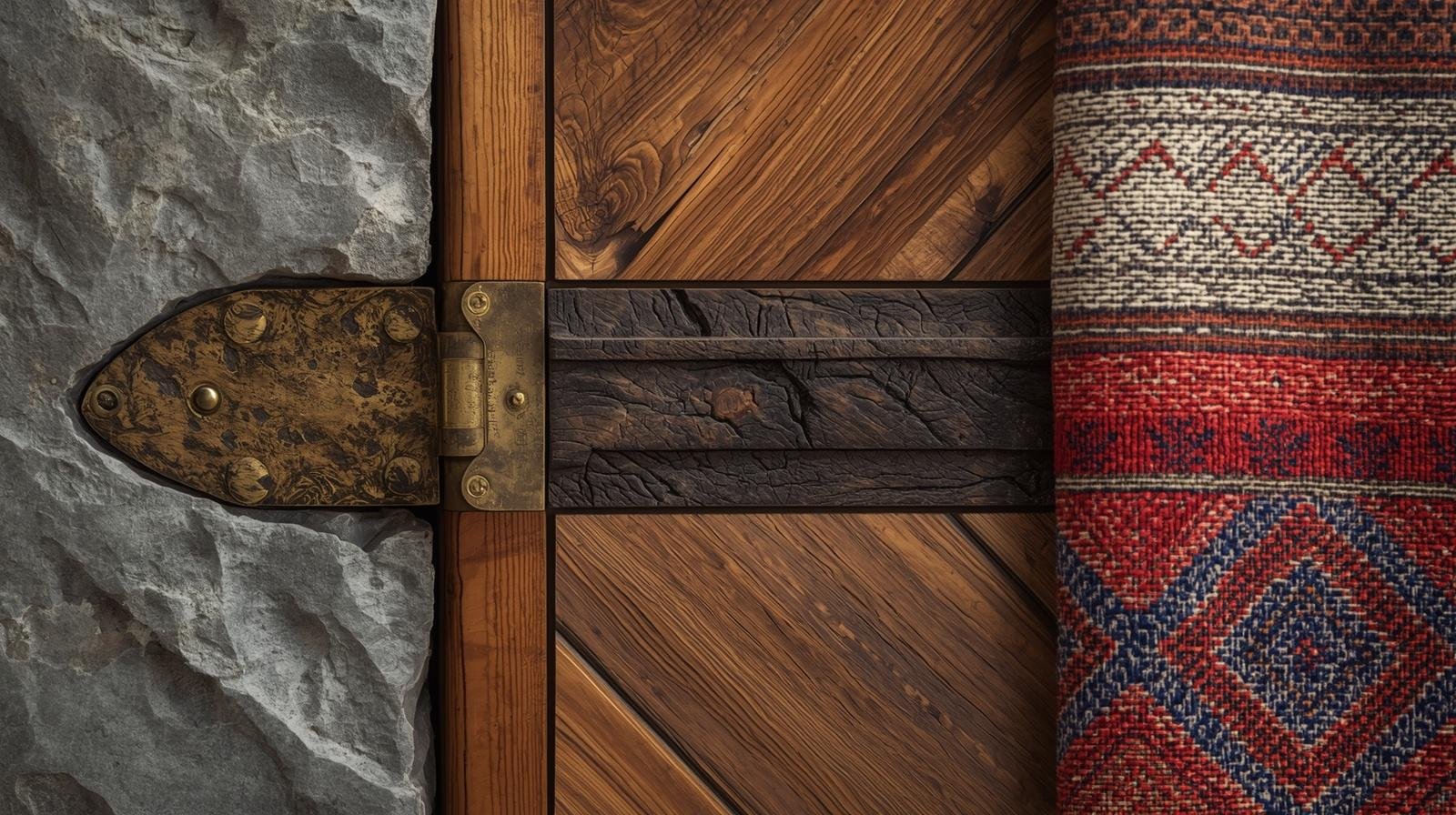
The synthesis of Swiss and Indian craft traditions happened through shared values: quality materials, hand execution, pieces built to last generations. Both cultures prize handwork and honest materials. Swiss woodworking and Indian textile arts both celebrate visible craft—the evidence of human hands creating beautiful objects. We commissioned textiles specifically for the chalet from Abraham & Thakore, Delhi-based design studio known for contemporary interpretations of traditional techniques. Working together, we developed color palette appropriate to alpine setting: warm neutrals, earth tones, deep indigos and charcoals. The weavers employed traditional techniques—hand-looming, natural dyes, cotton and wool fibers—but created patterns that would feel at home in Swiss context rather than announcing Indian origin. The textiles appear throughout: window treatments providing privacy and insulation, upholstery adding warmth to furniture, throws draped over reading chairs, bedding in guest rooms. Each piece employs hand-crafted technique—block printing, ikat weaving, hand-embroidery. The quality is immediately apparent: the weight of well-made fabric, the irregularities that distinguish handwork from machine production, the colors that gain depth from natural dyes.
Similarly, the brass hardware—door handles, cabinet pulls, bathroom fixtures—came from workshops in Moradabad where craftsmen have worked metal for generations. We specified designs that would complement Swiss woodwork: simple forms, honest construction, finishes that develop patina. The brass wasn't chosen for exotic appeal but for quality and character impossible to achieve with industrial production.
Two ski seasons have passed since completion. The chalet has become the family's preferred gathering place—more than Geneva apartment, more than Delhi family home. Something about the mountain setting, the cozy proportions, the views that never bore, creates atmosphere conducive to extended stays and multigenerational gatherings.
The chalet functions beautifully across seasons. Winter, obviously, is primary use period—ski-in/ski-out access makes Verbier's extensive terrain accessible directly from the house. But summer has proven equally appealing. The same views that frame snow-covered peaks in winter reveal green alpine meadows in summer. The mountain air, cool even in August, makes the chalet comfortable without air conditioning. Family hikes replace skiing; reading on the terrace replaces après-ski gatherings.
The sustainable systems perform better than projected. Solar panels on the roof generate more electricity than the house consumes annually (excess feeds back to grid). The radiant heating, paired with excellent insulation and thermal mass, keeps energy costs remarkably low despite large volume and extreme climate. The automated snow-melt systems use far less energy than manual clearing would require in labor and equipment.
For us, this project validates several design convictions. First, that cultural synthesis works best when subtle—the Indian elements don't announce themselves but integrate naturally into alpine context. Second, that quality materials and craft transcend cultural boundaries—Swiss woodwork and Indian textiles share values of hand execution and longevity. Third, that sustainable design needn't sacrifice luxury—the chalet meets Minergie standards (Swiss eco-certification) while providing every comfort.
We collaborate with clients creating mountain retreats that honor regional building traditions while introducing contemporary comfort and personal identity. Our approach integrates local materials with global craft excellence.
Begin Conversation