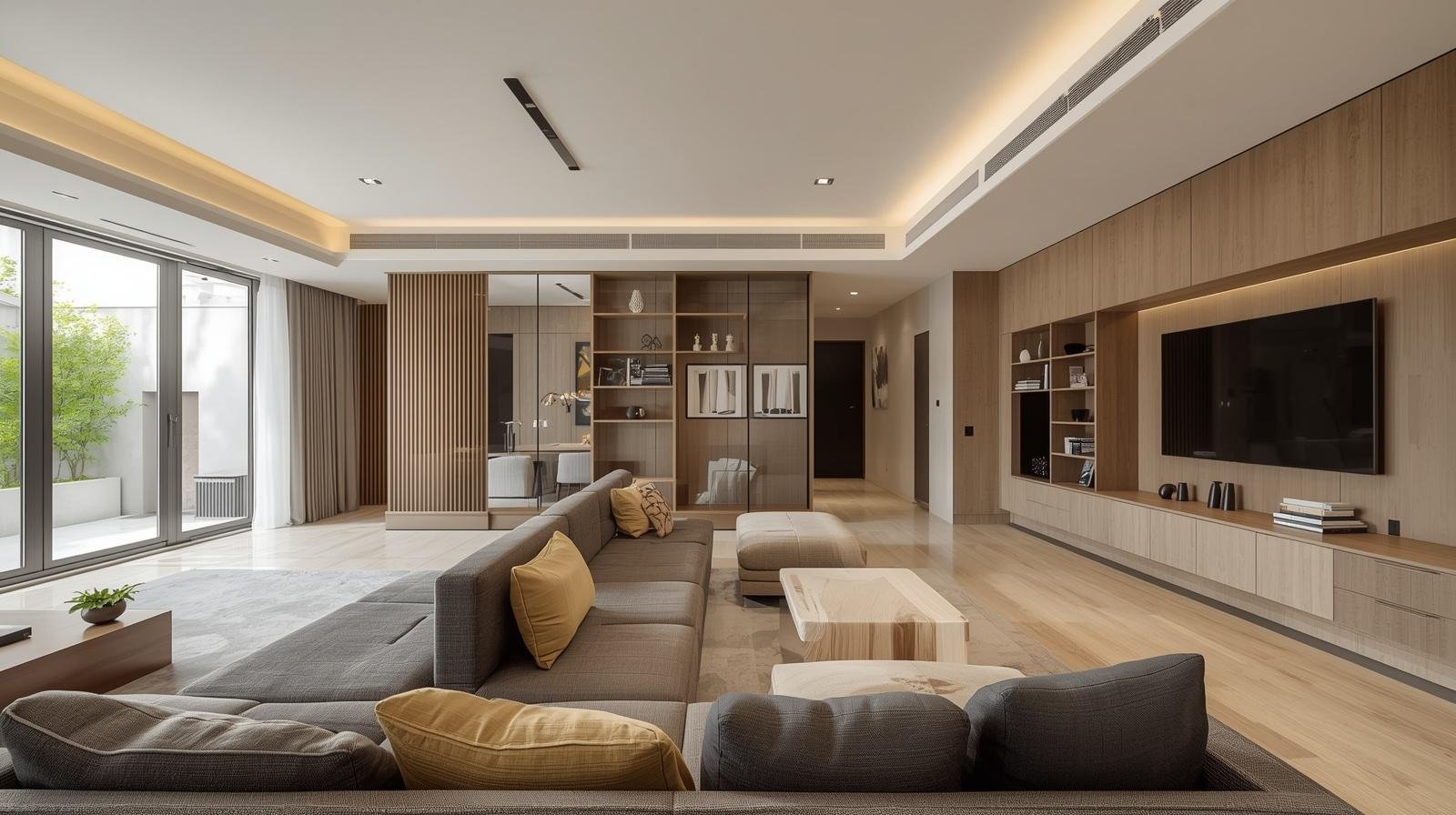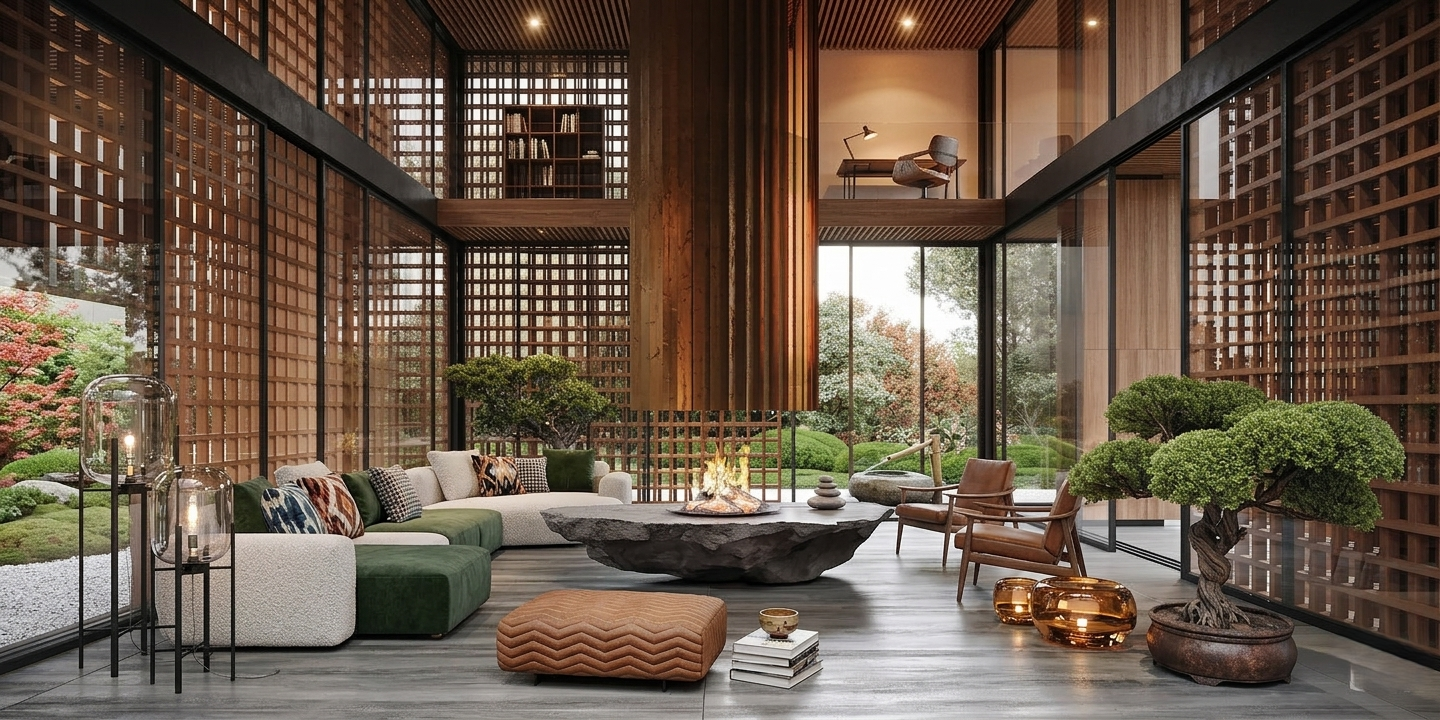
A 1,800 sq ft residence where Japanese spatial precision and Indian material craft create transcultural dialogue—proving that cultural synthesis happens through restraint, not accumulation.
The client—a Japanese lived in India for more than a decade, executive heading his company's Tokyo operations—had lived in the city for five years in developer-finished apartments that felt generic and placeless. When he acquired this Shibuya apartment with spectacular city views, he wanted something different: a home that would acknowledge both his Indian heritage and his adopted Japanese context without resorting to obvious cultural signifiers or creating East-meets-West clichés.
His brief emphasized restraint. Having lived in Tokyo, he appreciated Japanese design's economy—the idea that less can communicate more, that empty space has value, that materials should speak for themselves. But he wanted subtle connections to Indian craft traditions—not through color or pattern, but through materiality, tactility, and making processes. The space needed to feel distinctly his without announcing cultural identity loudly.
The 1,800-square-foot footprint presented typical Tokyo challenges: maximize every inch, create storage without clutter, maintain spatial flow despite necessary divisions, balance privacy with openness. Japanese apartments excel at these problems through centuries of spatial innovation. Our task was learning from this tradition while introducing elements that would personalize the space and connect it to the client's Indian roots.
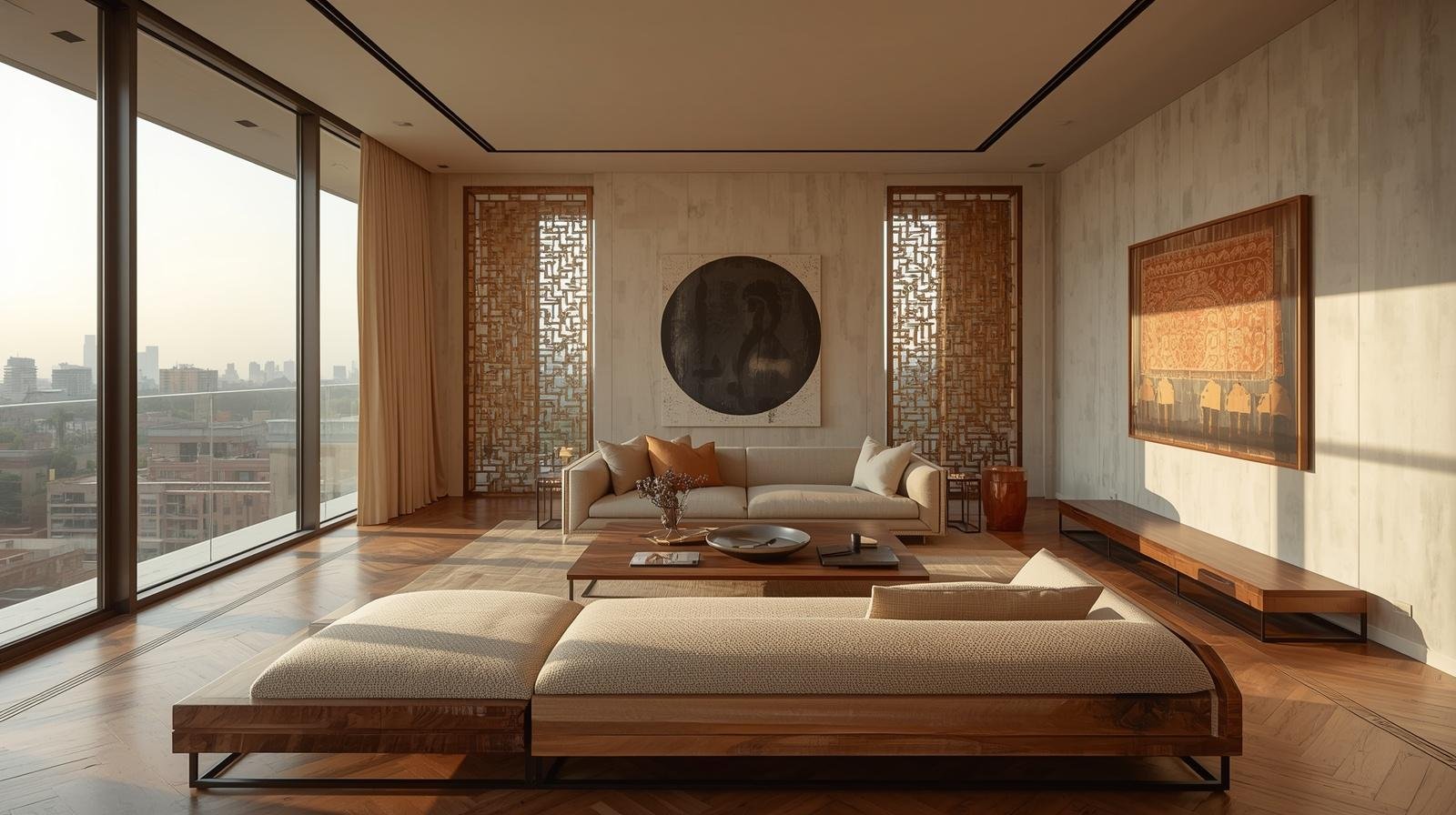
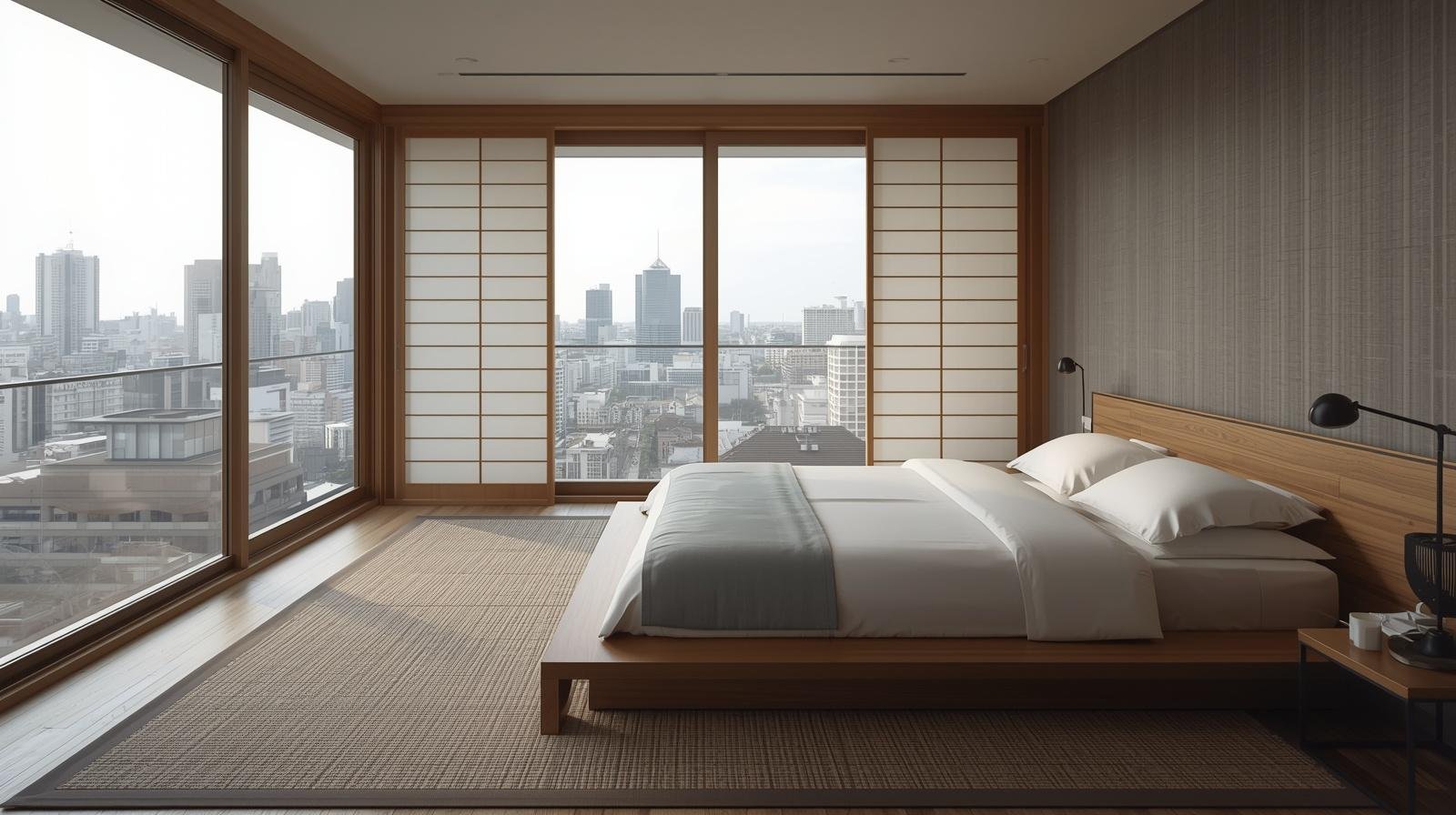
The spatial organization employs Japanese ma (間)—the concept of meaningful negative space that shapes how rooms relate and transition. Rather than corridors, we created threshold zones—areas that belong to neither room fully but mediate between them. Sliding screens, a traditional Japanese element updated with contemporary materials, allow spatial reconfiguration: the study can open to living room for entertaining or close for privacy; the bedroom can expand to include dressing area or contract for sleeping alone.
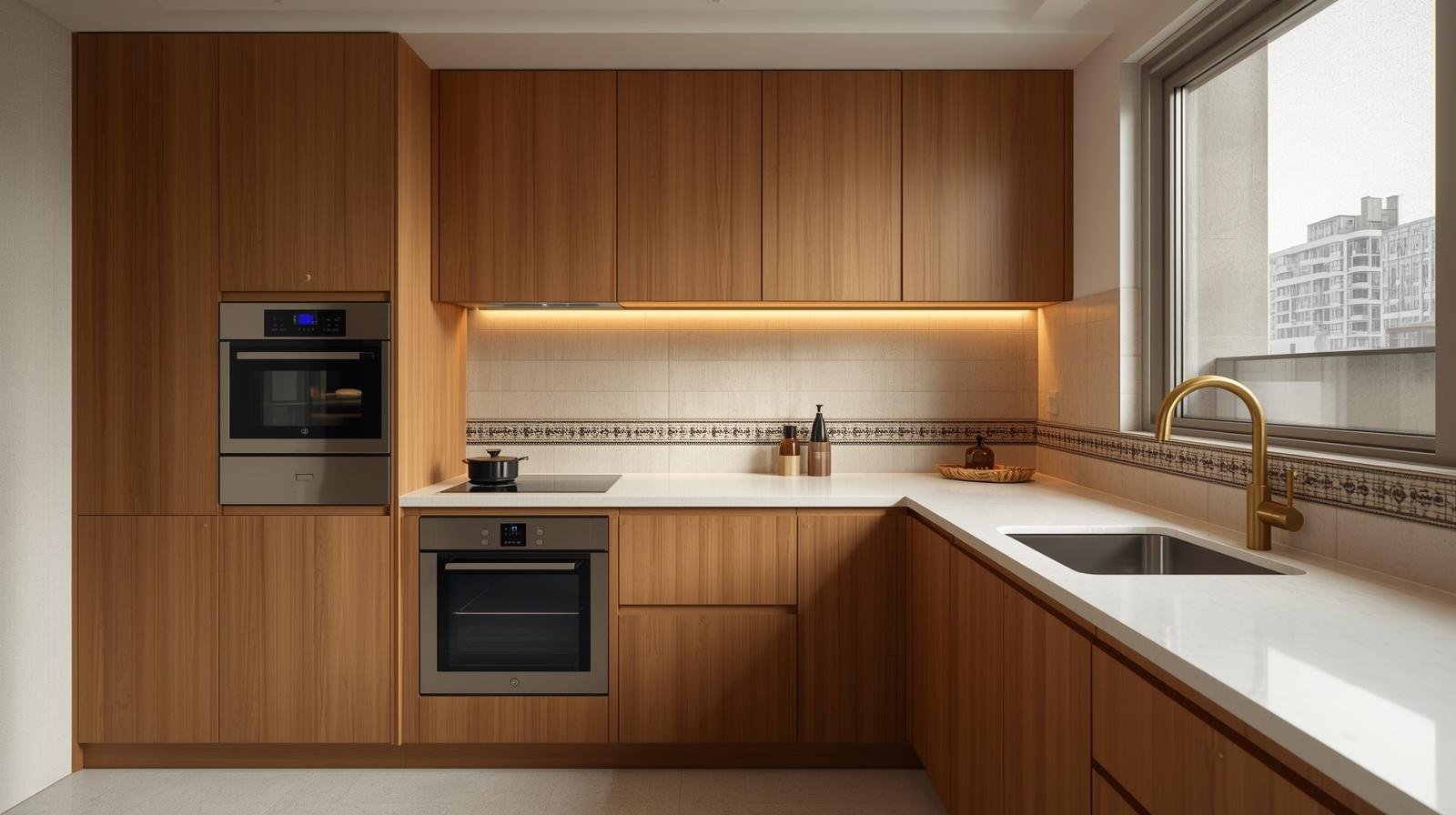
The apartment's centerpiece is custom tansu-inspired storage system spanning one wall of the living area. Traditional tansu chests employ modular construction allowing reconfiguration and transport—perfect for Tokyo's transient population. We worked with third-generation joiner Tanaka-san to design contemporary version: individual boxes in varying sizes (some drawers, some cabinets, some open shelves) that can rearrange as needs change. The joinery is entirely traditional Japanese—complex interlocking joints visible as design features rather than concealed. But the wood is Indian rosewood, and the brass hardware comes from Moradabad artisans who cast each pull by hand.
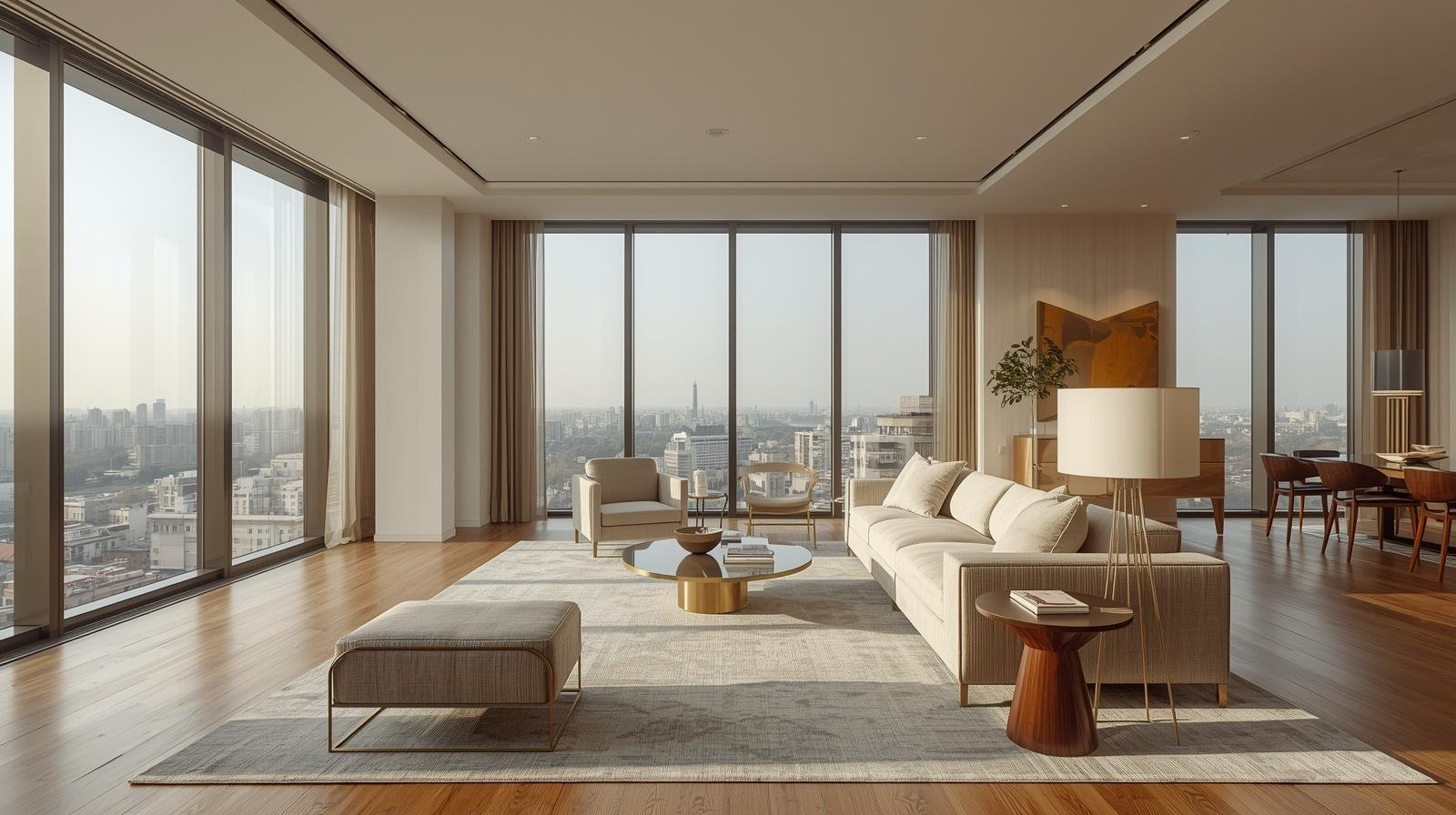
Spatial compression in Tokyo apartments demands multifunctionality. We designed what we call "threshold furniture"—pieces that define zones while serving multiple purposes. A low platform with built-in storage delineates the tatami-inspired sitting area from the main living space. The platform's top surface employs woven igusa (rush grass, traditional tatami material), but underneath lies storage for everything from shoes to seasonal items. Cushions for floor seating store inside the platform when not needed.
Lighting design layers carefully. Ambient illumination comes from concealed LED strips in ceiling coves—creating even, shadow-free baseline. Task lighting employs pendant fixtures designed by Kaoru Mende—contemporary forms in hand-blown glass and brass that reference both Japanese lanterns and Indian diyas (oil lamps). Accent lighting highlights the tansu wall and art collection. Everything dims to multiple preset scenes (morning, afternoon, entertaining, sleeping) controlled from single panels that disappear into wall planes.
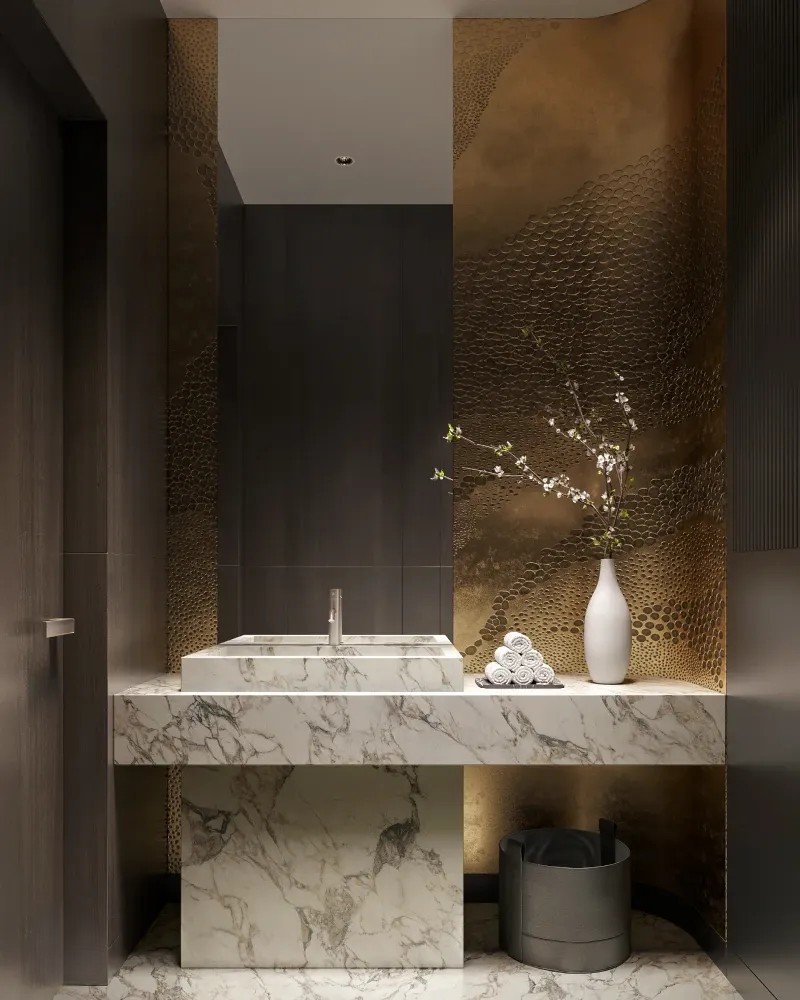
The bedroom employs Japanese concept of sleeping close to floor for grounding and calm. Rather than Western bed frame, we designed low platform in solid teak with built-in side tables and concealed storage beneath. Shoji-inspired sliding screens—rice paper replaced with translucent acrylic for durability—separate sleeping area from dressing zone. The bathroom continues minimal aesthetic but employs Indian marble for floors and walls—Makrana white with subtle veining, cut in large slabs, detailed with Japanese precision.
Technology integration happened Japanese-style: completely hidden. All screens retract into millwork. Sound system speakers conceal behind acoustic fabric panels that read as architectural elements. Climate control happens through ceiling-mounted units that disappear into white planes. Motorized blinds rise and lower at preset times. The apartment can be controlled entirely from smartphone app, but physical switches exist for those who prefer tactile interaction.
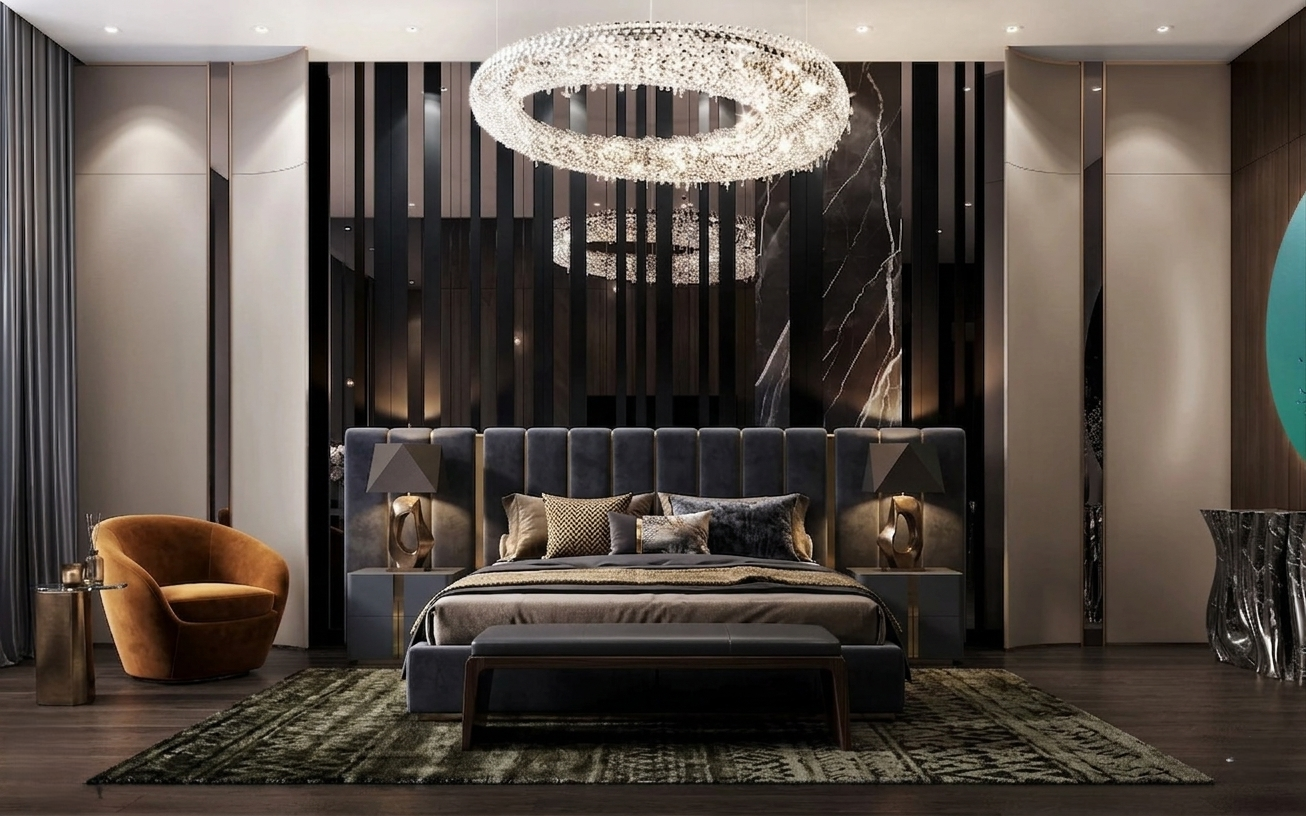
"Living between cultures could feel fragmenting—neither fully one thing nor another. This space resolves that tension. It doesn't try to be Japanese or Indian. It's both and neither, comfortable with synthesis. That's my life. That's contemporary identity.""— Keisuke Kashiwada, Homeowner
Japanese specification, Indian finishing
Flooring throughout employs Japanese walnut (onigurumi) milled into unusually wide planks (8 inches) typical of contemporary Japanese residential design. But the finishing technique follows Indian practices: multiple coats of natural oil hand-rubbed to saturation, creating matte surface that deepens in color over time. The wood was laid with minimal spacing, creating almost seamless surface that emphasizes grain patterns.
Traditional Japanese joinery, Indian rosewood
The modular storage system employs traditional tansu construction techniques executed by Tanaka Woodwork Studio, third-generation joiners in Tokyo. Each box features complex finger joints, sliding dovetails, and panel constructions perfected over centuries. But the wood is Indian rosewood rather than traditional Japanese cypress—denser, darker, developing richer patina. The joinery remains visible as design feature, celebrating craft tradition.
Moradabad artisans, lost-wax technique
All pulls, handles, and fixtures employ brass hardware commissioned from family workshops in Moradabad, India. Each piece was individually cast using lost-wax technique (same process used for temple bells and sculptures for millennia), then hand-finished. We shipped designs to India; artisans created wax models; we reviewed and refined; final pieces were cast and finished. The brass was left unsealed—it will develop natural patina in Tokyo's humid climate.
Hand-pressed, wood-fired
Kitchen backsplash employs small-format terracotta tiles from Kerala, hand-pressed and wood-fired using traditional techniques. The firing creates subtle color variation tile-to-tile—no two identical. The clay's natural porosity provides different surface quality than typical Japanese ceramics. We specified matte glaze in warm brown tones that complement rosewood and brass elsewhere.
Historic Indian quarries, Japanese detailing
Bathroom surfaces employ Makrana marble from Rajasthan—same stone used in Taj Mahal. The marble was cut into large-format slabs (minimizing grout lines per Japanese preference), then installed with Japanese precision (perfect alignment, minimal lippage, invisible joints). A honed finish provides slip resistance suitable for wet areas while maintaining the stone's luminous quality. The marble was book-matched to create symmetrical veining patterns—technique appreciated in both cultures.
Maheshwar weavers, contemporary patterns
Window treatments, cushion covers, and throws employ handloom textiles from Maheshwar, India. Working with weavers directly, we developed patterns that reference traditional Indian weaving but employ Japanese color sensibility (subdued tones, subtle gradations). The fabric is mercerized cotton—durable, washable, possessing subtle sheen. All textiles are natural fiber, biodegradable, and improve with washing.
FINAL REFLECTION The greatest challenge in creating transcultural spaces is avoiding superficiality—the "fusion" that combines cultures through borrowed decorative elements without understanding underlying principles. We approached this project by identifying values shared between Japanese and Indian design traditions, then expressing those values through specific material and craft choices.
Both cultures prize handwork and visible craft. Japanese joinery celebrates complex joints that demonstrate maker's skill. Indian metalwork and textile arts similarly showcase manual dexterity and patience. We honored both through commissioning custom elements: Japanese joinery techniques executed by Tokyo craftspeople, Indian brass hardware and textiles created by traditional artisans. Each culture's excellence appears through craft appropriate to it.
Both traditions value materials that age gracefully. Japanese aesthetics embrace wabi-sabi—beauty in impermanence and imperfection. Indian craft traditions similarly accept and celebrate patina, wear, the marks that time and use inscribe on objects. All materials in the apartment were chosen for how they'll age: wood that darkens, brass that oxidizes, plaster that develops subtle texture, stone that gains character. Nothing fights time; everything works with it.
Both cultures understand restraint. Japanese ma emphasizes meaningful emptiness. Indian minimalism (evident in certain temple architectures, in meditation spaces) similarly values absence as much as presence. The apartment employs both: Japanese spatial organization creating flow and separation simultaneously, Indian materials adding warmth and tactility without visual clutter.
Eighteen months after completion, the apartment has become exactly what the client sought: a home that feels simultaneously rooted in Tokyo and connected to his Indian heritage without announcing either identity loudly. Colleagues visiting—both Japanese and Indian—comment on the space's unusual quality without immediately identifying what creates it. The synthesis happens subtly enough that each culture's influence feels natural rather than forced.
The compact footprint initially concerned the client, accustomed to larger spaces in India. But the spatial efficiency Tokyo tradition has perfected—multifunctional furniture, concealed storage, flexible zones—provides functionality impossible in larger, less thoughtfully planned spaces. He now appreciates that generosity in residential design isn't merely about square footage but about how space is organized and detailed.
The tansu storage system proved remarkably practical. As his possessions evolved, he reconfigured the boxes—moving some, adjusting internal organization, even commissioning additional units from Tanaka-san that integrate seamlessly with originals. This adaptability, central to traditional tansu design, feels particularly appropriate for Tokyo where residents move frequently and lifestyles shift rapidly. The project has attracted attention from Tokyo's design community as example of how non-Japanese residents can create homes that respect local context while maintaining cultural identity. Several publications have featured it, typically describing it as "subtle fusion" or "transcultural minimalism"—labels we find apt. The apartment proves that globalization needn't mean homogenization, that cultural identity can express through restraint, that home can honor multiple heritages simultaneously.
We collaborate with globally mobile clients creating homes in compact urban environments. Our approach synthesizes cultural influences through material craft and spatial precision.
Begin Conversation