


MAGAZINE
The Art of Bespoke Luxury: How Custom Furniture Defines Ultra-Premium Interiors

In the world of luxury interior design, the distinction between opulence and true sophistication lies in one crucial element: personalization. While anyone with substantial capital can purchase designer furniture from established brands, the world’s most discerning clients understand that authentic luxury resides in pieces created exclusively for them—furniture that cannot be replicated, that tells their unique story, and that transforms their living spaces into galleries of personal expression.
The Evolution of Luxury: From Mass-Produced to Made-for-You
The landscape of premium interior design has undergone a fundamental transformation over the past decade. The ultra-high-net-worth individuals who once sought validation through recognizable brand names now pursue something far more valuable: absolute uniqueness. This shift represents a maturation of luxury consciousness, where true status is no longer communicated through logos but through the unmistakable presence of craftsmanship that exists nowhere else in the world.
Contemporary luxury clients—from tech entrepreneurs in Silicon Valley to royal family members in the Middle East—are increasingly investing in bespoke furniture that reflects their individual aesthetics, values, and lifestyles. These pieces serve multiple purposes: they function as daily-use furniture, investment-grade assets, and tangible expressions of personal identity.
The Crosby Difference: Where Traditional Craftsmanship Meets Contemporary Vision
For over two decades, Crosby Project has operated at the intersection of heritage Indian craftsmanship and modern design sensibility. Our 50+ artisan workshop in Delhi represents something increasingly rare in today’s manufacturing landscape: a place where time-honored techniques passed down through generations merge seamlessly with cutting-edge design innovation.
Each artisan in our workshop brings decades of specialized expertise. From master woodworkers who understand timber at an almost molecular level to metalwork specialists who can achieve finishes that appear impossible, our team creates furniture that transcends the ordinary definition of “custom-made.” We’re not simply modifying existing designs to client specifications; we’re architecting entirely new pieces that exist first as concepts, then as technical drawings, and finally as three-dimensional realities that often exceed even our clients’ ambitious visions.
The Investment Value of Bespoke Furniture
While the aesthetic and emotional value of custom furniture is immediately apparent, sophisticated clients also recognize its investment potential. Limited-edition and one-of-a-kind furniture pieces from established ateliers have demonstrated consistent appreciation in value, particularly when they represent significant design innovation or exceptional craftsmanship.
Consider the trajectory of mid-century modern furniture, which has seen values multiply exponentially over recent decades. Today’s bespoke pieces—particularly those created using sustainable materials and traditional techniques that are becoming increasingly rare—represent tomorrow’s collectibles. When clients commission furniture from Crosby Project, they’re not merely purchasing functional objects; they’re investing in tangible assets that embody cultural heritage, artistic vision, and irreplaceable human skill.
Materials That Matter: The Foundation of Exceptional Furniture
The journey of creating truly exceptional bespoke furniture begins long before our artisans touch their tools. It starts with material selection—a process that demands both technical knowledge and aesthetic intuition.
Sustainable Luxury Woods: We source premium timbers from responsibly managed forests, including Indian rosewood, teak, mango wood, and reclaimed wood that carries its own historical narrative. Each piece of wood is selected not just for its grain pattern and structural integrity, but for the story it will tell within the finished piece.
Metals and Finishes: From brass inlays that reference Mughal design traditions to contemporary steel frameworks finished in museum-quality powder coating, our metalwork elevates furniture from functional objects to sculptural statements. We regularly work with bronze, copper, stainless steel, and precious metals, often combining multiple materials within a single piece to create visual and textural complexity.
Upholstery and Textiles: Our upholstery materials range from Italian leathers that will develop rich patinas over decades to handwoven Indian textiles that connect contemporary furniture to centuries-old artistic traditions. We collaborate with textile artisans who create custom fabrics using natural dyes and traditional weaving techniques, ensuring that every surface of our furniture reflects intentional design decisions.
The Design Process: From Concept to Completion
Creating bespoke furniture requires a collaborative process that respects both the client’s vision and the designer’s expertise. At Crosby Project, our process unfolds through several carefully orchestrated phases:
Initial Consultation: We begin by understanding not just what clients want, but who they are. What are their daily routines? How do they entertain? What objects and materials resonate with them emotionally? What spaces have they visited that captured their imagination? These conversations often reveal desires clients hadn’t yet articulated, allowing us to propose solutions that exceed their initial expectations.
Concept Development: Armed with deep client insights, our design team creates initial concepts that range from subtle evolutions of classical forms to bold contemporary statements. We present these concepts through detailed renderings, material samples, and often physical models that allow clients to experience the scale and proportion of proposed pieces.
Technical Refinement: Once a design direction is approved, we develop comprehensive technical drawings that specify every dimension, joint, finish, and detail. This documentation serves as the blueprint for our artisans while also providing clients with absolute clarity about what they’re commissioning.
Artisan Fabrication: The actual creation process involves multiple specialists working in sequence and sometimes simultaneously. A single dining table might require the coordinated efforts of timber specialists, joinery experts, finishing artisans, and metalworkers, each bringing their specific expertise to different aspects of the piece.
Quality Control and Delivery: Before any piece leaves our workshop, it undergoes rigorous inspection. We examine not just the obvious visual elements but the subtleties of how drawers glide, how doors align, how finishes respond to light from different angles. For international clients, we coordinate white-glove delivery services that ensure pieces arrive in perfect condition, ready for installation.
Case Study: A Custom Dining Experience for a Dubai Residence
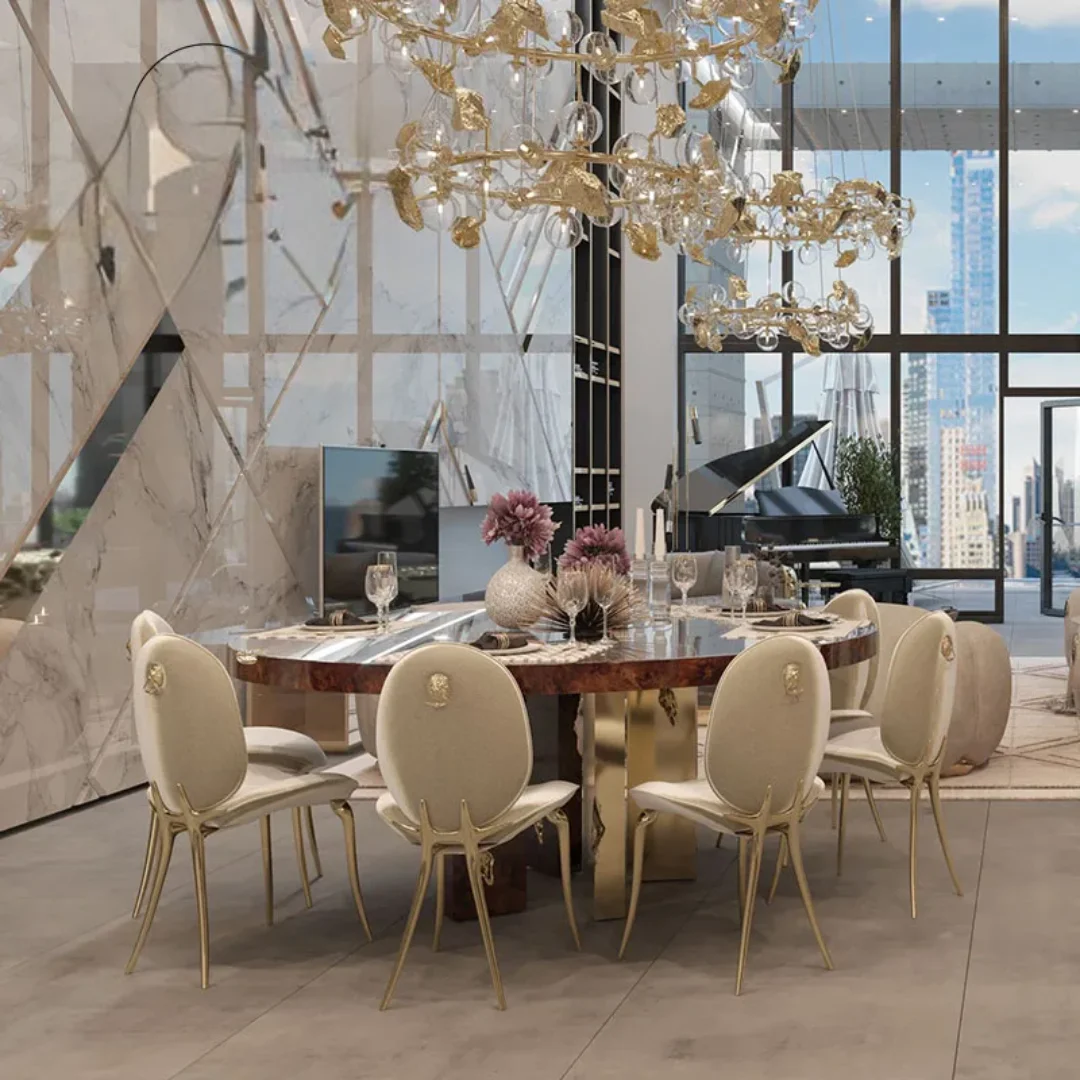
One of our most ambitious recent projects involved creating a complete dining environment for a client’s Dubai penthouse. The brief was both specific and open-ended: create a dining space that could accommodate intimate family dinners for six or formal entertaining for twenty-four guests, using sustainable materials, incorporating references to both Indian and Middle Eastern design traditions, and achieving a level of craftsmanship that would impress even the most discerning visitors.
Our solution involved a modular dining table system using reclaimed teak and brass inlays inspired by Islamic geometric patterns. The table functions as three separate pieces for everyday use but can be configured into a single eight-meter statement piece for larger gatherings. Each section features concealed structural supports that provide stability without disrupting the visual continuity of the geometric pattern that flows across the entire surface.
The accompanying chairs represent a contemporary interpretation of traditional Indian carved furniture, with ergonomically optimized proportions achieved through digital modeling and traditional hand-finishing that gives each piece subtle individuality. The upholstery combines hand-blocked cotton for visual interest with strategic leather reinforcements in high-contact areas for durability.
The complete installation required fourteen months from initial consultation to final installation, involved twelve specialized artisans, and resulted in furniture that our client describes as “the centerpiece that defined the entire apartment’s design direction.”
Sustainability as Standard, Not Exception
In an era when environmental consciousness has moved from niche concern to mainstream expectation, Crosby Project has integrated sustainability into every aspect of our operations. This isn’t a marketing position; it’s a fundamental operating principle that influences material sourcing, production processes, and business practices.
We prioritize reclaimed and salvaged wood, giving new life to materials from demolished structures, old furniture, and sustainable forestry operations. Our finishing processes use low-VOC products that protect both our artisans and our clients’ indoor air quality. We maintain long-term relationships with material suppliers who share our commitment to responsible sourcing and ethical labor practices.
Perhaps most importantly, we create furniture designed to last not years but generations. In a world of disposable consumer goods, we’re crafting pieces that will become family heirlooms, reducing consumption through longevity rather than through abstinence.
The Global Market for Bespoke Furniture
The international market for luxury custom furniture continues to expand, driven by several converging trends. Ultra-high-net-worth individuals are increasingly globally mobile, maintaining residences in multiple countries and seeking furniture that can either travel with them or maintain aesthetic continuity across their various homes. The rise of design-conscious emerging markets, particularly in the Middle East and Asia, has created new audiences for sophisticated custom furniture that honors cultural traditions while embracing contemporary aesthetics.
Digital platforms have made it possible for clients anywhere in the world to discover and commission work from ateliers they might never visit in person. At Crosby Project, approximately 40% of our commissions now come from international clients who initially discovered our work through our digital presence, then developed confidence in our capabilities through detailed virtual consultations before committing to significant projects.
Why Clients Choose Crosby Project
In a competitive global marketplace, clients select Crosby Project for several distinctive advantages:
Authentic Cultural Heritage: Unlike Western firms attempting to incorporate Indian design elements, we work from deep cultural knowledge and direct access to traditional techniques that cannot be replicated elsewhere.
Workshop Scale and Capability: Our 50+ artisan workshop provides the capacity to manage large-scale projects while maintaining the attention to detail typically associated with much smaller operations.
Design Innovation: We’re not a heritage brand resting on historical reputation. Our design team constantly explores new forms, materials, and techniques while remaining grounded in craftsmanship fundamentals.
International Logistics Expertise: Years of serving global clients have given us sophisticated capabilities in international shipping, customs clearance, and installation coordination.
Value Proposition: Our Delhi location and direct workshop operations allow us to deliver craftsmanship quality comparable to European ateliers at price points that provide genuine value without compromising on materials or execution.
Looking Forward: The Future of Bespoke Furniture
As we move deeper into the 21st century, bespoke furniture occupies an increasingly important position in luxury interiors. As artificial intelligence and automation transform manufacturing, the value of demonstrable human skill increases. As global supply chains create homogeneous product availability, the appeal of unique objects intensifies. As environmental consciousness deepens, the logic of investment-quality furniture that lasts generations becomes more compelling.
Crosby Project stands positioned to serve this evolving market, bringing together traditional Indian craftsmanship, contemporary design thinking, and sustainable practices to create furniture that satisfies both practical and aspirational needs.
For discerning clients worldwide seeking furniture that transcends the ordinary—pieces that will define their spaces, reflect their values, and appreciate in both monetary and emotional value over time—we offer not just products but partnerships in creating something genuinely exceptional.

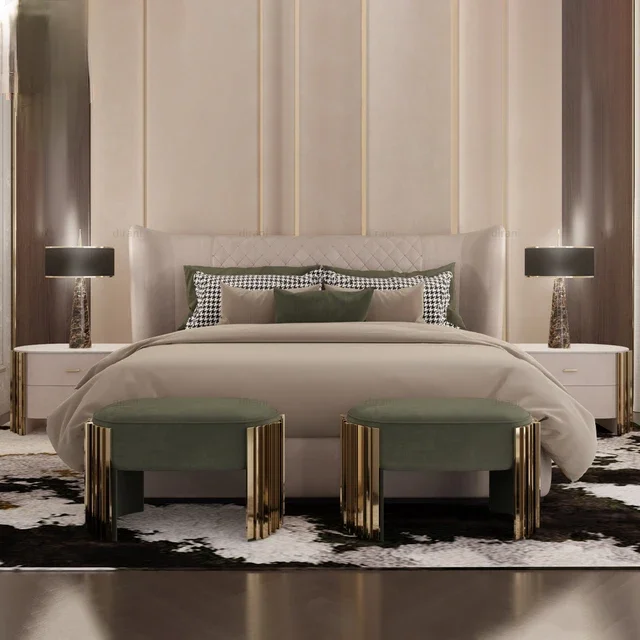











 Bedroom