



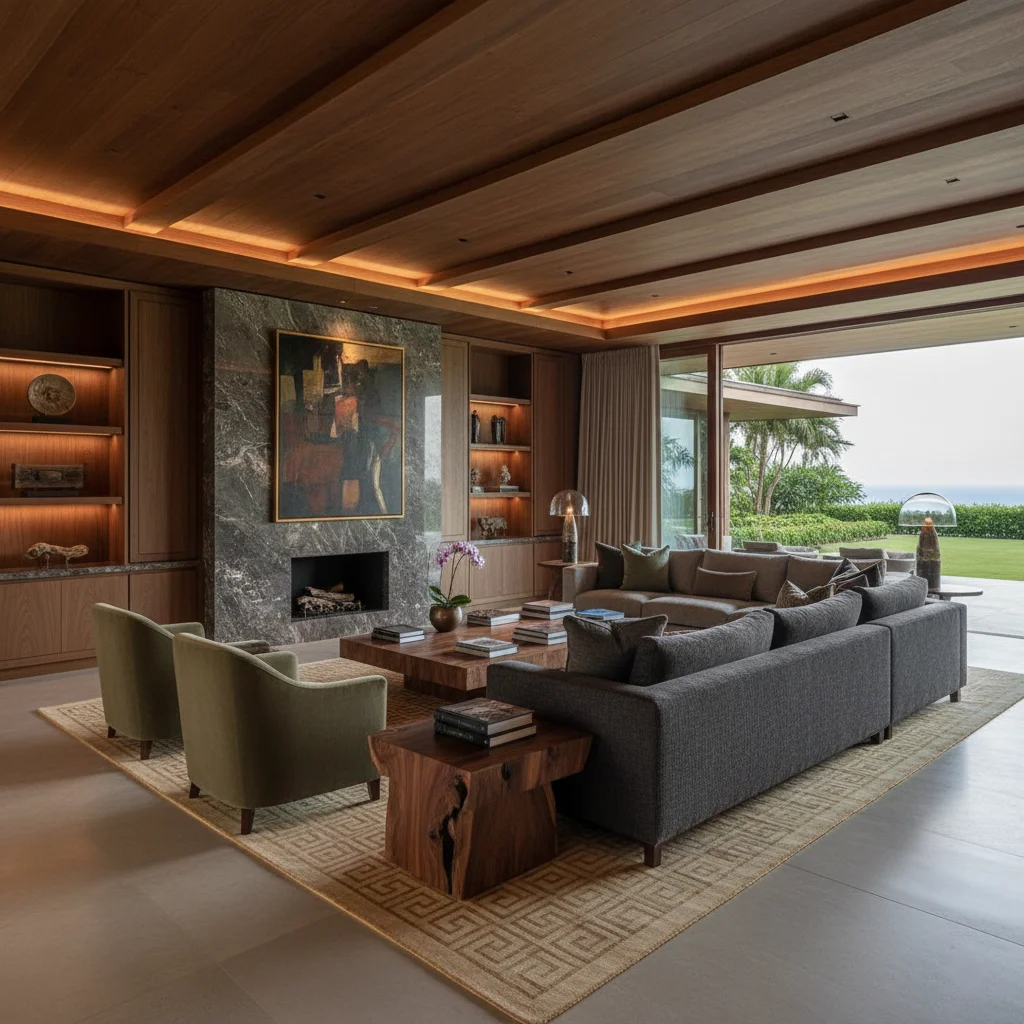
Inside the private residences of ultra-high-net-worth individuals—where true luxury transcends trends, status symbols, and everything you see in magazines
Published: December 2025 | Reading Time: ~14 minutes | Category: Ultra-Luxury Design & UHNW Lifestyle
The request was unusual even by our standards. A client—one of India’s most successful technology investors with a net worth comfortably exceeding $2 billion—wanted to discuss furniture for his new residence in Bangalore. But before showing me the architectural plans or discussing specific pieces, he made me sign a comprehensive non-disclosure agreement.
“I need you to understand something,” he said once the paperwork was complete. “What I’m about to show you cannot appear in any publication, cannot be discussed with other clients, cannot be referenced in your portfolio. The entire point of what we’re creating is that nobody outside my immediate family and closest friends will ever know it exists.”
Over the subsequent eighteen months, we created furniture for what remains one of the most extraordinary residences I’ve encountered—a 12,000 square foot penthouse that cost more to finish and furnish than most people spend on entire luxury homes. Yet you’ll never see it featured in Architectural Digest or shared on design blogs. It exists in a parallel luxury universe, invisible to the design media and general public.
This experience, repeated in various forms across dozens of commissions for ultra-high-net-worth individuals, has taught me something fundamental: the design choices that billionaires actually make in their private residences often bear little resemblance to what luxury design media portrays as “billionaire style.” The real preferences are more subtle, more personal, often more restrained than you’d imagine.
What follows isn’t speculation or aspiration. It’s based on two decades of direct observation—creating custom furniture for some of the world’s wealthiest individuals, seeing how they actually live, understanding what they genuinely value versus what they’re willing to let the world see. These insights reveal that at the absolute pinnacle of wealth, luxury becomes radically different from everything below it.
The Invisibility Principle: Why True Luxury Hides
The first and perhaps most surprising characteristic of billionaire interiors is deliberate invisibility. Unlike the aspirational wealthy who want their homes to signal status, the truly wealthy often work actively to conceal the extent of their luxury.
This isn’t about modesty or false humility. It’s about genuine privacy, security, and freedom from the social complications that visible extreme wealth creates. When your net worth exceeds $500 million or $1 billion, broadcasting that wealth invites problems—from security risks to endless solicitations to unwanted social dynamics.
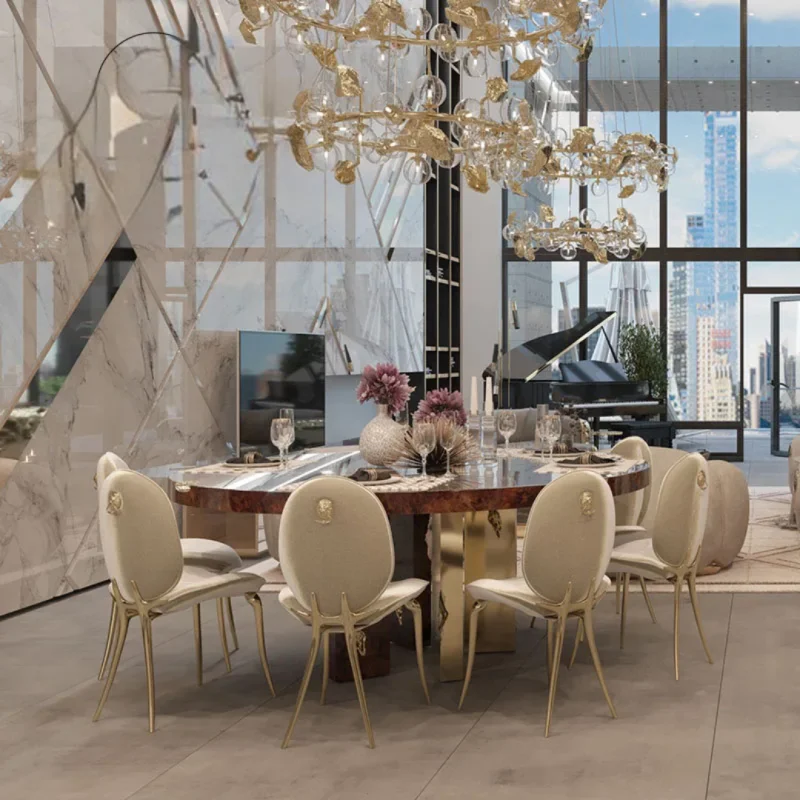
We see this constantly in furniture commissions. Clients request designs that appear understated but are actually extraordinarily expensive due to hidden quality factors invisible to casual observers. A dining table might look like refined but simple modern design, yet it’s actually created from incredibly rare wood using construction techniques requiring 800 hours of master craftsman time. The table cost ₹85 lakhs, but nobody looking at it would guess that figure—it simply appears as beautiful, well-made furniture.
This stealth luxury extends to material selection. Rather than using obviously expensive materials like exotic marbles or precious metals in ostentatious applications, billionaire interiors often employ rare materials in subtle ways. A floor might be rare Macassar ebony rather than standard oak—costing ten times as much but looking only marginally different to untrained eyes. Cabinet hardware might be custom-fabricated bronze rather than standard brass—requiring months of artisan work but appearing relatively simple.
The invisibility principle also manifests in avoiding recognizable luxury brands. While the aspirational wealthy fill homes with logoless products from famous design houses—assuming other sophisticated people will recognize a B&B Italia sofa or Minotti chair—true billionaires increasingly commission completely custom furniture that exists nowhere else. No brands to recognize, no way for visitors to mentally price what they’re seeing, just beautiful furniture of indeterminate origin.
A Mumbai client with generational wealth worth over ₹8,000 crores explained this philosophy: “The moment someone can identify a brand or estimate a cost, you’ve failed. The goal is creating beauty so personal and specific that it can’t be categorized or valued by anyone outside your immediate circle.”
Comfort Over Aesthetics: The Functionality Revolution
The second major distinction in billionaire interiors is the absolute prioritization of comfort and functionality over pure aesthetics. This seems counterintuitive—surely people with unlimited budgets would choose the most beautiful options regardless of practicality? But the reality is precisely opposite.
At the highest wealth levels, people have already proven everything they need to prove. They’re not seeking validation through their homes. They want spaces that support their lives with absolute efficiency and comfort, even if achieving this requires aesthetic compromises.
We’ve had numerous experiences where clients selected furniture options that were less visually dramatic than alternatives because they were more comfortable, more practical, or better suited to actual use. A sofa might be designed with slightly less elegant proportions because the modified dimensions provide better back support. A dining table might incorporate features that don’t photograph beautifully but make daily use easier.
This functionality-first approach appears in unexpected places:
Seating designed for actual bodies: Rather than accepting standard furniture proportions, ultra-wealthy clients increasingly commission furniture designed for their specific physical dimensions and preferences. We take detailed measurements of clients’ bodies, understand how they actually sit, and create furniture optimized for their comfort. A recent client is 6’4″ tall—standard furniture seats him with knees awkwardly high and inadequate back support. We created seating with dimensions tailored to his height, resulting in comfort impossible with standard proportions.
Technology integration that actually works: Billionaire homes incorporate sophisticated technology, but the best implementations are essentially invisible. Furniture includes integrated charging, hidden cable management, motorized mechanisms that operate silently. The technology serves the resident seamlessly rather than requiring constant attention or creating aesthetic compromises.
Storage that accommodates real life: Despite vast square footage, billionaire homes still require extensive storage for all the objects wealthy people accumulate. But rather than accepting visible clutter or creating visible storage systems, the best designs incorporate massive hidden storage accessed through seamless cabinetry. We’ve created closets larger than most bedrooms, pantries that could serve as small kitchens, storage rooms holding possessions most people don’t realize need storing.
Maintenance consideration: Ultra-wealthy clients understand that even with full-time staff, some maintenance is inevitable. They prefer materials and finishes that age gracefully, that don’t show every fingerprint or mark, that can be easily cleaned or refreshed. We finish dining tables with products that resist water rings and scratches, select upholstery fabrics that hide minor stains, use wood species that develop attractive patina rather than looking damaged as they age.
This comfort and functionality focus doesn’t mean sacrificing beauty. The challenge—and where exceptional design proves its value—is creating furniture that’s supremely comfortable and functional while also being exquisitely beautiful. This synthesis is far more difficult than purely aesthetic design, but it’s what billionaire clients demand and reward.
The Personal Narrative: When Everything Tells Your Story
The third distinguishing characteristic of billionaire interiors is intensely personal narrative. Every significant piece, every material selection, every design decision connects to the client’s personal history, interests, values, or experiences.
This goes far beyond generic personalization. It means commissioning furniture that incorporates wood from a family estate, or stones from a meaningful location, or design elements referencing significant life events. It means working with artisans whose work connects to the client’s heritage or values. It means creating interiors that couldn’t possibly belong to anyone else because they’re saturated with specific personal meaning.
We’ve created numerous pieces incorporating deeply personal elements:
Materials with specific provenance: A dining table using wood from trees on a client’s ancestral property in Kerala, milled and crafted into furniture incorporating traditional joinery techniques from that region. The table isn’t just beautiful—it’s literally made from the client’s family land using craft traditions his ancestors would recognize.
Design elements referencing personal achievements: Inlay patterns on cabinetry incorporating mathematical sequences significant to a mathematician client’s breakthrough research. The meaning is invisible to visitors but deeply significant to the client himself.
Collaborations with specific artisans: Commissioning work from craftspeople the client has personal relationships with, or from regions where the client has meaningful connections. A client who’d spent years working in rural Rajasthan insisted on using artisans from that specific region, supporting communities he’d come to care about.
Functional customization around specific interests: A passionate cook commissioning kitchen furniture designed around his specific cooking style and preferred equipment. A book collector creating a library with furniture and shelving designed for his exact collection. A car enthusiast incorporating automotive design elements and materials into furniture.
This personalization extends to scales both grand and minute. At the grand scale, it might mean entire rooms designed around specific passions—a whiskey tasting room with custom furniture for a spirits collector, a meditation chamber incorporating elements from locations meaningful to a spiritual practitioner, a music room designed acoustically and aesthetically for a serious musician.
At the minute scale, it might mean incorporating tiny details only the client would notice—a specific wood species chosen because it grows on property the client owns, inlay patterns referencing dates significant to the family, dimensions derived from numbers holding personal meaning.
A technology entrepreneur we worked with had us incorporate binary code into the carved details of his study furniture—the binary representation of his children’s birthdates, invisible to casual observation but deeply meaningful to him. The furniture literally encoded his family into its design.
This intense personalization creates interiors that are essentially untranslatable to other owners. When these properties eventually sell, the new owners often completely redo them because the existing interiors are so specifically designed for the previous residents that they can’t work for anyone else.
Quality Beyond Visibility: The Invisible Excellence
The fourth characteristic is investment in quality factors that are largely invisible but that distinguish exceptional furniture from merely expensive pieces.
Ultra-wealthy clients increasingly understand the difference between expensive and excellent. They’re willing to pay enormous premiums for quality improvements that most people would never notice but that create genuine long-term value.
This appears in numerous aspects of furniture creation:
Joinery that exceeds requirements: Using traditional hand-cut joinery techniques that take days longer than modern alternatives but create connections that actually strengthen over decades. The joints are hidden within furniture, invisible after construction, but they’re executed to standards approaching art rather than merely meeting structural needs.
Finishing processes that build quality: Applying twenty or thirty or forty coats of finish, carefully rubbed and polished between each layer, creating depth and durability invisible in photographs but apparent in person. These finishing processes might triple the cost of a piece, but they create quality that persists for generations.
Material selection at microscopic levels: Choosing specific wood boards not just for visible grain patterns but for growth ring density, cell structure, moisture content—factors affecting long-term stability and performance that only expert woodworkers understand. We’ll reject boards that look beautiful but show characteristics suggesting potential future problems invisible to clients.
Testing and quality control: Subjecting furniture to stress testing, environmental cycling, and quality inspection that exceeds any industry standard. We might age-test finishes under accelerated UV exposure, cycle furniture through humidity variations, load-test structural components to multiple times their intended use weights.
Documentation and archiving: Creating comprehensive documentation of every piece—construction photographs, material source records, artisan information, finish formulations, assembly details. This documentation has minimal immediate value but becomes invaluable for long-term maintenance and restoration.
A client once asked why we insisted on using traditional hand-cut dovetail joinery for drawer construction when modern drawer box construction using machine-cut joints and high-tech adhesives would be equally strong and far less expensive. The answer: traditional dovetails can be repaired and tightened indefinitely, while modern construction often fails catastrophically and irreparably. Over a fifty or hundred-year lifespan, the traditional approach proves far superior despite costing three times as much initially.
Ultra-wealthy clients understand this long-term value thinking. They’re not optimizing for five-year or ten-year performance—they’re creating furniture they expect their grandchildren to inherit. The premium for invisible quality excellence is trivial compared to the value of genuine multi-generational durability.
The Curation of Emptiness: When Less Becomes Ultimate Luxury
The fifth characteristic is sophisticated restraint—the willingness to leave spaces relatively empty rather than feeling obligated to fill them with objects and furnishings.
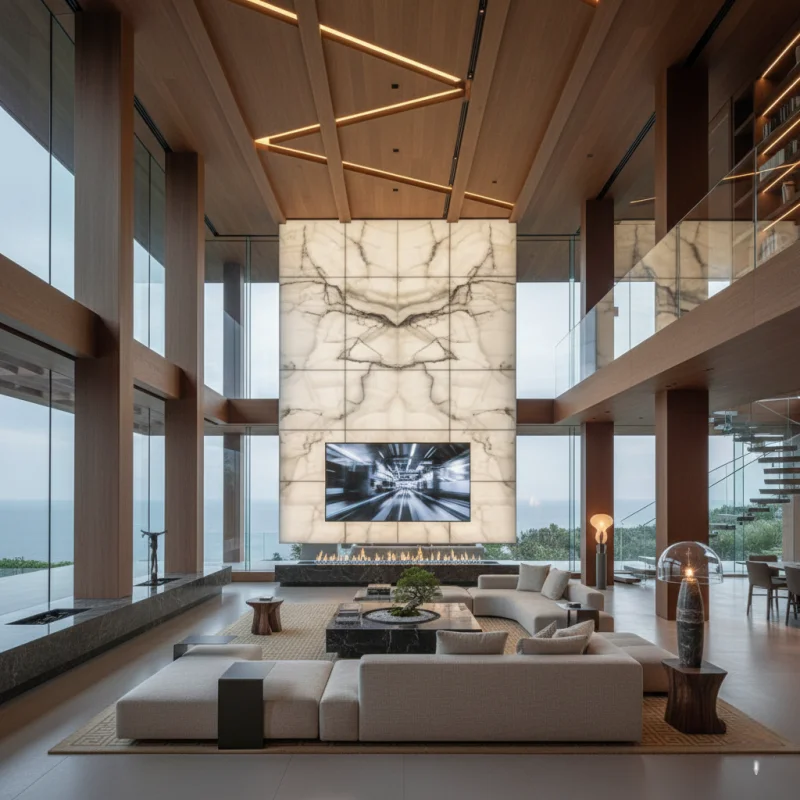
This restraint is perhaps the most reliable marker of genuine wealth in interior design. Aspirational wealthy people tend to fill spaces, demonstrating abundance through accumulation. True billionaires increasingly embrace emptiness, understanding that at their wealth level, the ultimate luxury is space itself—room to breathe, freedom from clutter, environments not dominated by possessions.
We see this in furniture commissions where clients specify minimal pieces executed at the highest quality rather than numerous pieces of lesser individual significance. A living room might contain only a single sofa, coffee table, and pair of chairs—but each piece represents months of work and enormous investment. The restraint makes each piece’s beauty and quality more apparent.
This doesn’t mean the spaces are cold or austere. The minimal furniture is supplemented by other elements creating warmth and interest—extraordinary materials in floors and walls, dramatic lighting, carefully positioned art, architectural features. But the furniture itself is restrained, allowing the space and architecture to breathe.
A Delhi client with a 15,000 square foot penthouse initially planned to furnish it comprehensively. After extensive discussion, we convinced him to reduce furniture quantities by about forty percent, using that budget to increase the quality and impact of fewer pieces. The result is a home that feels simultaneously grand and serene, with spaces that feel generous and calm rather than crowded and busy.
This restraint extends to storage and display. Rather than displaying collections prominently, many ultra-wealthy clients create extensive hidden storage and display systems visible only when deliberately accessed. Art collections might live in climate-controlled storage with viewing rooms where pieces can be displayed temporarily. Extensive wardrobes hide behind seamless wall panels. The public spaces maintain visual simplicity while accommodating vast quantities of possessions invisibly.
The psychology is interesting: when you can afford anything, having less becomes more impressive than having more. The restraint signals confidence and control. It demonstrates that you’re not seeking validation through visible consumption, that you’re secure enough to leave space empty, that you value quality and meaning over quantity and display.
The Sustainability Imperative: When Wealth Demands Responsibility
The sixth characteristic is genuine commitment to sustainability and environmental responsibility, though manifested differently than in typical “green” design.
Billionaire sustainability rarely involves highly visible green features—solar panels prominently displayed, recycled materials announced boldly. Instead, it’s deeper and more integrated, affecting fundamental choices about materials, construction, suppliers, and long-term impact.
This appears in several ways:
Extreme material provenance standards: Demanding complete documentation of material sources, verified sustainable harvesting, chain-of-custody records, third-party certification. We’ve had clients reject beautiful wood because its source forest, though legal, didn’t meet their sustainability standards.
Supporting traditional craft communities: Commissioning work from artisan communities as much for social sustainability—preserving traditional skills, supporting local economies—as for the quality and beauty of the work itself.
Long-term value thinking: Preferring furniture and finishes that will last indefinitely over options requiring eventual replacement, understanding that true sustainability means creating things that never become waste.
Lifecycle planning: Actually considering what happens to materials and furniture at end of use, preferring things that can be repurposed, recycled, or safely biodegraded over those that become permanent waste.
Ethical supply chains: Ensuring everyone involved in creating furniture and interiors receives fair compensation and works in appropriate conditions. We’ve had clients conduct their own audits of our workshop and supplier relationships to verify ethical practices.
This sustainability isn’t marketing or virtue signaling—most of it never becomes public knowledge. It’s private commitment to responsible consumption that’s genuinely practiced rather than merely claimed.
A Bangalore client worth over $3 billion has carbon accounting performed on every significant purchase, including furniture. He wanted to understand the complete environmental impact of the pieces we created—materials extraction, transportation, fabrication, finishing, delivery, expected lifetime, end-of-life disposition. The accounting showed his furniture commissions as carbon-negative over expected multi-generational lifespans due to long-term carbon sequestration in solid wood and avoided emissions from not requiring replacement.
The Art of the Invisible Hand: Designers Who Disappear
The seventh and final characteristic is the role of design professionals in billionaire projects. Contrary to the celebrity designer model promoted in design media, most billionaire interiors are created through collaborations where the designer’s individual style disappears into service of the client’s vision.
Ultra-wealthy clients aren’t seeking to live in designer’s signature style. They want designers who can translate the client’s vision into reality while contributing technical expertise and aesthetic refinement. The designer becomes invisible facilitator rather than visible author.
This collaborative model requires different skills than creating signature designs:
Deep listening and interpretation: Understanding not just what clients say they want but what they actually need, what will genuinely serve their lifestyle, what will make them happy long-term.
Invisible ego: Subordinating designer’s aesthetic preferences to client’s vision. Being willing to create designs that don’t advance the designer’s portfolio or reputation but perfectly serve the client.
Technical mastery: Bringing genuine expertise in materials, construction, detailing that allows translating vision into reality with highest possible quality.
Trusted advisor role: Developing relationships where clients trust designer judgment enough to accept recommendations even when they conflict with initial preferences, but always in service of client’s ultimate satisfaction.
We’ve found that our most successful billionaire commissions involve clients who are highly engaged—visiting our workshop, examining materials personally, discussing design iterations in detail. They’re not delegating to designers and accepting whatever results. They’re actively creating their homes with us as expert facilitators.
This collaborative approach produces interiors that feel genuinely personal rather than designed. Visitors sense that someone lives here, that the spaces reflect real people’s preferences and needs, rather than feeling like designer showrooms or magazine spreads.
The Ultimate Luxury: Freedom From Luxury
The overarching theme connecting all these characteristics is perhaps paradoxical: at the absolute peak of wealth, true luxury becomes freedom from typical luxury markers.
Freedom from needing to signal status through recognizable brands or visible expense. Freedom from trend-chasing and validation-seeking. Freedom from filling spaces because emptiness feels uncomfortable. Freedom from aesthetic constraints imposed by others’ expectations.
The billionaire interiors we create are beautiful, certainly, and extraordinarily expensive. But their defining quality is that they’re precisely what their owners want, executed at the highest possible quality, reflecting genuine personal values and preferences rather than performing wealth or sophistication for others.
This authentic, personal, invisible luxury represents design’s highest expression. Not creating impressive spaces that photograph beautifully, but creating spaces where specific individuals live their most authentic lives surrounded by beauty and quality visible primarily to themselves.
This is where luxury goes when price becomes irrelevant. This is what the world’s wealthiest actually choose when freed from all constraints except their own vision.
For consultations on ultra-luxury bespoke furniture:
Tamil Nadu Workshop
355/357, Bhavani Main Road, Sunnambu Odai, B.P.Agraharam, Erode, Tamil Nadu 638005, India
Ireland Office
16 Leopardstown Abbey, Carrikmines, Dublin 18 D18YW10, Ireland
Contact: +91-8826860000 | +91-8056755133 | care@crosby.co.in


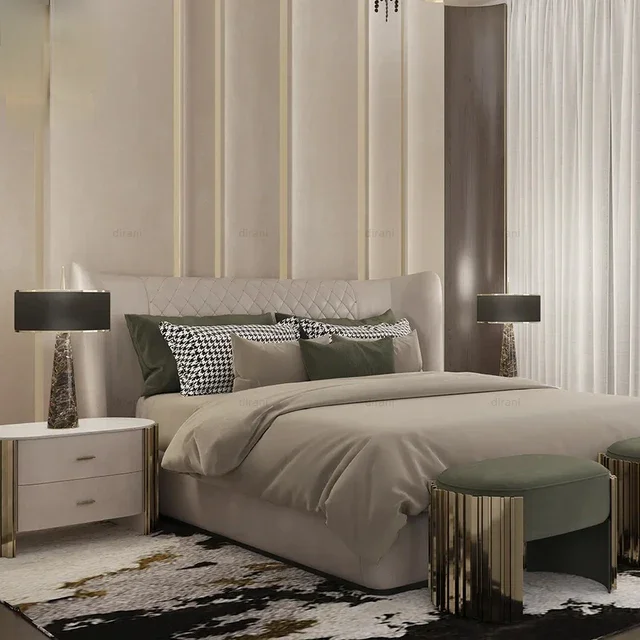












 Bedroom