


MAGAZINE
The ROI of Beauty: How Strategic Interior Investment Transforms Luxury Real Estate Value


Why forward-thinking developers are discovering that exceptional interiors aren’t expenses—they’re the most profitable investment in premium property development
Published: December 2025 | Reading Time: ~13 minutes | Category: Luxury Real Estate & Investment Strategy
The developer sat across from me in our Dubai office, frustrated. His ultra-luxury project in Palm Jumeirah—thirty residences starting at $8 million—wasn’t selling as quickly as projected. The architecture was spectacular, the location unbeatable, the specifications world-class. Yet buyers were hesitating, visiting multiple times but not committing. After six months, only twelve units had sold when projections suggested they’d be seventy percent sold by now.
“What am I missing?” he asked. “We’ve given them everything—smart home systems, Italian marble, German fixtures. What more do they want?”
I walked him through photographs from recent luxury developments across Dubai and Mumbai where sales had exceeded expectations, where buyers competed for units, where prices had appreciated beyond initial projections. In every case, these developments shared one distinguishing characteristic: they didn’t just deliver spaces—they delivered complete interior experiences, thoughtfully designed and flawlessly executed.
The developer studied the images silently, then asked the question that would transform his approach: “How much value does this actually add? Can we quantify the return on investing in interiors?”
That conversation happened eighteen months ago. Today, his development is completely sold, with the final units commanding thirty percent premiums over initial pricing. The transformation wasn’t achieved through deeper discounts or more aggressive marketing. It came from a fundamental shift in approach—treating interior design not as decoration applied after construction but as core value creation embedded in the development process from inception.
The Hidden Economics of Luxury Real Estate
The traditional development model treats interiors as finishing touches—important for presentation but fundamentally separate from real value creation. Developers invest enormous capital in land acquisition, design, construction, and building systems. Then, often as an afterthought, they allocate whatever remains in the budget toward making spaces look attractive for sales.
This approach fundamentally misunderstands how luxury buyers evaluate property. When someone is considering a $5 million apartment or $15 million villa, the basic infrastructure is assumed. Of course the plumbing works, the structure is sound, the systems function properly. These aren’t selling points—they’re minimum expectations.
What actually drives purchase decisions at the luxury level is something more subtle and more powerful: the ability to envision living in the space. Not just residing there, but actually living—entertaining friends, reading in the morning light, cooking family dinners, working from home. Luxury buyers aren’t purchasing square footage and amenities. They’re purchasing a lifestyle, an experience, a vision of their future selves.
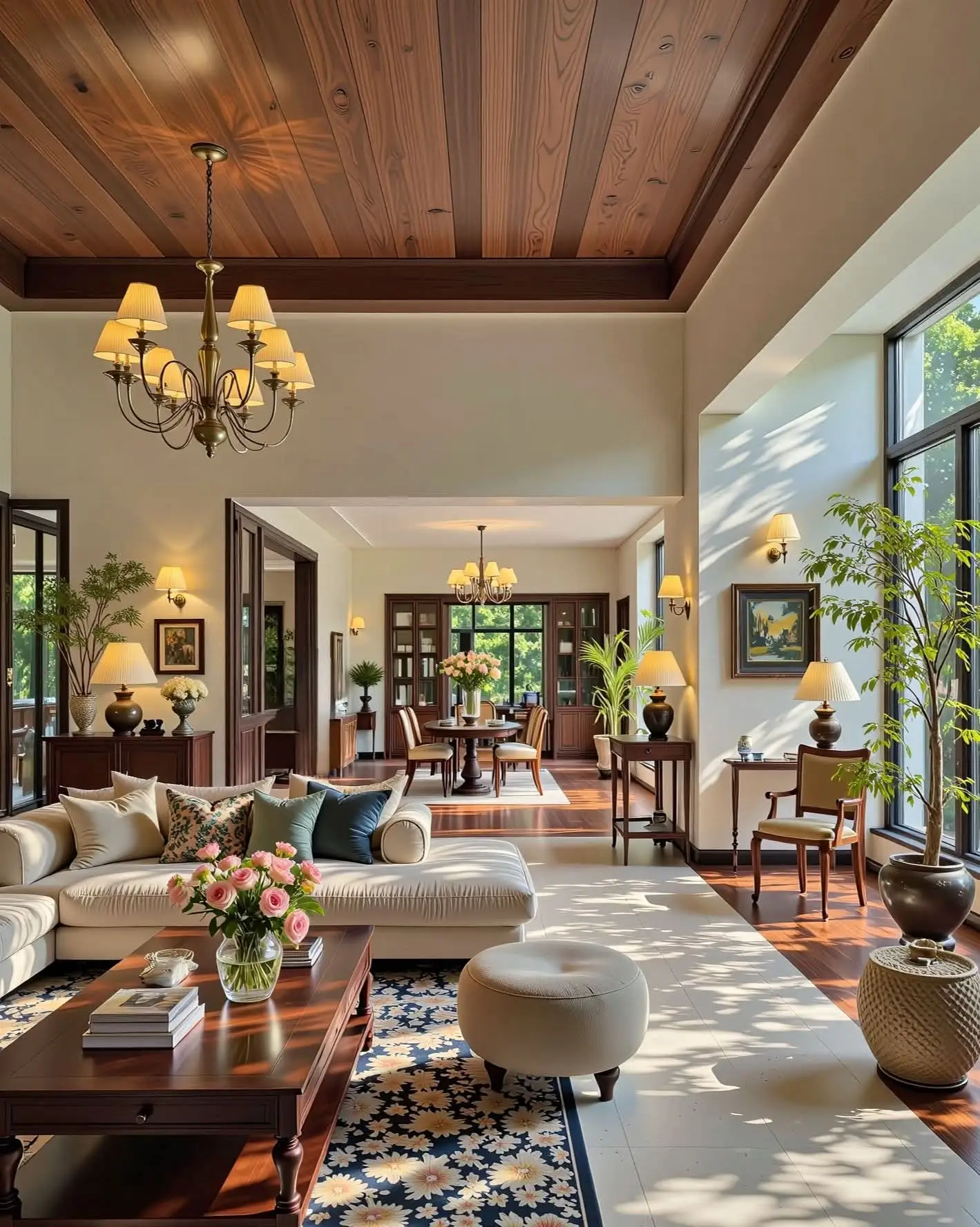
Exceptional interiors create this emotional connection in ways that empty spaces with standard finishes simply cannot. When a buyer walks into a space where every detail has been thoughtfully considered—where furniture scale is perfect for room proportions, where lighting enhances rather than merely illuminates, where materials and colors create specific moods and atmospheres—they don’t just see a property. They see their life unfolding in these rooms.
This emotional engagement translates directly into financial value through multiple mechanisms that sophisticated developers are beginning to understand and leverage systematically.
The Premium Pricing Effect: Numbers That Speak
The most obvious financial benefit of exceptional interior investment is the ability to command higher prices. But the magnitude of this premium often surprises developers accustomed to thinking about interiors as marginal cost centers.
Data from luxury developments across India’s major metros tells a compelling story. In Mumbai, two comparable developments in Worli—similar locations, similar architectural quality, similar amenities—achieved radically different results. The first, delivered with developer-standard finishes and no interior design, sold at an average of ₹85,000 per square foot. The second, featuring custom interiors designed by a recognized firm with bespoke furniture packages available, sold at ₹112,000 per square foot—a thirty-two percent premium.
The interior investment that created this premium? Approximately ₹8,000 per square foot—less than ten percent of the selling price but generating a return multiple times the investment. The developer’s increased revenue from the premium pricing exceeded the interior investment by a factor of three.
Similar patterns emerge in Bangalore’s premium markets. A villa development in Whitefield achieved average selling prices eighteen percent above comparable projects in the same area. The distinguishing factor? Each villa was delivered with complete interior design, including custom kitchen cabinetry, built-in wardrobes, lighting design, and curated furniture packages. The developer’s interior investment averaged ₹45 lakhs per villa on properties selling for ₹4.5 crores—a ten percent investment generating an eighteen percent price premium.
These aren’t isolated examples. Our work with developers across India and internationally reveals consistent patterns: thoughtful interior investment, when executed at appropriate quality levels, generates returns ranging from 200 to 400 percent through premium pricing alone.
But premium pricing represents only the first tier of value creation. The more sophisticated developers understand that exceptional interiors create value through multiple additional mechanisms.
Velocity: The Time Value of Money
In real estate development, time is literally money. Capital deployed in development doesn’t generate returns until units sell. Every month a unit remains unsold represents carrying costs—financing charges, maintenance, opportunity cost of capital that could be deployed elsewhere.
Exceptional interiors dramatically accelerate sales velocity, compressing the time between launch and sellout in ways that create enormous financial value through reduced carrying costs and faster capital rotation.
Consider a development with 100 units averaging ₹5 crores each—a total inventory of ₹500 crores. If standard interiors result in a 36-month sellout while exceptional interiors achieve 18-month sellout, the developer saves eighteen months of carrying costs. At typical financing rates of 12 percent annually, those eighteen months of avoided interest expense represent savings of ₹90 crores.
Even if the exceptional interiors cost ₹20 crores more than standard finishes—₹20 lakhs per unit across 100 units—the net financial benefit from accelerated sales is ₹70 crores. This doesn’t include the premium pricing or any of the other value-creation mechanisms. It’s purely the time value of money from faster turnover.
Our Palm Jumeirah developer experienced this dramatically. His first twelve units, sold before the interior investment, took six months to close those sales. After implementing comprehensive interior design and staging, the remaining eighteen units sold in four months—a forty percent reduction in sales cycle despite approaching the typically slower tail end of inventory.
For developers with multiple projects, this velocity improvement cascades into additional value. Capital recovered faster from one project can be deployed into the next, compounding returns across portfolios. A developer who typically completes and sells three projects per decade might complete four projects in the same timeframe with improved velocity—a thirty-three percent increase in production capacity without additional capital.
The Completeness Premium: Reducing Buyer Friction
Luxury buyers increasingly value turnkey solutions. The prospect of spending months after purchase working with interior designers, furniture vendors, and contractors—managing a complex, stressful process while trying to achieve cohesive results—represents significant friction in the purchase decision.
Developers who eliminate this friction by delivering completely finished spaces capture enormous value. Buyers will pay substantial premiums for properties they can move into immediately without months of additional work and investment.
This completeness premium is distinct from the aesthetic premium. Even buyers who ultimately want to modify interiors to personal taste value seeing a complete vision executed to high standards. It demonstrates quality, provides inspiration, and establishes a benchmark against which they can envision their own modifications.
We recently worked with a Bangalore developer creating luxury apartments in Indiranagar. The development offered two options: standard finishes allowing buyers to create their own interiors, or fully designed and furnished apartments available at a twenty-five percent premium.
The developer assumed perhaps twenty percent of buyers would choose the furnished option. The actual result? Sixty-five percent selected fully furnished units, and several buyers who initially chose standard finish later upgraded to furnished packages during construction.
The psychology is straightforward. Buyers purchasing ₹8 crore apartments aren’t seeking to save ₹2 crores on interiors. They’re seeking certainty, quality, and convenience. They want to know that when they move in, everything will work beautifully together. They value their time more than the marginal savings from managing the interior process themselves.
For developers, this creates extraordinary margin opportunity. The cost of providing complete interiors at scale—with volume purchasing power, established vendor relationships, and systematic process—is significantly lower than what individual buyers would pay for equivalent results. A developer might spend ₹40 lakhs creating interiors that would cost an individual buyer ₹65 lakhs to replicate. Pricing those interiors at ₹60 lakhs creates value for both buyer and developer while generating substantial profit margin.
Brand Differentiation in Saturated Markets
In India’s major luxury real estate markets, differentiation has become increasingly challenging. Every developer promises world-class specifications, international standards, and luxurious amenities. Buyers touring multiple projects see essentially similar offerings—the same imported marble brands, the same European fixture manufacturers, the same amenity lists.
Exceptional interiors provide genuine differentiation that’s immediately visible and emotionally impactful. When a buyer tours ten luxury projects and nine feature empty spaces with standard finishes while one presents beautifully designed, completely furnished interiors, that one project creates indelible impression.
This differentiation extends beyond individual project success to long-term brand building. Developers known for delivering exceptional interiors establish reputations that create value across entire portfolios. Future projects launch with built-in buyer confidence and reduced marketing costs.
We’ve seen this pattern repeatedly with developers we’ve worked with across multiple projects. A Pune developer who initially engaged us for a single flagship project was skeptical about the interior investment. The project’s success—sold out in fourteen months at premium pricing—led to interior investment becoming standard across their portfolio. Their newer projects now pre-sell based largely on reputation for interior quality, reducing marketing expense and enabling more aggressive pricing.
The brand value compounds over time. Buyers who purchased units in earlier projects and experienced the quality firsthand become advocates, referring friends and family. Real estate brokers preferentially show properties from developers with interior quality reputations, knowing they’ll generate easier sales and satisfied clients.
The Investment Buyer Premium
A significant segment of luxury real estate purchasers are investors rather than end-users. These buyers evaluate properties primarily through financial metrics—potential rental yields, capital appreciation prospects, liquidity.
Exceptional interiors dramatically enhance properties’ appeal to this investor segment through multiple mechanisms. First, properties with turnkey interiors achieve higher rental rates and lower vacancy periods. A fully furnished luxury apartment commands thirty to fifty percent higher monthly rent than an equivalent unfurnished unit, while also attracting higher-quality tenants who stay longer and maintain properties better.
Second, properties with exceptional interiors appreciate faster because they remain current longer. Standard finishes date quickly, requiring updates every five to seven years to maintain market appeal. Timeless, high-quality interiors designed by recognized professionals remain attractive for fifteen to twenty years, maintaining and even enhancing value without requiring updates.
Third, when investors eventually sell, properties with documented interior quality—design provenance, quality materials, professional execution—command premiums and sell faster than comparable properties requiring buyer investment in updates or modifications.
We worked with a developer in Gurgaon creating luxury apartments explicitly targeting investor buyers. Initial plans called for standard finishes, assuming investors would leave units unfurnished. Our recommendation was counterintuitive: invest in complete, high-quality interiors and market specifically to investors seeking turnkey rental properties.
The developer initially resisted, concerned investors wouldn’t value interiors they wouldn’t personally enjoy. We pushed back: sophisticated investors absolutely value interiors—not for personal enjoyment but for financial performance. Exceptional interiors generate higher rental income, lower management costs, and better appreciation.
The developer ultimately agreed to execute five units as a test. All five sold within three weeks of launch to investor buyers, at prices twelve percent above comparable units in the same development. The developer immediately converted the remaining inventory to the furnished specification.
Strategic Implementation: How to Actually Do This
Understanding that interior investment creates value is one thing. Implementing it effectively in development projects is another. The execution details matter enormously—done poorly, interior investment can actually destroy value. Done expertly, it transforms projects.
The first critical decision is timing. Interior design must be integrated into the development process from inception, not added as afterthought during construction. This means engaging interior designers during architectural design phase, ensuring spaces are proportioned and detailed to support intended interior executions.
We typically recommend developers engage interior design teams when architectural programming begins—before floor plans are finalized. This allows interior considerations to influence fundamental decisions about room sizes, ceiling heights, window placements, and service locations. These early-stage interventions often cost nothing but create enormous value by ensuring spaces will support exceptional interior results.
The second critical decision involves quality tier calibration. Interior investment must align with overall project positioning and target buyer expectations. Investing ₹50 lakhs per unit in interiors for ₹2 crore apartments rarely makes sense—the investment represents too large a percentage of overall value. But investing ₹50 lakhs per unit for ₹8 crore apartments might be entirely appropriate.
We generally recommend interior investment ranging from eight to fifteen percent of total unit value for luxury projects, varying based on competitive positioning and target market. At the ultra-luxury level—units above ₹15 crores—interior investment percentages often increase to fifteen to twenty percent because buyer expectations for customization and quality increase substantially.
The third critical decision addresses execution approach. Developers have several options: employing in-house design teams, engaging external design firms, partnering with furniture manufacturers like Crosby Project who can provide integrated design and execution services, or some combination of approaches.
Each approach has advantages and appropriate applications. In-house teams provide consistency and cost control but may lack cutting-edge design creativity. External design firms bring fresh perspectives and stronger design credentials but require careful management. Integrated design-and-execution partners streamline procurement and installation but require careful selection to ensure quality and appropriateness.
Many sophisticated developers use hybrid approaches—high-level design direction from recognized external firms, execution support from specialized partners like ourselves for custom furniture and millwork, project management from in-house teams who understand the development business.
The Common Objections and How to Address Them
Despite compelling financial and strategic logic, many developers remain hesitant about significant interior investment. The objections we hear repeatedly reveal fundamental misunderstandings about how luxury real estate markets actually function.
“Our buyers want to customize their own interiors”—this is the most common objection, and it’s based on outdated assumptions. While some buyers indeed want complete creative control, our experience across hundreds of luxury projects reveals this segment represents perhaps fifteen to twenty percent of total buyers.
The majority of luxury buyers appreciate seeing complete, professionally designed interiors even if they ultimately modify them. And a substantial segment—increasingly the majority in markets like Dubai, Mumbai, and Bangalore—actively prefer turnkey solutions. Developers who offer choice—standard finish for DIY buyers, complete interiors for turnkey buyers—capture both segments while allowing each to self-select.
“The interior investment is too risky if units don’t sell”—this objection misunderstands both the financial mechanics and the market dynamics. First, as we’ve discussed, exceptional interiors dramatically increase the probability of sale while enabling premium pricing. The “risk” of interior investment is far lower than the risk of slow sales from inadequate interiors.
Second, even in worst-case scenarios where units don’t sell as anticipated, properties with exceptional interiors perform better than standard units. They’re more valuable as rental inventory, more attractive to alternative buyers, more resilient in down markets. The interior investment provides downside protection even as it creates upside opportunity.
“We can’t recover the interior investment in our pricing”—this objection reveals misunderstanding of value-based pricing versus cost-plus pricing. Luxury real estate pricing isn’t determined by development costs plus desired margin. It’s determined by perceived value relative to competitive alternatives.
If interior investment creates sufficient differentiation and buyer appeal, the market will bear pricing that recovers the investment many times over. The question isn’t whether costs can be recovered but whether the interiors create sufficient value perception to justify premium positioning.
The Future: Where Interior Investment is Heading
Looking ahead, the trend toward interior investment in luxury development will accelerate rather than plateau. Several converging forces make this evolution inevitable.
First, luxury buyers are becoming more sophisticated and demanding. Experience with high-quality hotels, international travel, and exposure to global design standards has elevated expectations. Buyers who’ve stayed at Aman resorts or Soho House properties expect similar quality in their residences.
Second, the sharing economy and short-term rental markets have created new financial models where interior quality directly impacts income. Luxury apartments that generate premium Airbnb rates or attract corporate executive rentals must offer exceptional interiors. Developers creating products explicitly designed for these uses must invest in interiors from the start.
Third, sustainability considerations increasingly influence luxury real estate decisions. Buyers want assurance that materials are responsibly sourced, that furniture will last decades rather than requiring replacement, that spaces are designed for long-term relevance rather than trend-chasing disposability. These considerations require sophisticated interior design integration from project inception.
Fourth, competition in luxury development markets continues intensifying. As basic quality becomes universal—everyone offers German kitchens and Italian marble—differentiation requires moving to the next level of sophistication. Interior design provides that differentiation.
For developers willing to embrace interior investment strategically, the opportunities are extraordinary. The financial returns we’ve documented—premium pricing, faster sales velocity, reduced buyer friction, enhanced brand value—represent just the beginning. As more developers adopt these approaches, those who execute them most skillfully will capture disproportionate market share and pricing power.
The future of luxury real estate development isn’t just about building beautiful buildings. It’s about creating complete living experiences where architecture, interiors, furniture, and services integrate seamlessly. It’s about understanding that for luxury buyers, the furniture matters as much as the foundation, the lighting design as much as the structural engineering, the overall atmosphere as much as the square footage.
This is the frontier where real estate development and interior design converge, where construction expertise and aesthetic sensibility must integrate, where financial discipline and creative vision must coexist. It’s challenging, complex, and requires capabilities many developers haven’t historically needed.
But for those willing to develop these capabilities or partner with specialists who possess them, the rewards are substantial and sustainable. The luxury real estate market is evolving toward greater sophistication, higher standards, and more complete solutions. Developers who lead this evolution rather than resist it will define the next generation of luxury living.
For consultations on interior design for luxury real estate developments:
Tamil Nadu Workshop
355/357, Bhavani Main Road, Sunnambu Odai, B.P.Agraharam, Erode, Tamil Nadu 638005, India
Ireland Office
16 Leopardstown Abbey, Carrikmines, Dublin 18 D18YW10, Ireland
Contact: +91-8826860000 | +91-8056755133 | care@crosby.co.in












 Bedroom