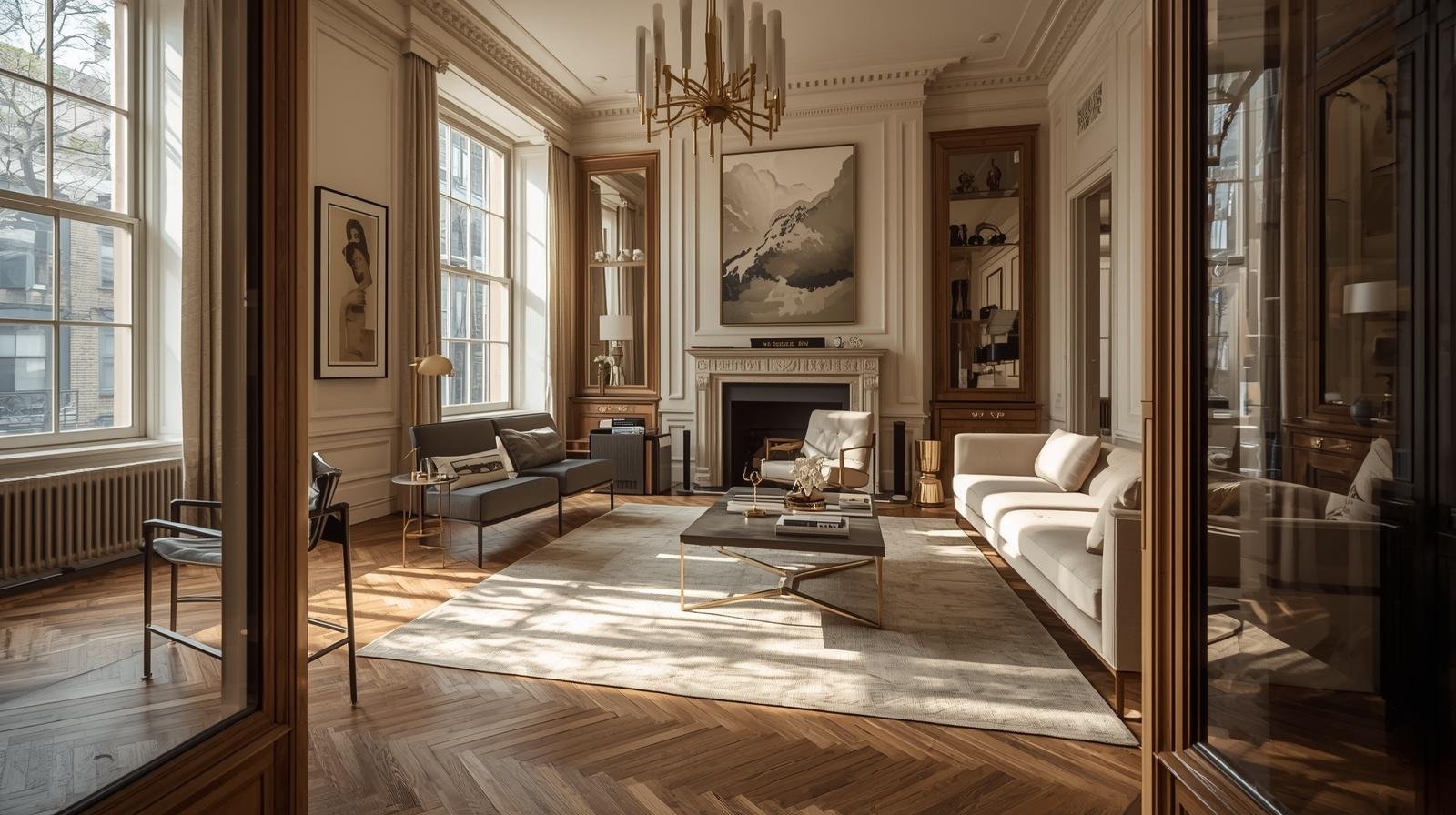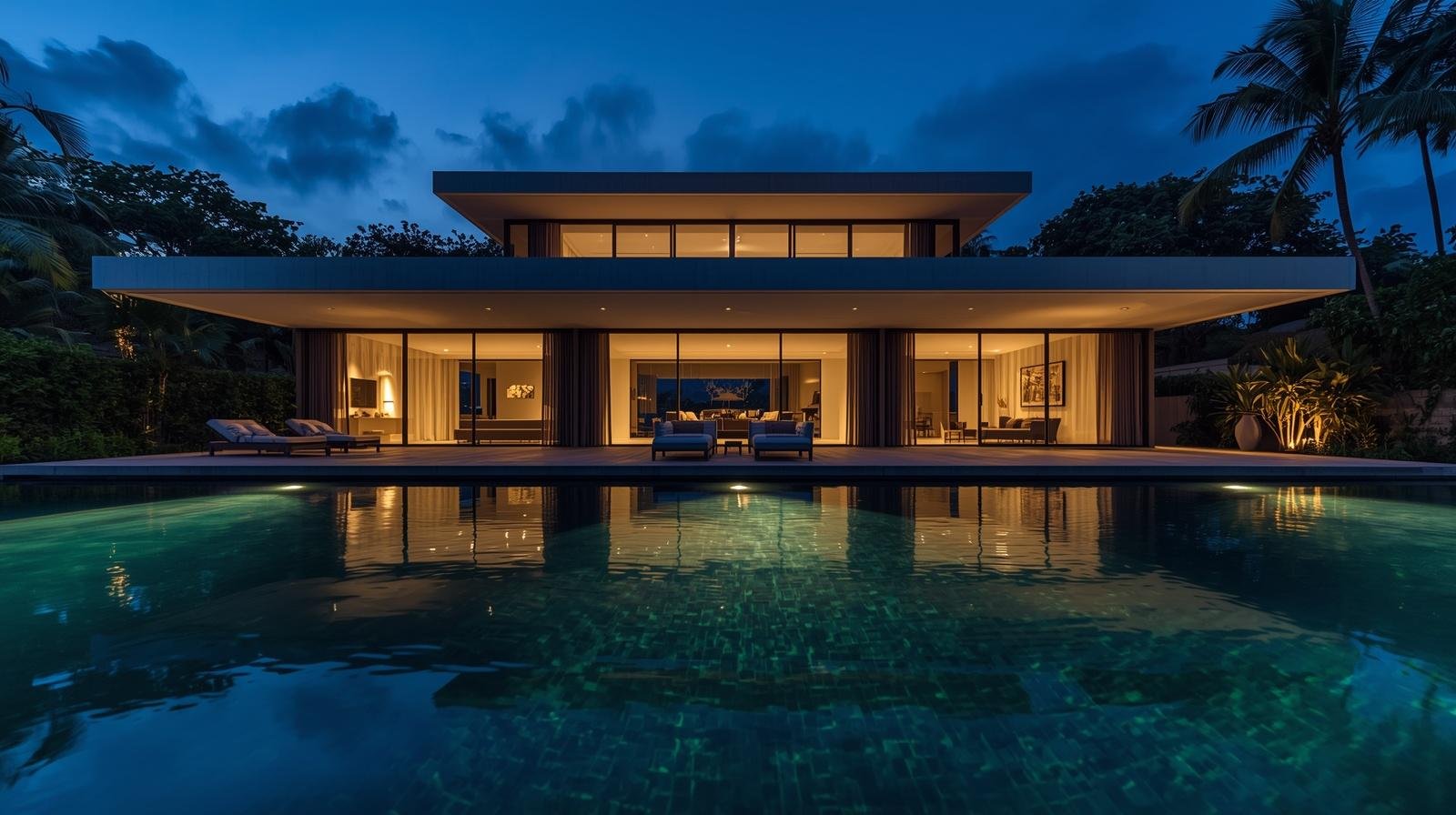
An 8,500 sq ft villa where indoor and outdoor spaces merge through landscaped courtyards—creating a tropical sanctuary that honors Bangalore's garden city heritage while embracing contemporary spatial fluidity.
The clients—founders of a successful AI startup who had relocated from Silicon Valley to lead their company's Bangalore expansion—came to us with unusual brief. Having spent fifteen years in California's tech corridors, they wanted to build something impossible there: a home that breathed. Where walls dissolved into gardens. Where work, family life, and contemplation happened not in separate rooms but in fluid zones that shifted function throughout the day.
Their 1.5-acre plot in Whitefield presented rare opportunity. Unlike Bangalore's dense urban core, this location offered space for genuine estate planning—room for courtyards, gardens, water features, outdoor pavilions. The site's gentle slope and established mango trees provided starting points. What they sought was architecture that would feel simultaneously rooted in Karnataka's tropical climate and informed by their global experience.
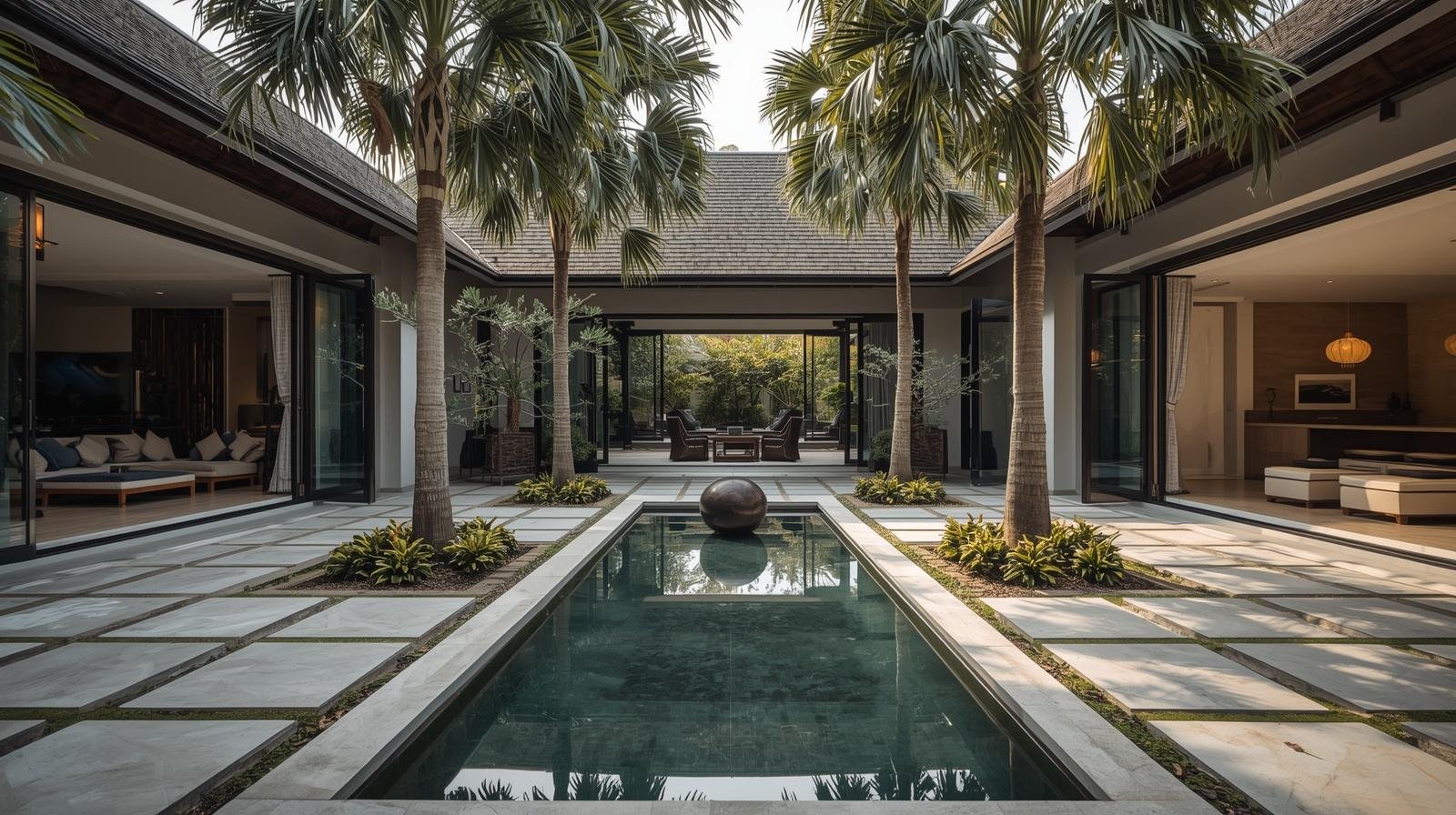
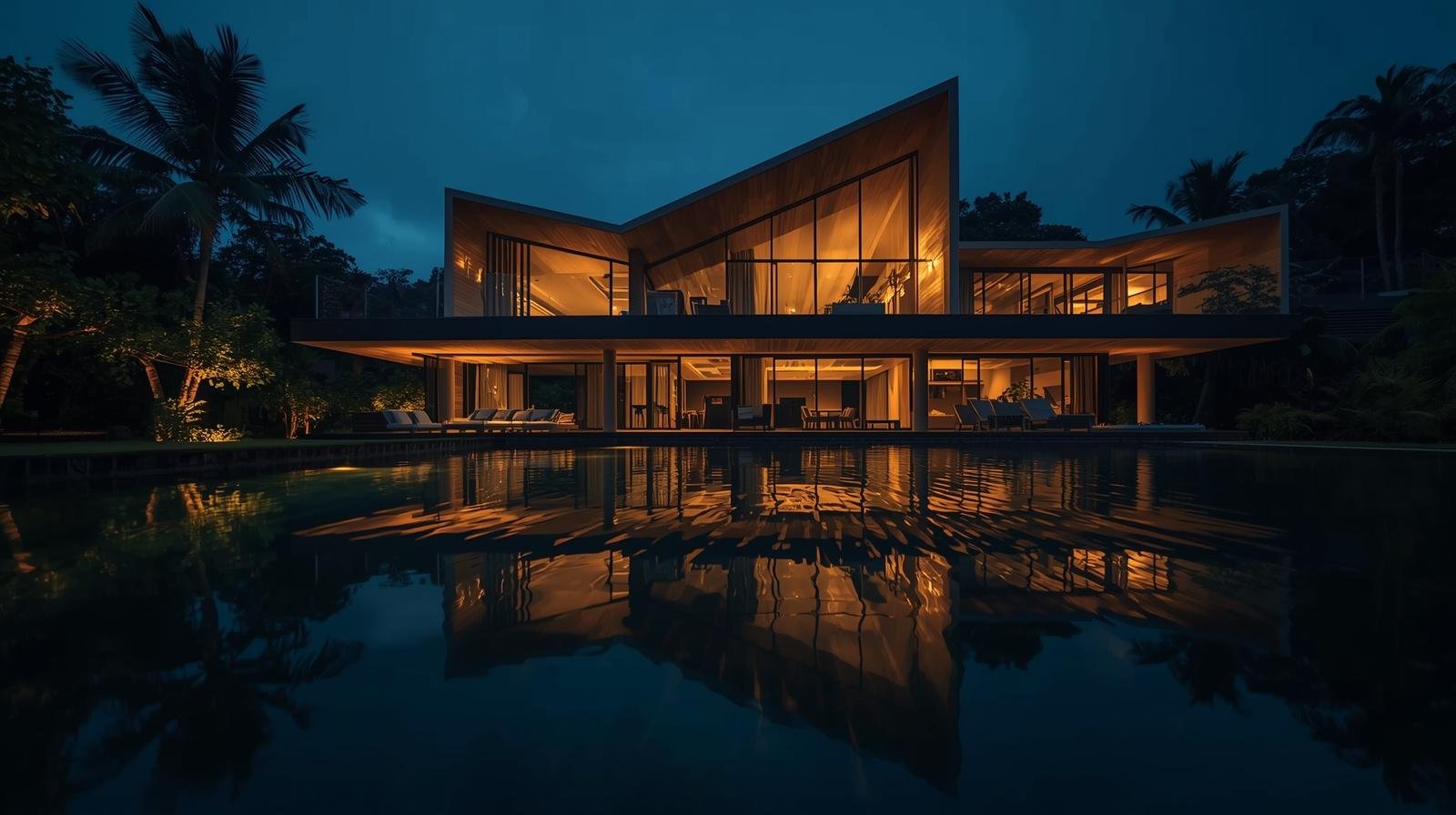
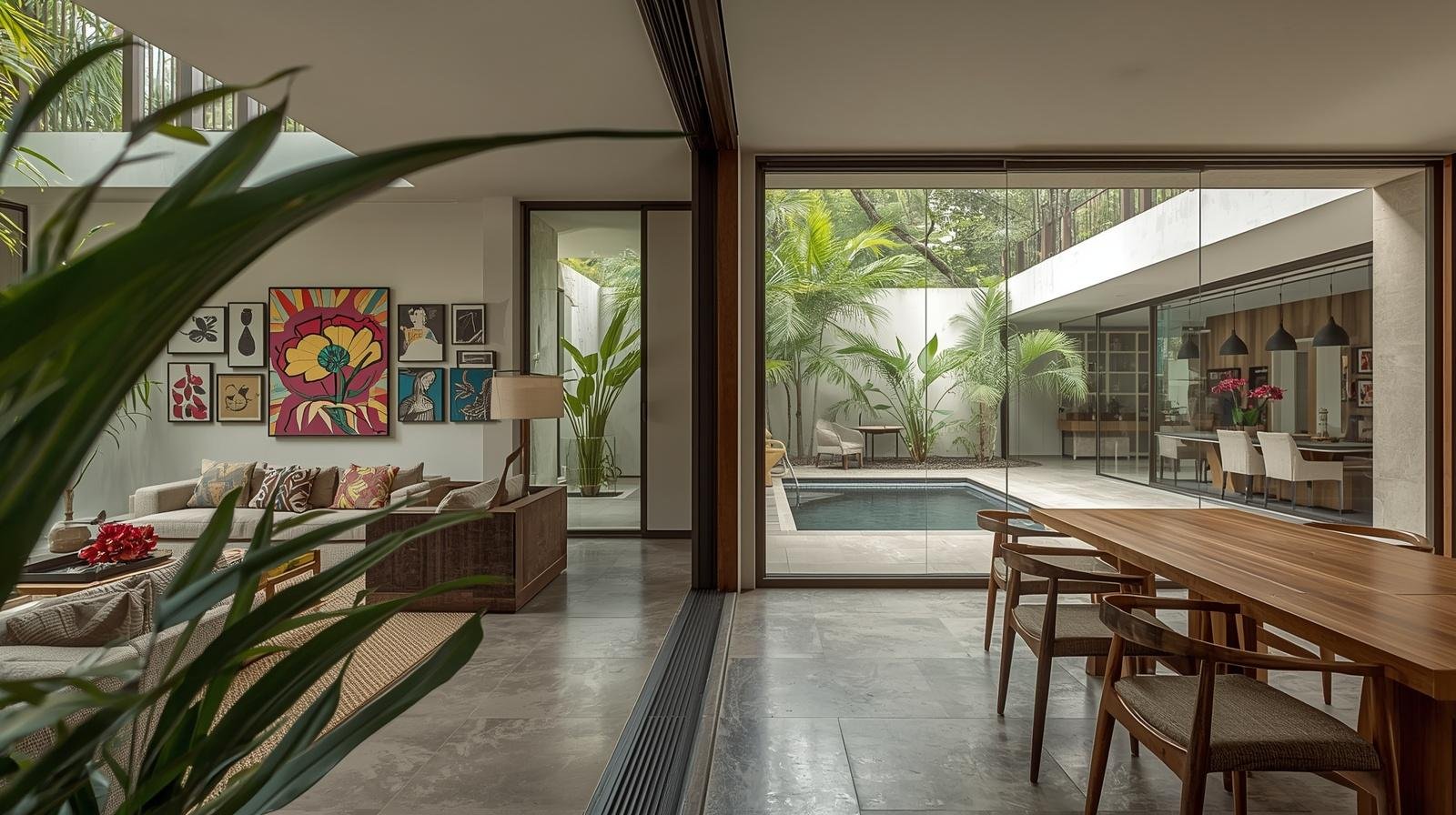
We approached the villa as series of pavilions organized around three courtyards—a contemporary interpretation of traditional South Indian courtyard houses that have regulated climate naturally for centuries. The central courtyard, largest of the three, serves as the home's social heart. Surrounded by living areas on three sides and open to the sky, it creates microclimate: cooler than exterior, naturally ventilated, filled with frangipani and jasmine.
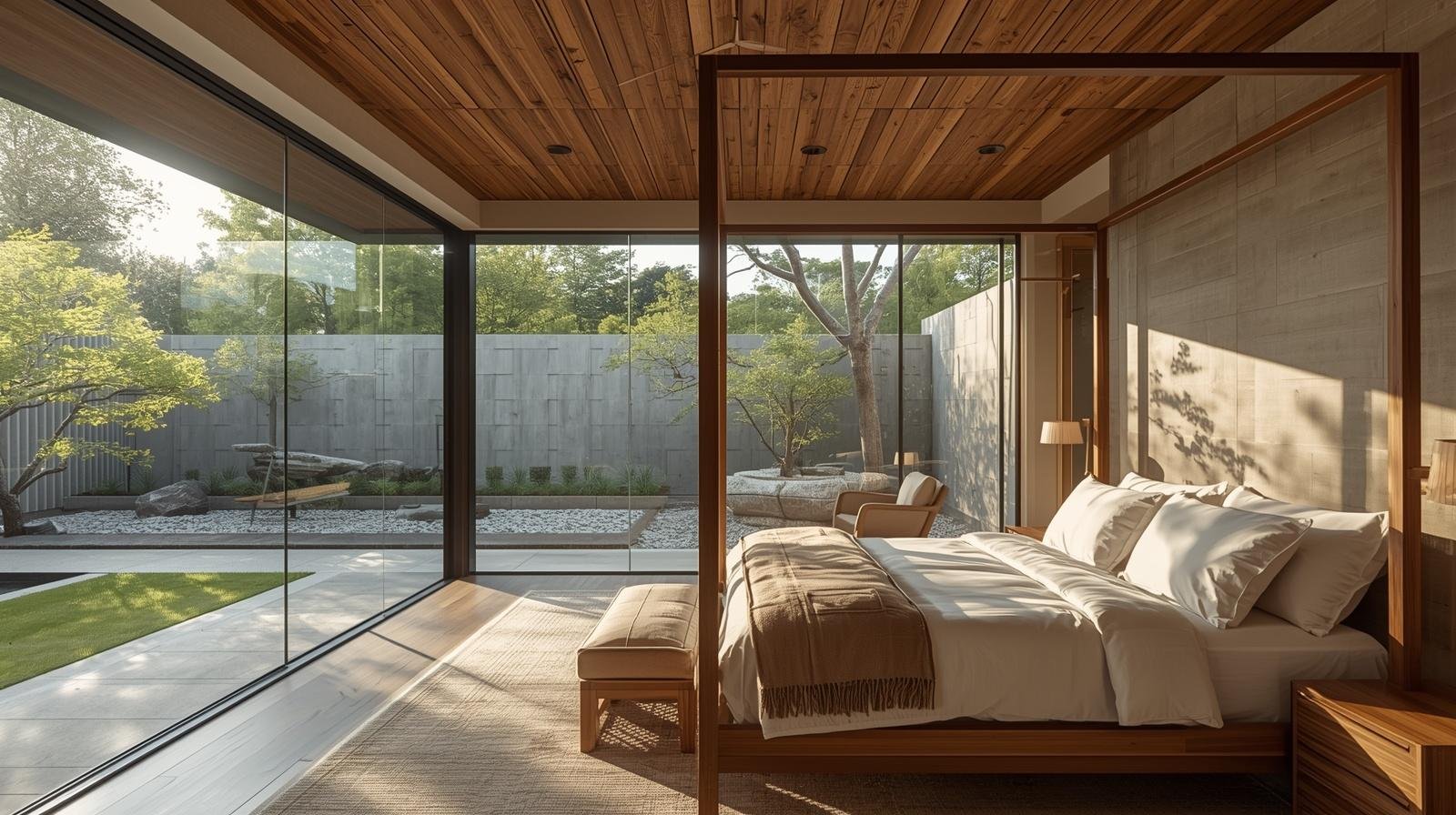
The pavilion structure allows every room direct connection to outdoors. The master suite opens to the eastern meditation garden—a contemplative space with raked gravel, sculptural rocks, and carefully pruned trees inspired by Japanese principles but executed with indigenous materials. The children's wing faces the southern play garden, where fruit trees provide shade and picking opportunities. The western pavilion, housing the library and guest suites, overlooks the reflecting pool.
Material choices responded to Bangalore's climate—warm days, occasional heavy rains, moderate temperatures year-round. We employed local Kota stone for all flooring—its thermal mass helps regulate interior temperatures while its natural slip resistance suits tropical conditions. The stone transitions seamlessly from interior to exterior, blurring boundaries between pavilions and courtyards.
Walls employ traditional lime plaster over laterite stone—materials that breathe, unlike modern cement. The plaster's thickness (three inches minimum) provides thermal insulation while the lime's alkaline properties naturally resist mold and mildew. We specified natural pigments mixed into final coats: ochres and umbers derived from local earth, creating warm neutral palette that shifts subtly with light.
The roof became crucial design element. Rather than typical flat slabs that trap heat, we designed shallow-pitched roofs with deep overhangs—providing shade while allowing air circulation. The soffits, clad in reclaimed teak, reflect warm light into courtyards. Concealed gutters channel monsoon rains to underground cisterns that supply irrigation for the grounds.
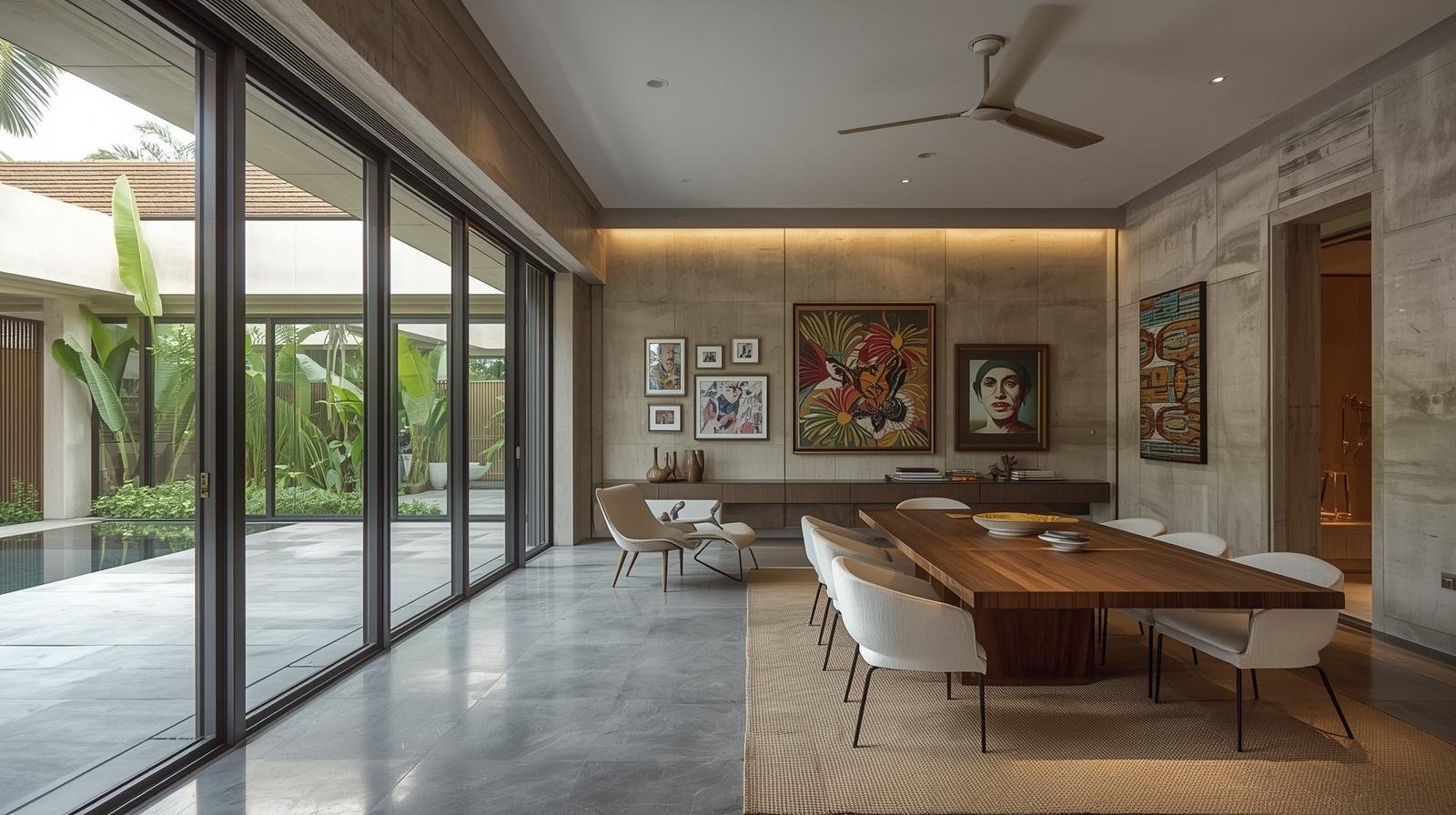
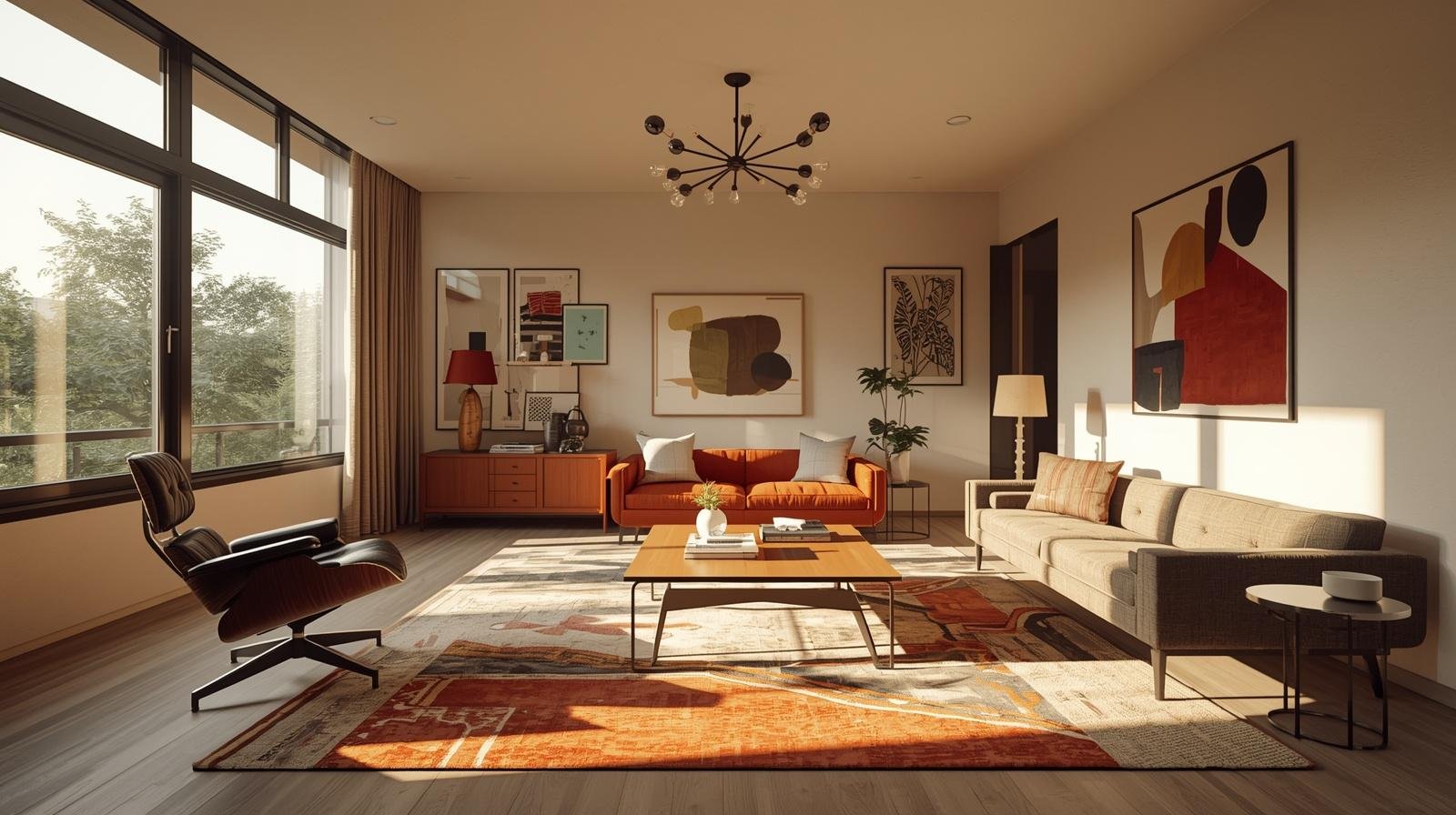
The art collection—primarily contemporary Indian artists acquired over two decades—guided spatial planning. We created gallery wall in the central living pavilion: a 40-foot-long limestone surface perfectly lit with adjustable track lighting. The couple's collection of Subodh Gupta sculptures found homes in the courtyards, creating dialogue between art and landscape. Smaller works inhabit more intimate spaces—the study, the master bedroom's seating area, the children's playroom.
Furniture came from multiple sources, unified by material palette. We designed and fabricated the primary dining table—a 14-foot slab of monkeypod wood supported by blackened steel legs—in our workshop. The outdoor furniture, crafted from sustainably harvested teak, was made by artisans in Mysore. Upholstered pieces came from contemporary Indian designers whose work we admire: Studio Wood for lounge seating, Phantom Hands for dining chairs, AKFD for the library's reading chairs.
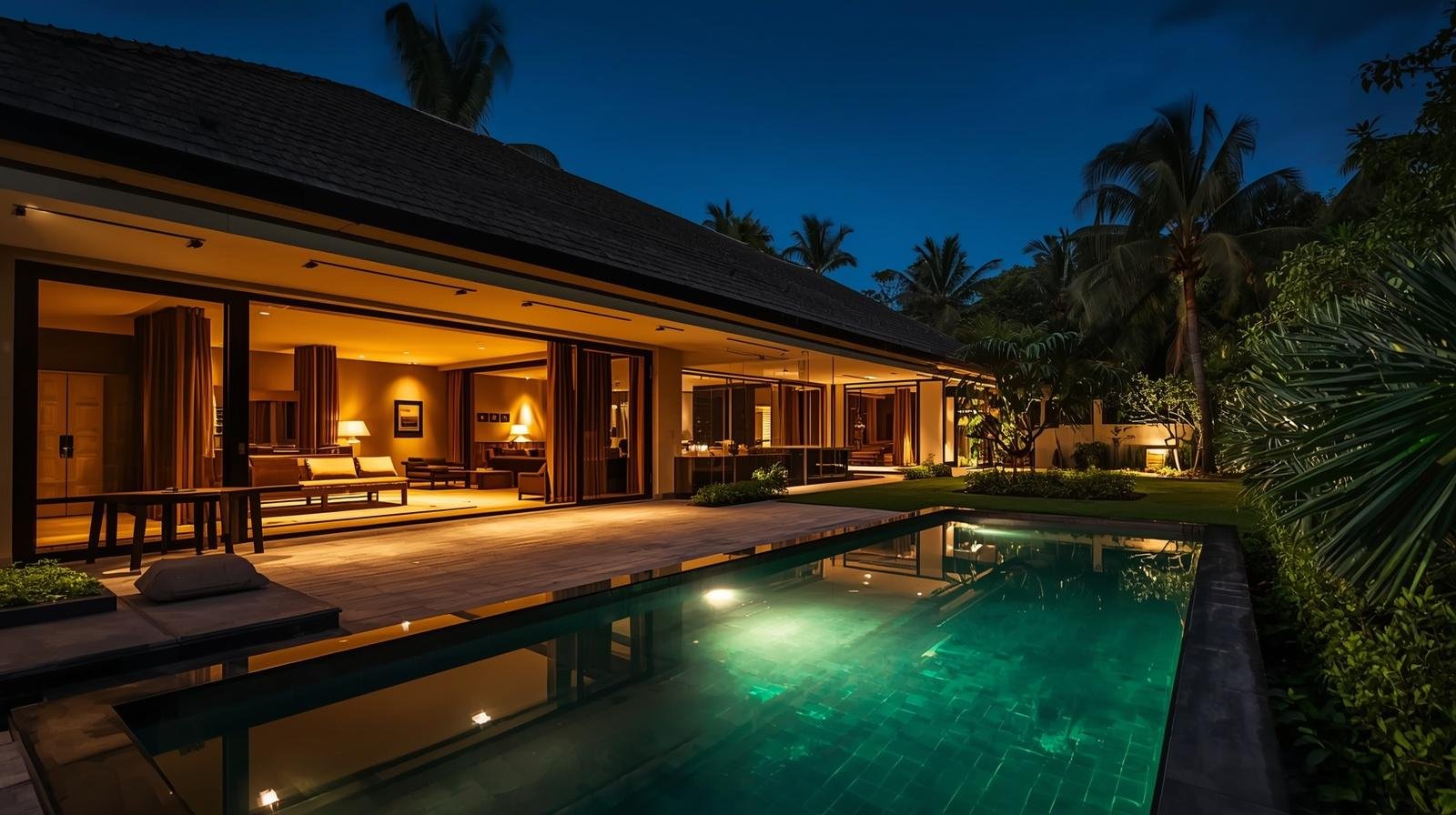
Lighting design balanced task, ambient, and accent needs while responding to the site's orientation. Morning light floods the eastern pavilions naturally; we supplemented with warm LED strips in ceiling coves. The central courtyard employs uplighting that transforms the frangipani trees into sculptural presences after dark. The reflecting pool's submerged lights create rippling patterns on the western pavilion's ceiling.
The landscape design, developed in collaboration with Outside In Studio, treats the grounds not as decoration but as additional rooms. Each garden serves specific purpose while contributing to the whole.
The meditation garden employs raked gravel, water-worn stones from Karnataka's rivers, and carefully pruned jamun and areca palms. The composition changes with viewing angle and light—what appears random from one perspective reveals order from another. A small pavilion with bamboo blinds provides shelter for yoga practice or quiet reading. The garden's sounds—gravel underfoot, water trickling from stone basin, wind through palm fronds—create acoustic backdrop that masks traffic noise from the adjacent road.
The children's garden takes opposite approach: abundant, exuberant, productive. Mango, guava, and chickoo trees provide fruit and climbing opportunities. Raised vegetable beds—built from reclaimed brick—grow tomatoes, peppers, and herbs that the family's cook incorporates into meals. A rope swing hangs from an ancient neem tree that predated construction. The children participate in garden maintenance, learning seasonal rhythms and plant care.
"After years in Silicon Valley's car-dependent sprawl, we wanted a home where our children could wander barefoot from bedroom to garden, where work happened in courtyards instead of closed offices, where the boundary between built and natural felt permeable. Crosby didn't just design a house—they created a ecosystem."— Anjali & Karthik Reddy, Homeowners
Rajasthan limestone, honed finish
All interior and exterior flooring employs Kota stone—a dense limestone quarried in Rajasthan. The stone was selected in person at the quarry, examining multiple lots for consistent color (warm grey-brown) and minimal variation. The large-format tiles (3x3 feet) minimize grout lines while the honed finish provides slip resistance suitable for tropical climate. The stone's thermal mass helps regulate interior temperatures naturally.
Laterite base, natural pigments
All walls employ traditional lime plaster over laterite stone masonry. The three-inch-thick plaster provides superior insulation compared to modern cement alternatives while allowing walls to breathe—crucial in humid climate. Natural earth pigments (ochre, umber, sienna) were mixed into the final coats, creating warm neutral palette. The plaster develops subtle patina over time, recording the building's history.
Salvaged from Kerala warehouses
All ceiling soffits, outdoor furniture, and accent elements employ teak salvaged from dismantled colonial-era warehouses in Kerala. Each piece carries history—bolt holes, saw marks, natural weathering—that we preserved during refinishing. The wood was cleaned, planed minimally to reveal fresh grain, then finished with natural tung oil. This reclaimed material provides character impossible to achieve with new timber.
Single-slab construction, hand-finished
The primary dining table was fabricated in our atelier from a single monkeypod slab—14 feet long, 4 feet wide, 3 inches thick. The slab was sourced from a tree that fell naturally (not cut) in Thailand, then dried for eighteen months before milling. The grain pattern—dramatic swirls and color variation—was preserved through minimal finishing. Steel base was blackened through traditional Japanese shou-sugi-ban technique.
Studio Wood, Phantom Hands, AKFD
Rather than specifying imported furniture, we commissioned pieces from India's emerging contemporary furniture makers. Studio Wood provided the living room's lounge seating—upholstered in natural linen with visible joinery details. Phantom Hands created the dining chairs—split cane backs referencing traditional design executed with contemporary proportions. AKFD designed the library's reading chairs—sculptural forms in solid teak.
Bangalore artisans, blackened steel
All metalwork—stair railings, door hardware, window frames, outdoor furniture bases—was fabricated by metalworkers in Bangalore's industrial district. We worked with them to develop blackened finish that wouldn't rust in tropical climate: the steel is heated, treated with natural oils, then sealed. The finish develops richer patina with age and handling.
Native and adapted tropical species
The landscape employs primarily native Karnataka species: mango, neem, jamun, areca palm, frangipani, ashoka. These trees require minimal irrigation once established and support local bird and insect populations. Groundcovers include native grasses and sedges rather than water-intensive lawn. The plant palette changes seasonally—frangipani flowers in spring, mango fruits in summer, ashoka blooms in monsoon.
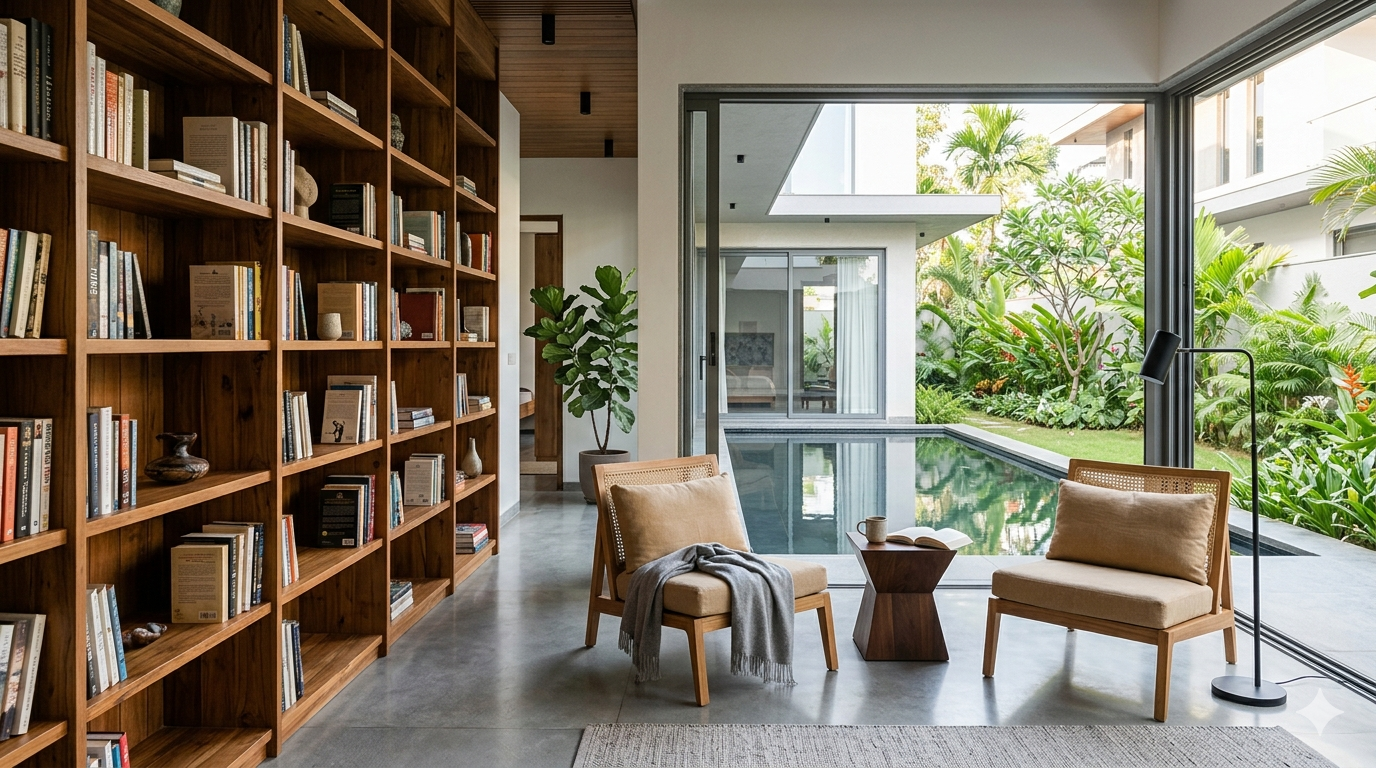
Eighteen months after completion, the villa has developed its own rhythms. The family rises with Bangalore's early light—children run to the meditation garden to check if fruit has ripened overnight. Breakfast happens in the central courtyard, the frangipani's morning fragrance mixing with coffee. The husband works from the library pavilion, its views of the reflecting pool providing contemplative backdrop for strategic thinking.
Monsoons transformed the experience. Rain drumming on the shallow roofs creates white noise that the family finds meditative rather than intrusive. Water sheets off deep eaves, creating temporary curtains between pavilions and courtyards. The children dance barefoot in warm rain, tracking mud that the Kota stone accepts gracefully. The cisterns fill, ensuring irrigation through dry months.
The gardens have matured faster than anticipated. The meditation garden's gravel patterns now require monthly raking—a practice the wife has adopted as moving meditation. The children's garden produced its first significant harvest—thirty guavas picked on a single October morning. The reflecting pool attracts birds—kingfishers, sunbirds, tailorbirds—creating natural spectacle the family watches from the western pavilion.
For us, this project demonstrates architecture's capacity to shape life patterns. The pavilion organization naturally encourages movement between spaces rather than settling into single rooms. The courtyard orientations bring family members into frequent contact without forcing proximity. The gardens invite participation—not merely viewing nature but tending it, harvesting it, learning from it.
The clients report that visitors—fellow tech executives considering similar moves from the US—invariably ask two questions: "How much did this cost?" and "Why don't we build like this in California?" The first question they deflect. The second they answer honestly: "Because we've forgotten how. This isn't innovation—it's memory. Bangalore knew how to build tropical homes centuries before air conditioning existed. Crosby simply remembered."
This validation of traditional wisdom through contemporary practice represents our deepest satisfaction. We didn't invent these approaches—courtyard cooling, thermal mass, natural ventilation, indoor-outdoor integration. We simply adapted inherited knowledge to contemporary program and aesthetic sensibility. The result feels simultaneously ancient and current, local and cosmopolitan, modest and luxurious.
The villa has been photographed for multiple publications, typically described as "tropical modernism" or "contemporary courtyard house." These labels capture aspects of the project but miss its essence: this is simply intelligent building for specific climate, informed by place-based knowledge and executed through careful craft. That such an approach seems noteworthy reveals how far contemporary architecture has strayed from basic principles.
We collaborate with clients creating homes that respond thoughtfully to climate, landscape, and regional building traditions while meeting contemporary program needs. Our process begins with understanding site, context, and how you wish to live.
Begin Conversation