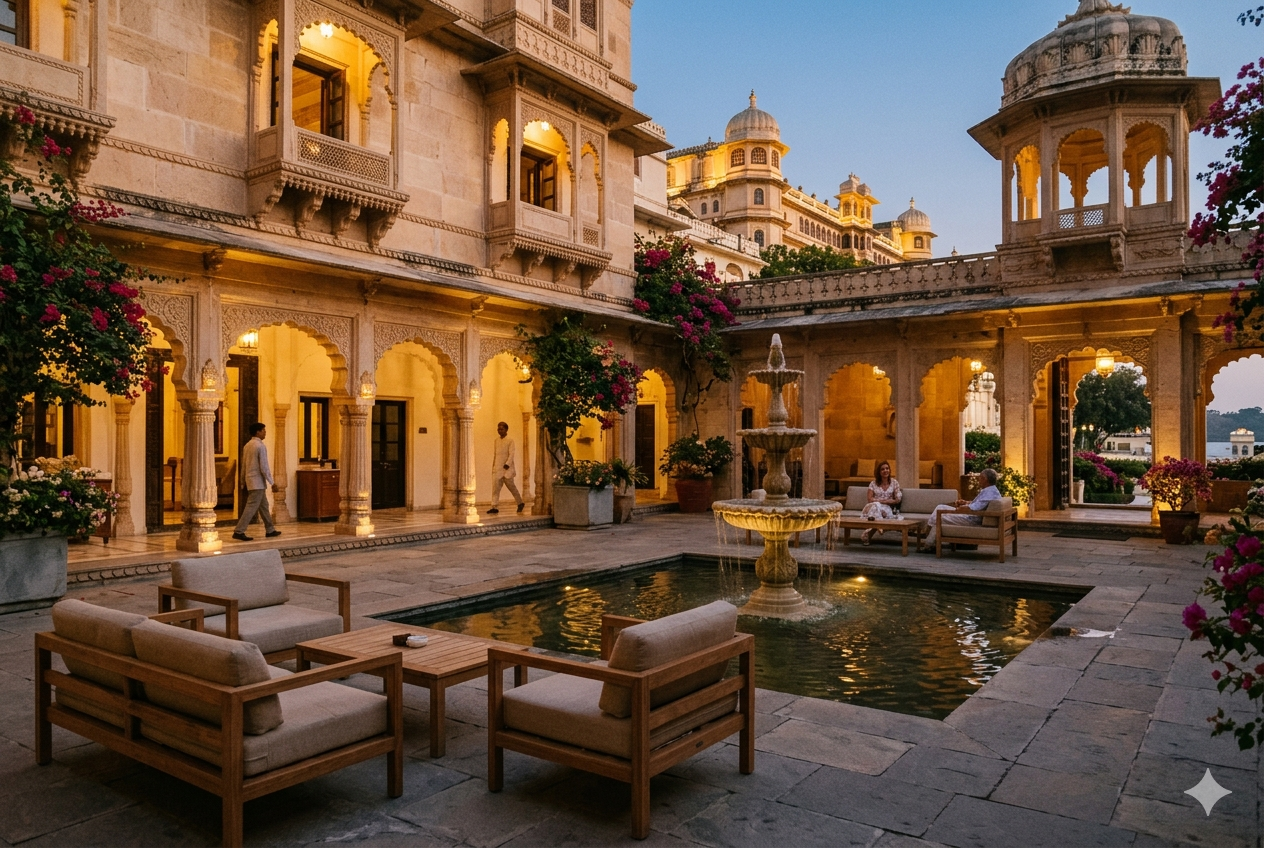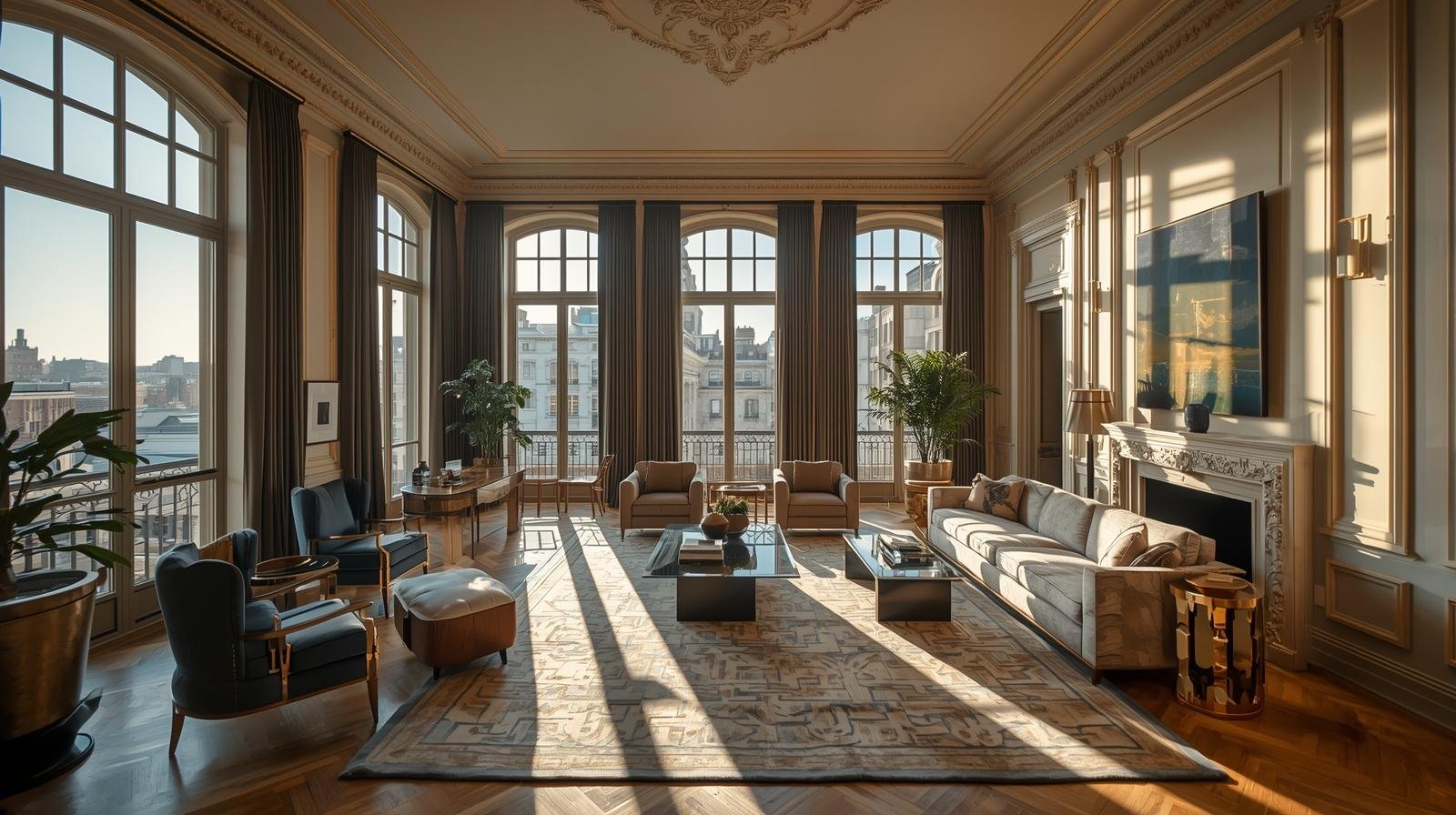
A five-floor Upper West Side residence where 1920s architectural bones frame contemporary art and living—honoring pre-war character while serving a modern family's needs without nostalgic pastiche.
When the clients—a finance executive and museum curator who had spent their careers collecting contemporary art—acquired this 1927 townhouse, they inherited both opportunity and constraint. The bones were exceptional: 12-foot ceilings, original plaster moldings, a gracious central staircase. But decades of unfortunate renovations had obscured these qualities beneath dropped ceilings, subdivided rooms, and synthetic materials.
Their brief centered on a paradox they'd observed in most pre-war Manhattan renovations: projects either preserved period details slavishly, creating museum-like environments unsuited to contemporary life, or gutted historic character entirely, pursuing minimalism that felt generic. They wanted third path: respecting the architecture's language while creating spaces for how they actually lived—open, light-filled, gallery-like.
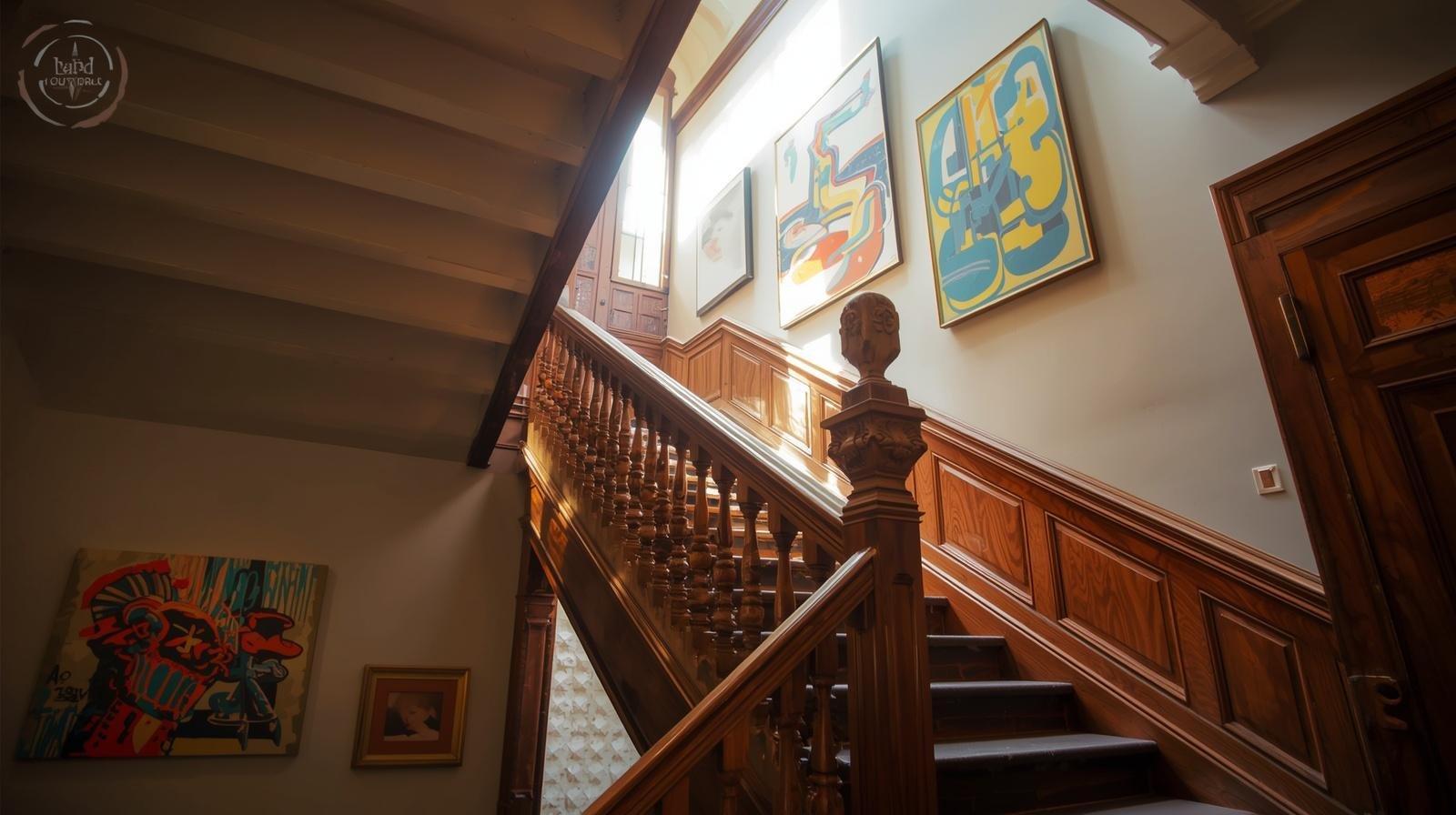
The renovation strategy centered on selective revelation. Rather than treating the townhouse as precious artifact or disposable shell, we identified which original elements merited preservation and which could be sacrificed for improved function. The plaster moldings—exceptional examples of 1920s craftsmanship—were painstakingly restored. The central staircase, with its carved newel posts and balusters, was stripped of layers of paint to reveal walnut beneath.
But we removed the warren of small rooms that had subdivided the parlor floor, creating open living/dining space that spans the townhouse's width. The removal required careful structural engineering: steel beams concealed in ceiling plane support loads from floors above. The intervention is invisible; the spatial transformation, dramatic.
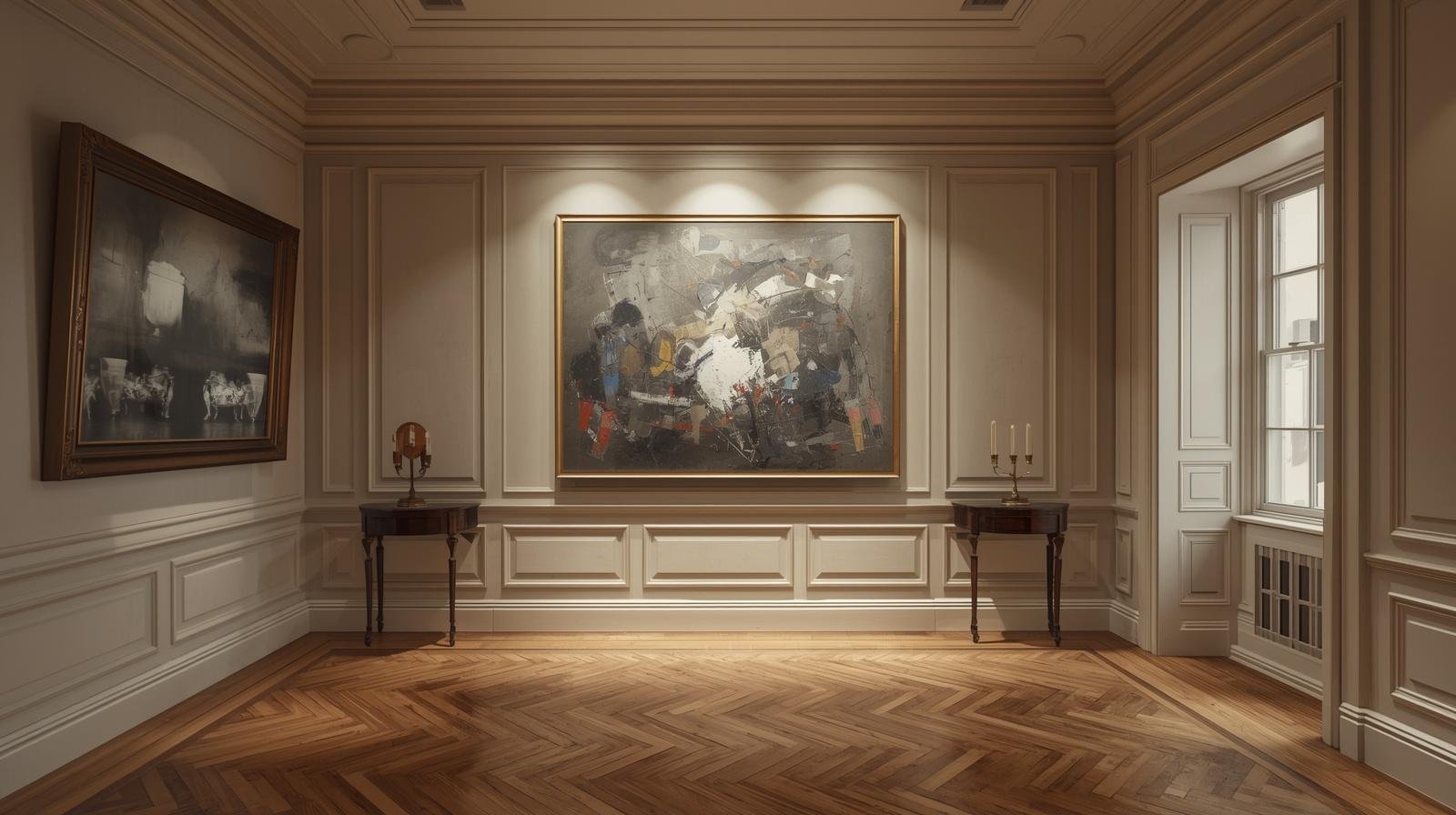
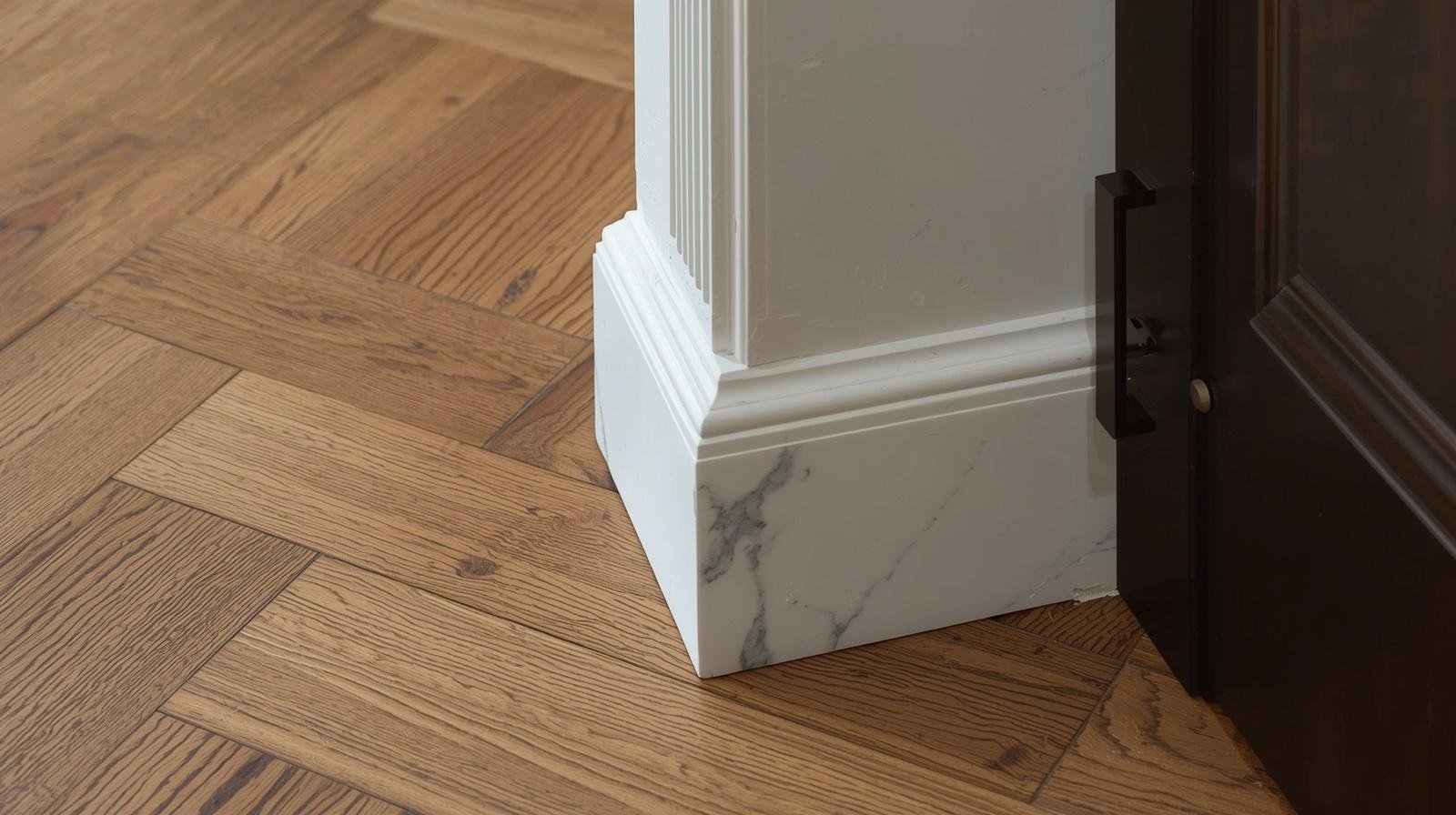
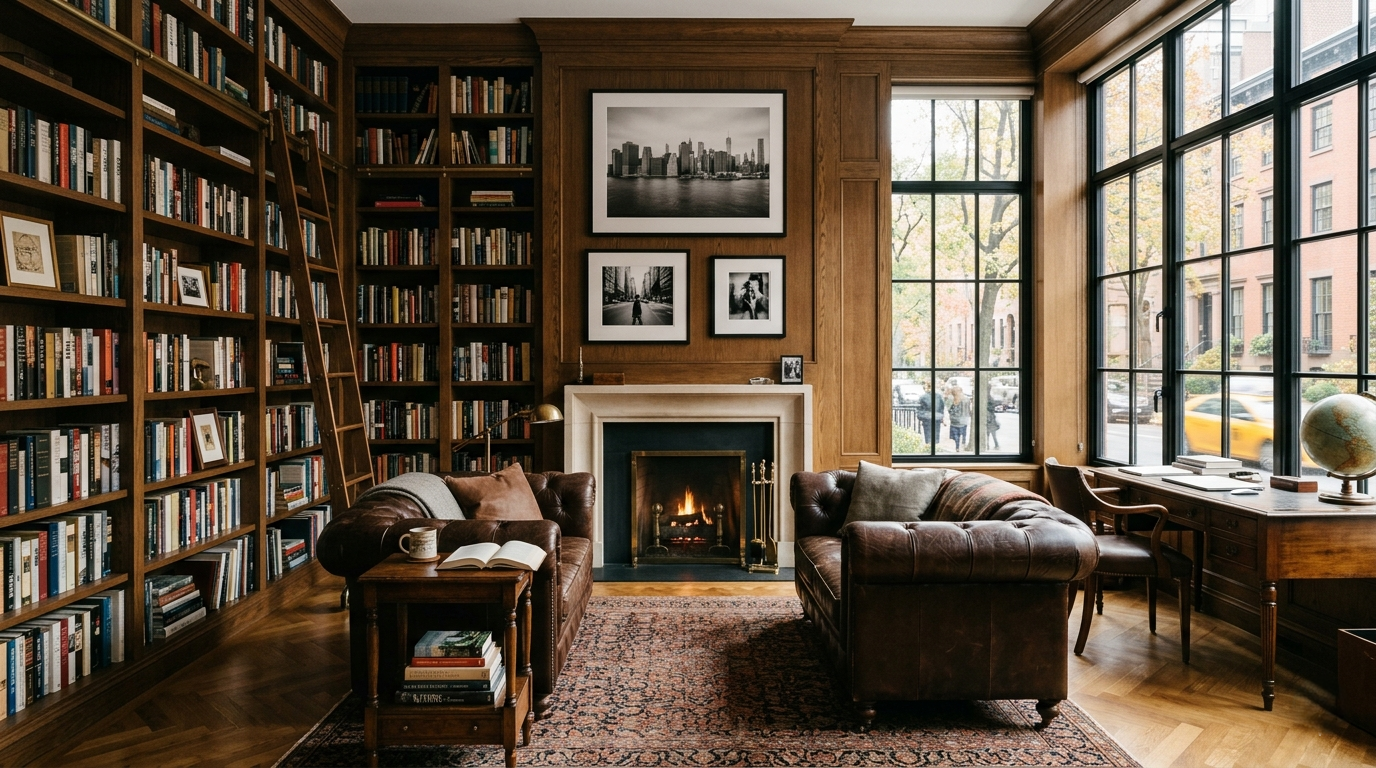
Flooring throughout employs wide-plank white oak in traditional herringbone pattern—referencing pre-war craftsmanship but executed in contemporary scale (8-inch planks rather than period-typical 3-inch). The wood was finished with natural oil rather than polyurethane, allowing it to develop patina while maintaining the soft, matte surface appropriate to the architecture's era.
The art collection—spanning 1960s minimalism through contemporary installation—required sophisticated lighting and wall systems. We created gallery walls throughout: plaster surfaces finished to museum standards, equipped with concealed picture rail systems that allow flexible hanging without visible hardware. Track lighting, carefully positioned in ceiling coves, provides adjustable accent illumination. Ambient light comes from a mix of restored period fixtures (rewired for LED), custom-designed pendants that reference 1920s forms without replicating them, and concealed linear LEDs in architectural details.
The kitchen—located on the garden level where original servants' quarters existed—required complete reinvention. Rather than attempt period recreation (which would have been neither authentic nor functional), we designed contemporary space that respects the architecture's proportions and materials palette. Custom cabinetry in rift-sawn white oak employs traditional joinery but contemporary door profiles. Countertops are honed Carrara marble—material appropriate to the era but detailed for current use. Appliances integrate behind panels; the visual effect is furniture more than kitchen.
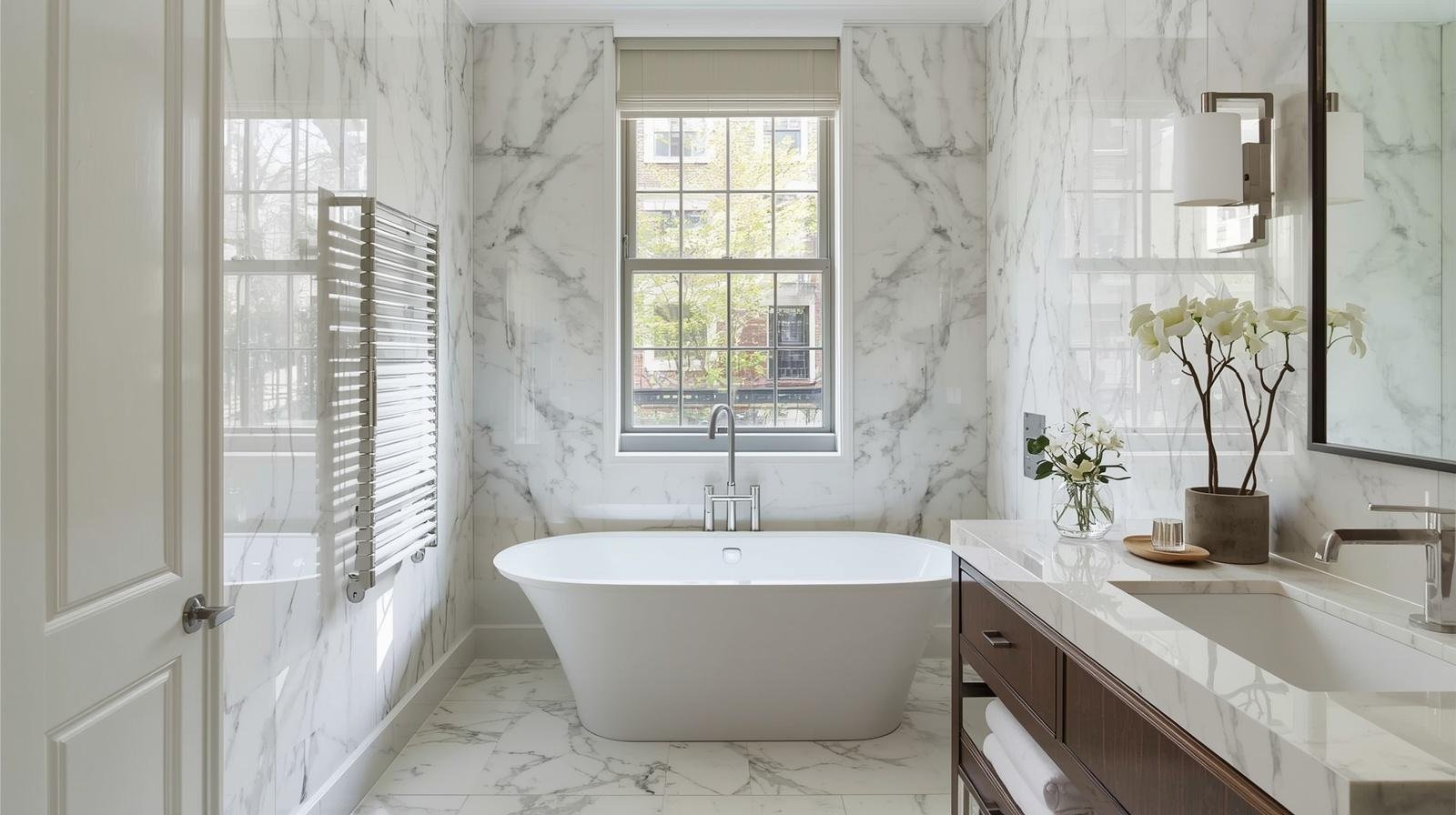
The master suite occupies the entire third floor. Here we took greater liberties, creating spa-like bathroom and walk-in closet that didn't exist in the original plan. But even these contemporary insertions employ materials and proportions that defer to the architecture. The bathroom's marble walls align with the building's window rhythm. The closet's millwork uses the same oak as flooring, maintaining material continuity.
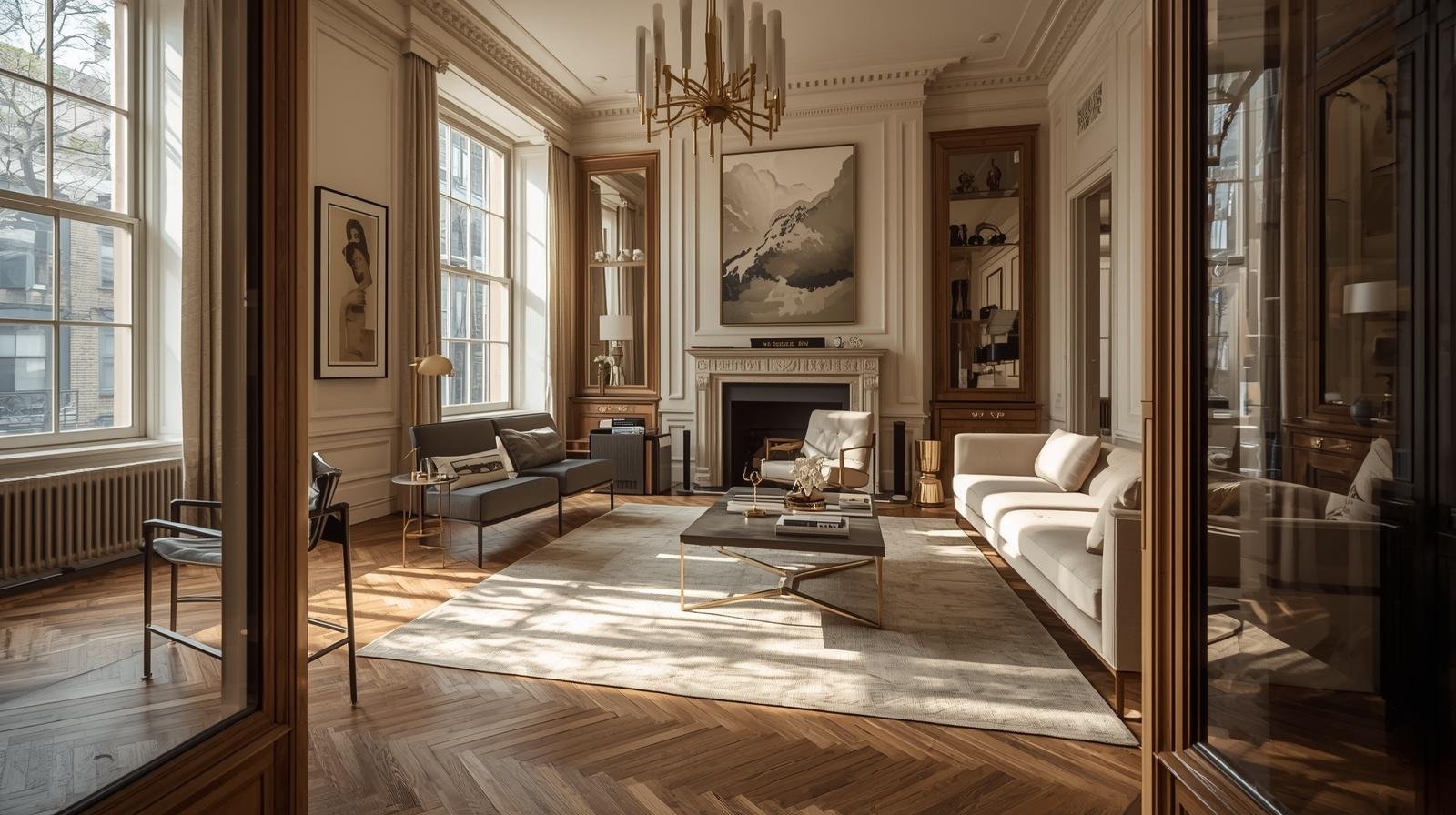
The parlor floor showcases larger works: a Brice Marden canvas anchors the living area, its abstract geometry creating dialogue with the room's classical moldings. A Donald Judd stack occupies a purpose-built niche. Smaller works by contemporary artists—Wade Guyton, Laura Owens, Julie Mehretu—populate the dining area.
Upper floors house more intimate pieces. The second-floor study, lined with bookshelves in the same white oak as kitchen cabinetry, displays photographs from the couple's collection of late-20th-century masters. The master bedroom's seating area features drawings and prints—works suitable for contemplative viewing.
The lighting system allows the collection to be highlighted dramatically for entertaining or recede into subtle presence for daily living. This flexibility proved essential; the couple wanted their art visible but didn't want to live in gallery. The townhouse needed to function as home first, exhibition space second.
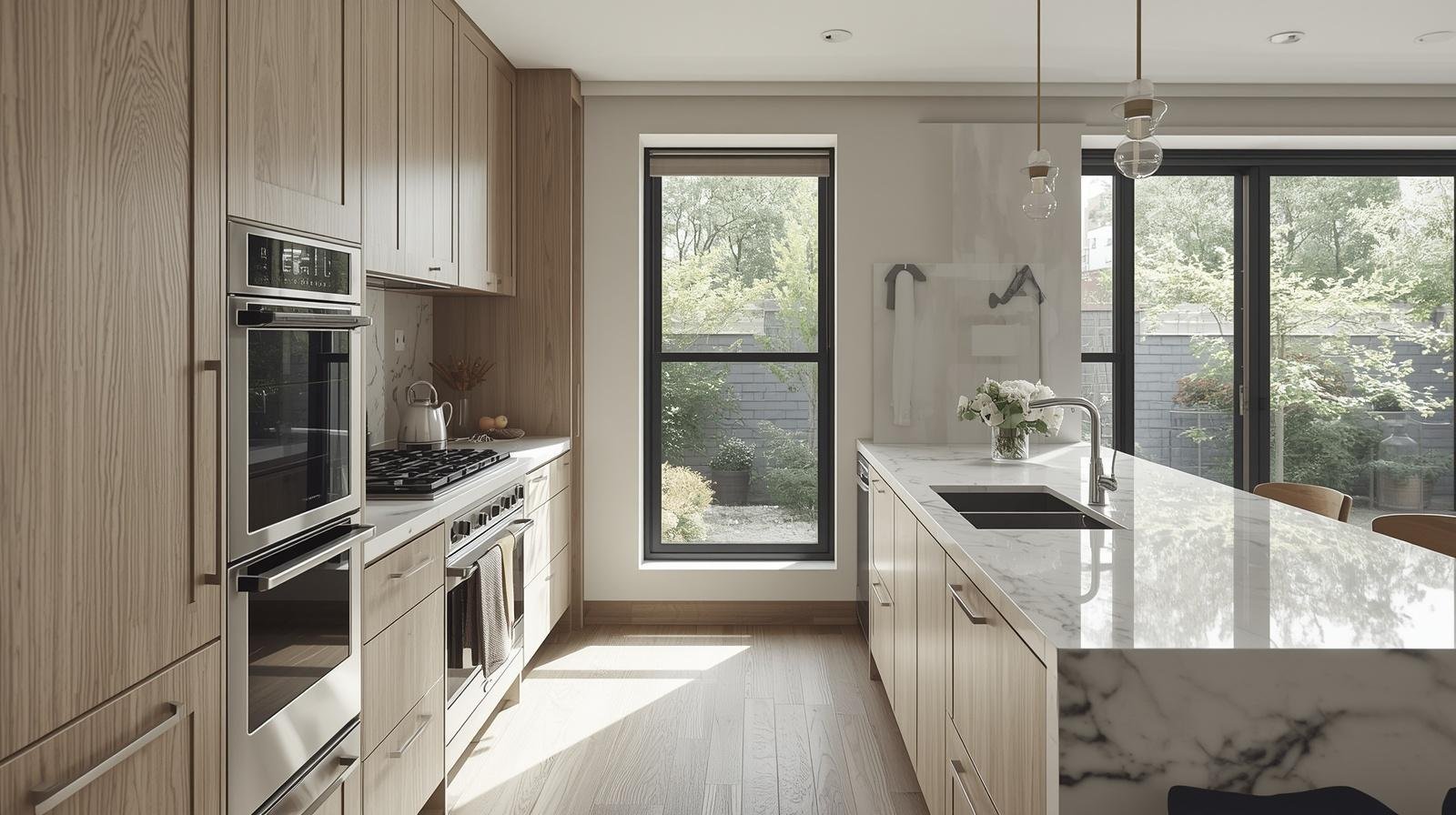
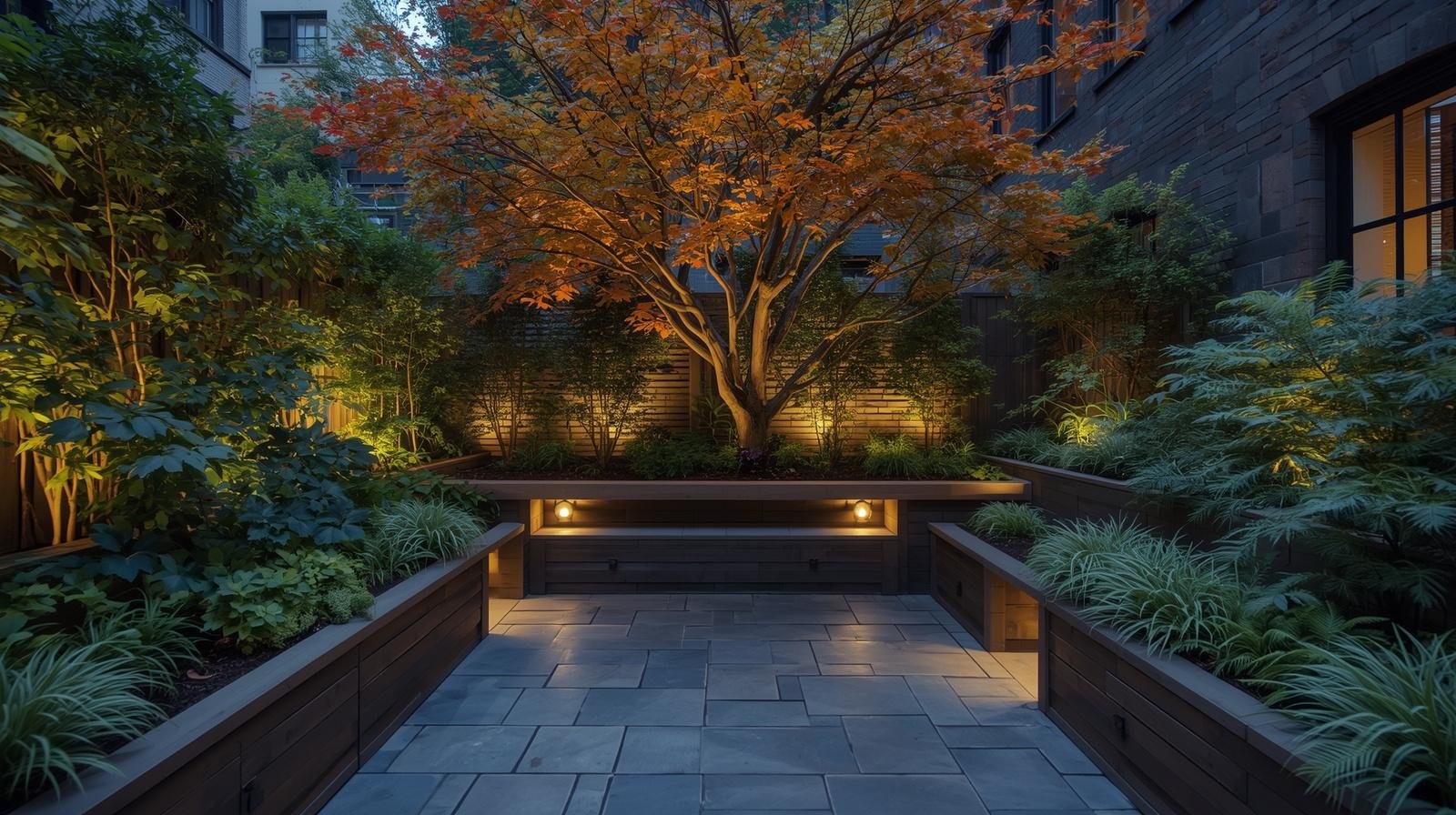
The garden, a 30-by-20-foot courtyard accessible from the kitchen, transformed from neglected pavement into outdoor room. We designed bluestone terrace with integrated planters, creating microclimate suitable for shade-loving species. Japanese maple provides seasonal color; boxwood offers evergreen structure; ferns and hostas soften edges. Built-in seating—teak slats on steel frame—accommodates summer dining. Uplighting transforms the maple into sculptural presence after dark.
Mechanical systems required complete replacement but needed to disappear within historic envelope. We employed mini-split air conditioning rather than central forced air, eliminating ductwork that would have compromised ceiling heights and architectural details. The units tuck into custom millwork surrounds. Radiant floor heating—installed beneath the herringbone oak—provides winter warmth without radiators or vents. The boiler and water heater occupy a rebuilt basement utility room, freed from the kitchen where they'd been awkwardly located.
The couple's art collection—which had been in storage during their years in a glass-walled Tribeca loft—finally found appropriate home. The townhouse's generous wall space and neutral palette create ideal gallery conditions.
"We'd seen too many pre-war renovations that either turned homes into stage sets for period fantasy or stripped away everything that made them special. Crosby understood we wanted something more nuanced: respect for architecture without revival, contemporary comfort without erasure."— Rachel & Michael Chen, Homeowners
Traditional lime plaster, hand-troweled finish
All original plasterwork was carefully evaluated. Damaged sections were repaired by specialists using traditional three-coat lime plaster technique—scratch coat, brown coat, finish coat—each hand-troweled and allowed to cure before the next application. Moldings that couldn't be saved were replicated by casting from intact sections. The restored plaster received minimal paint—a warm white that allows the material's texture to read.
French white oak, natural oil finish
Rift-sawn white oak, traditional joinery
All custom millwork—kitchen cabinetry, library bookshelves, master closet—employs rift-sawn white oak selected for consistent grain. The wood was cut to emphasize linear grain pattern, creating visual calm. Traditional mortise-and-tenon joinery (no visible fasteners) was executed by Herrick & White, a fourth-generation millwork firm based in Queens. Drawer boxes use dovetail joints; doors employ cope-and-stick construction. Hardware is solid brass, hand-finished.
Honed finish, book-matched installation
Kitchen countertops and master bathroom surfaces employ Carrara marble from the same Italian quarry that supplied stone for the townhouse's original mantels (which we retained). The contemporary installations use honed finish rather than polished—softer, more forgiving of use, more appropriate to the era. Slabs were book-matched where possible to create symmetrical veining patterns. Edges received simple profiles rather than ornate moldings.
Blackened steel, low-iron glass
Where contemporary interventions required visual distinction from historic fabric—the glass shower enclosure, the kitchen's open shelving, door hardware for new insertions—we employed blackened steel and low-iron glass. These materials read as clearly modern while their quiet palette defers to the architecture. The steel was finished using traditional techniques (heat and oil) that create depth rather than flat paint.
Museum-quality track, custom fixtures
Gallery lighting employs museum-standard track systems concealed in ceiling coves—adjustable but invisible. The tracks accept multiple fixture types, allowing flexibility as the collection changes. Custom pendants, designed specifically for the dining room and kitchen, reference 1920s forms (particularly Bauhaus-era geometric fixtures) but employ contemporary LED technology and hand-blown glass from a Brooklyn artisan.
Two years after completion, the townhouse has settled into its role as both family home and art gallery. The couple's teenage children move freely through spaces that earlier incarnations—formal parlors, servants' quarters—would never have accommodated. Friends gather in the parlor for dinner, unintimidated by the art that surrounds them. The garden hosts summer breakfasts, the marble becoming dappled with tree-filtered light.
The art collection continues evolving. Pieces rotate as acquisitions happen and interests shift. The flexible lighting and hanging systems make these changes straightforward—a painting can move from parlor to study without construction or patching. This adaptability validates our approach: the townhouse provides framework rather than fixed composition.
The clients report that guests invariably ask the same question: "When was this house built?" Those unfamiliar with pre-war architecture assume contemporary construction; the architecture's quality and the renovation's restraint create seamless whole. Those who know New York townhouses immediately recognize the building's era but are surprised by the contemporary feeling. Both reactions please the clients, who wanted neither museum nor modernist box but synthesis of both.
For us, this project demonstrates that historical architecture and contemporary life aren't opposing forces requiring compromise. Rather, they're complementary when approached with respect for both. The townhouse's bones provided framework—proportion, light, material character—that contemporary intervention enhanced rather than fought. The result feels neither revival nor rupture but continuation: the building's ongoing life, adapted for current occupants while honoring inherited qualities.
The preservation community, typically skeptical of contemporary interventions in historic structures, has largely embraced the project. We've been cited as example of "respectful renovation"—though we'd phrase it differently. Respect alone produces timid work. What's required is confidence: belief that well-considered contemporary intervention can enhance historic architecture rather than diminish it. The townhouse proves this possible.
Manhattan's townhouse market has noticed. Several neighbors have approached us about similar projects—renovations that preserve character while creating contemporary spatial quality. This validates our conviction that many owners of pre-war homes want exactly what these clients sought: not recreation of period interiors but contemporary living within historic envelope, executed with care for inherited architectural language.
We collaborate with owners of architecturally significant homes who seek contemporary spatial quality while honoring inherited character. Our approach balances preservation and intervention thoughtfully.
Begin Conversation