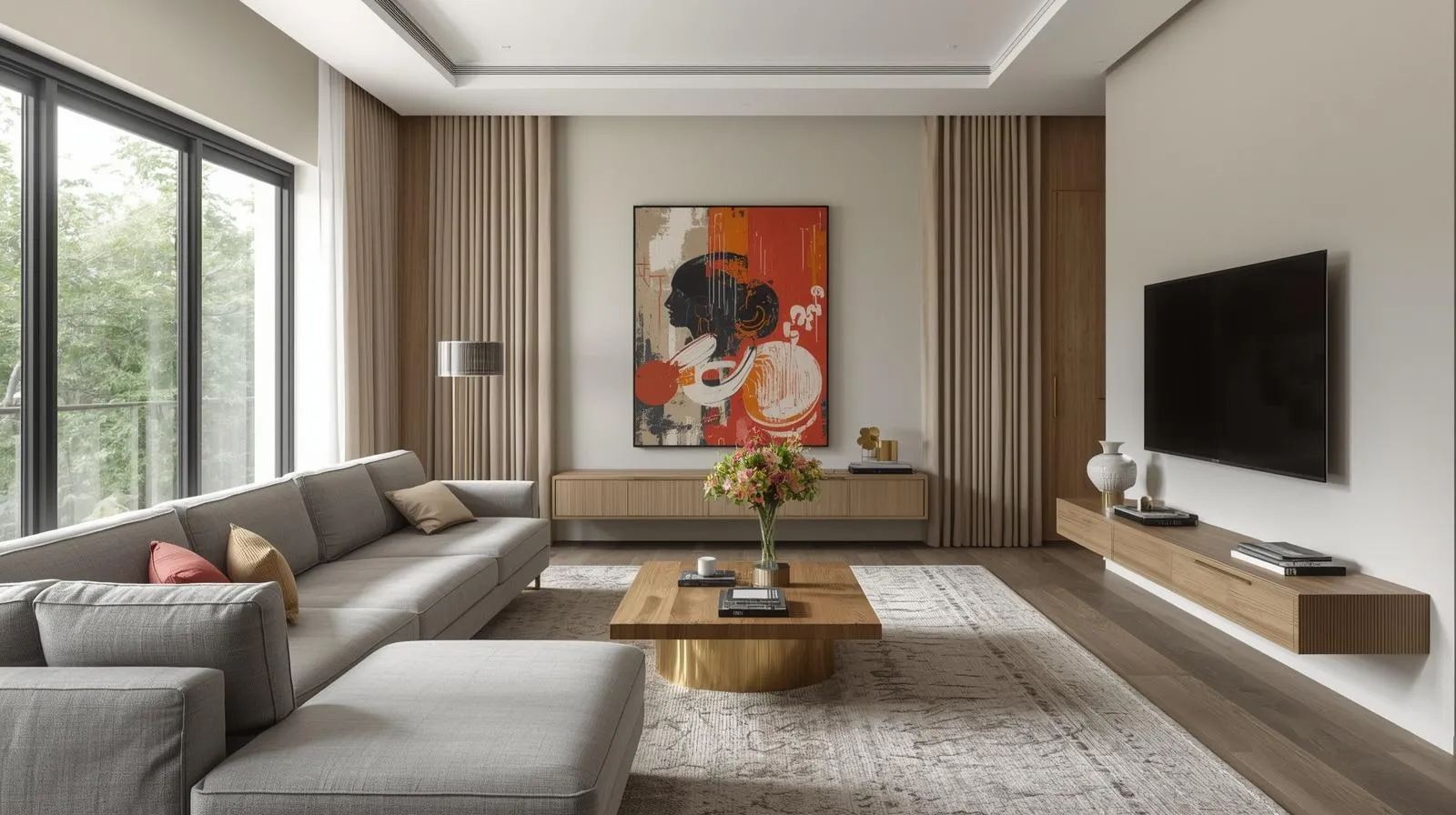
Where Continental India Meets the Coast The brief from Hyatt's design team posed an intriguing contradiction: create a coastal-inspired restaurant in Lucknow—a landlocked city 1,200 kilometers from the nearest ocean. The challenge wasn't merely aesthetic. Lucknow sits in the Gangetic plains, where summer temperatures soar past 45°C and winter fog blankets the city in dense white. Under the aegis of JK Construction, Crosby executed the finishing work for this 8,500 square foot space spanning three distinct zones: Rocca Restaurant, UP Bar, and Lukjin Restaurant, plus The Penthouse event space. Each area required coastal character while serving vastly different functions.
The project timeline was unforgiving: six months from bare structure to operational restaurant. The parent company had completed the shell; Crosby's mandate covered everything visible—brickwork, tiling, finishes, fixtures, and the thousand details that transform construction into hospitality. The Coastal Paradox How do you evoke the ocean in a city defined by Mughal gardens and Nawabi architecture? The answer lay not in literal translation—no driftwood sculptures or fishing nets—but in capturing coastal essentials: light, breeziness, material honesty, and chromatic restraint. Each chair and table base employed traditional weaving techniques that allow air circulation, crucial for both coastal authenticity and Lucknow's climate.
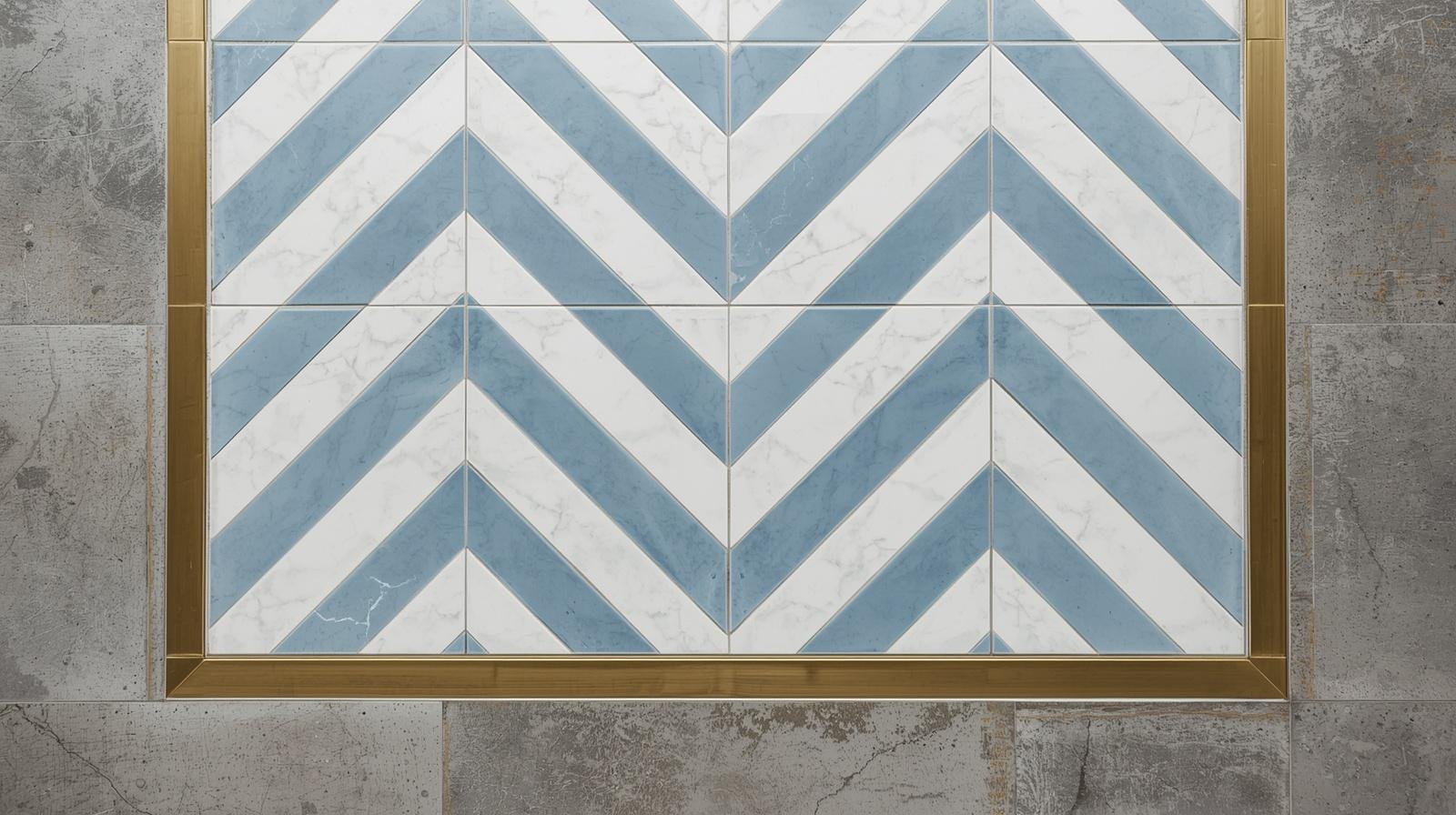
The flooring strategy addressed both aesthetic and functional imperatives. Polished concrete—a material with industrial honesty—formed the primary surface, its cool tone echoing wet sand. Within this neutral field, we introduced geometric tile patterns in soft blues and whites, creating visual interest without competing with the restaurants' food presentations.
But we adapted spaces for contemporary use. Partition walls that subdivided grand rooms into offices were removed, revealing original proportions. New insertions—kitchen, bars, bathrooms—employed clearly contemporary detailing that contrasts with historic fabric rather than attempting false historicism. The wine cellar occupies former basement storage, its climate-controlled glass walls and modern racking systems reading as 21st-century insertions in 1930s shell.
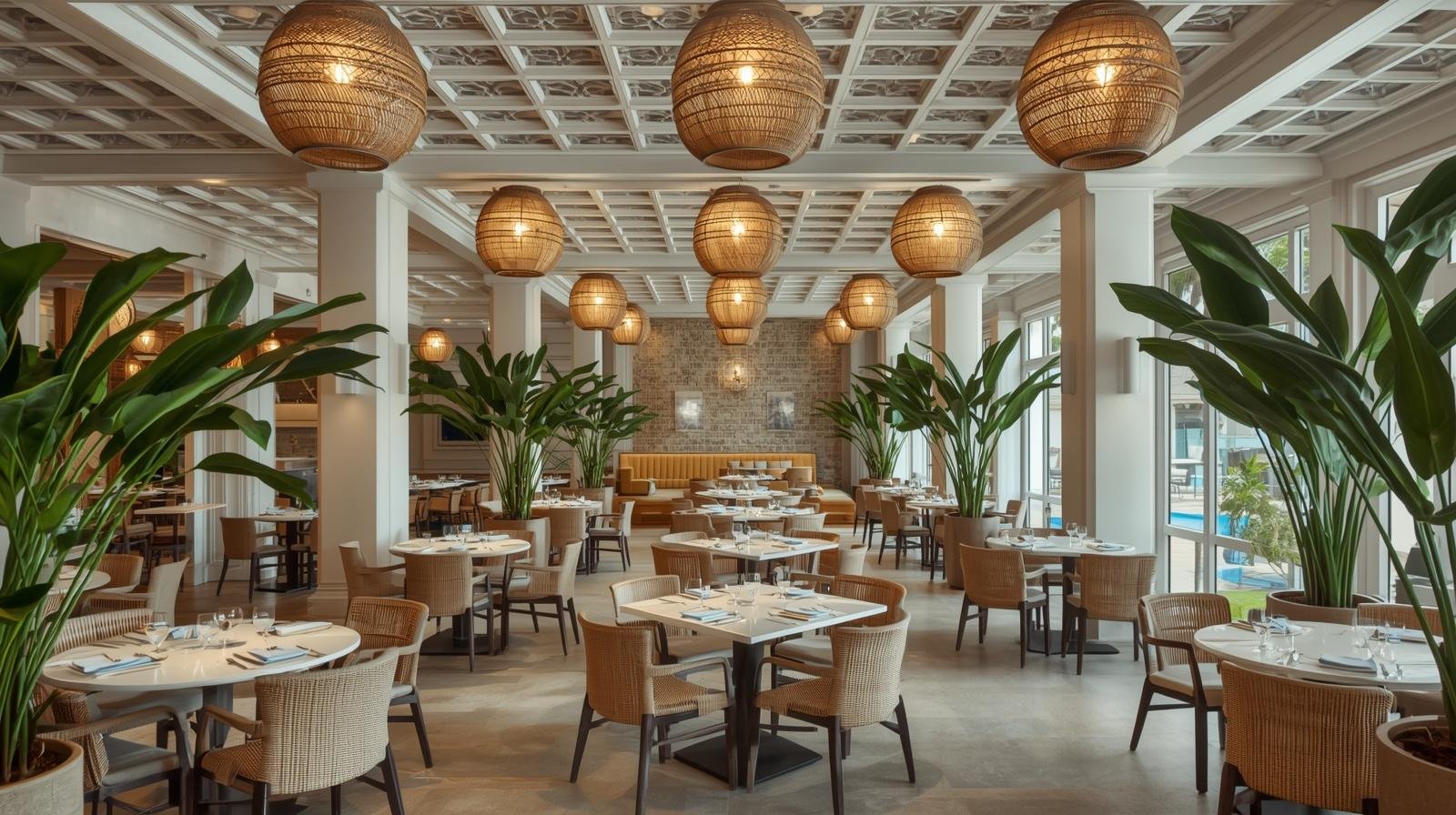
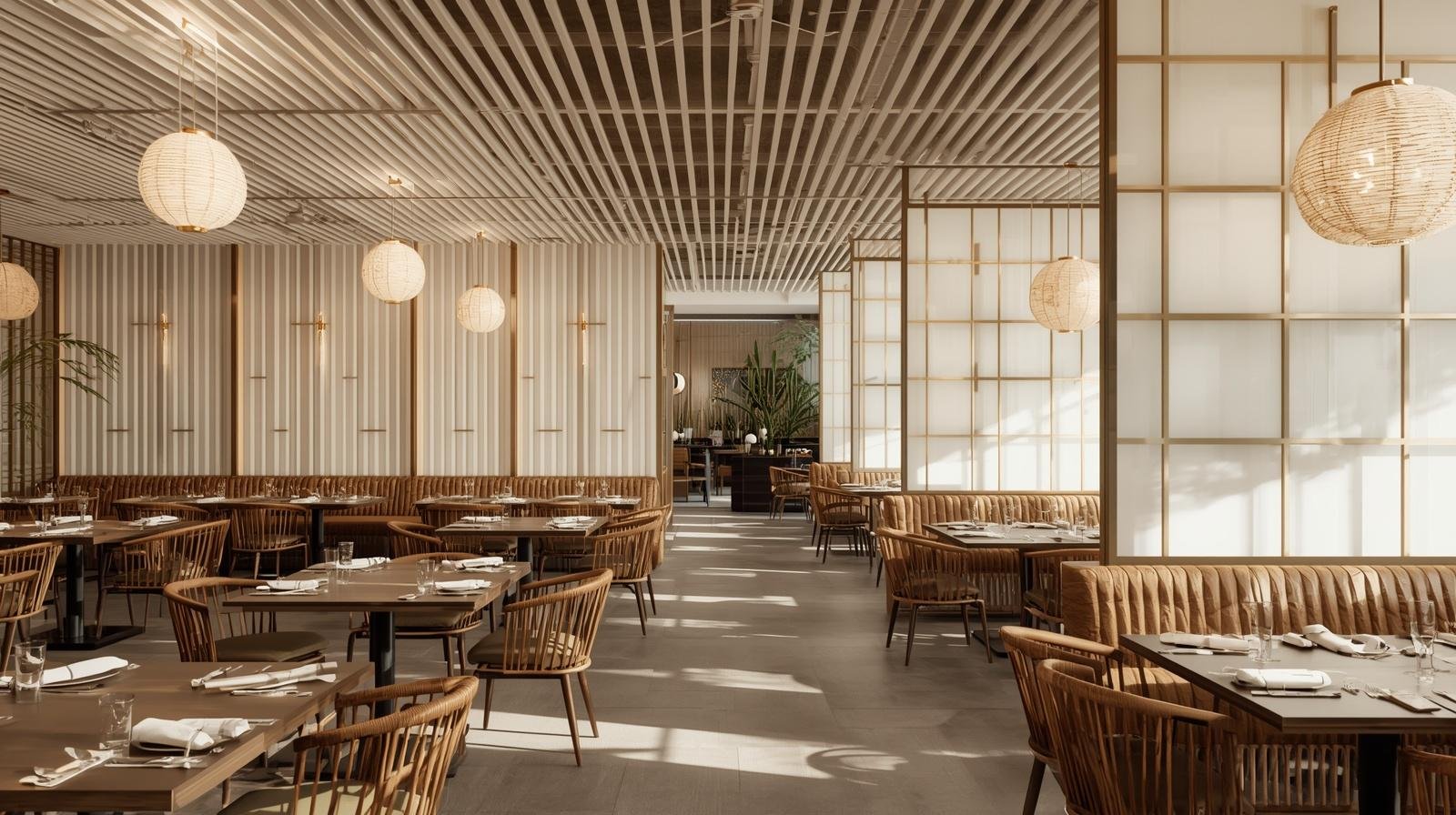
Rocca Restaurant: Mediterranean Lightness Rocca occupies the largest footprint—approximately 4,000 square feet serving 65 covers. The design team faced a rectangular space with minimal natural light, threatening the very brightness coastal design demands. The solution employed layered strategies. We installed a white trellis ceiling—a geometric framework in painted aluminum—that diffuses artificial light while creating dappled patterns reminiscent of sunlight filtering through palm fronds. Custom pendant fixtures in woven rattan and cream fabric hang at varying heights, their warm glow softening the space's commercial scale. The walls received textured white plaster, applied by hand to create subtle variations that catch and reflect light. This technique—borrowed from Mediterranean architecture where builders work lime plaster in thick layers—adds depth without pattern or decoration.
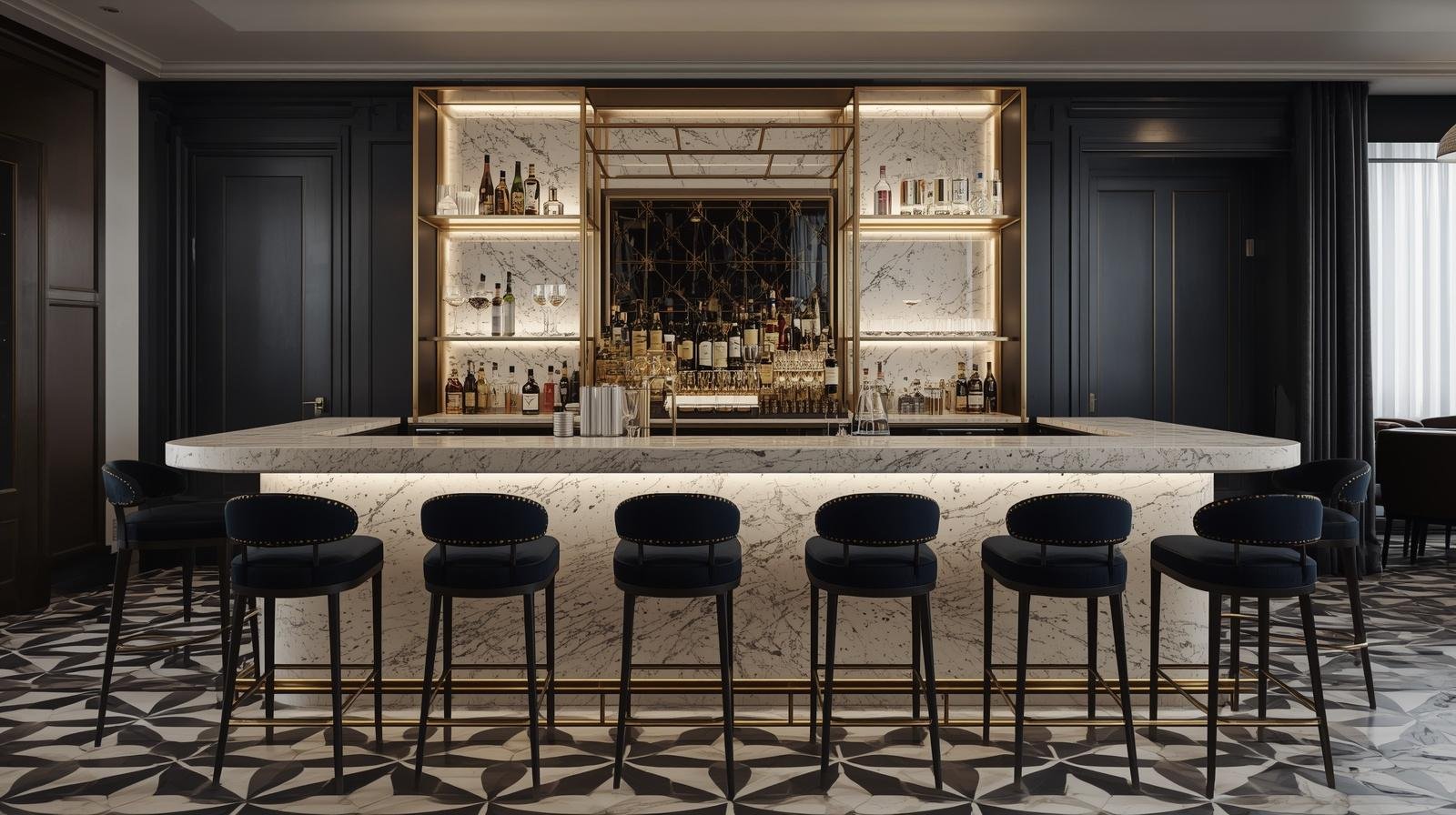
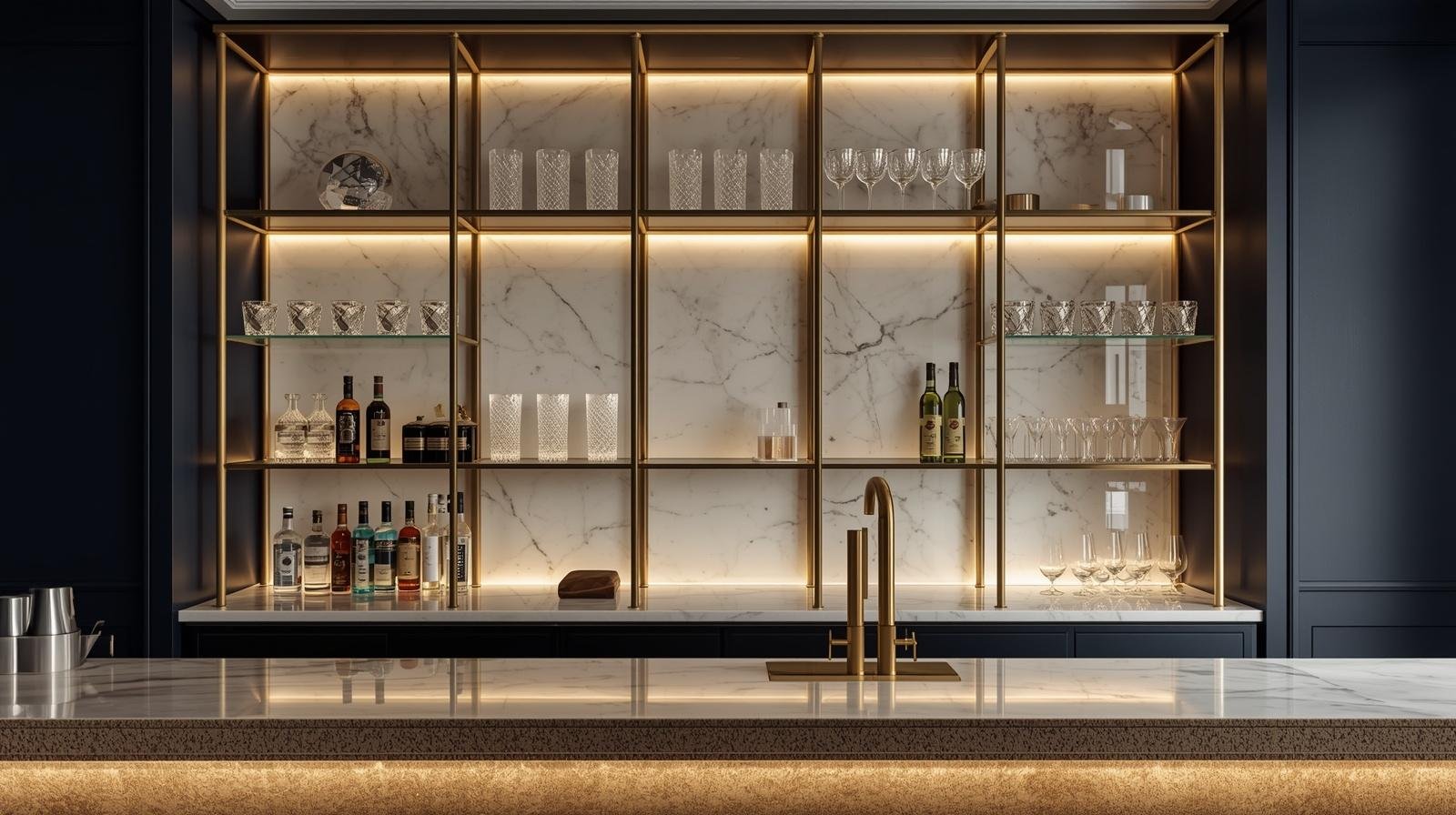
Seating combines custom rattan dining chairs from our Kerala partners with upholstered banquettes in marine-grade fabrics. The fabric selection proved critical: hospitality-grade materials that suggest luxury while withstanding daily commercial use. We chose a textured weave in powder blue that evokes sailcloth without mimicking it literally. Potted palms—Areca and Kentia varieties selected for low-light tolerance—punctuate the space, their organic forms softening the geometry while reinforcing the coastal narrative. These weren't token plants but architectural elements, each positioned to frame sightlines and define circulation zones. The open kitchen anchors one end, its stainless steel and white tile creating a bright terminus. We designed a custom marble service counter—white Makrana with subtle grey veining—that bridges the kitchen's functionality with the dining room's softer aesthetic. UP Bar: Sophisticated Restraint The bar occupies a more intimate 3,500 square feet, serving as both standalone destination and pre-dinner gathering space for Rocca guests. Here, the coastal aesthetic shifts toward evening sophistication. We developed a deeper color palette—navy blues and charcoal greys—appropriate for bar lighting while maintaining coastal references. The bar counter itself employs terrazzo in custom colorway: cream base with navy, grey, and brass chips. The material nods to 1950s Miami glamour while maintaining contemporary restraint. Back-bar shelving employs brass framework with white marble shelves—a combination suggesting luxury without excess. Each shelf features integrated LED strips that illuminate glassware from below, creating a warm glow that contrasts with the space's darker tones. Seating includes a mix of bar stools in navy leather and lounge furniture in textured fabrics. The floor transitions from concrete to geometric tile patterns that intensify toward the bar—a visual journey from beach to evening sophistication. Lukjin Restaurant: Minimalist Refinement Lukjin occupies 2,000 square feet dedicated to Asian cuisine. The design brief required coastal aesthetics to coexist with Asian minimalism—a challenging synthesis given their different material vocabularies. We maintained the cream and blue palette but introduced cleaner geometries and reduced decoration. Furniture employs simpler forms in darker rattan, closer to traditional Chinese dining chairs than the Mediterranean shapes used in Rocca.
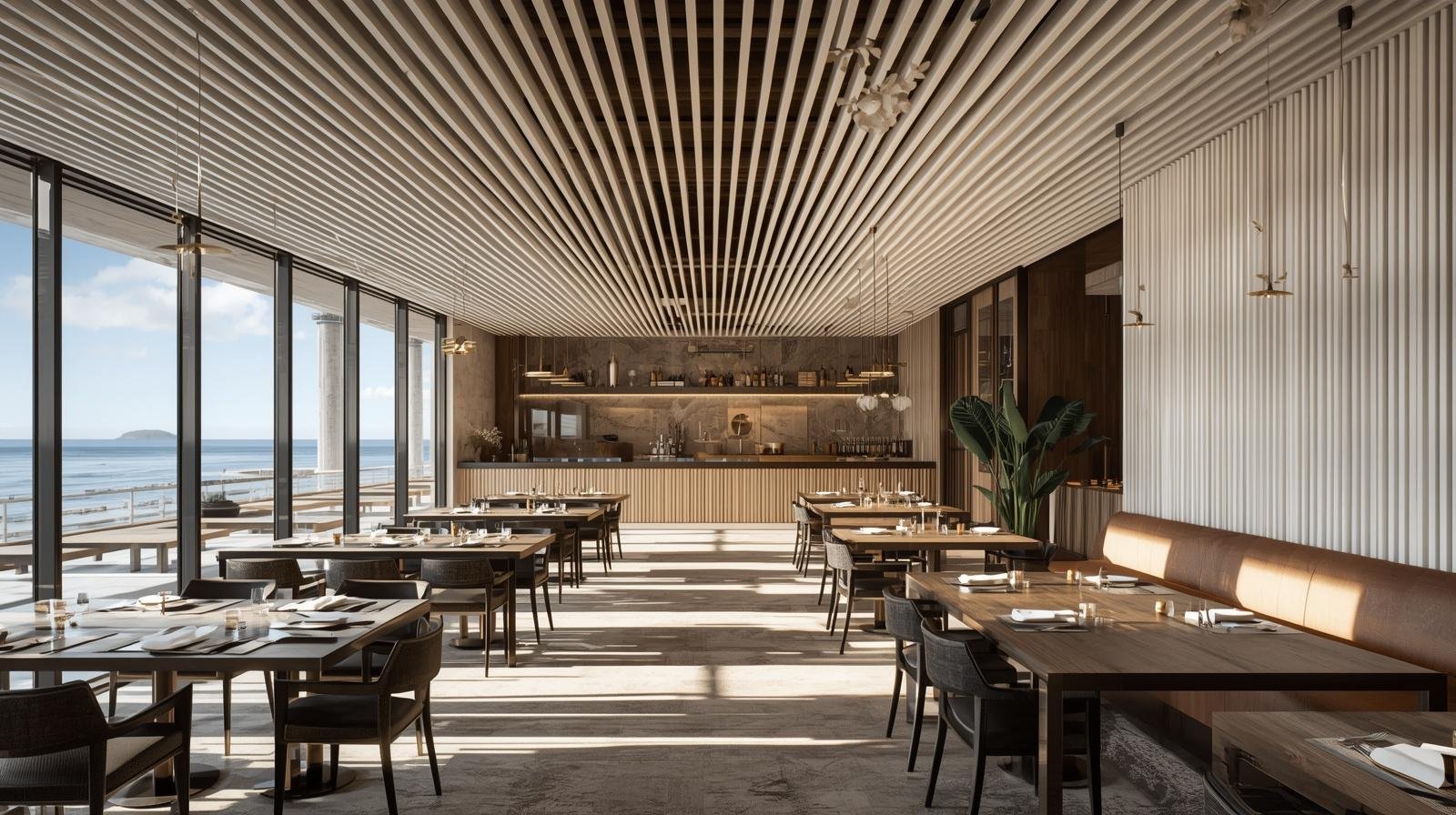
The ceiling treatment differs markedly: instead of trellis, we installed linear white baffles that create clean shadows while concealing mechanical systems. This geometry references Japanese shoji screens without literal imitation. Custom screens in white-painted wood with brass details divide the space into semi-private zones. These panels—fabricated by Delhi craftsmen—employ geometric patterns that read as both coastal lattice and Asian fretwork, demonstrating how thoughtful abstraction can bridge different design languages. The lighting strategy employs paper lanterns in cream and white—a nod to Asian tradition executed in scale and proportion appropriate for commercial hospitality. Each fixture underwent custom development to meet fire codes while maintaining the delicate aesthetic lanterns suggest.
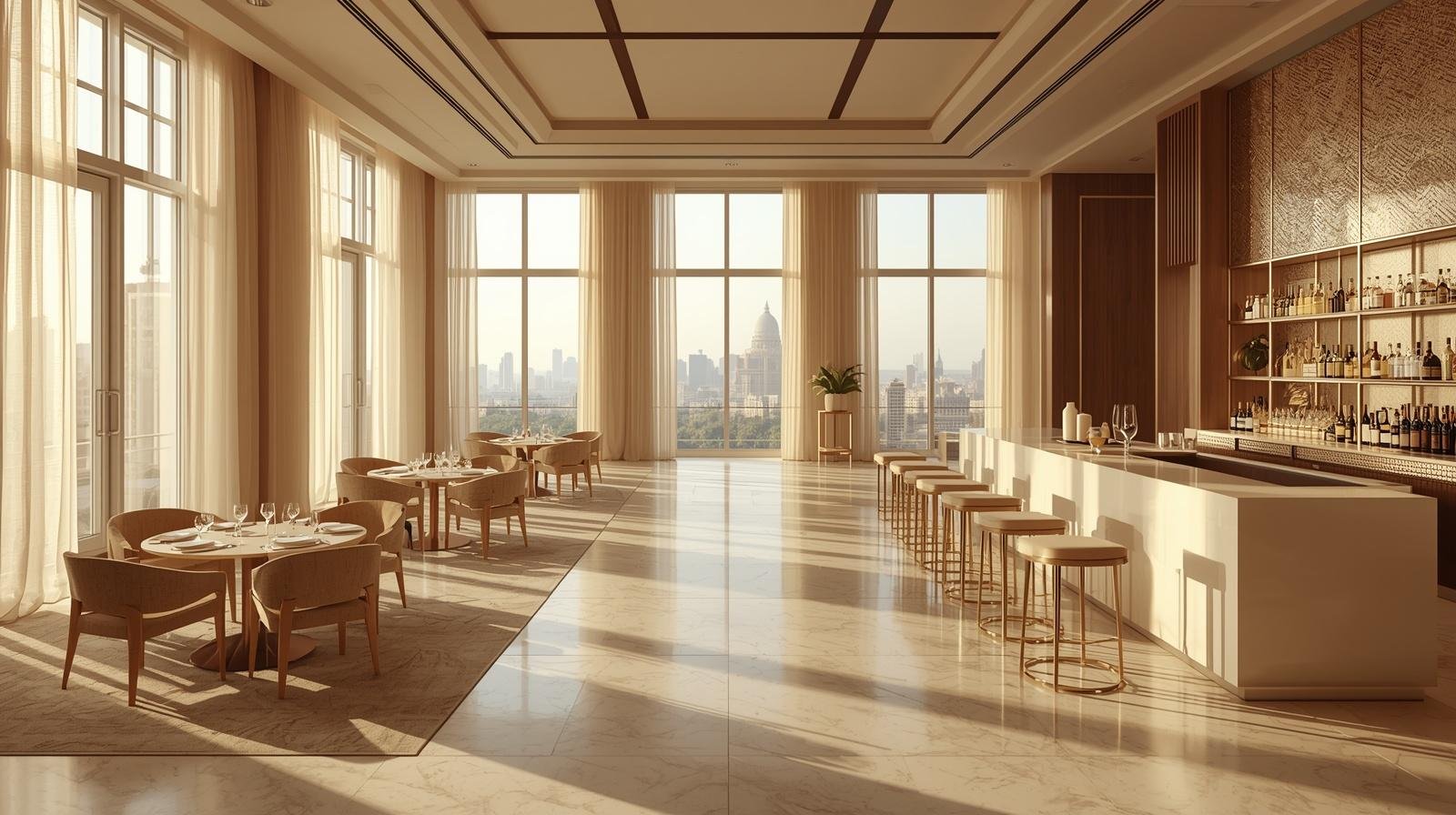
The Penthouse: Event Flexibility The Penthouse occupies 1,000 square feet on the upper floor, serving private events and receptions. Here, the coastal aesthetic becomes more explicitly luxurious, appropriate for wedding celebrations and corporate gatherings. Floor-to-ceiling windows provide genuine natural light—the only space in the complex with this advantage. We designed custom sheer curtains in cream linen that filter harsh afternoon sun while maintaining views of Lucknow's skyline. The flooring employs larger-format tiles in cream with subtle grey veining, their scale appropriate for event setup flexibility. Unlike the restaurants' fixed furniture, The Penthouse features movable pieces that accommodate different configurations. A custom bar unit in white lacquer with brass details anchors one wall, its clean lines allowing floral arrangements and event décor to take focus. Built-in storage conceals AV equipment and service items.
"Crosby's finishing work transformed our vision into reality. The coastal aesthetic they achieved in landlocked Lucknow has become our property's signature—guests consistently mention the transportive quality of the restaurants. Their attention to material authenticity and craft detail demonstrates why they're among India's most trusted hospitality finishers. Two years of intensive use has only enhanced the spaces' character."— Rajiv Kapoor, General Manager, Hotel Lucknow
Specification: Cream cement base, navy/grey/brass aggregate, honed finish, hospitality-grade sealer
The bar counter employs terrazzo in custom colorway developed specifically for this project. Traditional terrazzo artisans in Jaipur cast the material on-site in 3-meter sections, allowing seamless installation without visible joints. The aggregate mix—carefully calibrated navy stone chips, grey marble fragments, and brass inlays—creates subtle sparkle under bar lighting while maintaining sophisticated restraint. Post-installation grinding and polishing required 72 hours per section, achieving the mirror-smooth surface that resists staining and wear essential for commercial bar service.
Specification: Natural rattan cane, hand-woven traditional patterns, hospitality-grade construction
All dining chairs and lounge furniture employ rattan woven by third-generation artisans in Kerala whose families have supplied luxury hotels across the Indian Ocean. Each chair frame undergoes steam-bending to achieve gentle curves impossible with straight cane. The weaving pattern—a traditional Kerala technique featuring double-wrapped vertical elements—provides exceptional strength and air circulation. Hospitality-grade construction includes reinforced joints and marine-grade finish protecting against humidity while allowing the natural material to breathe.
Specification: A-grade white with grey veining, honed finish, 20mm thickness
The service counter and bar back-shelving employ Makrana marble from the same Rajasthan quarries that supplied stone for the Taj Mahal. We personally selected slabs at the quarry, examining veining patterns and color consistency across the 12-meter run required. Each shelf piece underwent precision cutting and edge profiling in our fabricators' workshop before installation.
Specification: Three-layer system, hand-troweled, sealed with breathable coating
Wall surfaces throughout received hand-textured plaster applied by specialized craftsmen who trained in Mediterranean restoration techniques. Modern acrylic-modified plaster ensures durability while breathable sealer protects against humidity common in commercial kitchens.
Specification: Cement tiles, hand-laid geometric patterns, sealed
The geometric tile patterns employ traditional cement tiles fabricated by Mumbai's century-old Bharat Floorings & Tiles, whose manufacturing process remains unchanged since 1922. Each tile is hand-made: color pigments pressed into cement under hydraulic pressure, creating patterns that penetrate the full tile thickness rather than surface application. The powder blue and white colorway was custom-developed for this project.
Specification: Solid brass, hand-forged and welded, living finish
All brass elements—bar framework, screen details, furniture caps, trim pieces—were fabricated by traditional metalworkers in Delhi, where generations of craftsmen have supplied architectural metalwork. Each joint was hand-forged and welded, ground smooth, and polished to eliminate visible seams. The result suggests traditional brass craftsmanship adapted for contemporary hospitality use.
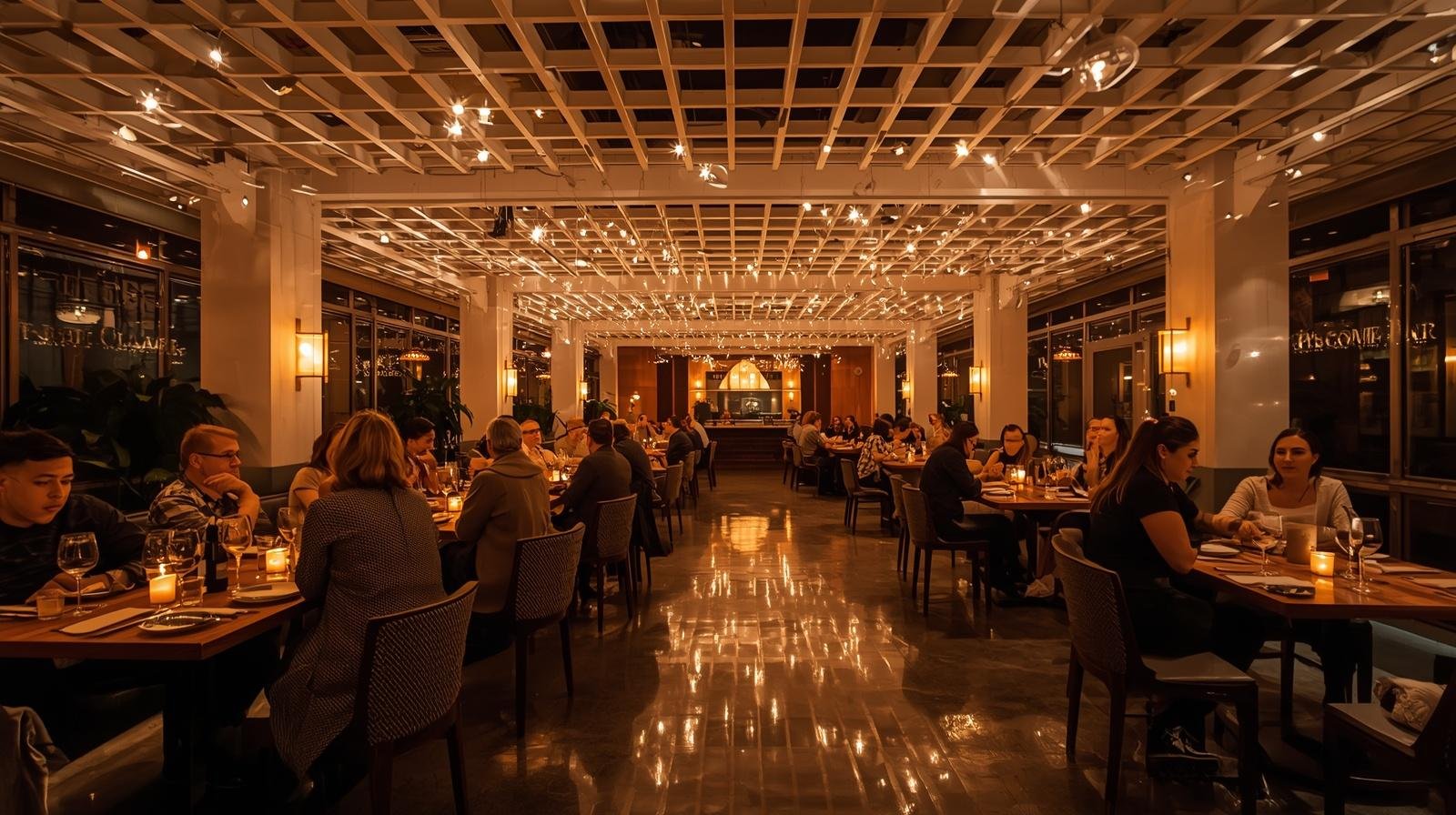
Material Craft: Executing Vision The finishing work presented numerous technical challenges. The rattan furniture arrived from Kerala requiring assembly and installation. Each piece received on-site inspection and adjustment, ensuring wobble-free stability crucial for commercial service. The weaving patterns had to accommodate standard seat cushions while maintaining traditional techniques. The textured plaster walls employed a three-layer system: base coat, texture coat, and seal coat. Lighting: Technical Poetry The lighting design balanced multiple imperatives: adequate illumination for service, flattering light for dining, energy efficiency for operations, and aesthetic coherence with coastal themes. The trellis ceiling at Rocca conceals uplights that wash the white surface, creating the illusion of natural skylight even at night. This strategy—borrowed from luxury retail—maintains spatial brightness without visible sources.
Two Years On: Enduring Design Hyatt Lucknow opened in mid-2018. Two years of intensive use—approximately 200 covers daily across the restaurants—has validated the design decisions. The materials have aged gracefully. The terrazzo bar counter has developed the subtle sheen that comes from thousands of glass-bottoms sliding across its surface. From Crosby's perspective, the project demonstrated our capacity to execute large-scale hospitality work under tight timelines while maintaining craft quality. Every tile, every furniture piece, every light fixture reflected collaborative problem-solving between our team, JK Construction, and Hyatt's design consultants. PROJECT CREDITS Client: Hyatt Regency Lucknow Main Contractor: JK Construction Finishing Contractor: Crosby Project Private Limited Scope: Brickwork, Tiling, Finishes, Millwork, Furniture Installation Timeline: 6 months (January 2018 - June 2018) Photography: Completed work images available on site
We collaborate with hotel founders and hospitality entrepreneurs creating exclusive gathering spaces that balance heritage preservation with contemporary needs. Our approach honors architectural character while enabling vibrant social life.
Begin Conversation