A 25-acre wellness sanctuary in Wayanad's rainforests where 5,000-year-old Ayurvedic healing traditions and contemporary architecture create environment for deep restoration—without resort clichés or spa aesthetics.
The founders—a husband-wife team of Ayurvedic physicians who had practiced in Kerala for three decades—approached us with unusual vision. They had witnessed wellness tourism's growth but felt most resorts commercialized Ayurveda into spa treatments, divorcing healing practices from philosophical foundations. What they sought: a retreat that would honor Ayurveda's complexity while meeting international guests' expectations for comfort and beauty.
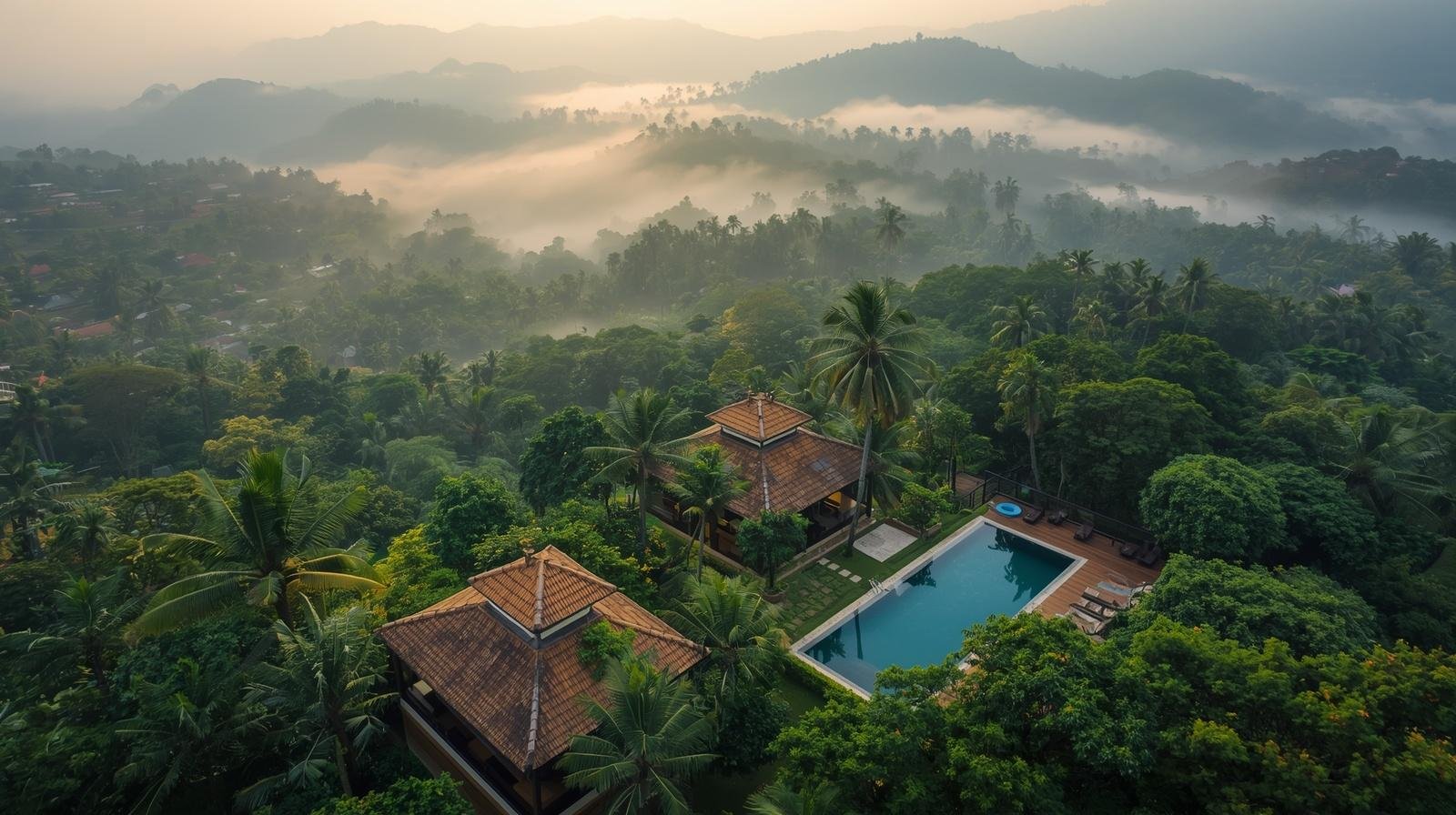
Their 25-acre property in Wayanad—Kerala's mountainous interior—offered pristine setting. Dense tropical rainforest, seasonal streams, endemic bird species, and relative isolation from coastal tourism corridors. The land sloped gently toward distant mountains, creating natural terracing. A century-old spice plantation occupied portions of the property—cardamom, pepper, vanilla—which they wanted to preserve and integrate.
The brief emphasized authenticity over luxury signaling. No faux-palace architecture. No gold-plated fixtures or marble excess. Instead, traditional Kerala building techniques, local materials, spatial organization that supported healing protocols. The resort would accommodate maximum 36 guests across 18 villas, ensuring intimate atmosphere and individualized care. Treatment programs would span minimum two weeks—enough time for Ayurvedic protocols to work—discouraging casual spa-goers seeking weekend pampering.
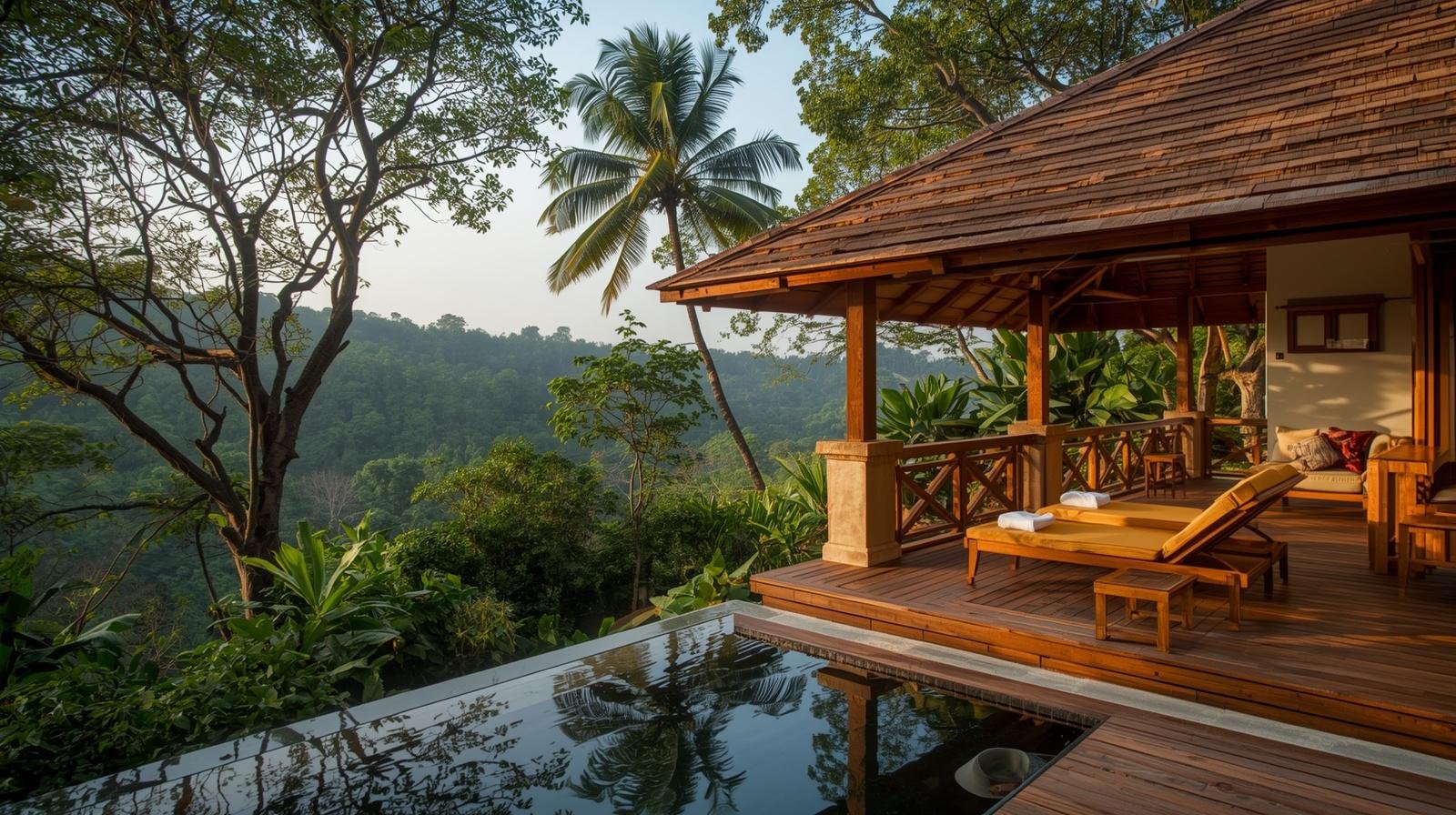
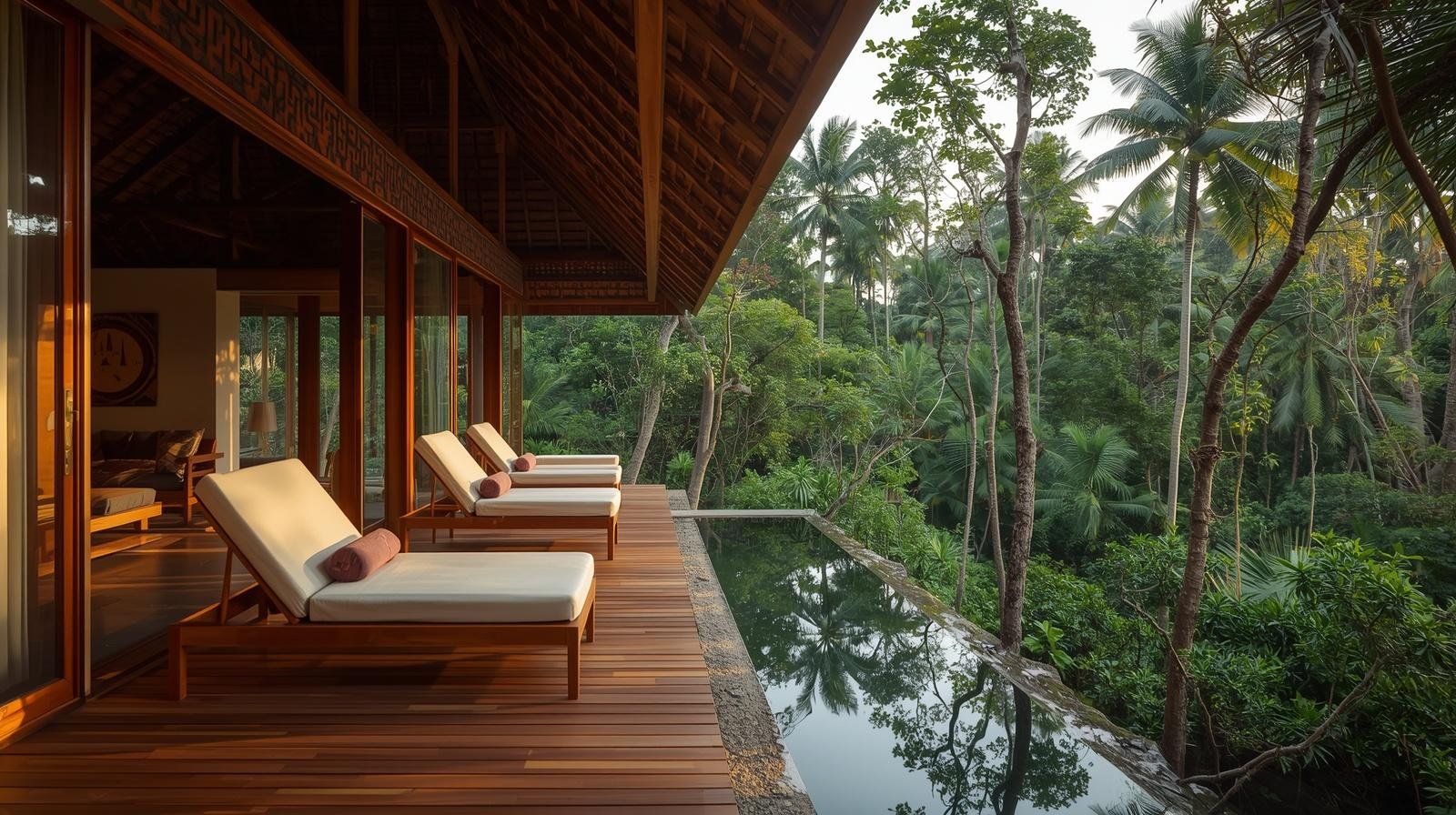
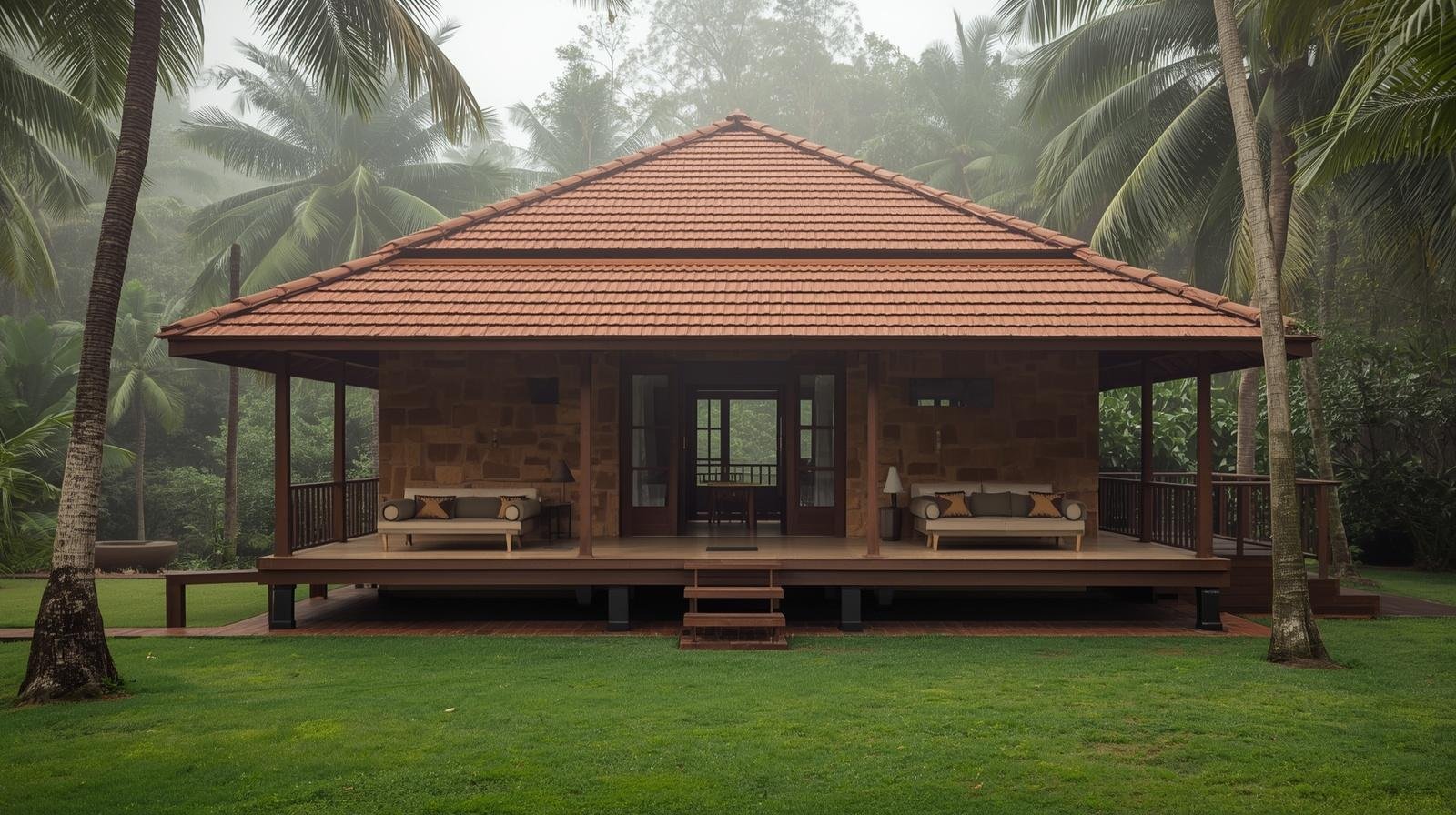
We designed the resort as village rather than single complex. Eighteen villas—six single-occupancy, twelve for couples—scatter across the hillside, positioned for privacy while maintaining connection to central facilities. Each villa references traditional Kerala Nalukettu architecture: pitched tile roofs, deep verandas, carved wooden screens, courtyard organization. But we simplified the language, removing ornamental excess while preserving functional elements—overhangs for rain protection, cross-ventilation for cooling, elevated floors for snake deterrence.
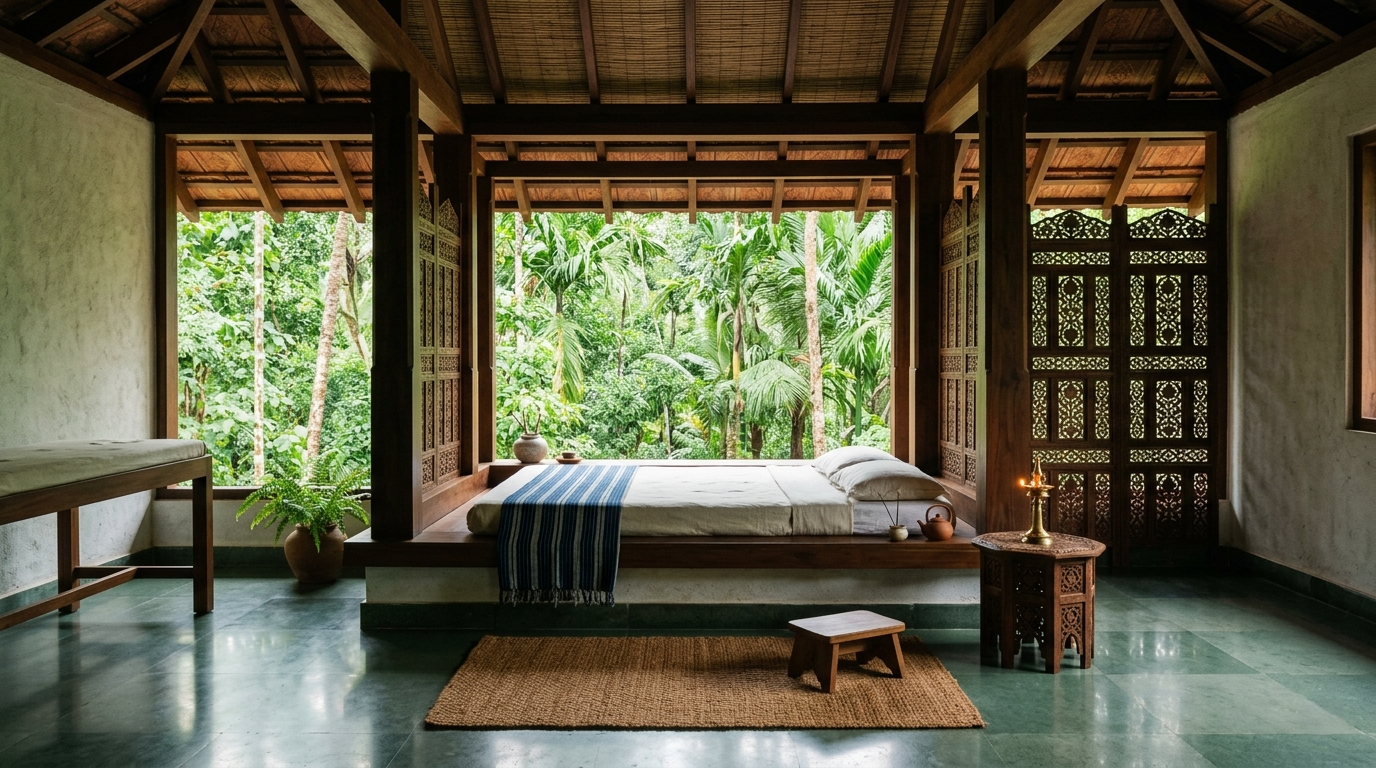
Villa construction employed traditional methods updated for contemporary performance. Laterite stone walls—quarried within 50 kilometers—provide thermal mass and textural warmth. The stone was laid with lime mortar (no cement), allowing walls to breathe in humid climate. Roofs use Mangalore clay tiles, manufactured using 400-year-old techniques, creating living surfaces that regulate interior temperatures naturally. Wooden elements—columns, screens, ceiling beams—employ sustainably harvested teak and rosewood, joined using traditional carpentry without metal fasteners.
Interior spaces maintain simplicity befitting healing environment. Walls receive lime plaster in warm white, providing neutral backdrop that doesn't compete with forest views. Floors employ polished kota stone—cool underfoot, easy to maintain. Built-in seating and sleeping platforms use solid wood with natural fiber cushions. Storage integrates into walls rather than standing as separate furniture. The effect is simultaneously monastic and comfortable, focused and restful.
The Ayurvedic treatment center occupies the property's heart—a series of interconnected pavilions organized around healing courtyard. Treatment rooms employ traditional design: stone floors with drainage (for oil-based therapies), wooden treatment tables, abundant natural light, views of forest. Each room includes private outdoor bathing area where medicinal steam baths and herbal rinses occur.
The pharmacy—where doctors prepare individualized herbal formulations—occupies dedicated building with temperature-controlled storage for medicinal plants, oils, and minerals. Traditional bronze vessels store preparations; wooden shelving houses dried herbs. The space smells of cardamom, turmeric, and medicated oils—olfactory signature that grounds guests immediately in Ayurvedic practice.
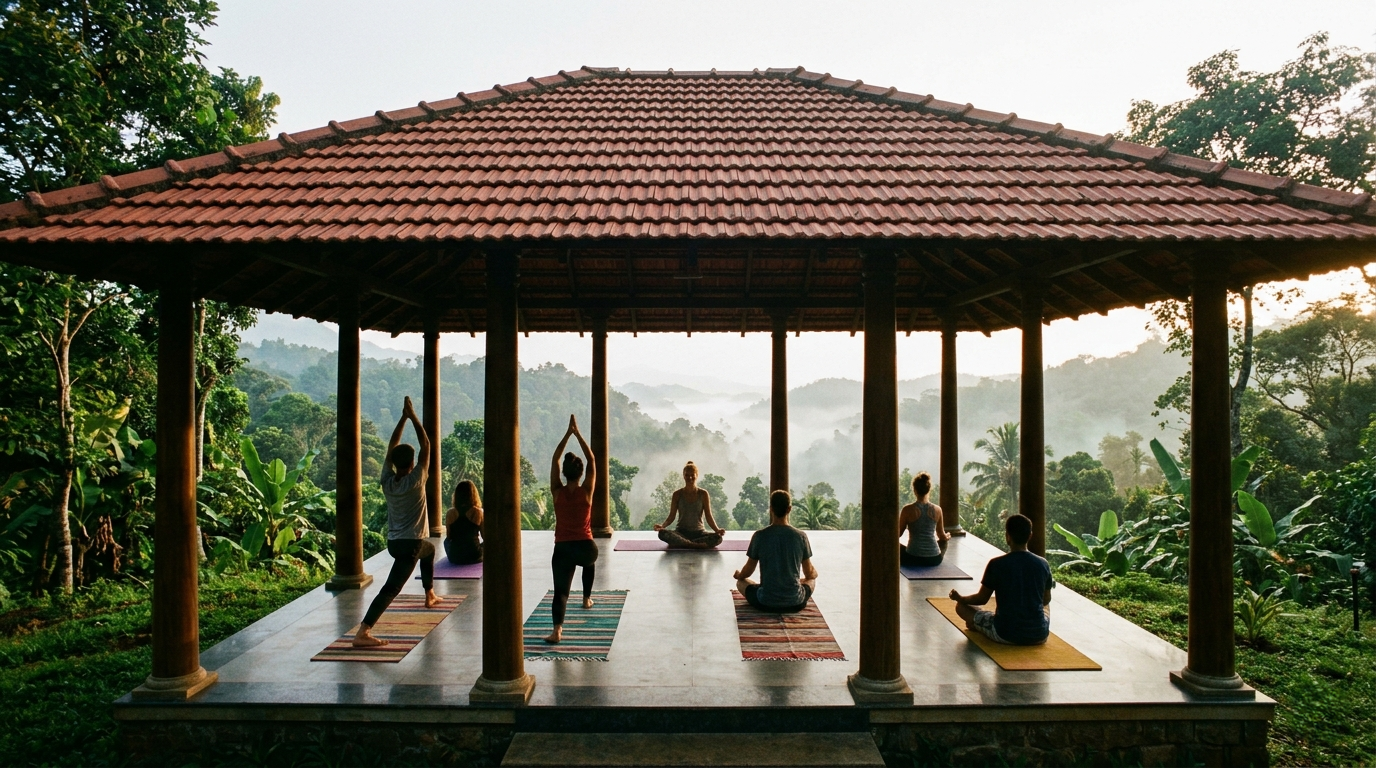
The yoga pavilion, positioned at the property's highest point, offers 360-degree forest views. The structure is essentially roof and floor—no walls, complete openness to surroundings. Teak columns support clay-tile roof. The floor, polished concrete integrated with radiant heating (for morning sessions when mountain air chills), provides stable surface for practice. The pavilion accommodates 30 practitioners comfortably; typical occupancy runs 12-15, ensuring spacious personal zones.
Dining presented particular challenge. Ayurvedic dietary principles vary by individual constitution (dosha) and treatment protocol. The kitchen needed flexibility to prepare multiple variations of each meal. We designed commercial kitchen equipped for individualized cooking—multiple stations, varied cooking methods (steaming, oil-free sautéing, slow simmering), extensive spice storage.
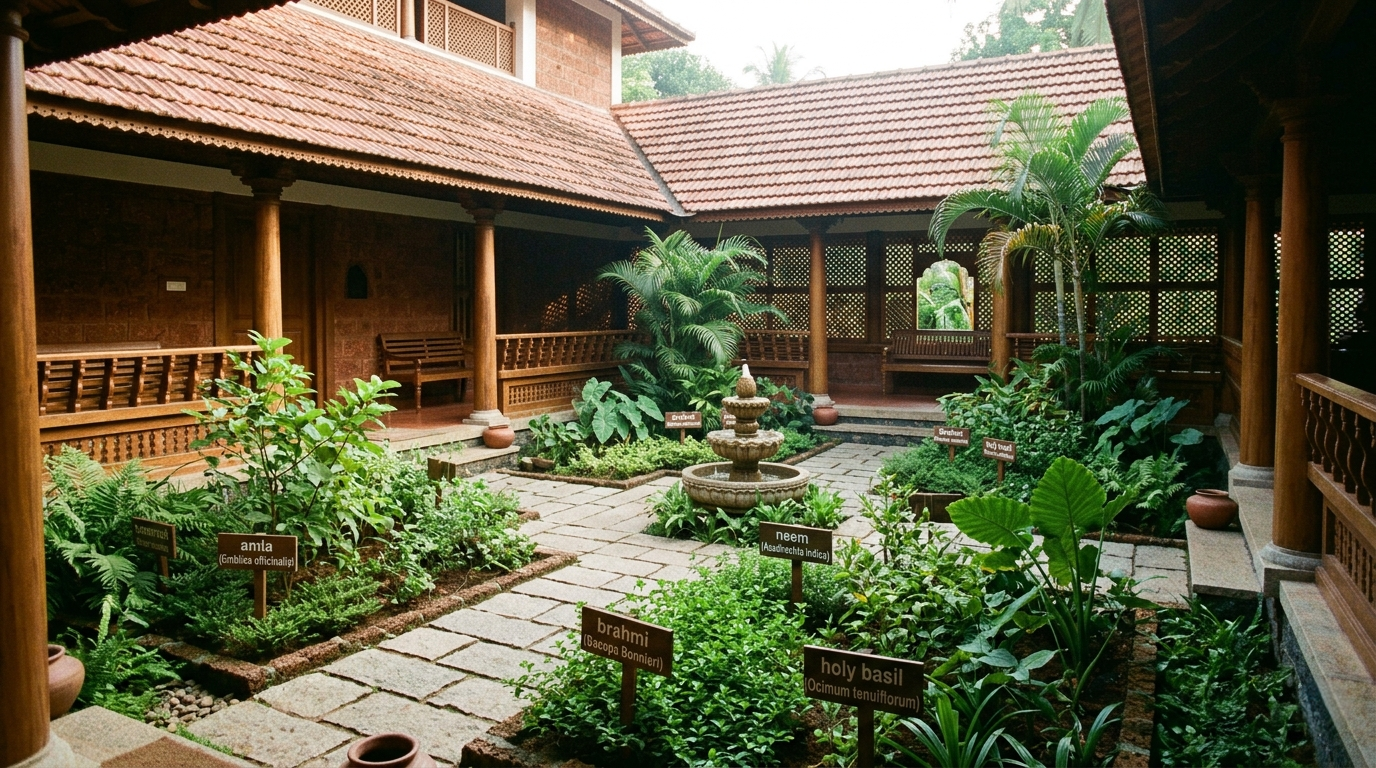
Landscape design honored existing ecology while creating usable spaces. We removed only minimal vegetation for building sites, preserving the property's forest character. Paths between villas employ traditional Kerala laterite steps—no concrete or asphalt. Native plants—wild ginger, turmeric, medicinal herbs—grow freely; we simply curated and labeled them. The existing spice plantation became walking meditation garden, with identification markers explaining each plant's Ayurvedic applications.
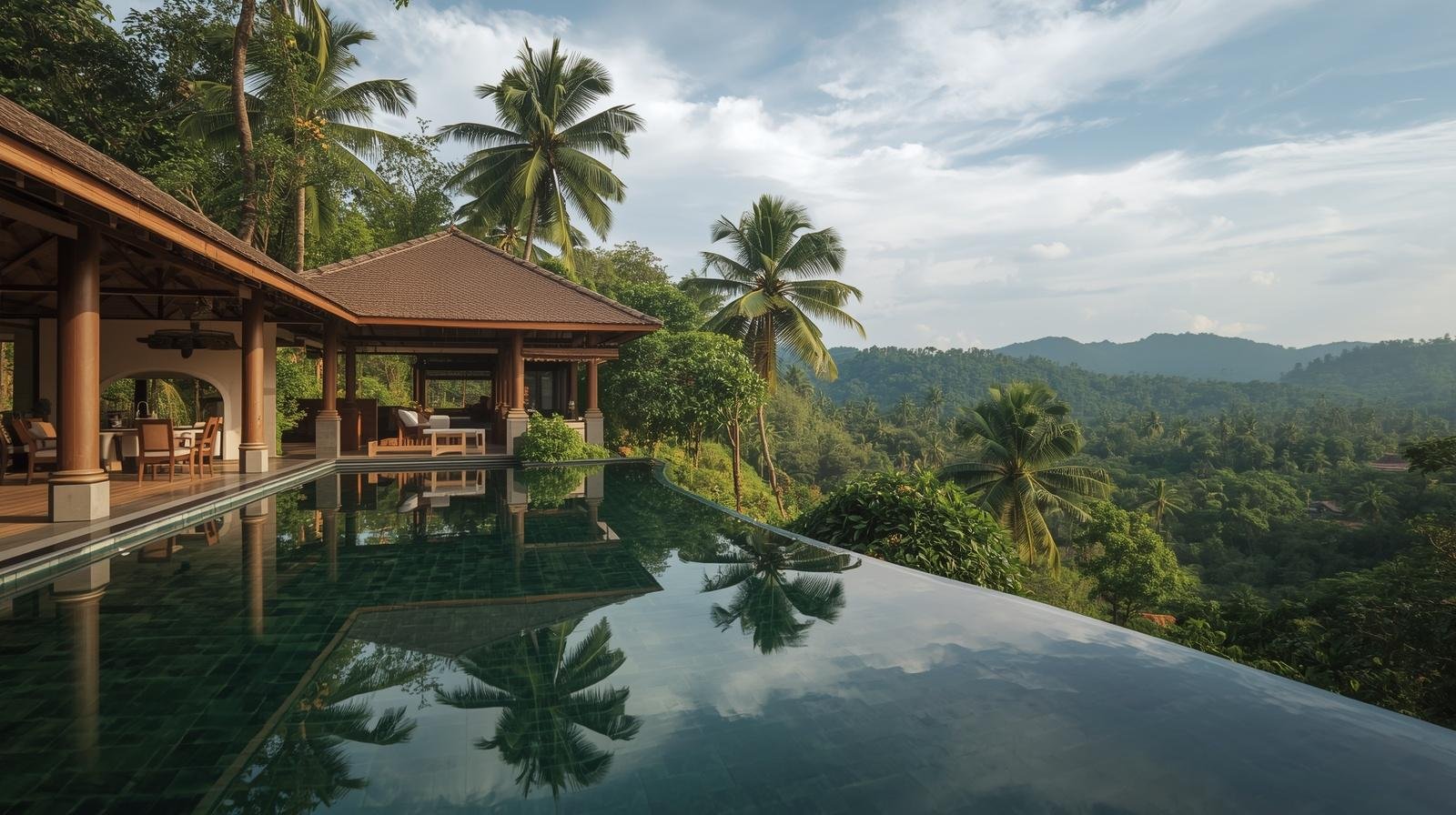
"We deliberately designed against resort expectations—no infinity pools at every villa, no spa music, no 'wellness packages.' Healing requires simplicity, silence, and time. The architecture supports this by receding. Guests notice the forest, the rain, the birds. That's the point."— Dr. Lakshmi & Dr. Anoop, Founders
Locally quarried, traditional lime mortar
All walls employ laterite stone—porous volcanic rock abundant in Kerala. The stone was quarried within 50 km, reducing transportation impact. Traditional masons laid the stone with lime mortar mixed on-site using centuries-old formulas: slaked lime, sand, jaggery (promotes bonding), and egg whites (improves elasticity). The three-foot-thick walls provide superior thermal mass and breathability compared to concrete or brick. No waterproofing or sealing—the walls absorb and release moisture naturally.
Traditional kiln-fired, 400-year-old technique
ll roofing employs Mangalore tiles manufactured using traditional techniques. Local clay is shaped by hand, sun-dried, then fired in wood-burning kilns. The resulting tiles are porous, allowing roofs to breathe while shedding rain. Each tile differs slightly from others—variation that creates living surface. The tiles develop moss and lichen over time, integrating buildings into forest ecosystem. Expected lifespan: 100+ years with minimal maintenance.
Teak and rosewood, traditional joinery
All structural and decorative woodwork employs teak and rosewood from FSC-certified Kerala forests. Traditional carpenters—many from families practicing the craft for generations—executed all joinery using mortise-and-tenon, dowels, and wooden pegs. No screws, nails, or metal fasteners. The wood was air-dried for 18 months before use, then finished with natural oils. Carved screens reference traditional Kerala patterns but employ contemporary simplification.
Rajasthan limestone, hand-polished
Interior floors employ Kota stone—dense limestone from Rajasthan. The stone was cut into large-format tiles (3x3 feet), then hand-polished to achieve soft sheen. The cool surface is ideal for tropical climate and bare-foot walking (standard practice in Ayurvedic environments). Color variations in the stone—from grey-green to warm brown—create subtle visual interest without patterning.
Kerala handloom, organic cotton
All linens—bedding, towels, cushion covers—employ organic cotton woven on Kerala handlooms. The fabric is unbleached, undyed, naturally antimicrobial. Bedding is simple: flat sheets and lightweight blankets suitable for tropical climate. Cushions use kapok fiber filling (harvested from silk-cotton trees without harming them). Everything is designed for frequent washing required by Ayurvedic protocols.
Native Kerala species, traditional knowledge
The landscape integrates hundreds of medicinal plant species used in Ayurvedic preparations: turmeric, ginger, holy basil, ashwagandha, brahmi, neem. Plants were sourced from local nurseries specializing in native species. The gardens are maintained by traditional practitioners who understand seasonal harvesting and propagation. Guests can walk the gardens with guides who explain each plant's properties and uses.
FINAL REFLECTION Ayurveda conceives health holistically—not merely absence of disease but balance of body, mind, and spirit influenced by environment, diet, daily rhythms, and mental state. Architecture supporting Ayurvedic healing must therefore address multiple dimensions simultaneously.
Spatial organization follows Vastu Shastra—traditional Indian architectural science—but applied practically rather than dogmatically. Buildings orient to cardinal directions for optimal sun exposure and airflow. Treatment rooms face east, receiving gentle morning light ideal for therapies. Sleeping areas face south, encouraging restful sleep. Communal spaces open west, capturing evening light for social gathering.
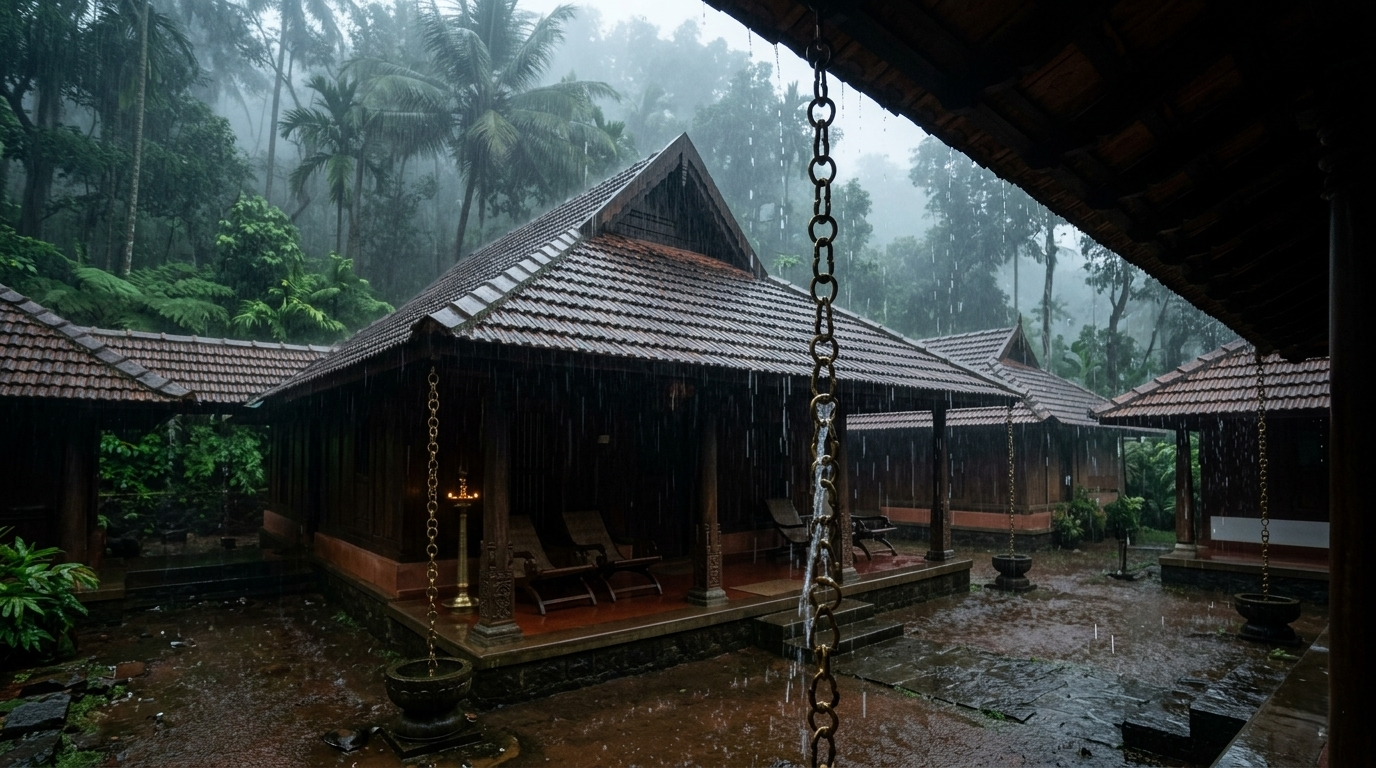
Material selection considered energetic qualities—a concept Western architecture often dismisses but Ayurveda takes seriously. Stone grounds energy; wood moderates it; water cleanses it. The resort employs all three intentionally. Stone floors and walls provide stability. Wood ceilings and screens add warmth. Water features—fountains, rain chains, the stream—offer purification and white noise that aids meditation.
The absence of mechanical cooling and artificial lighting after sunset creates environment that aligns with natural rhythms. Guests rise with dawn light, practice yoga as sun rises, receive treatments during optimal morning hours, rest during afternoon heat, gather for evening programs as daylight fades. This circadian alignment—impossible in air-conditioned, artificially lit environments—itself becomes therapeutic.
The resort opened two years ago with deliberately limited marketing—word-of-mouth and selective press coverage only. Occupancy averages 85% with waiting list for high season. The typical guest stays 21-28 days (far exceeding industry averages), often returning annually. This validates the founders' conviction that depth of experience outweighs breadth of amenities.
Guest feedback consistently emphasizes the architecture's role in healing. People mention "sleeping better than I have in years" (attributed to natural ventilation and darkness after sunset), "feeling grounded" (stone floors, forest immersion), and "mental clarity" (simplicity, lack of visual noise). Exit surveys show 92% report significant health improvements; 78% maintain Ayurvedic practices at home post-visit.
The resort has attracted international attention from wellness community—featured in specialized publications rather than luxury travel magazines. This distinction matters. We deliberately avoided the "eco-luxury resort" aesthetic (infinity pools, villas with names like "Serenity Suite," Instagram-ready design moments). The resort looks more like village than resort, functions more like healing center than hotel. This authenticity attracts serious practitioners while deterring spa tourists seeking weekend escapes.
For us, this project demonstrates that luxury and simplicity aren't opposing values. The resort is genuinely luxurious—not through marble or gold but through space, silence, beauty, and depth of care. It proves that architecture can support healing not through gimmicks (aromatherapy dispensers, meditation alcoves decorated with Buddha statues) but through fundamental decisions about materials, light, proportion, and relationship with landscape. The project has influenced our subsequent wellness work. We've been approached about similar retreats—yoga centers, meditation ashrams, therapeutic communities—and we apply lessons from Kerala: build with local materials, respect indigenous knowledge, prioritize function over aesthetics, let landscape guide design, embrace simplicity. These principles produce environments that feel authentic because they are—rooted in place, informed by tradition, serving genuine human needs rather than marketing fantasies.
We collaborate with practitioners and property owners seeking to create healing environments that honor traditional wisdom while meeting contemporary expectations. Our approach balances authenticity with comfort.
Begin Conversation