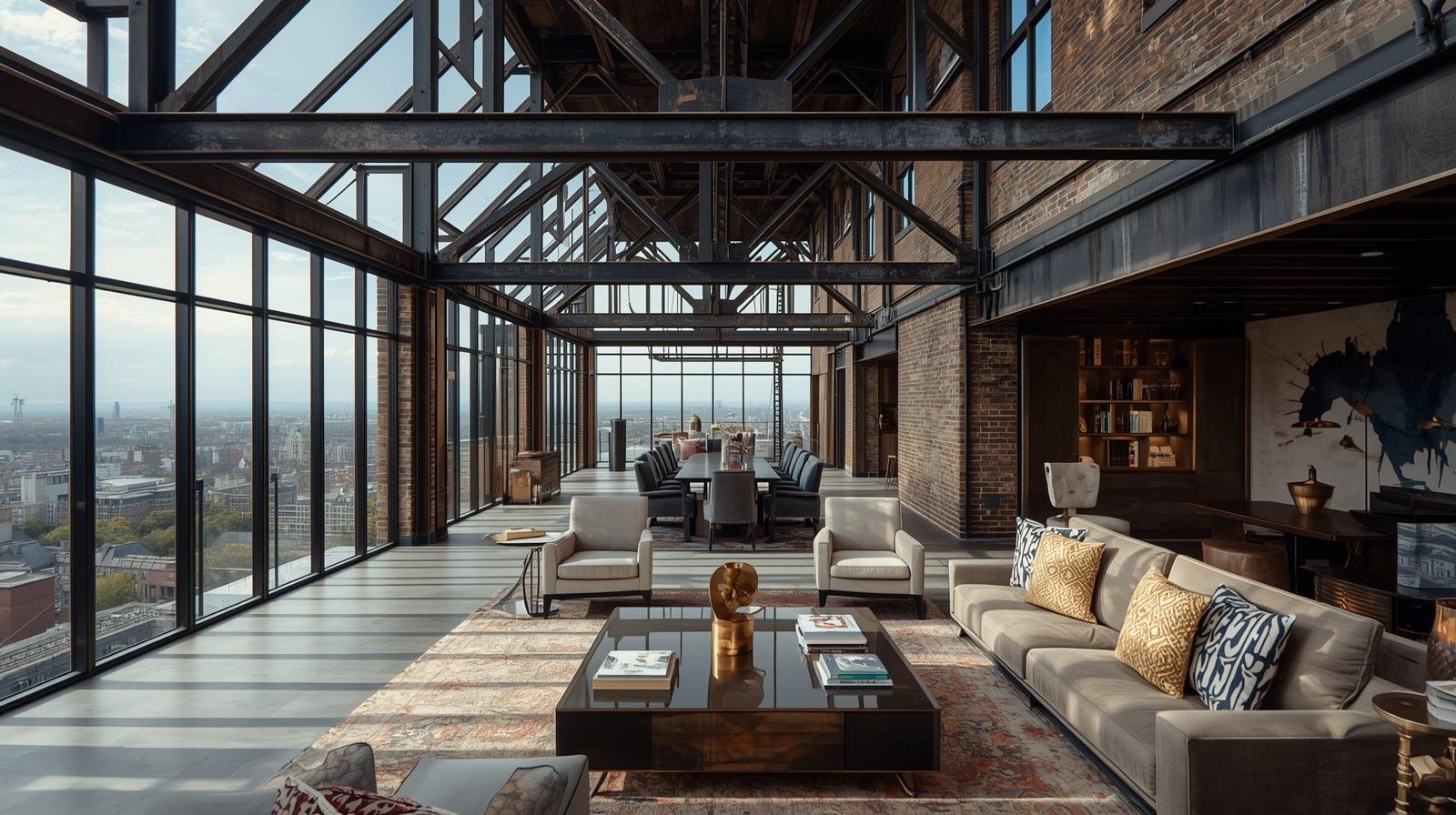
A 3,200 sq ft industrial loft conversion in Shoreditch where raw Victorian warehouse architecture frames contemporary art collection and cosmopolitan living—celebrating material honesty and urban context.
The client—a London-based hedge fund executive originally from Mumbai—had acquired the top two floors of a converted Victorian warehouse in Shoreditch. The building's industrial past remained legible: exposed brick walls, cast-iron columns, heavy timber beams, saw-tooth skylights that once illuminated garment workshops. The developer's basic shell conversion had stabilized the structure and installed glazing but left interiors unfinished—blank canvas awaiting interpretation.
His brief emphasized restraint and authenticity. Having lived through London's property boom, he'd grown weary of developers' typical approach: stripping industrial buildings of character, installing luxury finishes that could exist anywhere, creating spaces that denied their origins. What he sought: penthouse that would honor the building's industrial history while serving as sophisticated urban home. No faux-industrial styling. No exposed ductwork as decoration. Just honest materials, careful detailing, and respect for what existed.
The space presented both opportunities and constraints. The double-height central volume—originally the main workroom—offered dramatic spatial quality but challenged heating and acoustics. The saw-tooth roof, while architecturally significant, created awkward ceiling planes. Original brick walls, beautiful but uninsulated, couldn't meet building codes without intervention. Load-bearing columns dictated spatial organization. Within these parameters, we needed to create home that felt spacious, warm, and refined while remaining true to industrial origins.
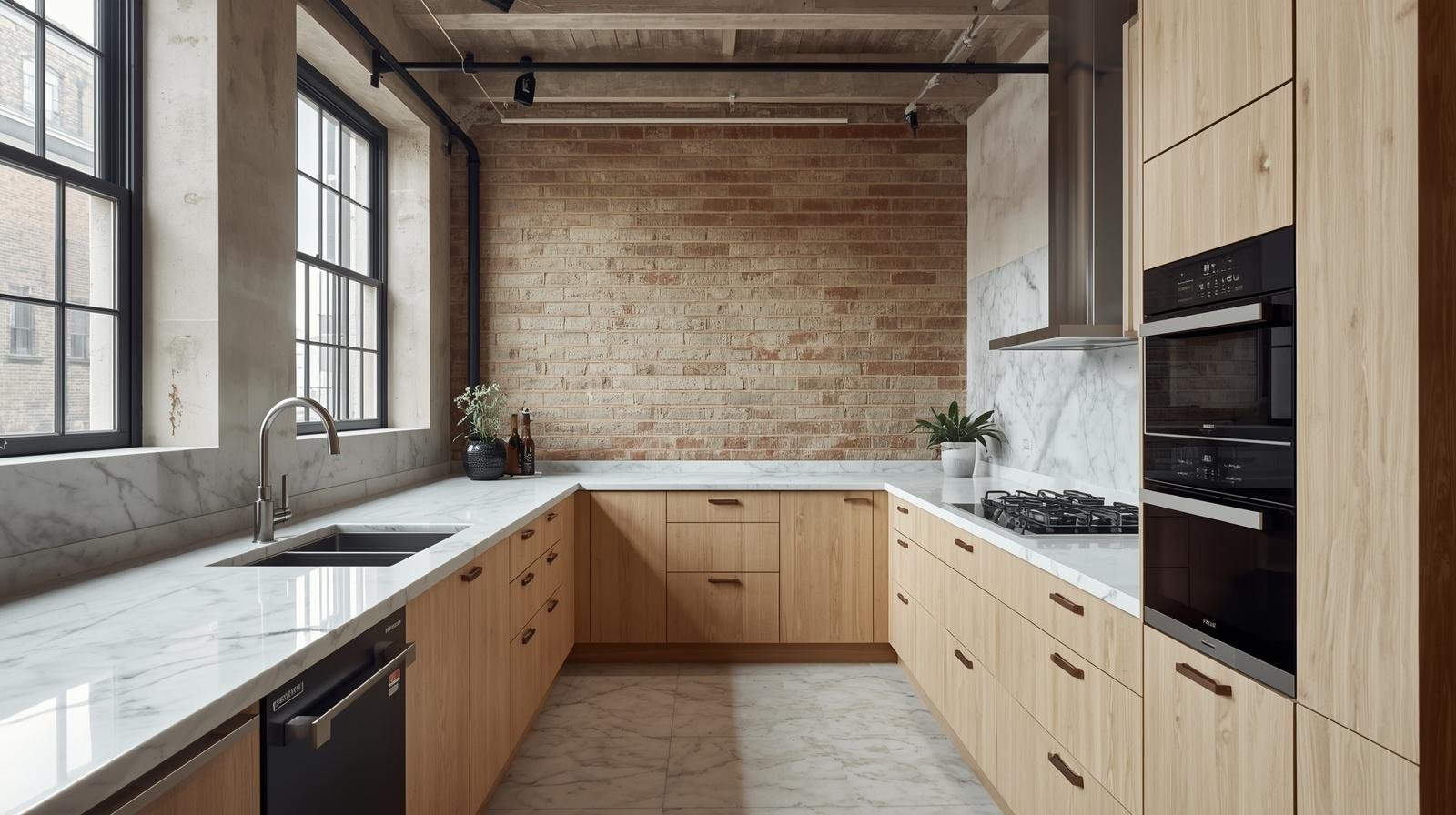
The design strategy centered on selective intervention—identifying which elements to preserve, which to remove, and what to add. We retained all original brick walls, cast-iron columns, timber beams, and the saw-tooth skylights. These elements define the space's character; obscuring them would erase the building's history. But we addressed their functional limitations: brick walls received interior insulation behind glass panels (maintaining visual exposure while meeting thermal requirements), columns were cleaned and sealed, beams were structurally reinforced, skylights were reglazing with high-performance glass.
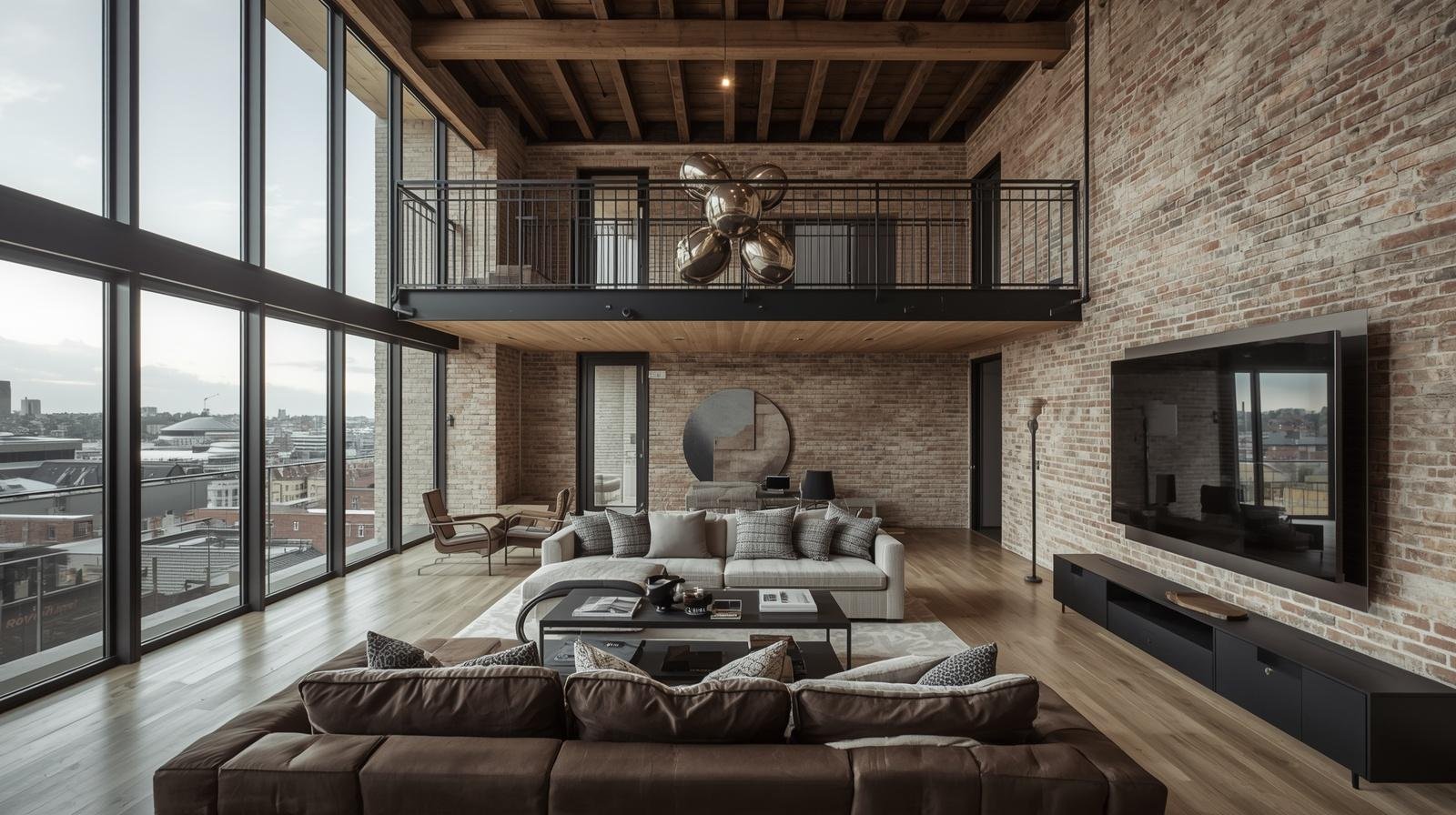
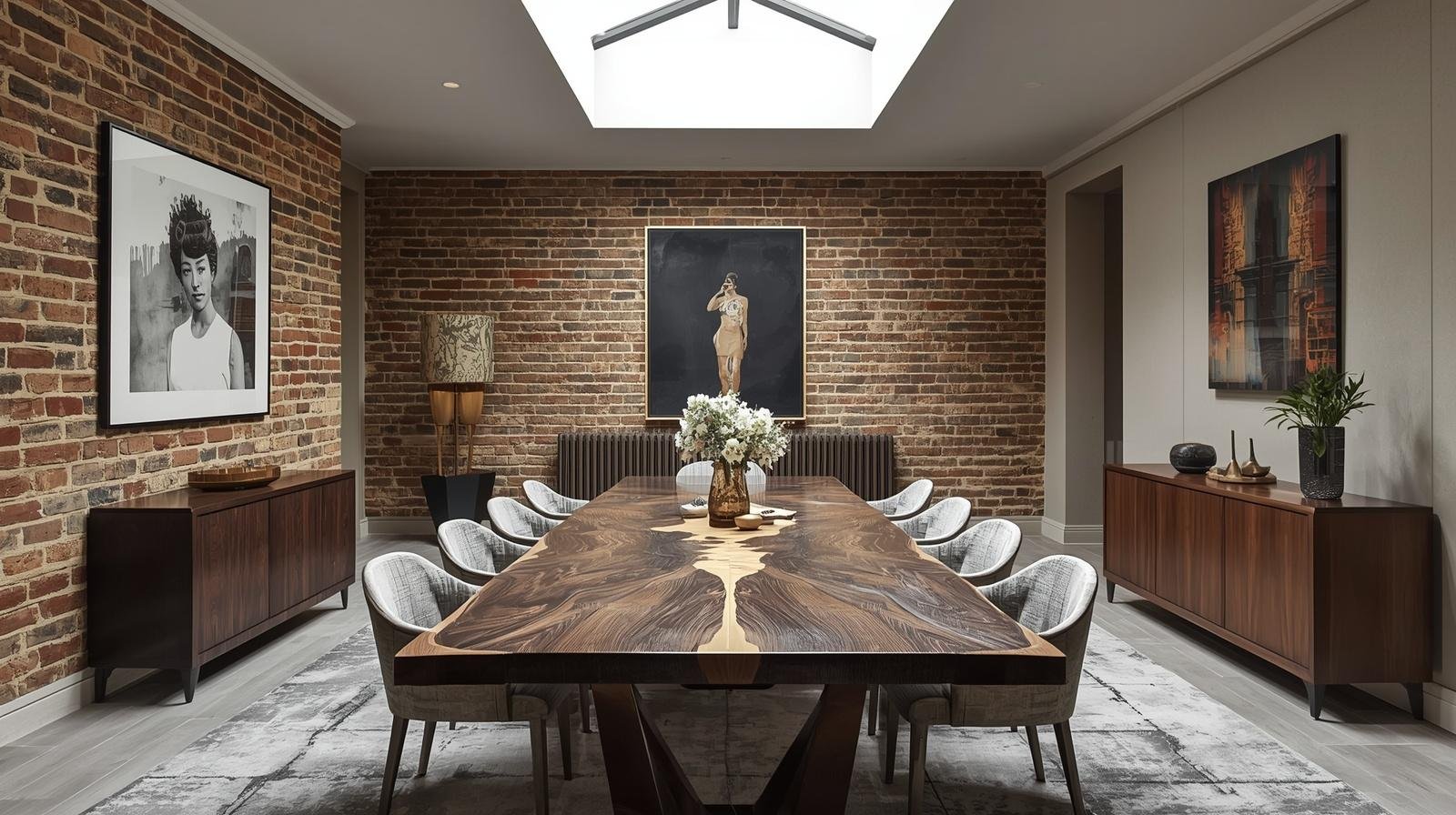
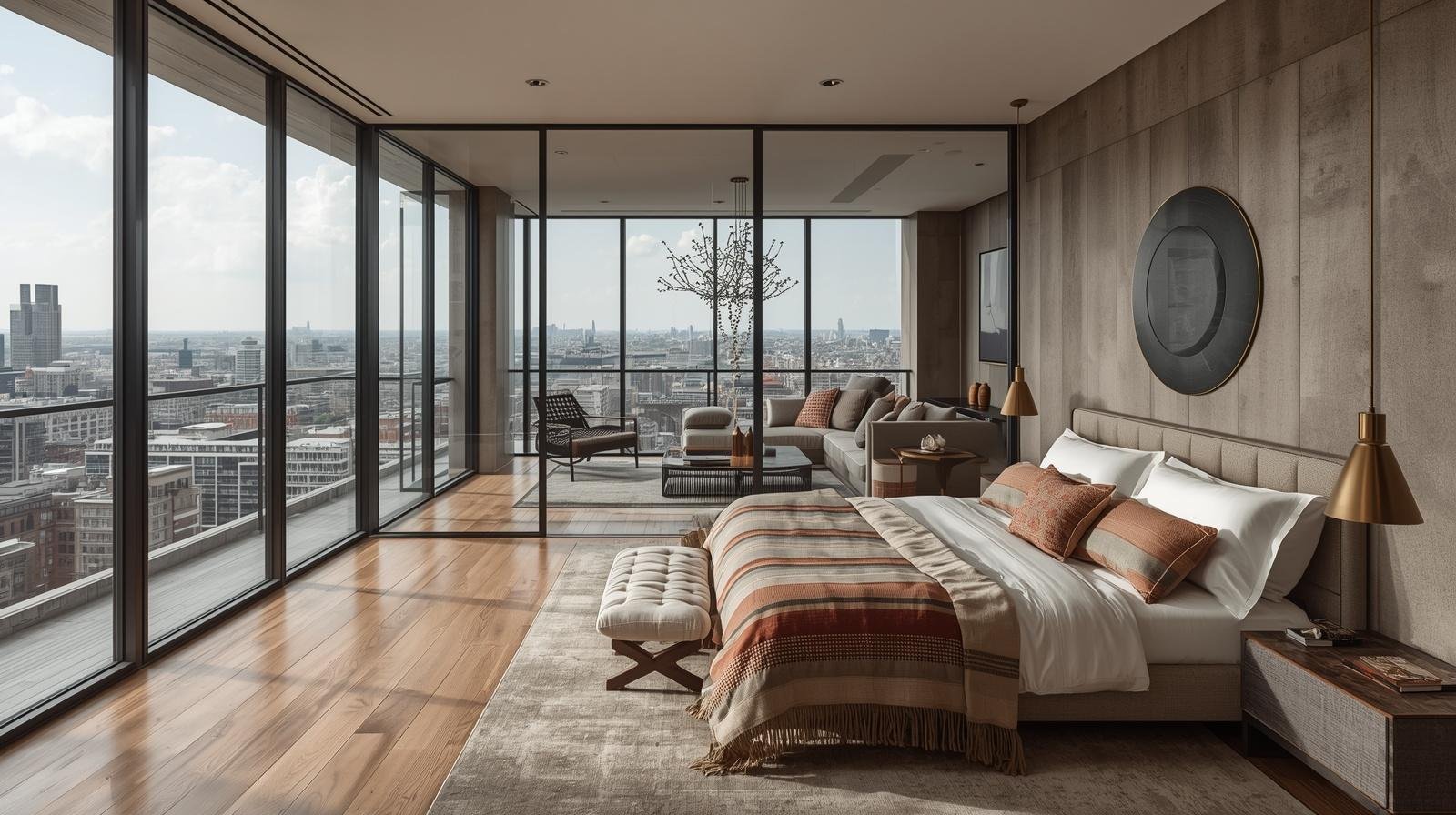
New insertions employed contemporary materials that contrast rather than imitate. A steel-and-glass mezzanine, hovering within the double-height space, creates additional floor area for master suite without blocking light or views. The staircase connecting levels employs blackened steel structure with oak treads—honest materials detailed precisely. Kitchen cabinetry uses rift-sawn white oak with minimal hardware, creating warm counterpoint to surrounding brick and steel.
Flooring throughout employs wide-plank French oak—14-inch boards finished with natural oil. The wood provides warmth underfoot while its contemporary scale and finish prevent any attempt at period recreation. Area rugs—commissioned from weavers in Jaipur using natural dyes—define zones within the open plan while introducing textile warmth and subtle color.
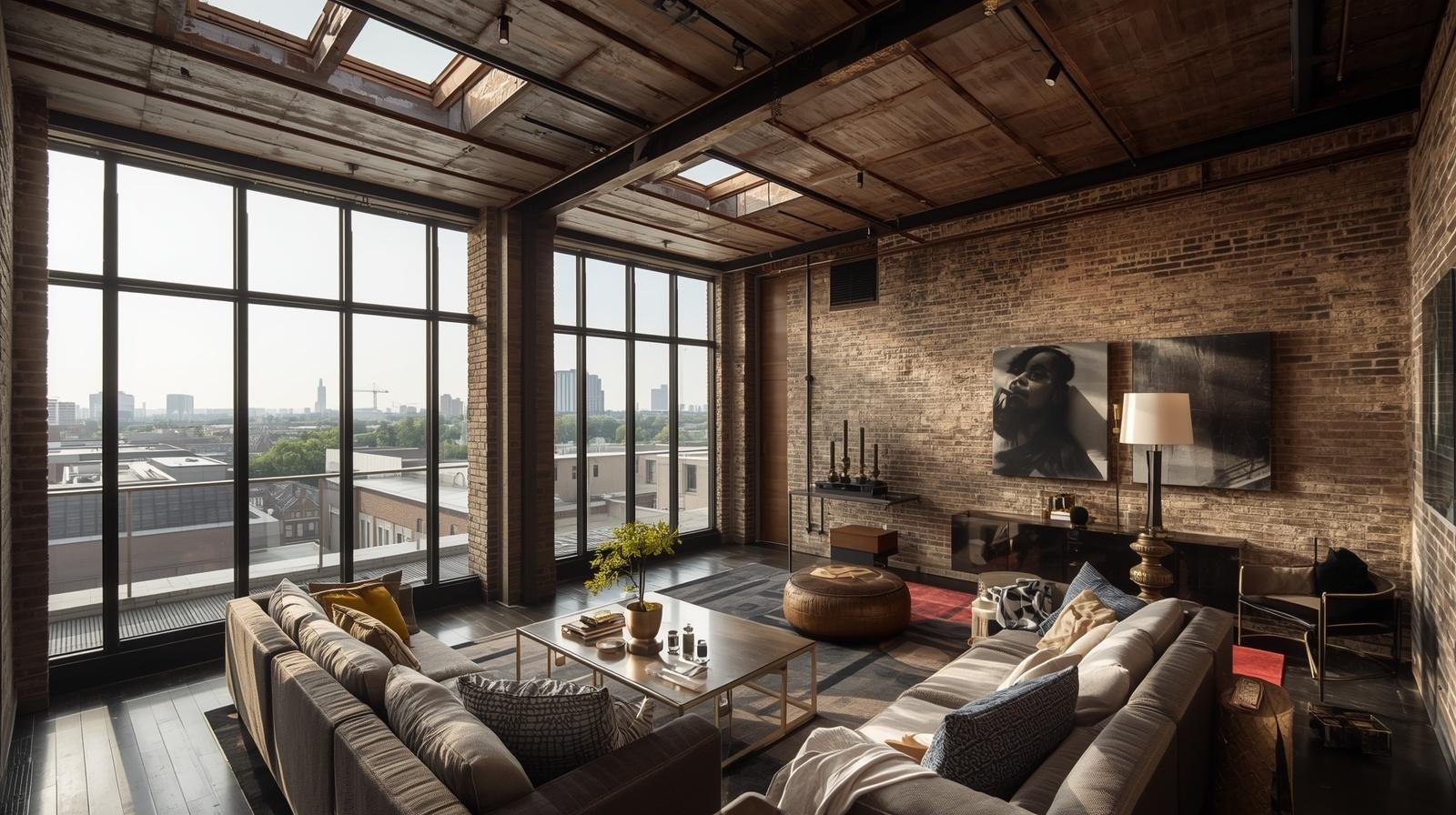
The art collection—contemporary works by British and Indian artists—guided spatial planning. The brick walls, though beautiful, presented challenges for hanging art. We designed a track system concealed in ceiling beams, allowing cables to drop at any point along the walls. This flexibility accommodates rotating works without patching brick. Gallery-quality LED track lighting, also ceiling-mounted, provides adjustable accent illumination.
Larger sculptures occupy the double-height space, positioned to create dialogue with architecture. An Anish Kapoor mirror work reflects the saw-tooth ceiling. A Subodh Gupta installation of brass vessels stacks against exposed brick. Smaller works populate the mezzanine level and private quarters. The collection feels integrated rather than imposed, objects and architecture informing each other.
The client's Indian heritage appears through curated details rather than obvious signifiers. Brass hardware throughout—door handles, cabinet pulls, bathroom fixtures—comes from Moradabad workshops where his grandfather once worked. The commissioning process became personal research into family history. Textiles on furniture and beds employ handloom fabrics from Maheshwar and Varanasi. A custom dining table, fabricated in our Delhi atelier, uses monkeypod wood with brass inlay referencing traditional Indian patterns executed with contemporary restraint.
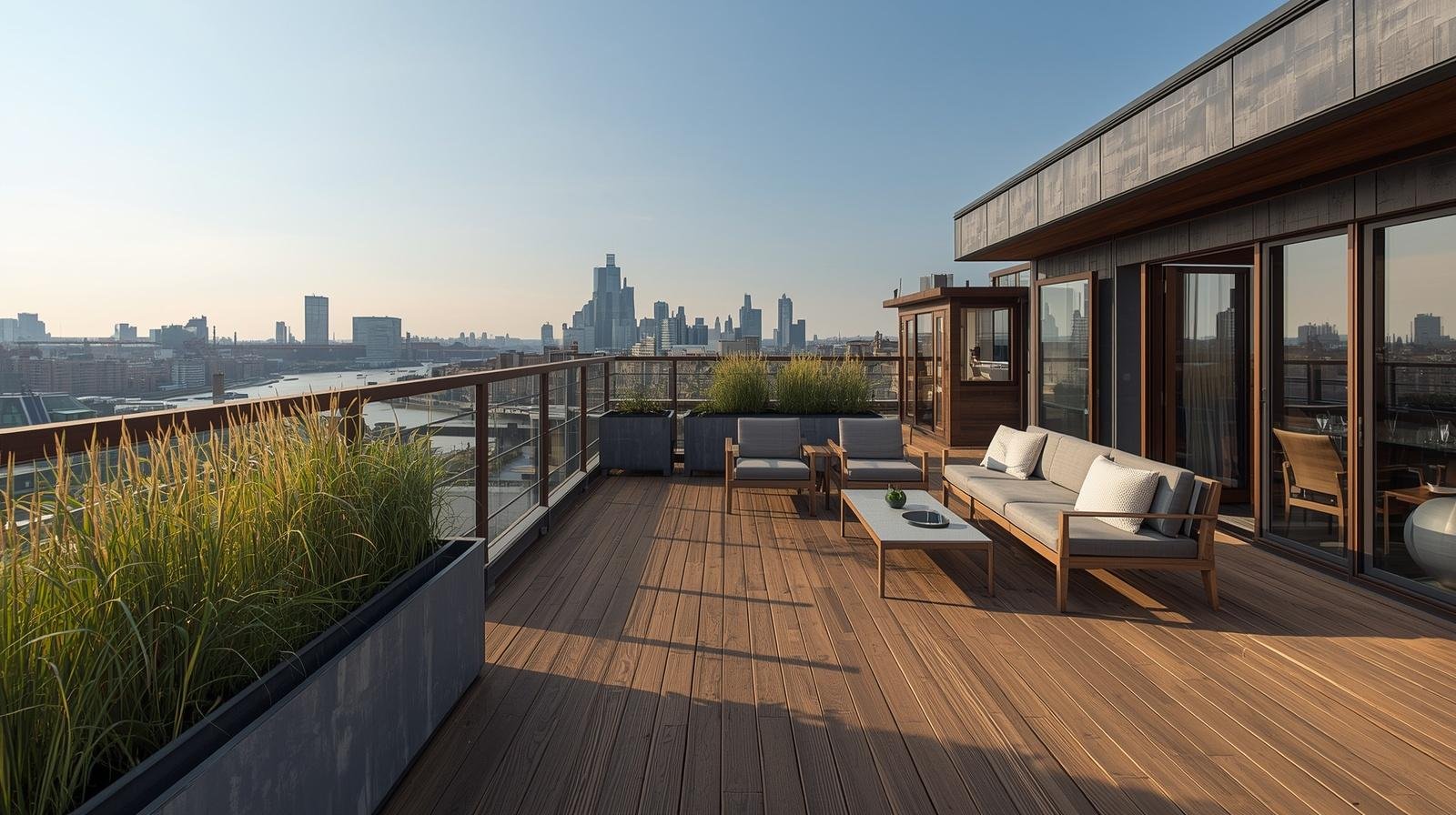
The roof terrace—120 square meters exposed to London weather—required particular attention. Rather than attempting English garden or Mediterranean terrace (both contextually false), we embraced urban roofscape aesthetic. Ipe wood decking, resistant to constant moisture, provides warm surface. Built-in seating employs the same blackened steel as interior staircase. Planters, fabricated from weathering steel (Corten), hold grasses and shrubs that thrive in windy, sun-exposed conditions.
Industrial conversions often fail by choosing between two extremes: stripping away all character in pursuit of luxury, or preserving so reverently they become museum-like. Both approaches deny the building's ongoing life. What's needed is recognition that adaptive reuse is exactly that—adaptation, not preservation or erasure.
We made clear distinctions between original and new. The brick walls remain visibly brick—cleaned and sealed but not painted or plastered. The steel columns retain their industrial character—cleaned of rust, sealed against further corrosion, but showing decades of patina and wear. These elements are honest about their age and origin.
New interventions, by contrast, are clearly contemporary. The glass panels insulating the brick walls, for instance, use minimal frameless systems that read as modern insertions. The steel mezzanine employs welded plate construction impossible in Victorian era. The oak flooring's contemporary scale and finish prevents any confusion with period materials.
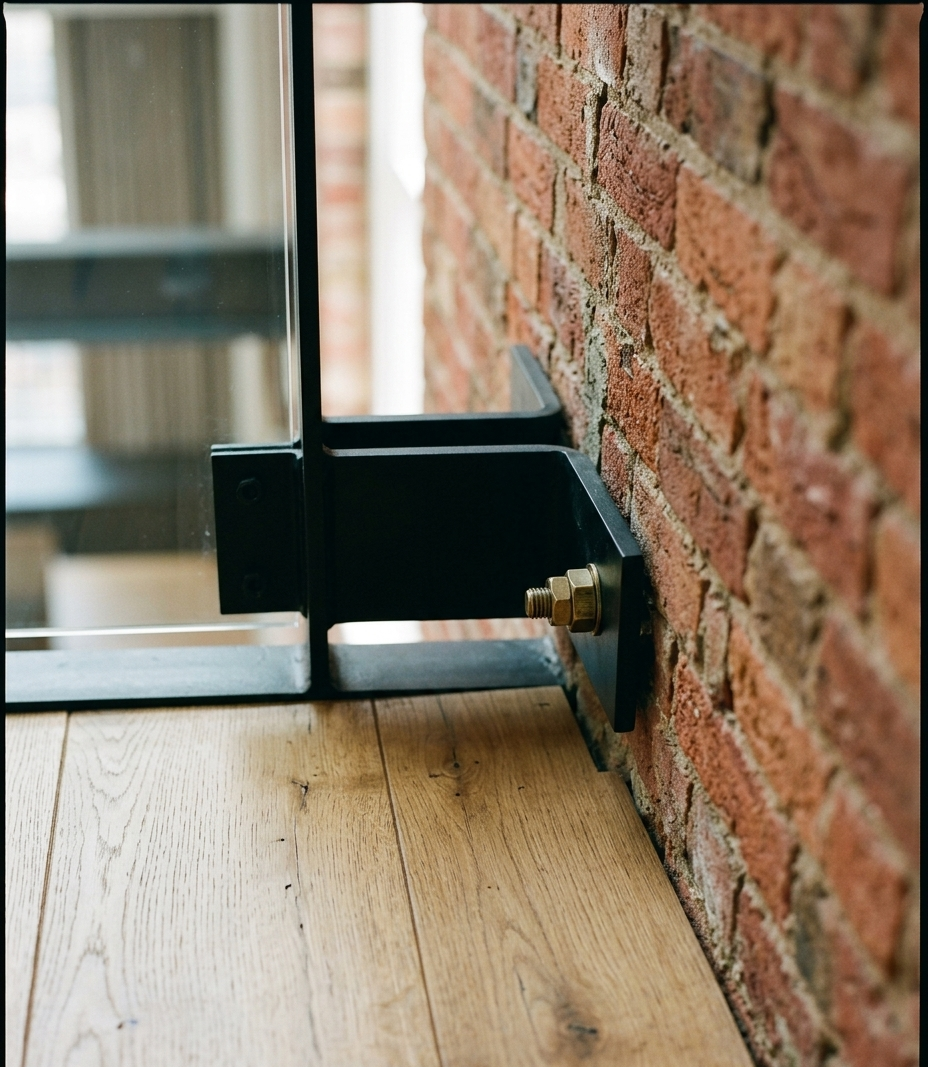
This honesty extends to detailing. Where new meets old—where steel mezzanine touches brick wall, where glass meets timber beam—we created clear reveals rather than attempting seamless integration. These shadow lines acknowledge the joining of different eras without highlighting it dramatically. The effect is subtle: most visitors don't consciously notice the strategy, but they perceive the space as genuine rather than contrived.
"I wanted a home that acknowledged I'm neither purely British nor Indian, that I work in finance but collect art, that I value heritage but live thoroughly modern life. The space doesn't resolve these tensions—it celebrates them. That's London. That's contemporary life."— Rohan Mehta, Homeowners
Victorian brickwork, cast iron, timber beams
All original structural elements were carefully conserved. The brick walls were cleaned using gentle methods (no abrasive blasting), then sealed with breathable coating that maintains their appearance while providing minimal protection. Cast-iron columns were wire-brushed to remove loose rust, treated with rust converter, then sealed with matte finish that preserves their industrial character. Timber beams received structural assessment; several required steel reinforcement plates (concealed where possible) to meet current loading requirements.
Glass-fronted insulation panels
To meet building regulations while preserving brick wall visibility, we installed internal insulation behind frameless glass panels. The system employs rigid insulation boards attached to the brick, then covered with slim glass panes held by minimal aluminum tracks top and bottom. The glass protects insulation while maintaining visual connection to brick. The system achieves required U-values without external cladding or thick internal plaster that would obscure the walls.
Mezzanine structure, staircase, terrace furniture
All structural steel—mezzanine frame, staircase, railings, terrace elements—employs plate steel blackened through traditional heat-and-oil technique. The process creates deep black finish with subtle variation that develops richer patina over time. Welded connections are ground smooth but remain visible—honest expression of how the elements join. All steel was fabricated by Metalwork London, specialists in architectural metalwork.
French white oak, 14-inch planks
New flooring throughout employs French white oak milled into unusually wide 14-inch planks. The contemporary scale prevents any confusion with Victorian-era flooring (typically 3-4 inches). The wood was finished on-site with multiple coats of natural oil, creating matte surface that improves with use. Boards were laid with minimal spacing, creating almost seamless surface that emphasizes the wood's scale and grain.
Moradabad workshops, traditional casting
All brass elements—door hardware, cabinet pulls, bathroom fixtures—were commissioned from family workshops in Moradabad. The client's personal connection to this region (his grandfather worked in brass industry) made sourcing particularly meaningful. Each piece was cast using traditional lost-wax technique, then hand-finished with natural patination. The brass will develop richer color over time through handling and oxidation.
Monkeypod wood, brass inlay, Delhi fabricationBangalore artisans, blackened steel
The dining table—primary furniture piece and statement element—was fabricated in our Delhi atelier. The top, milled from single monkeypod slab, measures 12 feet long and 4 feet wide. Brass inlay follows geometric patterns inspired by traditional Indian jali work but executed with contemporary precision using CNC technology. The base employs blackened steel matching other metalwork. The table was shipped to London knocked-down, assembled on-site.
Maheshwar and Varanasi weavers
Upholstery, bedding, and window treatments employ handloom fabrics from traditional Indian weaving centers. Cotton from Maheshwar—woven on pit looms using techniques unchanged for generations—covers sofa cushions and bed linens. Silk from Varanasi, in neutral tones (not bright traditional colors), provides accent pillows and throws. All textiles use natural dyes and fibers, biodegradable and sustainable.
Eighteen months post-completion, the penthouse has become the client's primary residence (he maintains smaller apartments in Mumbai and New York). This wasn't guaranteed—many London luxury properties serve as investment vehicles or occasional pieds-à-terre. That he actually lives here full-time validates our emphasis on livability over showpiece aesthetics.
The space has hosted everything from intimate dinners to charity fundraisers for 80 guests. The flexible open plan accommodates both uses—furniture reconfigures easily, the double-height space prevents any gathering from feeling cramped, the terrace extends usable area in good weather. This versatility proves that industrial conversions can serve real life rather than just photograph well.
The client reports that visitors consistently ask the same question: "When was this done?" The space feels simultaneously old and new, industrial and refined, minimal and warm. These apparent contradictions reflect successful resolution of the project's core tension: how to honor building's past while creating thoroughly contemporary home.
From conservation perspective, the project demonstrates that adaptive reuse needn't mean either museum preservation or character erasure. Victorian industrial buildings can serve 21st-century residential use while remaining legible as what they were. This requires clear distinctions between old and new, material honesty, and confidence that contemporary interventions can enhance rather than compromise historic fabric.
The London press has featured the project in several design publications, typically describing it as "sensitive industrial conversion" or "contemporary meets heritage." We find these labels accurate if incomplete. What's equally significant but rarely mentioned: the project bridges cultures (British industrial heritage + Indian craft), transcends categories (luxury that celebrates rawness), and demonstrates that globalization needn't mean homogenization. The client's transcontinental life, his mixed cultural identity, his collection spanning British and Indian artists—all these find authentic expression in space that refuses singular identity.
For us, this validates an increasingly important conviction: the future of luxury residential design lies not in generic international style but in synthesis of global and local, contemporary and historical, refined and raw. The penthouse proves these aren't compromises but opportunities—sources of richness impossible in monolithic approaches.
We collaborate with clients transforming industrial and historic urban buildings into contemporary homes. Our approach balances preservation of architectural character with requirements of modern living.
Begin Conversation