A 45,000 sq ft workspace where biophilic design principles and Indian craftsmanship create an environment that prioritizes employee wellbeing alongside productivity—redefining corporate culture for a global fintech company.boration, and wellbeing—redefining what a contemporary Indian office can be.
When this rapidly scaling fintech unicorn decided to consolidate its Asia-Pacific operations in Singapore, the leadership team—having experienced both Silicon Valley's infamous open offices and Asia's traditional corporate hierarchies—wanted neither. They sought workspace that would attract top talent in Singapore's competitive market while reflecting the company's values: transparency, sustainability, cultural diversity, and human-centered technology.
Their brief emphasized three principles. First, biophilic design—abundant plants, natural materials, maximized daylight—to counter the mental health impacts of screen-intensive work. Second, spatial flexibility to accommodate rapid growth and evolving work patterns. Third, cultural synthesis that would feel comfortable to their multinational team without defaulting to generic "global corporate" aesthetic.
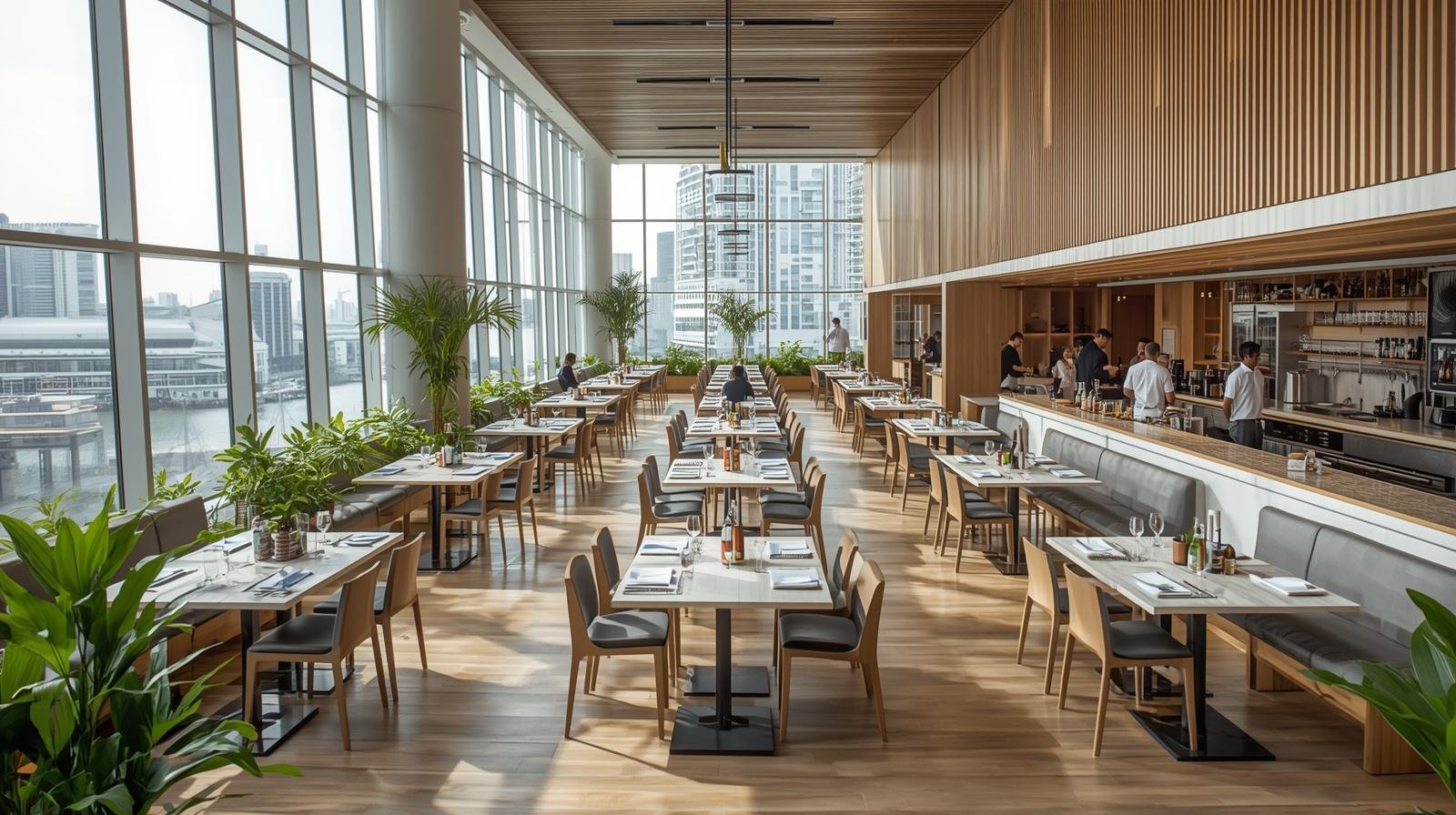
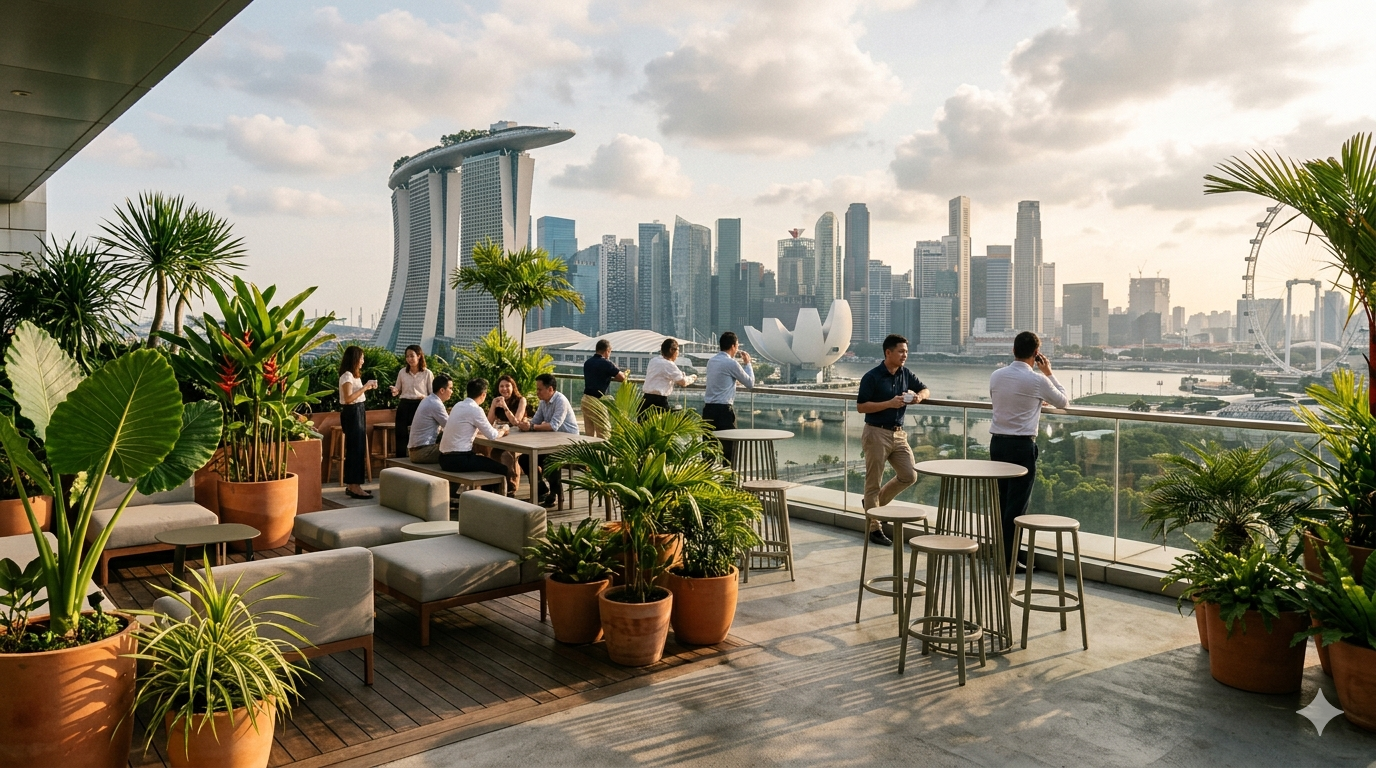
The Marina Bay location—three floors in a glass tower with spectacular city and harbor views—presented both opportunity and challenge. The views were assets to preserve. But typical corporate fit-outs would have created glare-plagued, overheated spaces requiring excessive air conditioning. Our task was maximizing the views while creating comfortable, sustainable workspace.
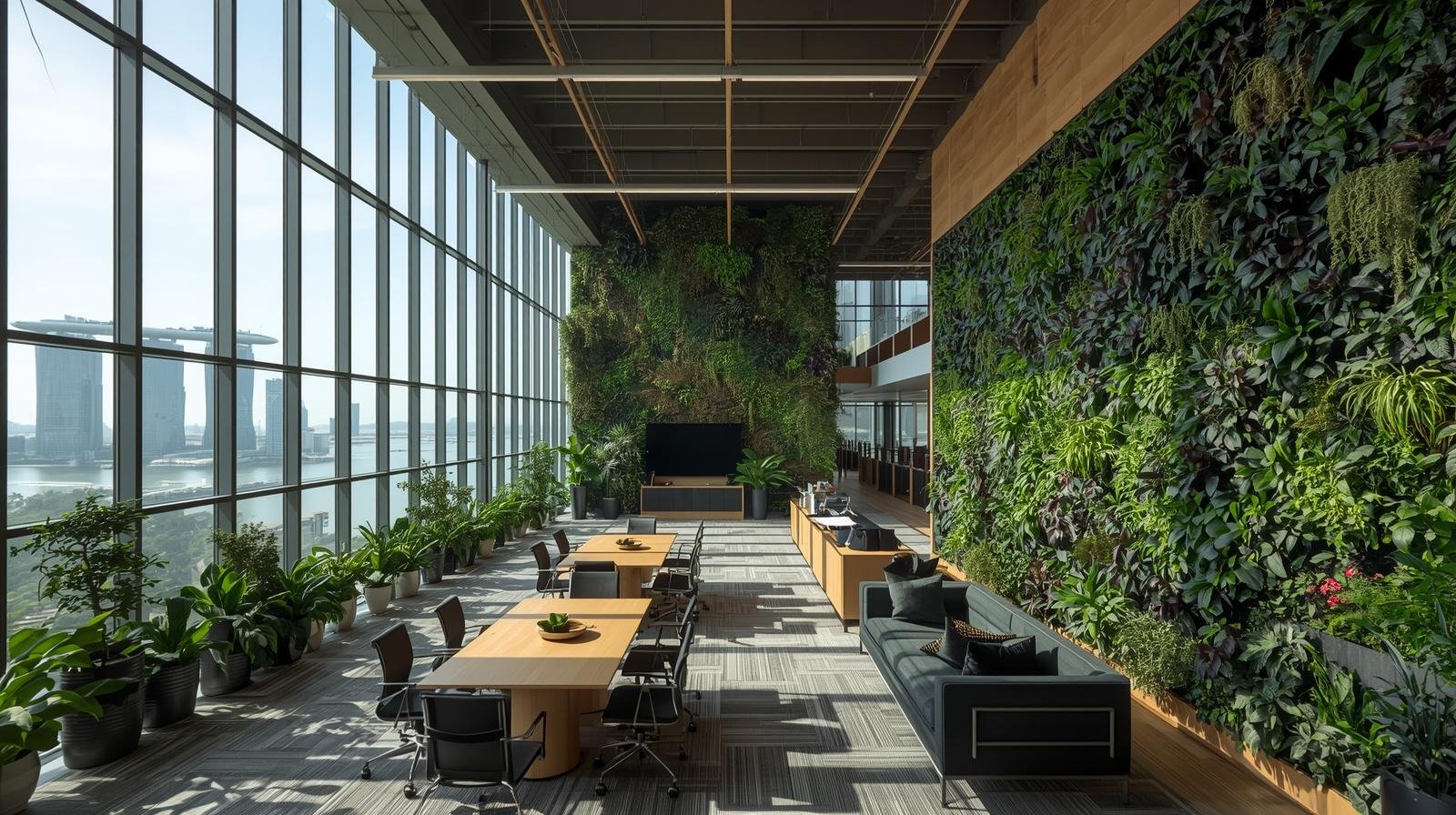
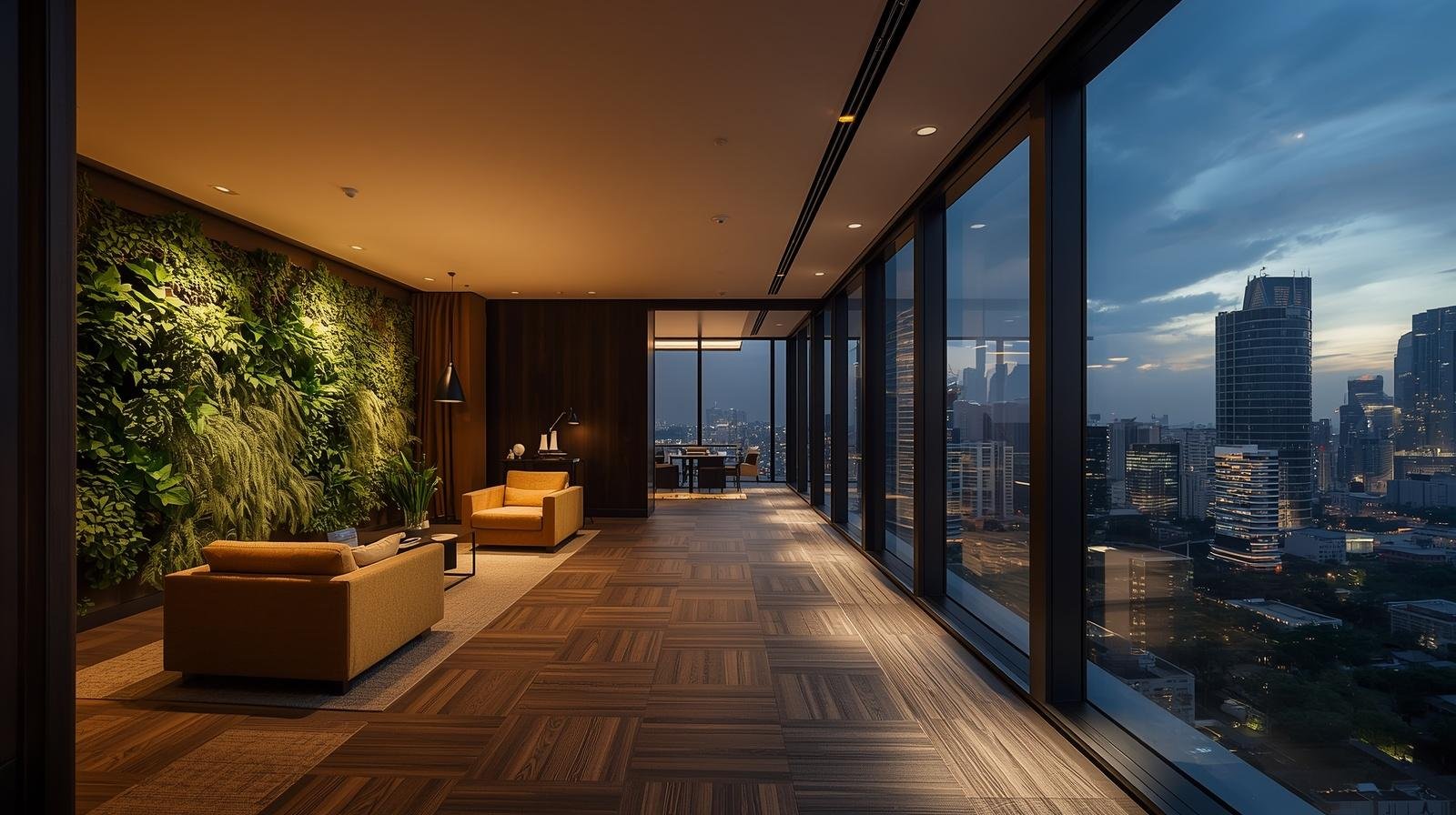
We organized the space around a central "urban forest"—a three-story living wall containing over 4,000 plants representing Southeast Asian biodiversity. The wall doesn't merely decorate; it functions as biological air filter, humidity regulator, and acoustic absorber. Automated irrigation and LED grow lights ensure health. The plants were selected in collaboration with Terraform, a Singapore-based biophilic design firm, for their air-purifying qualities and tolerance of office conditions.
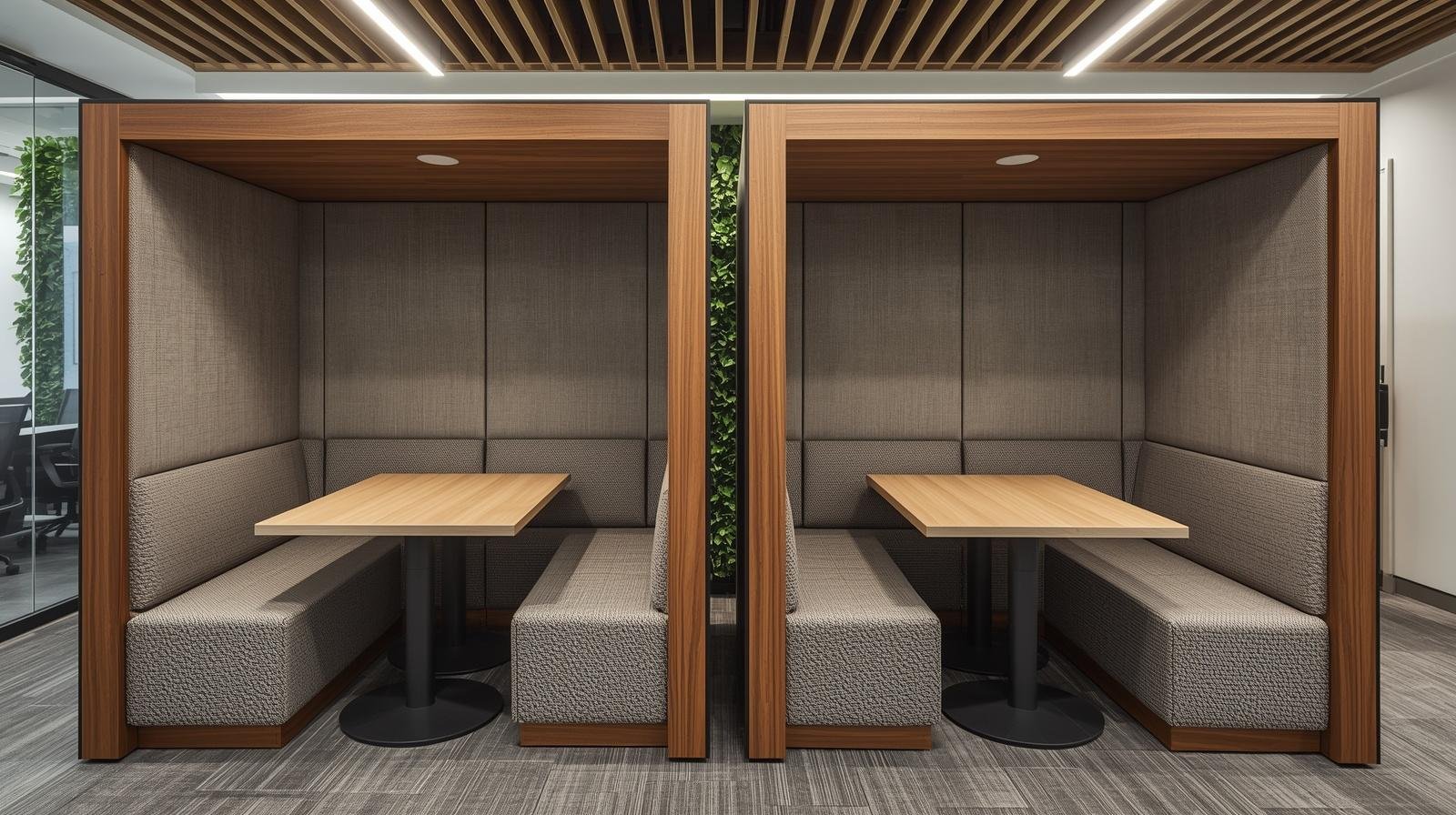
This vertical garden anchors the spatial organization. Workstations radiate outward in clusters rather than rows, creating neighborhoods of 20-25 people. Each neighborhood includes variety of settings: open desks for collaborative work, high-backed booths for focused tasks, standing-height counters for impromptu meetings, lounge areas for casual conversations. Employees move throughout the day based on task requirements rather than remaining at assigned desks.
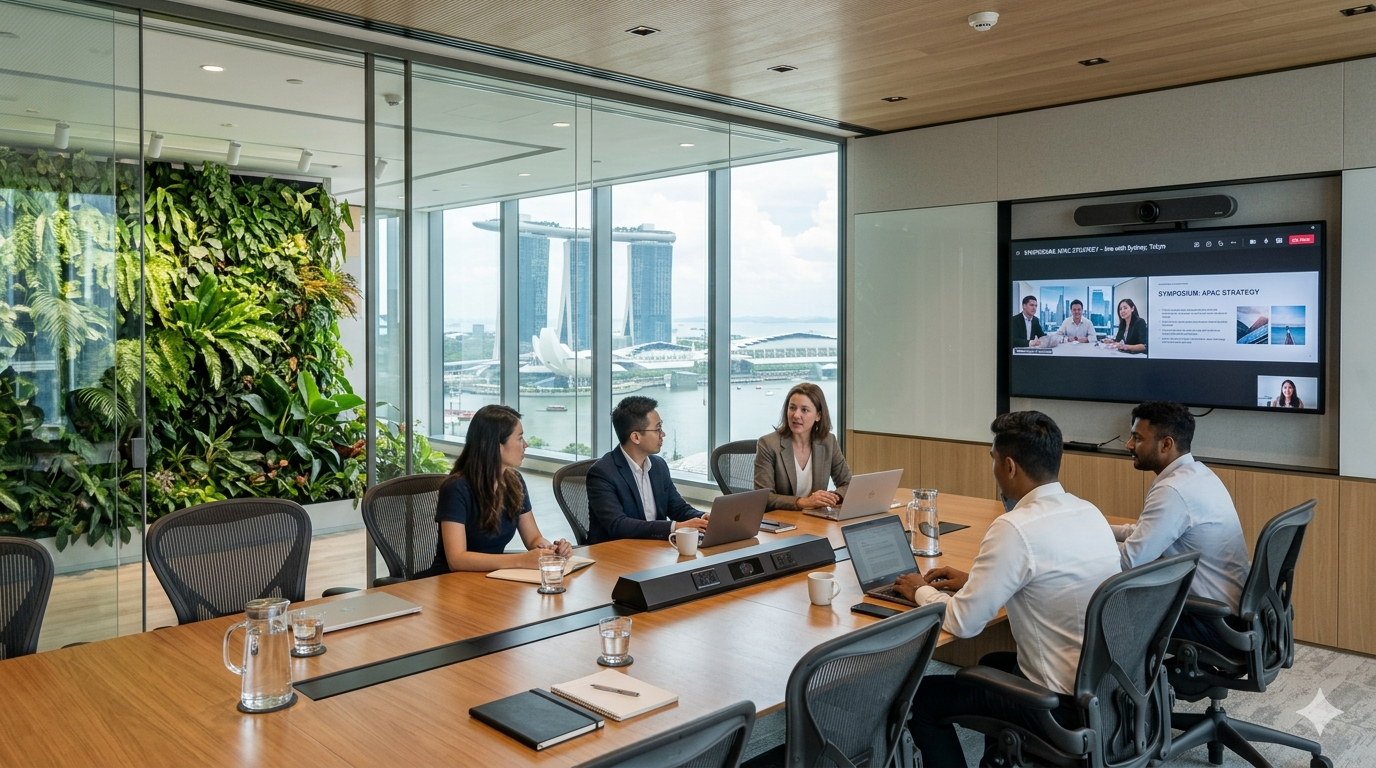
The perimeter, rather than being lined with executive offices (as traditional corporate planning would dictate), remains open and accessible. The views become shared resource. We created a continuous circulation path along the windows—part gallery, part promenade—where employees can walk, phone, or simply pause to look out. Meeting rooms, positioned one layer in from the perimeter, employ glass walls that maintain visual connection to views while providing acoustic privacy.
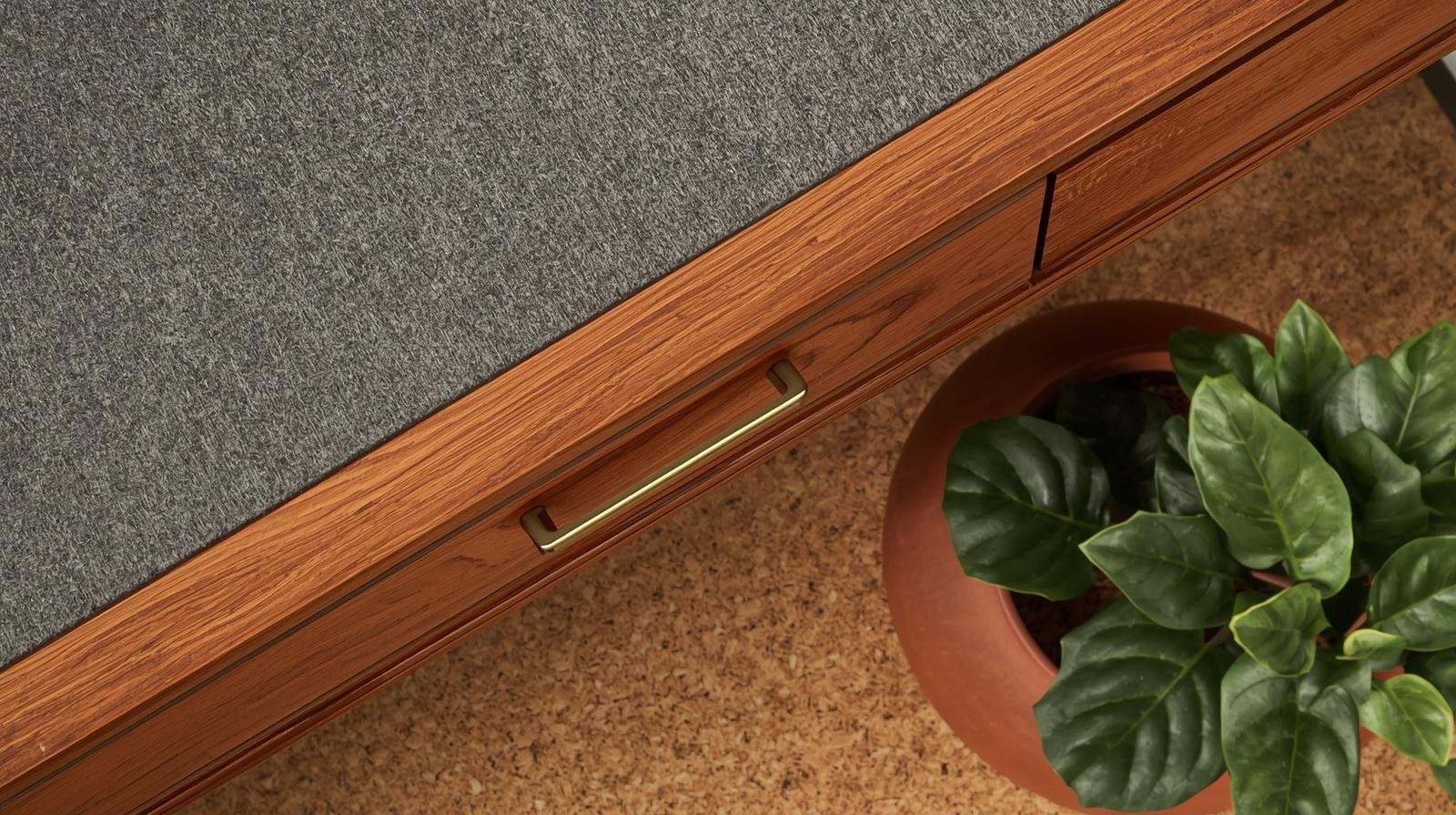
Material selection balanced biophilic principles with practical requirements of high-traffic corporate environment. All desking employs solid teak—sustainably harvested from certified Indonesian forests, milled in Singapore. The wood provides warmth and acoustic absorption impossible with typical laminate surfaces. We specified modular systems that reconfigure easily as team structures evolve.
Flooring transitions between zones: polished concrete in circulation areas (durable, low-maintenance), cork in workstation neighborhoods (comfortable underfoot, acoustic benefit), and reclaimed teak decking on the terrace (weather-resistant, beautiful aging). Each material signals different spatial use without requiring signage.
The acoustic strategy employed multiple approaches. The living wall provides baseline absorption. Additional acoustic panels—fabricated from compressed wool felt in natural grey tones—mount invisibly in ceiling planes. Private meeting rooms use double-glazed glass with acoustic interlayers. White noise systems mask conversation in open areas without creating the oppressive hum typical of corporate environments. The result: spaces that feel quiet without being silent, allowing concentration without isolation.
Cultural synthesis happened through curated integration of Indian craftsmanship within contemporary Singapore workspace. The company's founders, both of Indian origin, wanted their heritage present without resorting to obvious signifiers. We commissioned custom elements from Indian artisans: brass door hardware from Moradabad workshops, handwoven textiles for acoustic panels from Maheshwar weavers, terracotta planters from Kerala potters, carved wooden screens from Saharanpur carpenters.
These elements integrate subtly. The brass hardware reads as premium detailing rather than cultural display. The textiles' natural fibers and hand-woven texture add warmth without announcing their origin. The terracotta planters house the vertical garden's lower-level plants. The wooden screens provide privacy for nursing mothers' room and prayer/meditation space—the latter designed to accommodate multiple faiths without privileging any.
The art program, developed with local gallery STPI, features contemporary Indian artists alongside Southeast Asian practitioners. Large-scale works by Subodh Gupta and Bharti Kher anchor public spaces. Smaller pieces by Singaporean, Malaysian, and Indonesian artists populate meeting rooms. The collection reflects the company's geographic footprint and multicultural team without becoming UN-style representation checklist.
Technology integration happened invisibly. All screens—for videoconferencing, digital whiteboards, presentations—retract into millwork when not in use. Wireless charging integrates into desk surfaces. Cable management happens beneath raised floors. The Wi-Fi network employs enterprise-grade infrastructure that remains completely hidden. Meeting rooms auto-detect occupancy and adjust lighting, temperature, and AV settings accordingly. The goal: technology that enables work without dominating the environment.
We designed custom furniture for these zones: a long communal table in reclaimed teak for lunch gatherings, reading chairs upholstered in Kerala handloom cotton, phone booth frames in powder-coated steel with acoustic glass. Each piece was conceived for its specific location and use pattern, developed through workshops with the staff during design development.
"Our previous office—all glass and white surfaces—looked impressive but felt sterile. People complained about headaches, poor air, lack of privacy. This space supports how we actually work: sometimes collaborative, sometimes focused, always human. Turnover dropped 40% in the first year. That's ROI you can measure."— Priya Malhotra, Chief People Officer
Indonesian FSC-certified forests, Singapore milling
All desking and millwork employ teak from FSC-certified sustainable forests in Indonesia. The wood was selected for consistent grain and color, then milled in Singapore to reduce transportation emissions. Joinery employs traditional techniques—mortise-and-tenon, dowels—rather than metal fasteners. Natural oil finish (no polyurethane) allows the wood to breathe and develop patina. The desks are modular and reconfigurable, accommodating organizational changes without waste.
Moradabad brass, Maheshwar textiles, Kerala terracotta
Brass door hardware was hand-cast by artisans in Moradabad using lost-wax technique, then hand-finished with traditional patination. Acoustic panel coverings employ handwoven cotton from Maheshwar—natural fiber processed on traditional pit looms. Terracotta planters, hand-thrown by Kerala potters, house plants throughout the office. These elements add cultural depth and artisanal character to otherwise contemporary space.
Portuguese cork, natural antimicrobial properties
Work neighborhoods employ cork flooring—warm underfoot, naturally antimicrobial, excellent acoustic absorption. Cork is harvested without harming trees (the bark regenerates), making it highly sustainable. We specified planks in three natural tones, installing them in geometric patterns that subtly define different zones. The material's resilience makes it ideal for high-traffic areas while its warmth counters the concrete and glass elsewhere.
Salvaged from demolished buildings, weather-resistant
Outdoor terrace flooring uses teak decking salvaged from buildings demolished in Singapore's constant redevelopment. The wood carries history—nail holes, natural weathering—that we preserved during refinishing. The aged teak is more stable and weather-resistant than new timber, requiring minimal maintenance. Oil finish refreshed annually maintains its appearance.
Twenty months post-occupancy, the space has validated nearly every design hypothesis. The company tracks employee satisfaction quarterly; scores improved 35% after the move from their previous office. More significantly, retention rates increased—particularly among senior talent, for whom Singapore's competitive market offers constant opportunities.
Exit interviews from the pre-move office consistently mentioned "sterile environment," "lack of natural light," "noise levels." These complaints vanished. Current feedback emphasizes "feels like we're cared for," "the space supports different work modes," "I actually look forward to being in office." These qualitative improvements translate to quantitative impact: productivity metrics (sprint completion, code quality, customer satisfaction) all improved modestly but measurably.
The living wall has become the office's signature element—featured in recruitment materials, press coverage, and social media posts by employees. It also delivers measurable environmental benefit: the plants filter approximately 30 kg of CO2 annually while improving air quality beyond what HVAC alone could achieve. Energy consumption runs 25% below comparable offices due to reduced air conditioning load (the plants' evapotranspiration provides cooling) and maximized daylight reducing artificial lighting needs.
The flexible workspace model proved prescient. During pandemic, the office easily accommodated reduced occupancy with distancing protocols. As hybrid work emerged, the variety of settings supported part-time in-office schedules without requiring assigned desks. Teams now use the office primarily for collaboration, with focus work happening remotely—exactly the pattern the flexible design anticipated.
For us, this project demonstrates that corporate workplace design can transcend the depressing binary of cubicle farms versus "cool" open offices. Both models treat employees as either production units or creative types—categories that flatten human complexity. What's needed is environments that recognize people work in varied ways across the day, that wellbeing and productivity aren't opposing concerns, that beautiful surroundings and natural materials aren't luxuries but necessities.
The Singapore market has noticed. We've been approached by several multinationals seeking similar approaches—spaces that balance corporate professionalism with human comfort, global sophistication with regional character, environmental responsibility with business performance. This validates our conviction that the future of corporate design lies not in either/or choices but in thoughtful synthesis of seemingly competing values.
We collaborate with organizations seeking workspace that supports employee wellbeing, reflects corporate values, and balances environmental responsibility with business performance. Our approach integrates biophilic design principles with cultural sensitivity.
Begin Conversation