













Crosby: Your Premier Online Destination for Furniture Solutions
Embark on your journey to transform your living space with Crosby...
For the living room: Explore sofa sets, sectional sofas, lounge chairs...
For the dining room: Elegant dining tables and dining sets...
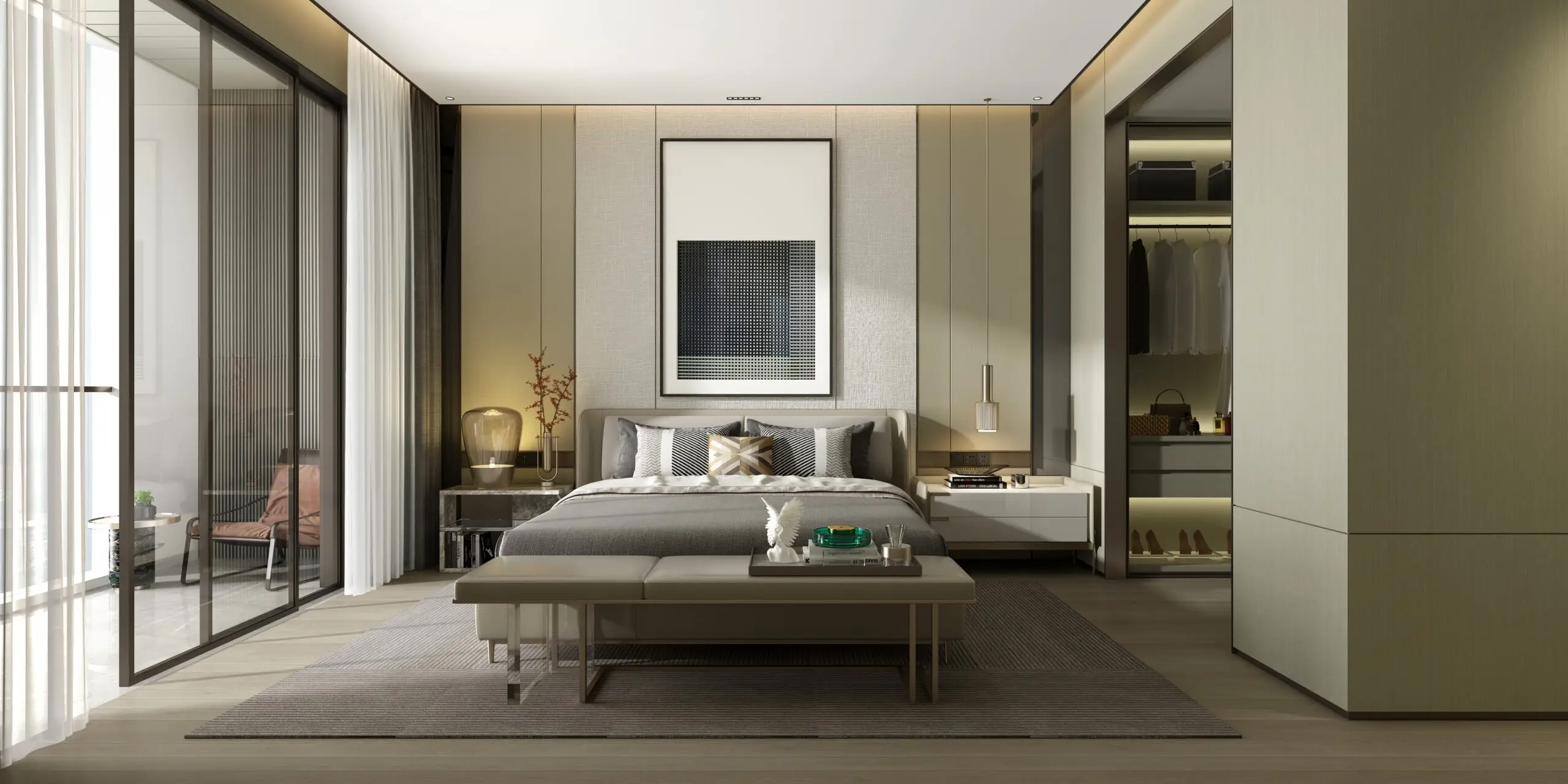
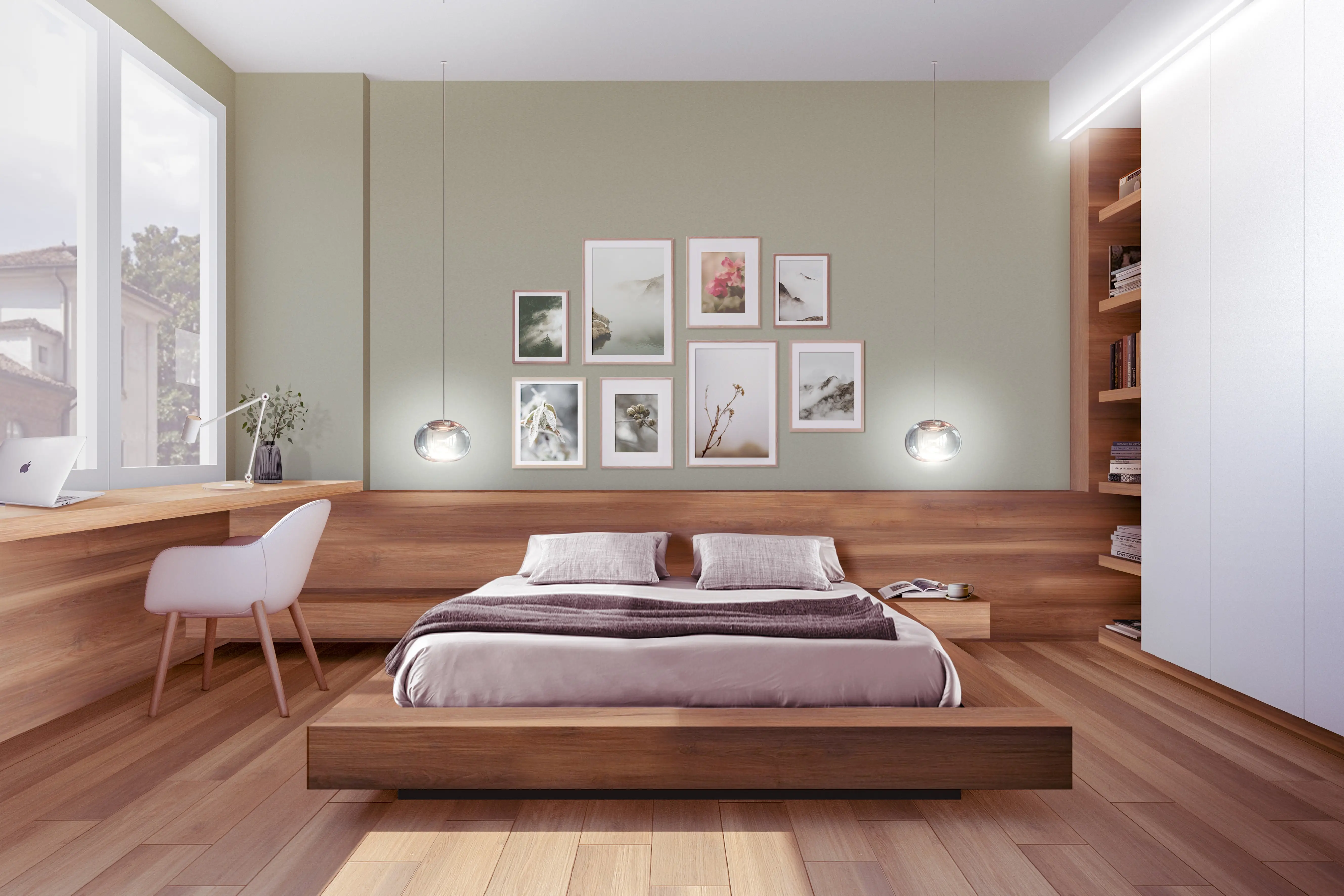
For the bedroom: Beds, mattresses, wardrobes, children’s furniture...
For the office: Study desks, office chairs...
Outdoor furniture: Tables, chairs & more.
Crosby brings modern styling, comfort, and a quality shopping experience.
A bed that’s actually built for how you sleep
Most bedroom furniture is bought once and lived with for a decade, which makes it a strange category to shop for the way people shop for most things online — a photo, a price, a click. A bed frame that flexes slightly under weight, a headboard that was never quite tall enough to lean against comfortably, storage that jams because the hydraulics were the cheapest ones available — none of that shows up in a product photo, and all of it shows up within the first year of actually sleeping in the room.
We build ours in our own workshop in Erode, Tamil Nadu — the same joiners cutting the frame, the same team doing the upholstery, the same hands finishing the piece before it ships. Nothing here is assembled from parts bought off three different vendors and bolted together the week before delivery. If a hinge on a storage bed fails in year six, the same company that built it comes back to fix it, because there’s no vendor chain to get lost in.
What follows is meant to help you choose a bed that actually fits your room and your sleeping arrangement, not just the one that photographs best. If you’d rather talk it through directly, our design team replies within a working day.
Getting the size right before anything else
Bed size is the decision everything else depends on, and it’s worth getting precise rather than approximate. Measure the room, not just the bed — you want at least 60 centimetres of clear floor on every side you’ll actually walk around, and closer to 75 centimetres on the side you get in and out of most, so the room doesn’t start feeling like a corridor the moment the bed goes in.
An Indian single bed, at roughly 91 by 191 centimetres, suits a child’s room, a guest room that doesn’t need to double as anything else, or a studio flat where floor space is the scarcest resource in the home. A double, at around 137 by 191 centimetres, sits in an odd middle ground — genuinely comfortable for one person who likes room to spread out, tight for two adults sharing long-term, but a sensible choice for a smaller second bedroom that occasionally hosts a couple.
Queen, at 152 by 198 centimetres, is the size most Indian couples actually sleep on, and for good reason — it fits comfortably in a bedroom of around 3.3 by 3.6 metres without dominating the room, and it’s the size our diwan-storage frames are built around most often, because the storage-to-footprint ratio works out best here. King, at 183 by 198 centimetres, needs real space behind it — a room of at least 3.6 by 4.2 metres if you want 60 to 75 centimetres of clearance on three sides rather than squeezing past the bed to reach a wardrobe. It’s the size that makes a principal bedroom feel like one, but it’s also the size most commonly bought for a room that can’t actually accommodate it comfortably — worth confirming with a tape measure before you fall for a king-size headboard in a room built for a queen.
If you’re not certain which size your room can genuinely take, send the dimensions through the enquiry form and we’ll tell you honestly rather than let you find out after delivery.
Storage — where most of the real decision-making happens
In an Indian flat under about 1,500 square feet, under-bed storage isn’t a nice-to-have, it’s usually load-bearing to the whole household’s storage plan, and it’s worth more attention than the headboard design gets.
Our diwan-type hydraulic beds are the ones we build and sell the most of, and the mechanism is worth understanding before you choose one. Twin gas-lift pistons raise the entire mattress platform on a hinge, revealing a single open cavity underneath rather than a set of drawers — on a queen frame that’s roughly 400 litres of usable space, enough for a season’s bedding, spare pillows and a couple of large suitcases stacked flat. The trade-off against drawer-based storage is access: you’re lifting the whole platform to get anything out, which means it suits things you reach for occasionally — off-season storage, luggage — rather than something you’re in and out of daily.
Drawer-based storage beds, by contrast, give you daily access without lifting anything, at the cost of slightly less total volume and a visible drawer front on at least one side of the frame, which matters if the bed sits in the centre of the room rather than against a wall. Box-bed frames — a solid base with the storage built into the frame itself rather than a lift mechanism or drawers — split the difference, and tend to be the quietest option if you don’t want the storage to be visually part of the design at all.
If storage isn’t a real constraint in your home, a platform bed without any storage mechanism at all is worth considering on its own merits — fewer moving parts, generally a lower profile, and one less hinge to eventually need attention.
Frame materials, and what actually differs between them
We build primarily in two hardwoods, and which one suits you depends on what you’re actually optimising for. Sheesham is the denser, heavier of the two, with a visible, characterful grain that darkens attractively over its first couple of years — it’s the material we’d point most people toward for a frame that’s meant to last decades rather than one design cycle. Merandi is lighter both in weight and in tone, takes a smoother, more uniform finish, and is what we use most often under upholstered headboards where the wood itself isn’t the visual focus — the fabric is doing that job instead.
Both are genuinely solid timber, not an engineered substitute, which matters specifically for beds because a bed frame under a mattress and two adults takes sustained, repeated load in a way a side table or a shelf never does. An engineered-wood frame can be perfectly fine for years and then develop a flex at the joints that a solid timber frame simply doesn’t — it’s the one piece of furniture in a home where we’d steer most people toward solid wood over veneer, even though veneer is the right call in plenty of other rooms.
Headboards and upholstery — the part that decides how the bed actually feels
An upholstered headboard changes a bedroom more than almost any other single piece of furniture in it, because it’s what you see every time you walk in and what you lean against every time you read before sleep. We upholster in 400 GSM velvet, boucle and leatherette as standard, and each behaves differently enough that the choice is worth thinking through rather than picking on colour alone.
Velvet at that weight is dense enough to hold its shape without sagging at the seams over time, and it takes colour beautifully — a deep green or a warm rust reads as genuinely rich rather than flat, in a way lighter-weight velvet doesn’t manage. It shows crushing where you lean against it repeatedly, which some people like as a lived-in texture and others find looks worn within a year; worth being honest with yourself about which camp you’re in before choosing it for a headboard you’ll lean against nightly.
Boucle is having a genuine moment for a reason — the texture reads as warm and tactile in photographs and in person, and it hides the kind of light marking that would show immediately on a smooth fabric. It’s harder to spot-clean than a smooth weave, so it suits a bedroom with fewer children and pets moving through it more than a family room would.
Leatherette is the practical choice if the bedroom sees real wear — it wipes clean in seconds, doesn’t hold odour the way fabric can, and at a reasonable weight it doesn’t read as cheap the way thinner leatherette sometimes does. It’s also the fastest of the three to feel dated if the colour trends move on, which fabric upholstery is more forgiving about.
If none of the three is right for a specific project — a fabric you’ve already sourced, a colour match to existing curtains — tell us through the enquiry form; upholstery is one of the more straightforward things to customise since we’re building the frame from scratch in any case.
Four-poster and canopy frames, for the room that can carry one
A four-poster genuinely needs a large room to work — anything under about 4 by 4.5 metres and the posts start crowding the space rather than framing it. Where the room can take it, though, a four-poster does more visual work than almost any other bedroom piece; it gives a room a sense of occasion that a platform bed, however well made, simply can’t. We build these in solid sheesham or teak, generally as a made-to-order piece rather than something held in stock, since the proportions need to be drawn against the specific room rather than built to a generic size. If you’re considering one, send us the room’s dimensions and ceiling height before anything else — a four-poster in a room with a low ceiling reads as oppressive rather than grand, and it’s a mistake worth avoiding before the piece is cut.
Bedside tables and lighting — the details most people plan last
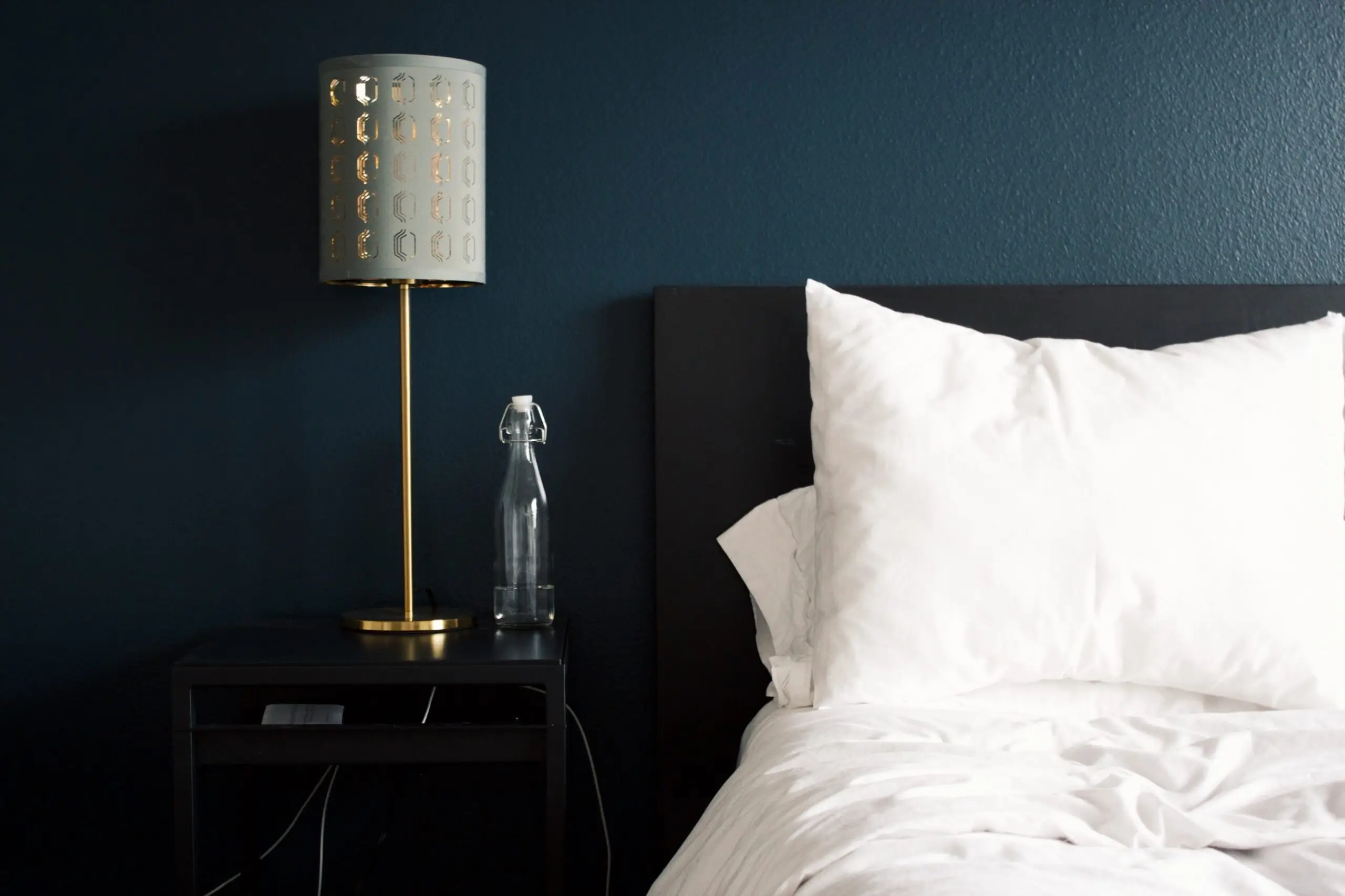
A bedside table is worth matching to the bed’s actual height, not just its style — the surface should sit roughly level with or slightly below the mattress top, so reaching for a glass of water or switching off a lamp doesn’t mean reaching upward at an awkward angle in the dark. If the bed has a tall upholstered headboard, a slightly taller bedside table balances the proportions better than a low one that gets visually swallowed by the headboard behind it.
For bedside lighting, a fitting with a warm colour temperature — the same 2700K range most of our lamps and pendants are specified in — reads as restful rather than clinical at the hour you’re actually using it. A dimmable fitting earns its keep here more than almost anywhere else in the house; full brightness for reading, low warm light for the last ten minutes before sleep, on the same fitting rather than two separate lamps.
Built to your room, not just to a standard size
Because every frame is cut to order in our own workshop, sizing isn’t fixed the way it is when you’re buying from a retailer’s existing stock. A queen frame can usually be widened or narrowed by up to 15 centimetres to fit an awkward room, a headboard height can be adjusted to suit a specific ceiling, and upholstery can be specified in a fabric that isn’t the one shown on the site — all without the surcharge a retailer would apply for stepping outside a standard size. If you want to understand how we document a custom piece before it’s cut, our note on BIM and working drawings covers the process we use for furniture as well as full interior projects.
Ordering, delivery and what happens after
Beds already in stock ship in two to four weeks. Anything made to order — a custom size, a non-standard upholstery fabric, a four-poster drawn to a specific room — takes four to eight weeks, because it’s built after you order it rather than pulled from a warehouse; we’ll tell you which category applies before you commit to anything.
Delivery is free on orders over ₹50,000, which most bed frames clear on their own. Assembly and installation are handled by our own crew, including levelling a frame on an uneven floor and walking through how the hydraulic or drawer storage actually operates before we leave — not a courier dropping flat-packed panels at the door. All prices are exclusive of GST, applied at the applicable rate on the final invoice, and mattresses are sold separately from the frame.
Frames carry a five-year structural warranty. Hydraulic lift mechanisms on storage beds carry two years specifically, since it’s the one moving mechanical part in an otherwise static piece of furniture and it’s the part most worth having covered on its own terms. General hardware — drawer runners, headboard fixings — carries ten years, serviced on site by our own team. For a project ordering multiple bedrooms at once — a hospitality fit-out, a housing development’s model apartments — our trade and bulk ordering page covers volume pricing, and the full range is available as a downloadable catalogue if a PDF is easier to work from than clicking through categories.
Living with it
Solid wood frames want very little beyond an occasional dust and, once every year or two, a wood-safe polish applied lightly rather than heavily — a thick build-up of polish over time does more harm than good, leaving a cloudy film that’s genuinely tedious to strip back. Keep a frame out of direct sun where the room layout allows it; timber and stained finishes both fade unevenly under repeated UV exposure, and unlike a scratch, fading isn’t something a polish or a light sand can reverse.
Upholstered headboards benefit from a weekly pass with an upholstery attachment on a vacuum, which lifts dust before it works into the weave rather than after. Velvet and boucle both want spot-cleaning rather than a full wet clean for anything beyond a light mark — check with us before using a household cleaner on either, since the wrong product can leave a ring that’s more visible than the original stain. Hydraulic mechanisms on storage beds want no maintenance at all under normal use; if a lift starts feeling stiffer than it did when new, that’s worth flagging to us rather than forcing it, since it usually means a service visit rather than a replacement part.
A few questions people actually ask
Will a king bed actually fit my room, or does it just look like it will in the photo?
This is the single most common thing we’re asked, and the honest answer is that a photo genuinely can’t tell you. A king frame needs a room of roughly 3.6 by 4.2 metres to leave comfortable clearance on three sides — send us your room’s actual dimensions before ordering and we’ll tell you plainly whether it works.
How long does a custom-sized or made-to-order bed actually take?
Four to eight weeks from a confirmed order, depending on how far the piece departs from a standard design. A resized version of an existing frame sits at the faster end of that window; a genuinely bespoke piece, like a four-poster drawn for a specific room, sits closer to eight weeks.
Can I get the same design in a different size or fabric than what’s shown online?
Usually yes. Because we cut every frame to order, resizing within reason and swapping the upholstery fabric are both things we can generally say yes to rather than redirect you to a different, similar product instead.
What’s actually different about buying a bed from a manufacturer instead of a furniture retailer?
Mainly that changes are possible at all. A retailer sells you whatever size and finish is already sitting in their warehouse; we’re cutting the frame after you order it, which is why resizing, refinishing and custom upholstery are all real options here rather than a polite way of saying no.
If you’re still weighing up size, storage, or which upholstery would actually hold up in your household, that’s a normal place to be before a purchase this size. Tell us about the room and how you actually live in it, and we’ll give you a straight answer before you spend anything.

 Bedroom


