
MAGAZINE
The Quiet Revolution: How Indian Homes Are Redefining Luxury in 2026

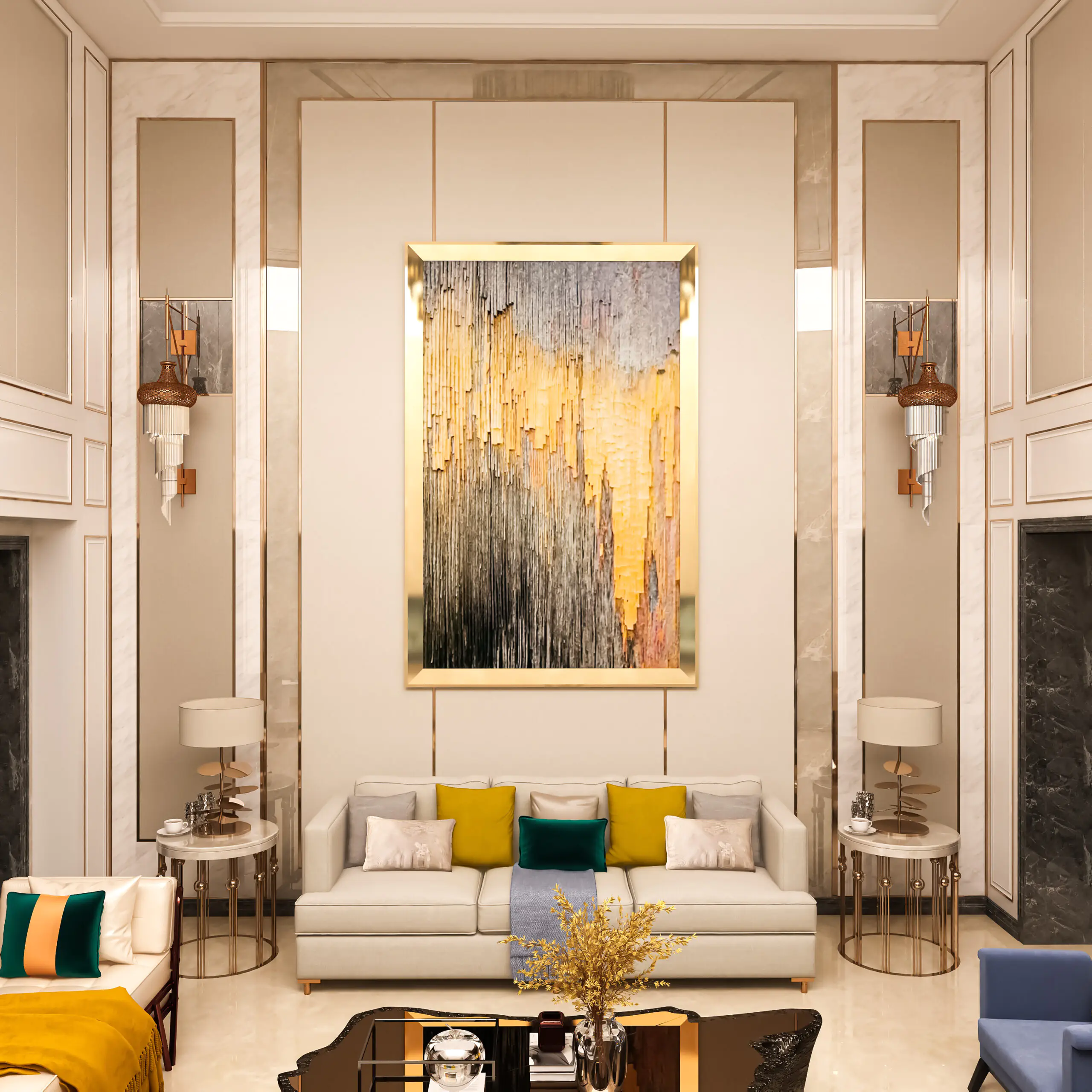
A Designer’s Perspective on Sustainable Elegance and Timeless Craft
By the Crosby Design Team | February 2026 | 18-minute read
Something fundamental has shifted in how discerning Indian homeowners think about their spaces.
After spending the last 18 months consulting with clients across Mumbai, Delhi, Bangalore, and internationally in Dubai and Singapore, we’ve observed a pattern: people are no longer asking “what’s trending?” They’re asking “what will still feel right in 20 years?”
This question represents a profound evolution in Indian interior design—one that aligns perfectly with what we’ve always believed at Crosby: exceptional design isn’t about following trends. It’s about understanding what endures.
In this comprehensive guide, we’ll explore the design principles shaping thoughtful Indian homes in 2026, drawing from our work with over 200 commissioned projects, conversations with master artisans in our atelier, and the evolving needs of modern Indian families.
This isn’t a trend list. This is a framework for making design decisions that will serve you for decades.
Table of Contents
- The Philosophy Shift: From Trend to Timelessness
- Material Honesty: The Return to Natural Wood
- Craftsmanship Over Mass Production
- Designing for How You Actually Live
- Color as Psychology, Not Decoration
- The Sustainable Luxury Paradox
- Room-by-Room Insights from Our Projects
- Investment-Grade Furniture: What Makes It Last
- The Indian Context: Global Aesthetics, Local Realities
- Making Decisions That Age Well
<a name=”philosophy-shift”></a>
The Philosophy Shift: From Trend to Timelessness
Why the Smartest Clients Have Stopped Following Trends
In our initial consultations, we’ve noticed something interesting: the question “what’s in style?” has been replaced by “what won’t go out of style?”
This represents a maturation of the Indian design market. Homeowners who’ve watched their granite countertops and glass-heavy furniture feel dated within five years are making different choices now.
The shift looks like this: Old Mindset New Mindset “What’s trending in 2026?” “What works for my family’s life?” “How do I make this look expensive?” “How do I invest wisely in quality?” “Can I get this installed quickly?” “Can this be made specifically for my space?” “What will impress guests?” “What will I still love in 20 years?”
This evolution isn’t about rejecting contemporary aesthetics—it’s about approaching design with the same thoughtfulness you’d bring to any long-term investment.
At Crosby, we call this “conscious luxury.” It means:
- Choosing materials that age beautifully, not just look new
- Commissioning pieces made for your specific space and needs
- Prioritizing craftsmanship that justifies the investment
- Selecting finishes that are honest to the material, not superficial
<a name=”material-honesty”></a>
Material Honesty: The Return to Natural Wood
Why Solid Wood Is Reclaiming Indian Homes
Walk into any Crosby project completed in the last year, and you’ll notice something: wood is everywhere, but not in the way you might expect.
Gone are the high-gloss, heavily veneered pieces that dominated Indian homes in the 2010s. In their place: matte-finished, naturally oiled solid wood furniture with visible grain patterns and honest joinery.
What’s driving this shift:
1. Longevity Over Novelty
Our clients commission solid wood furniture because they understand the economics: a well-made teak or sheesham piece will outlive three generations of particleboard alternatives.
We recently completed a Delhi residence where the grandfather’s vintage Burma teak dining table—60 years old, naturally patinated—became the inspiration for the entire home. The family didn’t want to replace it. They wanted everything else to deserve to sit beside it.
2. Sustainability You Can Verify
Every piece of wood in our atelier comes with FSC certification. Our clients ask to see it. They want to know:
- Where the wood was sourced
- How the forest is managed
- What the artisans are paid
This transparency is becoming non-negotiable for discerning buyers. Learn more about our sustainable sourcing practices.
3. The Tactile Experience
Solid wood furniture has a weight, a temperature, a grain pattern that MDF and veneer cannot replicate. When you run your hand across a hand-finished teak console table, you feel the material’s integrity.
This sensory authenticity matters more in an increasingly digital world.
What This Means for Your Furniture Choices:
If you’re furnishing a home in 2026, consider:
- For Living Spaces: Solid wood coffee tables with natural oil finishes that develop patina over time, rather than laminate-topped pieces that chip and peel.
- For Bedrooms: Platform beds in teak or sheesham with traditional joinery (mortise-and-tenon, dovetail) that won’t require replacement when you move homes.
- For Dining: Extendable solid wood dining tables that can grow with your family and host generations of meals.
The Wood Species Resurgence:
In our projects this year:
- Teak is chosen for its exceptional durability and natural resistance to moisture (ideal for Indian climates)
- Sheesham offers beautiful grain patterns and works well for contemporary designs
- Walnut is increasingly requested for its sophisticated dark tones in modern interiors
Each species has distinct characteristics. A good designer helps you match wood to use case, not just aesthetics.
Craftsmanship Over Mass Production: The Artisan Renaissance
Why Hand-Made Furniture Is Becoming an Investment Category
In our Delhi atelier, master craftsman Ravi Kumar has been carving wood for 40 years. His hands know when a joint is tight before any glue is applied. He can read grain patterns to predict how a piece will age.
This knowledge cannot be replicated by machines.
And increasingly, our clients understand this. They’re willing to wait 6-8 weeks for a custom-crafted sofa rather than buying something off a showroom floor next week.
Why Craftsmanship Matters in 2026:
1. Structural Integrity That Lasts
Hand-made furniture uses traditional joinery techniques:
- Mortise-and-tenon joints (not just screws and glue)
- Dovetail drawer construction (lasts 10x longer than stapled drawers)
- Hand-fitted corner blocks for sofa frames
- Individually hand-tied spring systems for seating
These methods take more time, but they create furniture that lasts for generations rather than years.
2. Customization to Your Exact Specifications
When furniture is made by hand, customization isn’t an “extra”—it’s the default.
Recent examples from our projects:
- A Mumbai client needed a dining table 20cm longer than standard to fit their space perfectly. We made it.
- A Bangalore family wanted their bed frame height adjusted for an elderly parent. Done.
- A Dubai client requested brass inlay to match their heritage jewelry collection. Our artisans created it.
This level of personalization is impossible with mass-produced furniture.
3. The Story Behind Each Piece
Every piece from our atelier carries the mark of the artisan who made it. This isn’t romantic nostalgia—it’s tangible value.
When you commission bespoke furniture, you know:
- Who made it
- How long it took
- What techniques were used
- The wood’s origin
This provenance matters. It’s the difference between “furniture” and “a piece commissioned for our home.”
The Economics of Artisan Furniture:
Yes, hand-crafted furniture costs more upfront. But let’s examine the real economics:
Mass-Produced Sofa:
- Initial cost: ₹40,000
- Lifespan: 3-5 years
- Replacement needed: 3x over 15 years
- Total cost: ₹120,000+
- Landfill contribution: Significant
Crosby Hand-Crafted Sofa:
- Investment: ₹1,85,000
- Lifespan: 20+ years
- Replacement needed: None
- Total cost: ₹1,85,000
- Landfill contribution: Zero
- Resale/heirloom value: Appreciates
The hand-crafted piece costs less over its lifetime while providing superior comfort, style, and sustainability.
Designing for How You Actually Live (Not How Instagram Suggests You Should)
The Rise of Honest, Functional Spaces
One of the most refreshing shifts we’re seeing: clients are rejecting “showroom-perfect” aesthetics in favor of spaces designed for real life.
A recent conversation with a Mumbai couple illustrates this:
“We’re tired of living rooms we’re afraid to use. We have two kids, we entertain monthly, my husband works from home twice a week. We need furniture that handles all of that gracefully—not furniture we have to protect.”
This is the brief we’re getting more often. And it’s resulting in better design.
What “Designed for Life” Actually Means:
1. Multi-Functional Spaces That Adapt
Indian homes—especially in cities—are rarely single-purpose anymore. Living rooms are also:
- Work-from-home offices
- Kids’ study areas
- Family gathering spaces
- Formal entertaining zones
Your furniture needs to accommodate this fluidity.
Smart Solutions We’re Implementing:
- Modular sofa systems that can be reconfigured for different occasions
- Coffee tables with hidden storage for tablets, remotes, charging cables
- Beds with integrated storage to maximize small bedroom efficiency
- Extendable dining tables that seat 4 daily but extend to 8 for festivals
2. Maintenance-Realistic Materials
We’re specifying materials that:
- Don’t show every fingerprint (moving away from high-gloss everything)
- Can be cleaned with simple, natural products
- Age beautifully rather than just deteriorate
- Don’t require professional servicing every year
Example: Natural oil-finished wood develops a gentle patina over time. Small scratches can be addressed with a simple re-oiling. Compare this to high-gloss veneer, where every scratch is permanent and glaring.
3. Storage That Actually Works
The most common complaint we hear about existing homes: “not enough storage.”
The real issue is usually: storage in the wrong places, or poorly designed storage that doesn’t match how you live.
Our approach:
Before designing any storage solutions, we ask:
- What are you storing?
- How often do you access it?
- Who in the family uses these items?
- What’s your natural organizational style?
This leads to customized solutions like:
- Entryway consoles with key drops, mail slots, and shoe storage below
- Bedroom wardrobes with internal configurations designed around your actual wardrobe (not generic templates)
- Kitchen storage that accounts for Indian cooking needs (masala boxes, large pots, appliances)
Color as Psychology, Not Decoration
Understanding How Color Shapes Daily Experience
We recently completed a bedroom for a Delhi-based executive who’d been struggling with sleep. The room had previously been painted a vibrant coral—energizing and modern, but psychologically exhausting after 14-hour workdays.
We repainted in a muted clay tone, adjusted the lighting, and selected bedding in soft natural linen. Her sleep quality improved noticeably within two weeks.
This is color as psychology, not decoration.
The Color Principles Guiding Thoughtful Indian Homes in 2026:
1. Rooms Have Purposes; Colors Should Support Them
Bedrooms = Restoration
- Earthy neutrals: clay, sand, warm grays
- Muted greens: sage, olive, eucalyptus
- Soft blues: powder, slate (but warm-toned, not cold)
These colors lower cortisol and support rest. See how we apply this in bedroom design.
Living Spaces = Connection
- Warm neutrals: beige, cream, warm taupe
- Grounded earth tones: terracotta, rust, camel
- Rich accent walls: deep olive, charcoal, navy
These create warmth and encourage gathering. Explore our living room furniture designed to anchor these palettes.
Workspaces = Focus
- Neutral backdrops: warm white, light gray
- Accent colors that energize but don’t distract: muted blues, sage greens
- Natural wood tones to ground the space
Our office furniture designs work within these principles.
Dining Areas = Conviviality
- Welcoming earth tones: warm browns, soft oranges, amber
- Rich wood furniture tones
- Accent lighting that creates intimacy
2. The Indian Climate Consideration
Color perception changes dramatically based on natural light. In India’s intense sunlight:
- Cool grays can look sterile and harsh
- Warm neutrals feel more inviting
- Deep colors need careful testing (can feel oppressive in small, hot spaces)
We always test paint colors in the actual space, at different times of day, before final selection.
3. The Longevity Test
Before committing to any color, we ask clients: “Will you still feel good waking up to this in five years?”
If there’s hesitation, it’s the wrong color.
The Most Enduring Color Palettes We’re Using:
- Warm neutrals (beige, sand, cream) with natural wood tones and muted green accents
- Soft grays (warm, not cool) with natural textures and warm metal accents (brass, bronze)
- Earth tones (clay, terracotta, rust) with natural linen and darker wood furniture
These combinations feel current without being trendy. They provide a calm backdrop that allows your life—and your curated furniture pieces—to be the focal point.
The Sustainable Luxury Paradox: How Spending More Can Mean Less Environmental Impact
Why True Sustainability Isn’t Cheap (And Why That’s Okay)
There’s a persistent misconception that sustainable design means “budget-friendly alternatives.” This couldn’t be further from the truth.
Real sustainability—furniture made from responsibly sourced materials, crafted by fairly paid artisans, built to last generations—costs more upfront. Always.
But it’s still the better choice. Here’s why.
The True Cost of “Affordable” Furniture:
When you buy a ₹15,000 particleboard wardrobe from a mass-market retailer, the real costs are:
Environmental:
- Particleboard made from wood chips and formaldehyde-based adhesives (off-gassing for years)
- Factory production in regions with lax environmental controls
- Shipping from factories to warehouses to homes (massive carbon footprint)
- Lifespan of 3-5 years before replacement
- Ends in landfill (doesn’t biodegrade due to chemical adhesives)
Human:
- Factory workers paid minimum wage in poor conditions
- No artisan skill development or preservation
- Contributes to loss of traditional craft knowledge
Personal:
- Furniture that doesn’t fit your space properly
- Low-quality materials that look worn quickly
- Emotional dissatisfaction from replacing items frequently
- No connection to the objects in your home
The Crosby Alternative: Investment-Grade Sustainable Luxury
When you commission a wardrobe from Crosby:
Environmental:
- FSC-certified solid wood from responsibly managed forests
- Atelier production in Delhi with renewable energy offset
- Natural finishes (tung oil, beeswax) with zero VOCs
- Lifespan of 20-50+ years
- Fully biodegradable or recyclable at end of life
Human:
- Master artisans paid living wages
- Traditional skills passed to next generation
- Local economic support
- Pride of ownership in work produced
Personal:
- Custom-designed for your exact space and needs
- Hand-crafted quality that improves with age
- One-time investment, no replacement needed
- Emotional connection to a piece made for you
The Math:
Budget Wardrobe:
- ₹15,000 × 4 replacements over 20 years = ₹60,000
- Environmental cost: High
- Satisfaction: Low
- Legacy value: Zero
Crosby Wardrobe:
- ₹1,25,000 × 1 (lasts 20-50+ years) = ₹1,25,000
- Environmental cost: Minimal
- Satisfaction: High
- Legacy value: Can be passed down
Yes, the Crosby piece costs more initially. But it costs less per year of use, creates zero waste, supports sustainable practices, and becomes part of your family’s story.
This is sustainable luxury.
Explore our commitment to sustainability.
Room-by-Room Insights: Designing Spaces That Work for Indian Lifestyles
Bedrooms: Sanctuaries for Rest in Busy Lives
The bedroom has become the most important room to get right. After two years of pandemic-related stress, our clients are clear: the bedroom must be a genuine sanctuary.
What’s Changing in Bedroom Design:
1. Investment in Sleep-Worthy Beds
We’re seeing clients allocate 30-40% of their bedroom budget to the bed itself—recognizing that quality sleep is non-negotiable.
What makes a bed “investment-grade”:
- Solid wood frame with traditional joinery (no squeaking after five years)
- Upholstered headboard for comfort (reading, sitting up)
- Proper height (Indian clients often prefer lower platforms; we customize)
- Storage integration (essential in space-constrained homes)
2. Lighting That Supports Circadian Rhythms
Overhead lighting is out. Layered, adjustable lighting is in:
- Bedside lamps at correct height for reading
- Dimmable ambient lighting for evening wind-down
- Blackout solutions for undisturbed sleep
- Warm color temperature bulbs (2700K) only
3. Natural Materials That Breathe
Bedrooms need materials that regulate temperature and humidity:
- Solid wood furniture (not particle board)
- Natural fiber bedding (cotton, linen)
- Breathable window treatments
- Minimal synthetic materials
4. Storage That Keeps Surfaces Clear
Visual clutter impacts sleep quality. Every bedroom needs:
- Bedside tables with drawers (not open shelves)
- Adequate wardrobe space designed for your actual wardrobe
- Hidden charging stations (no cables in sight)
View our bedroom furniture collection.
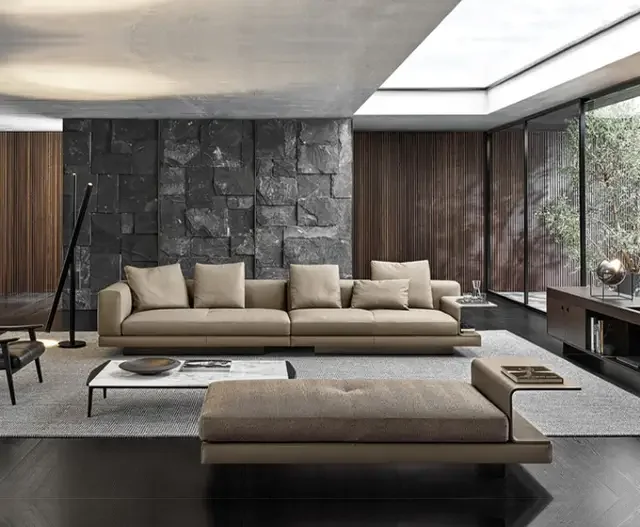
Living Rooms: Spaces That Adapt to Indian Family Life
Indian living rooms serve more functions than Western counterparts. They’re:
- Formal entertaining spaces
- Family gathering zones
- Work-from-home offices
- Kids’ study areas
- Festival celebration spaces
Your furniture must accommodate this versatility.
The Living Room Essentials We Recommend:
1. A Sofa Worth the Investment
Your sofa likely gets more daily use than any other furniture piece. It must be:
- Comfortable for 3+ hour sitting (movie nights, festival gatherings)
- Cleanable (Indian homes, Indian cooking = need for practical fabrics)
- Structurally sound (solid wood frame, hand-tied springs)
- Timeless in design (this piece will be in your home for 15+ years)
We typically recommend modular configurations that can be rearranged for different occasions.
2. A Coffee Table That Works
Your coffee table should:
- Be at the right height for your sofa (36-46cm typically)
- Provide storage (remotes, magazines, inevitably some clutter)
- Have a surface that can handle daily use (water rings, hot chai mugs)
- Be beautiful enough to anchor the room
3. Flexible Seating
Beyond the main sofa, consider:
- Accent chairs that can be moved for different configurations
- Ottomans that serve as both seating and surface
- Floor seating options for traditional gatherings
4. Smart Storage
Living rooms accumulate: books, devices, kids’ items, paperwork. Built-in or custom storage solutions that blend with your design keep the space from feeling cluttered.
Explore living room furniture options.
Dining Spaces: Where Families Still Gather
Despite changing lifestyles, the dining table remains culturally significant in Indian homes. It’s where:
- Families eat together (when everyone’s schedule allows)
- Festival meals happen
- Kids do homework
- Extended family gathers
- Working from home happens (when the desk is occupied)
This demands a serious table.
What Makes a Dining Table “Forever Furniture”:
1. Size That Fits Your Life
Most Indian families need:
- 4-6 seater for daily use
- 8-10 seater capacity for festivals/guests
Solution: Extendable dining tables that expand when needed.
2. Durability for Daily Abuse
Dining tables take impact:
- Hot serving dishes
- Spills (curry, chai, wine)
- Homework and art projects
- Serving as makeshift workstation
You need:
- Solid wood construction (not veneer)
- Natural oil finish (can be spot-repaired)
- Proper thickness (3-4cm minimum)
3. Timeless Design
Your dining table will likely outlive your sofa. Choose a design that:
- Doesn’t scream “2026 trend”
- Works with evolving decor styles
- Has honest, beautiful proportions
- Showcases the wood’s natural character
Home Offices: Designed for Focus and Longevity
Post-pandemic, home offices aren’t temporary setups. They’re permanent spaces requiring:
1. Ergonomic Fundamentals
- Desk at correct height for your body
- Chair with proper lumbar support
- Monitor at eye level
- Adequate task lighting
2. Storage for Work Materials
- File organization
- Supplies within reach
- Cable management
- Reference materials accessible
3. Acoustic Considerations
- Materials that absorb sound
- Placement away from high-traffic areas
- Door that closes (if possible)
Explore our office furniture solutions.
<a name=”investment-furniture”></a>
Investment-Grade Furniture: Understanding What Makes Pieces Last Generations
The Furniture You Should Spend Money On (And What You Can Compromise)
After 15 years of designing homes and manufacturing custom furniture, we’ve developed clear principles about where to invest and where you can be flexible.
The Non-Negotiables: Where Quality Matters Most
1. Your Bed
You spend 1/3 of your life here. The bed frame must:
- Support the mattress properly (solid wood frame, not metal or flimsy support)
- Be comfortable for sitting (upholstered headboard)
- Be quiet (no creaking from loose joints)
- Last decades (quality joinery and materials)
Investment range: ₹1,50,000 – ₹3,50,000 for a king-size bed built to last 30+ years.
2. Your Primary Sofa
This gets more use than almost any furniture piece. Must have:
- Kiln-dried hardwood frame (not plywood or particleboard)
- Hand-tied spring system (not cheap sinuous springs)
- High-density foam core (won’t collapse in 3 years)
- Quality upholstery fabric or leather
- Professional construction
Investment range: ₹1,50,000 – ₹3,00,000 for a three-seater sofa that lasts 20+ years.
3. Dining Table
This piece often lasts longest in a home (we’ve seen 60-year-old tables still in daily use). Requires:
- Solid wood construction (3-4cm thick top)
- Traditional joinery
- Finish that can be renewed
- Timeless proportions
Investment range: ₹1,20,000 – ₹2,50,000 for a 6-8 seater table that becomes an heirloom.
4. Primary Wardrobe/Storage
Bedrooms need serious storage. Quality wardrobes feature:
- Solid wood construction
- Soft-close hardware
- Internal configuration designed for your needs
- Modular/adjustable shelving
- Proper ventilation
Investment range: ₹1,50,000 – ₹4,00,000 for custom bedroom storage that lasts.
Where You Can Be More Flexible:
- Accent chairs (replace as your style evolves)
- Decorative accessories
- Lighting fixtures
- Rugs and textiles
- Side tables and occasional furniture
These pieces can be updated without undermining your core furniture investment.
The Crosby Warranty Philosophy
We offer a 10-year structural warranty on all commissioned furniture because:
- We use techniques and materials proven over centuries
- We employ master artisans who take pride in their work
- We build for longevity, not quick sale
- We believe in the pieces we create
If we wouldn’t warranty it for 10 years, we wouldn’t make it.
Learn more about our commission process.
<a name=”indian-context”></a>
The Indian Context: Adapting Global Aesthetics to Local Realities
What Works Differently in Indian Homes
Much design content originates from Western markets (US, Europe, Scandinavia). These aesthetics can be beautiful, but they don’t always translate directly to Indian contexts.
Key Differences in Indian Home Design:
1. Climate Considerations
Challenge: India’s diverse climates (hot-humid in Chennai, dry heat in Delhi, monsoons in Mumbai) affect materials differently than temperate Western climates.
Solution:
- Wood species that handle humidity (teak is ideal)
- Natural finishes that breathe (not plastic-based polyurethanes)
- Fabrics that don’t trap heat
- Ventilation-friendly furniture placement
2. Multi-Generational Living
Challenge: Indian homes often house multiple generations or have extended family visiting frequently.
Solution:
- Furniture that accommodates varied ages (heights, seating firmness, accessibility)
- Flexible dining setups that expand for gatherings
- Private spaces within shared homes
- Durable materials that handle heavy use
3. Cultural Practices
Challenge: Floor sitting, shoe removal at entry, religious spaces, festival celebrations—these are less common in Western design briefs.
Solution:
- Entry storage for footwear
- Low seating options (floor cushions, low stools)
- Dedicated pooja/prayer areas in design
- Durable flooring that can handle diverse use
4. Domestic Help Considerations
Challenge: Many Indian homes have domestic staff requiring practical access and storage solutions not common in Western homes.
Solution:
- Separate storage for household supplies
- Kitchen layouts accommodating multiple cooks
- Furniture easy to clean around
- Practical, maintainable finishes
5. Space Constraints in Urban Areas
Challenge: Indian metro apartments are often smaller than Western counterparts, requiring creative solutions.
Solution:
- Multi-functional furniture
- Custom-sized pieces for odd dimensions
- Vertical storage maximization
- Scale-appropriate furniture (not oversized Western pieces)
Crosby’s Approach: Global Aesthetics, Indian Engineering
Our design philosophy synthesizes:
- Contemporary global aesthetics (clean lines, natural materials, minimal decoration)
- Traditional Indian craftsmanship (hand joinery, artisan skills, time-honored techniques)
- Climate-appropriate materials (woods and finishes that perform in Indian conditions)
- Cultural sensitivity (designing for how Indian families actually live)
The result: homes that feel current and sophisticated while functioning perfectly for Indian life.
See how we apply this in our residential projects.
Making Design Decisions That Age Well: A Framework
The Questions to Ask Before Any Major Furniture Purchase
Over years of consultations, we’ve developed a decision-making framework that helps clients avoid regrets. Before committing to any significant furniture investment, ask:
The Longevity Questions:
1. “Will I still find this beautiful in 10 years?”
If you’re choosing something because it’s “what everyone’s doing right now,” reconsider. True design quality transcends momentary trends.
Test: Look at design from 10 years ago. What still looks good? Usually: clean lines, quality materials, honest construction. What looks dated? Usually: overly trendy silhouettes, gimmicky features, poor-quality materials trying to look expensive.
2. “Does this suit my actual lifestyle or my aspirational one?”
Many people buy furniture for the life they imagine (minimalist, child-free, never eating on the couch) rather than the life they live (two kids, Friday night movies, chai on every surface).
Design for reality, not fantasy.
3. “Is this quality worth the price?”
Higher price doesn’t always mean better quality. Learn to evaluate:
- Construction method (joinery type)
- Material quality (solid vs. veneer, wood species)
- Finish durability (natural oil vs. polyurethane)
- Artisan skill level (visible in details)
- Warranty offered (companies confident in their work offer meaningful warranties)
At Crosby, we’re happy to explain exactly what you’re paying for and why.
4. “Can this be repaired/refinished if needed?”
Solid wood furniture can be:
- Re-oiled or refinished
- Repaired if joints loosen
- Adjusted if your needs change
Veneer/particleboard furniture cannot be meaningfully repaired. When it’s damaged, it’s discarded.
This difference matters over a 20-year lifespan.
5. “Does this serve a specific need in my home?”
Avoid buying furniture because it’s beautiful in a showroom. Ask:
- What function does this serve?
- Where exactly will it go?
- What will I use it for?
- Do I have something that already serves this purpose?
Intentional purchasing prevents clutter and regret.
The Sustainability Questions:
6. “Where do these materials come from?”
At minimum, verify:
- Wood is FSC-certified (or equivalent sustainable certification)
- Finishes are low/zero VOC
- Fabrics are responsibly produced
If a manufacturer can’t tell you material origins, that’s a red flag.
7. “Who made this and under what conditions?”
Ethical furniture production means:
- Artisans paid fair living wages
- Safe working conditions
- Skill development and preservation
- Local economic support
Learn about our artisan partnerships.
8. “What happens to this at end of life?”
Sustainable furniture is:
- Made from materials that biodegrade or can be recycled
- Constructed without toxic adhesives
- Built to last so long that “end of life” is decades away
Unsustainable furniture:
- Ends in landfill within 5-10 years
- Contains non-biodegradable materials
- Off-gasses chemicals for years
- Contributes to deforestation
The Practical Questions:
9. “Can this be delivered/installed in my space?”
Measure:
- Doorways, stairwells, elevators
- Room dimensions
- Ceiling heights
- Existing furniture it must work around
We create detailed delivery plans for every commission to avoid surprises.
10. “What’s the real total cost?”
Consider:
- Purchase price
- Delivery/installation
- Any modifications needed
- Maintenance over lifetime
- Replacement timeline
- Resale/heirloom value
Often, a higher-quality piece costs less per year of use than a cheaper alternative that needs replacement.
Final Thoughts: Designing Homes for Life, Not for Instagram
The most satisfying projects we complete aren’t the ones that photograph beautifully (though they often do). They’re the ones where clients tell us, a year later:
“We use every piece daily. Everything works exactly as we need it to. We’re not thinking about changing anything. We just live here happily.”
This is the goal.
Not a home that impresses for a moment. A home that serves you well for decades.
The principles that make this possible:
- Invest in quality where it matters most (bed, sofa, dining table, primary storage)
- Choose materials that age beautifully (solid wood, natural finishes, quality fabrics)
- Prioritize craftsmanship over trends (traditional joinery, artisan skills, time-tested techniques)
- Design for your actual life (not aspirational lifestyle or Instagram aesthetics)
- Think in decades, not years (furniture that lasts 20-50+ years, not 3-5)
- Support sustainable practices (FSC wood, fair artisan wages, minimal waste)
- Commission pieces for your space (custom-fit furniture that maximizes your specific home)
Ready to Start Your Project?
At Crosby, we begin every project the same way: by listening.
We want to understand:
- How you live now
- How you want to live
- What matters most to you
- What your space requires
- What your budget allows
From there, we develop furniture and interior solutions tailored specifically to your home—not generic designs adapted to fit.
Our process:
- Initial Consultation (Virtual or in-person)
- Design Development (Custom proposals with detailed renderings)
- Material Selection (Guided tour of wood species, finishes, fabrics)
- Crafting Period (6-10 weeks in our atelier)
- Delivery & Installation (Professional setup in your home)
- Ongoing Support (Lifetime care guidance)
Commission timelines: 6-10 weeks from design approval
Warranty: 10 years structural on all pieces
Service area: Pan-India and select international locations
Get Started
📧 Email: care@crosby.co.in
📞 Phone: +91-8826860000
🌐 Website: thecrosbystore.com
Explore Our Collections:
Visit Our Atelier: Delhi | By appointment only
Related Reading
- Understanding FSC Certification: Why Wood Source Matters (internal blog link)
- The True Cost of Fast Furniture: A Sustainability Analysis
- Traditional Joinery Techniques: Why Hand-Crafted Furniture Lasts
- Designing Multi-Generational Indian Homes: A Case Study Approach
About the Author:
This guide was developed by the Crosby Design Team, drawing from 15+ years of commissioned residential projects across India and internationally. Our team includes interior architects, furniture designers, and master craftsmen specializing in sustainable luxury design.
Share This Guide:
Found this helpful? Share with someone planning a home renovation or furniture investment.
Last Updated: February 2026

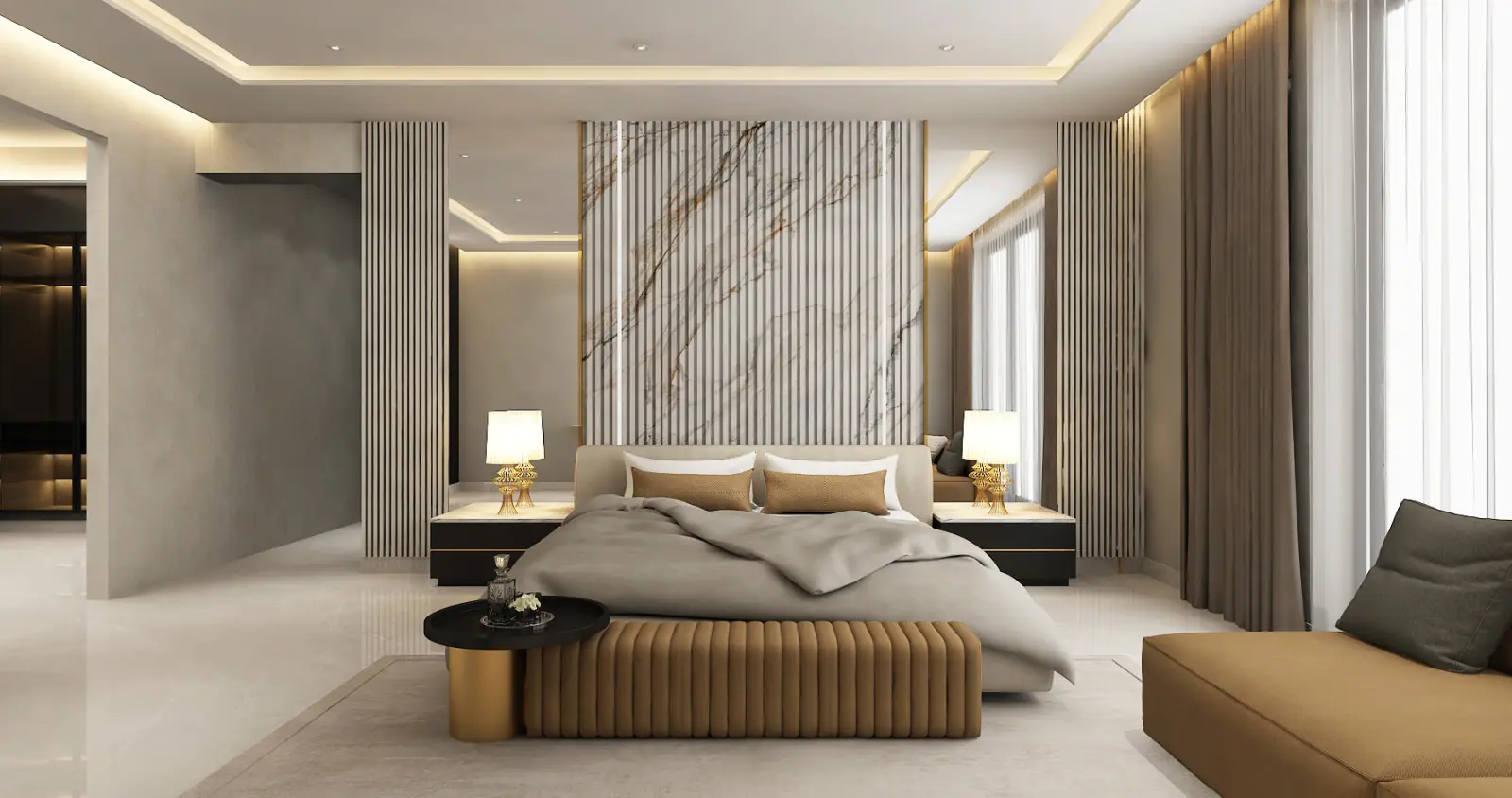












 Bedroom