
MAGAZINE
Why Your Furniture Business Is Not Growing as Fast as It Should — And Exactly What to Do About It

How to Increase Furniture Sales: A Complete Growth Strategy for Interior Designers and Furniture Businesses | Crosby
Let’s skip the preamble. If you have a furniture business or an interior design studio in India and you are not growing at the rate the market justifies — and the market is growing very fast — one or more of the following things is true.
You are selling to the wrong customer. You are reaching them through the wrong channel. You are pricing yourself incorrectly for your quality. You have no systematic lead nurture process. You are winning projects on referral and losing them on discovery. Your content makes you look like everyone else.
Here is how to fix all of it.
Fix 1: Stop Competing on Price — Start Competing on Brief
The single most effective growth strategy available to a quality furniture business is to move every sales conversation away from price and toward the brief.
Price comparison is a commodity behaviour. The customer who opens with “what does a sofa cost?” is comparing you to every other sofa seller in India. You cannot win that comparison if you are a quality manufacturer — your price will always be higher than a volume retailer.
The customer who opens with “I need a sofa that works in a room that opens onto a terrace, with natural light from the east, where I entertain six people twice a week and I want it to last fifteen years” — that customer cannot compare you to a volume retailer. They have described a brief. They need a designer and a manufacturer, not a shop. And if you can respond to that brief with intelligence and specificity, you have already won the commercial conversation before price is discussed.
Action: Redesign every enquiry form, every consultation call, and every consultation room to begin with the brief, not the catalogue. Train your sales team to ask about the space, the life, the aspiration — before showing anything.
Fix 2: Build the B2B Revenue Stream
Most furniture businesses in India generate almost all their revenue from individual residential clients. This is one of the most expensive ways to run a furniture business, because the cost of acquiring a single residential client — in time, marketing, and sales effort — is enormous relative to the order value.
The B2B revenue stream — real estate developers, hotel developers, corporate fit-out projects — requires exactly the same product but generates five to twenty times the revenue per relationship. A residential client might purchase ₹10–50 lakhs of furniture across a relationship. A developer might procure ₹2–10 crore of furniture per project, and return with the next project twelve months later.
Action: Identify the top twenty real estate developers and hotel developers in your target market. Develop a specific offer for developer procurement — package it, price it, and present it directly. One developer relationship replaces thirty residential acquisition campaigns.
Fix 3: Content That Demonstrates Expertise, Not Just Products
The furniture businesses growing fastest in India in 2026 are those that have understood a simple principle: content is a sales team that works twenty-four hours a day.
A blog article titled “How to Choose a Dining Table for a Room With Limited Natural Light” — specific, expert, genuinely useful — will appear in search results every time someone in India searches for dining table advice in a challenging space. That reader is, by definition, a warm prospect. They are planning a purchase. They have found your expertise before they have found your catalogue. The commercial relationship begins with trust rather than comparison.
Action: Produce one expert content piece per week. Not a product promotional piece — an expert piece that solves a real design problem for a real audience. Do this for twelve months. Your organic search traffic will transform your lead economics.
Fix 4: Target the International Client Systematically
India’s NRI diaspora represents one of the most commercially under-served luxury furniture markets in the world. There are millions of Indians living in the Gulf, the UK, Europe, the US, and Southeast Asia who are simultaneously maintaining, renovating, or building homes in India — and who trust a studio with international presence in a way they will not trust a purely local supplier.
Crosby’s Dublin studio exists, in part, because it signals to the international client that we are not purely local. It validates our quality for a diaspora audience that measures everything against international references.
Action: Create a specific landing page and content stream targeting NRI clients. Target the keywords they search: “interior design for my India home while living abroad,” “renovate Delhi home NRI,” “trusted furniture supplier India international.” Build a process for managing design and procurement relationships with clients in different time zones.
Fix 5: Turn Every Completed Project Into a Sales Asset
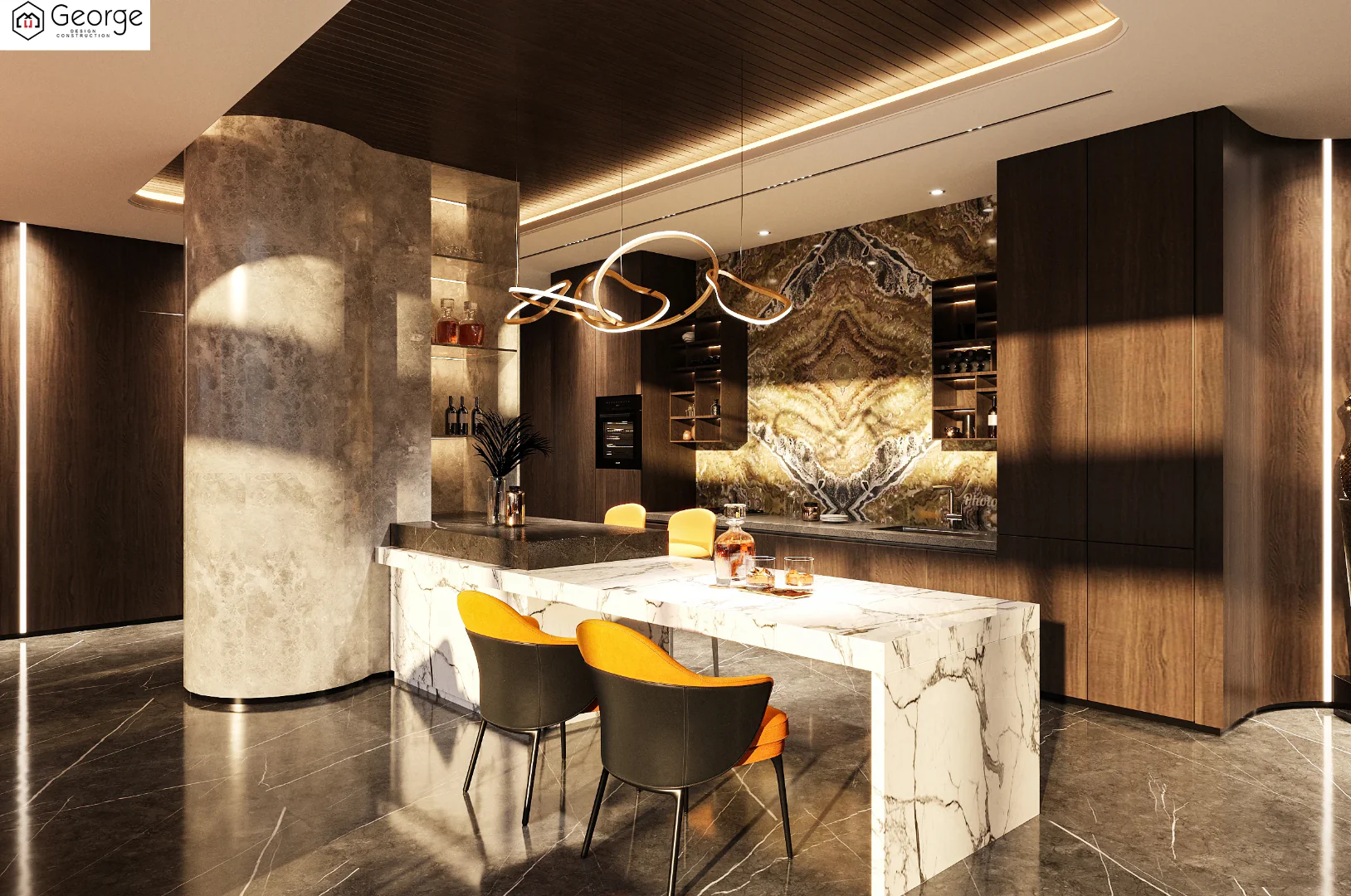
The most underused commercial asset in most furniture businesses is the completed project. A beautifully delivered interior, photographed professionally and published across the right channels, generates enquiries from clients who want the same quality.
Livspace built a significant portion of its initial growth from exactly this principle — publishing detailed before/after project stories that demonstrated outcomes, not just capabilities. Studia54’s entire international presence is built on the visual documentation of extraordinary projects distributed through Pinterest and Instagram.
Professional photography of every completed project is not a marketing cost. It is a capital investment in perpetual lead generation.
Action: Commission a professional photographer for every completed project of significance. Publish the results with keyword-rich captions and project descriptions. Pin every image to Pinterest boards organised by project type, location, and style. Build a searchable portfolio that demonstrates range, depth, and consistent quality.
The Crosby Growth Summary
In Crosby’s own commercial development, the highest-impact growth moves have been:
- Targeting developers and hospitality clients for B2B revenue
- Building a global procurement capability that justifies a premium price
- Creating content that demonstrates expertise in specific niches (FF&E, bespoke furniture, NRI design)
- Developing international market presence (Dubai, Dublin, international delivery)
- Treating every completed project as a portfolio investment
These are not Crosby-specific insights. They are the commercial mechanics of any quality-led furniture and design business. The question is whether you are applying them.
Talk to us about how Crosby can help you build the procurement and design capability that supports these strategies.











 Bedroom